Published in 1999, this book is an exploration of the life and work of American sociologist Alvin W. Gouldner. Gouldner's life and contribution to legal theory is a case study in the limits of critical, self-reflexive inquiry. Hegel's dialect is a major theme running throughout Gouldner's work, and, even throughout his life, Gouldner himself seemed trapped in the unfolding of the spirit through three distinct stages: 1945-1960 - thesis; 1960-1970 - antithesis; and 1970-1980 - synthesis or new thesis. Implications for creating a reflexive critical sociology in Gouldner's image are discussed.
Published in 1999, this book is an exploration of the life and work of American sociologist Alvin W. Gouldner. Gouldner's life and contribution to legal theory is a case study in the limits of critical, self-reflexive inquiry. Hegel's dialect is a major theme running throughout Gouldner's work, and, even throughout his life, Gouldner himself seemed trapped in the unfolding of the spirit through three distinct stages: 1945-1960 - thesis; 1960-1970 - antithesis; and 1970-1980 - synthesis or new thesis. Implications for creating a reflexive critical sociology in Gouldner's image are discussed.
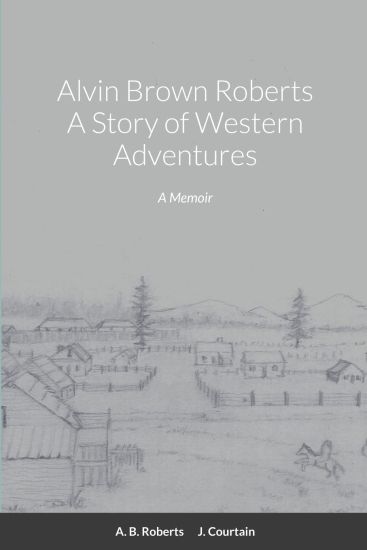
This book is a memoir of the life and travels of Alvin Brown Roberts on the Oregon Trail in 1853. Historical insights into his life in early territorial days of Portland, Oregon, Shoalwater (Willapa Bay) and Walla Walla, Washington. He describes the Battle of Walla Walla, his involvement in the Oregon Mounted Volunteers and the after effects on the surrounding country. Included are some of his original sketches of the area and photos of tombstones he created as an pioneer mason.
From their home base in Minnesota, the Karpis-Barker Gang cut a swath of crime and terror across the Midwest in the early 1930s. They kidnapped two important businessmen and held them for exorbitant ransoms. They stole payrolls and robbed banks as the bullets flew. Corrupt police and wily crime bosses helped Alvin Karpis and the Barker brothers Freddie and Doc every step of the way. Who were these men and women? What made them into killers and kidnappers? How did their reckless lifestyles lead to their downfall? From Ma Barker to Volney Davis to Edna Murray the Kissing Bandit, authors Deborah Frethem and Cynthia Schreiner Smith delve into the crimes, personalities and motivations of one of the most successful and infamous gangs in American history.
In ART SPEAKS, an artist extends himself through words, finding the image, the color, the meaning, the structure, and the music within himself. Alvin Sandler is an artist, print-maker, and sculptor, who also writes. "Art Speaks", is his third book in as many years, preceded by "My Life in Pictures", in 2012, and "Drawing the Line Demonstrations in Art", 2011. In 1992 he published a hand-painted edition of "Picture Poems". In the author's words; " 'Art Speaks' is a collection of 50 poems that span my youth, and my maturity, up to the present. As an artist who also writes, I thought my poems needed the support of art, to stand. I resolved to face each poem with a work of my art. The poems were mostly written; the art would all be new. After several months, and 40 attempts of uncertain style, I had only 6 pieces that served. That left 44 to go. It wasn't as torturous as it sounds. I designed a decent format, tested and explored various media, and finally found the right style to complement my poems. From then on, it was all art-- if I could produce it; happily I did." Painter, printmaker, writer, Alvin Sandler, born in Brooklyn in 1933, is a graduate of New York's High School of Music and Art. He studied drawing and printmaking at the Art Students' League, and at Pratt Graphics Center, furthering his studies at the Instituto de Bellas Artes, Mexico, and with engraver Leopoldo Mendez, and muralist Pablo O'Higgens. Upon his return from Mexico, at age 20, Sandler had his first solo show in New York City. Exhibitions and honors followed, including awards from the National Academy of Design, and the National Arts Club, two solo shows at the Hudson River Museum, Yonkers, N.Y., Long Island University, and New York University. His color etchings have received numerous national and regional awards. His triptych mural "The American Passion" is in The Schomberg Collection, New York Public Library. After dividing several years between Ajijic, Mexico, and Manhattan, in 1981 Sandler moved to Bisbee, Arizona, where he has lived with his wife, artist Katherine Hagstrum, for over thirty years, enjoying the beauty of the Southwest landscape, with new adventures in art, with paintings, drawings, etchings, monotypes, and more recently, sculpture. Sandler has exhibited in Tucson, Phoenix, Scottsdale, Santa Fe, Douglas, Wilcox, and Bisbee. He has won many prizes in the region, including a solo exhibition at the Schemer Museum, Phoenix. Since 2010 he has invested himself in producing three books, summing up in words and pictures, his insights and experience for a reading public.
The distinguished American philosopher Alvin Plantinga has had a career-long interest in the defense of Christian belief. There hasn't been a major contemporary challenge to such belief that Plantinga has not, in some way, addressed. This book draws together those contributions, highlighting particularly Plantinga's groundbreaking work in the areas of epistemology and the problem of evil. Historical and biographical background information is included to give perspective to Plantinga's work. His theory that both theistic and Christian belief is warranted and basic is explored and critiqued, and an assessment is offered as to the significance of Plantinga's work for apologetic theory and practice.
Hello, Alvin Welcome to the world of books. This colorful, personalized keepsake is just for you. In Alvin s Reading Log, your family and friends will be able to record the first 200 books you read and prepare you for a lifetime of reading, achievement, and success. Sprinkled with great advice and inspiration, this memory book will remind you throughout your life of those books and people who inspired you. A note for adults: recording a child s first books creates a mindset of reading the first steps to a lifetime of learning and growth."
Hello, Alvin Welcome to the world of books. This colorful, personalized keepsake is just for you. In Alvin s Reading Log, your family and friends will be able to record the first 200 books you read and prepare you for a lifetime of reading, achievement, and success. Sprinkled with great advice and inspiration, this memory book will remind you throughout your life of those books and people who inspired you. A note for adults: recording a child s first books creates a mindset of reading the first steps to a lifetime of learning and growth."
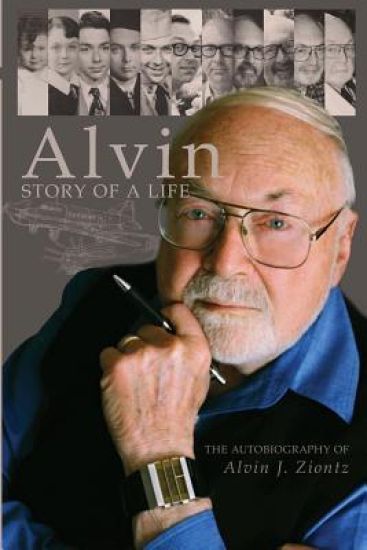
"ALVIN" is the story of a life - a career as a lawyer defending Indian tribes and a parallel career in photography. The writer, 87, tells stories; stories of a young man from a middle class Jewish family in Chicago, a voracious reader with a talent for art and music, yet seeking out the work of a manual laborer, a story of racial bigotry in the U.S. Army, the story of his rise from a mediocre law student to the founder of a law firm in Seattle that became a national leader in the defense of tribal sovereignty, the story of the love of "Lennie", the girl he married and her conquest of cancer, the story of his children and their lives, and the story of his immersion in the art of photography. The stories include devoting his lawyer's skills to exonerate a mailman wrongly accused of stealing from the mails, arguing a case in the Supreme Court, persuading a court that his client's possession of gold bullion was not a crime, debating an "Equal Protection" issue with the future Justice of the Supreme Court, Ruth Bader Ginsberg, meeting John F. Kennedy, litigating a Rabbi's will by crossing swords with the highest authority in Orthodox Judaism and his part in the struggle of American Indian tribes to reconstruct their tribal governments.
The distinguished American philosopher Alvin Plantinga has had a career-long interest in the defense of Christian belief. There hasn't been a major contemporary challenge to such belief that Plantinga has not, in some way, addressed. This book draws together those contributions, highlighting particularly Plantinga's groundbreaking work in the areas of epistemology and the problem of evil. Historical and biographical background information is included to give perspective to Plantinga's work. His theory that both theistic and Christian belief is warranted and basic is explored and critiqued, and an assessment is offered as to the significance of Plantinga's work for apologetic theory and practice.