

Kirjahaku
Etsi kirjoja tekijän nimen, kirjan nimen tai ISBN:n perusteella.
321 tulosta hakusanalla Amitava Roy

Hunger is an issue which has been subject to much rigorous intellectual examination by economists, philosophers, sociologists, NGOs and governments. This volume provides a critical overview of current academic and political perspectives and then compares these views from thenon-hungry people with those of thehungry particularly from a broad range of poor communities in India. Their views are gathered using participatory rural appraisal techniques and the scale of the material presented is unprecedented. Not surprisingly, the comparisons show that the perceptions of the hungry are fundamentally different from those of the non-hungry. It makes compelling suggestions about how best policy makers can attempt to eliminate hunger based on what the hungry themselves suggest. The book also draws attention to the critical role of Common Property Resources and women in the fight against under-nutrition, which have so far been largely ignored.

A trailblazing interrogation of the cultural, political, and economic implications of World Bank hegemony.World Bank literature is more than a concept-it is a provocation, a call to arms. It is intended to prompt questions about each word, to probe globalization, political economy, and the role of literary and cultural studies. As asserted in this major work, it signals a radical rewriting of academic debates, a rigorous analysis of the World Bank and the International Monetary Fund (IMF), and a consideration of literature that deals with new global realities. Made more relevant than ever by momentous antiglobalization demonstrations in Seattle and Genoa, World Bank Literature brings together essays by a distinguished group of economists, cultural and literary critics, social scientists, and public policy analysts to ask how to understand the influence of the World Bank/IMF on global economic power relations and cultural production. The authors attack this question in myriad ways, examining World Bank/IMF documents as literature, their impact on developing nations, the relationship between literature and globalization, the connection between the academy and the global economy, and the emergence of coalitions confronting the new power. World Bank Literature shows, above all, the multifarious and sometimes nefarious ways that abstract academic debates play themselves out concretely in social policy and cultural mores that reinforce traditional power structures. Contributors: Anthony C. Alessandrini, Kent State U; Bret Benjamin, SUNY, Albany; John Berger; Suzanne Bergeron, U of Michigan, Dearborn; Lorrayne Carroll, U of Southern Maine; Manthia Diawara, NYU; Grant Farred, Duke; Barbara Foley, Rutgers; Claire F. Fox, U of Iowa; Rosemary Hennessy, SUNY, Albany; Doug Henwood, Left Business Observer; Caren Irr, Brandeis; Joseph Medley, U of Southern Maine; Cary Nelson, U of Illinois; Gautam Premnath, U of Massachusetts, Boston; Bruce Robbins, Columbia; Andrew Ross, NYU; Subir Sinha, U of London; Kenneth Surin, Duke; Rashmi Varma, U of North Carolina; Evan Watkins, U of California, Davis; Phillip E. Wegner, U of Florida; Richard Wolff, U of Massachusetts.

A Foreigner Carrying in the Crook of His Arm a Tiny Bomb
Amitava Kumar
Duke University Press
2010
sidottu
Part reportage and part protest, A Foreigner Carrying in the Crook of His Arm a Tiny Bomb is an inquiry into the cultural logic and global repercussions of the war on terror. At its center are two men convicted in U.S. courts on terrorism-related charges: Hemant Lakhani, a seventy-year-old tried for attempting to sell a fake missile to an FBI informant, and Shahawar Matin Siraj, baited by the New York Police Department into a conspiracy to bomb a subway. Lakhani and Siraj were caught through questionable sting operations involving paid informants; both men received lengthy jail sentences. Their convictions were celebrated as major victories in the war on terror. In Amitava Kumar’s riveting account of their cases, Lakhani and Siraj emerge as epic bunglers, and the U.S. government as the creator of terror suspects to prosecute. Kumar analyzed the trial transcripts and media coverage, and he interviewed Lakhani, Siraj, their families, and their lawyers. Juxtaposing such stories of entrapment in the United States with narratives from India, another site of multiple terror attacks and state crackdowns, Kumar explores the harrowing experiences of ordinary people entangled in the war on terror. He also considers the fierce critiques of post-9/11 surveillance and security regimes by soldiers and torture victims, as well as artists and writers, including Coco Fusco, Paul Shambroom, and Arundhati Roy.

A Foreigner Carrying in the Crook of His Arm a Tiny Bomb
Amitava Kumar
Duke University Press
2010
pokkari
Part reportage and part protest, A Foreigner Carrying in the Crook of His Arm a Tiny Bomb is an inquiry into the cultural logic and global repercussions of the war on terror. At its center are two men convicted in U.S. courts on terrorism-related charges: Hemant Lakhani, a seventy-year-old tried for attempting to sell a fake missile to an FBI informant, and Shahawar Matin Siraj, baited by the New York Police Department into a conspiracy to bomb a subway. Lakhani and Siraj were caught through questionable sting operations involving paid informants; both men received lengthy jail sentences. Their convictions were celebrated as major victories in the war on terror. In Amitava Kumar’s riveting account of their cases, Lakhani and Siraj emerge as epic bunglers, and the U.S. government as the creator of terror suspects to prosecute. Kumar analyzed the trial transcripts and media coverage, and he interviewed Lakhani, Siraj, their families, and their lawyers. Juxtaposing such stories of entrapment in the United States with narratives from India, another site of multiple terror attacks and state crackdowns, Kumar explores the harrowing experiences of ordinary people entangled in the war on terror. He also considers the fierce critiques of post-9/11 surveillance and security regimes by soldiers and torture victims, as well as artists and writers, including Coco Fusco, Paul Shambroom, and Arundhati Roy.

A young poet is killed by her lover, a politician, in the eastern Indian state of Bihar. Soon afterward, across India in Bombay, an idealistic journalist is hired by a movie director to write a Bollywood screenplay about the murdered poet. Research for the script takes the writer, Binod, back to Bihar, where he and his cousin Rabinder were raised. While the high-minded Binod struggles to turn the poet’s murder into a steamy tale about small towns, desire, and intrigue, Rabinder sits in a Bihari jail cell, having been arrested for distributing pornography through a cybercafé. Rabinder dreams of a career in Bollywood filmmaking, and, unlike his cousin, he is not burdened by ethical scruples. Nobody Does the Right Thing is the story of these two cousins and the ways that their lives unexpectedly intertwine. Set in the rural villages of Bihar and the metropolises of Bombay and Delhi, the novel is packed with telling details and anecdotes about life in contemporary India. At the same time, it is a fictional investigation into how narratives circulate and vie for supremacy through gossip, cinema, popular fiction, sensational journalism, and the global media.

A young poet is killed by her lover, a politician, in the eastern Indian state of Bihar. Soon afterward, across India in Bombay, an idealistic journalist is hired by a movie director to write a Bollywood screenplay about the murdered poet. Research for the script takes the writer, Binod, back to Bihar, where he and his cousin Rabinder were raised. While the high-minded Binod struggles to turn the poet’s murder into a steamy tale about small towns, desire, and intrigue, Rabinder sits in a Bihari jail cell, having been arrested for distributing pornography through a cybercafé. Rabinder dreams of a career in Bollywood filmmaking, and, unlike his cousin, he is not burdened by ethical scruples. Nobody Does the Right Thing is the story of these two cousins and the ways that their lives unexpectedly intertwine. Set in the rural villages of Bihar and the metropolises of Bombay and Delhi, the novel is packed with telling details and anecdotes about life in contemporary India. At the same time, it is a fictional investigation into how narratives circulate and vie for supremacy through gossip, cinema, popular fiction, sensational journalism, and the global media.
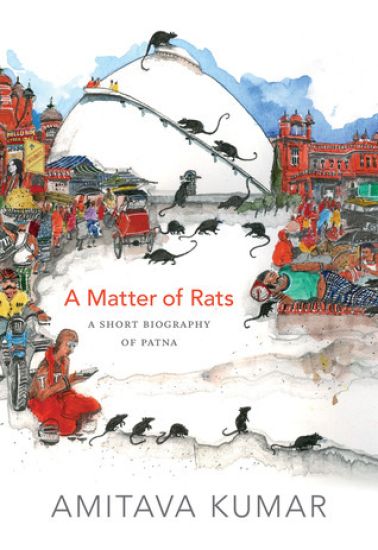
It is not only the past that lies in ruins in Patna, it is also the present. But that is not the only truth about the city that Amitava Kumar explores in this vivid, entertaining account of his hometown. We accompany him through many Patnas, the myriad cities locked within the city-the shabby reality of the present-day capital of Bihar; Pataliputra, the storied city of emperors; the dreamlike embodiment of the city in the minds and hearts of those who have escaped contemporary Patna's confines. Full of fascinating observations and impressions, A Matter of Rats reveals a challenging and enduring city that exerts a lasting pull on all those who drift into its orbit.Kumar's ruminations on one of the world's oldest cities, the capital of India's poorest province, are also a meditation on how to write about place. His memory is partial. All he has going for him is his attentiveness. He carefully observes everything that surrounds him in Patna: rats and poets, artists and politicians, a girl's picture in a historian's study, and a sheet of paper on his mother's desk. The result is this unique book, as cutting as it is honest.
To be a writer, Amitava Kumar says, is to be an observer. The twenty-six essays in Lunch with a Bigot are Kumar's observations of the world put into words. A mix of memoir, reportage, and criticism, the essays include encounters with writers Salman Rushdie and Arundhati Roy, discussions on the craft of writing, and a portrait of the struggles of a Bollywood actor. The title essay is Kumar's account of his visit to a member of an ultra-right Hindu organization who put him on a hit-list. In these and other essays, Kumar tells a broader story of immigration, change, and a shift to a more globalized existence, all the while demonstrating how he practices being a writer in the world.
To be a writer, Amitava Kumar says, is to be an observer. The twenty-six essays in Lunch with a Bigot are Kumar's observations of the world put into words. A mix of memoir, reportage, and criticism, the essays include encounters with writers Salman Rushdie and Arundhati Roy, discussions on the craft of writing, and a portrait of the struggles of a Bollywood actor. The title essay is Kumar's account of his visit to a member of an ultra-right Hindu organization who put him on a hit-list. In these and other essays, Kumar tells a broader story of immigration, change, and a shift to a more globalized existence, all the while demonstrating how he practices being a writer in the world.

The widely used herbal antidepressant kava is damaging to the liver. Pregnant women should avoid most herbal remedies because of pesticides and preservatives required in the growth and storage of the herbs. Most ayurvedic medicines contain unacceptable levels of lead and other heavy metals. St. John's Wort could complicate any chronic medical condition. Many people see herbal remedies as "natural" and therefore safe, but in Prescription or Poison? Dr. Amitava Dasgupta explains that one of his first pharmacology professors taught him that "medicine" is just another word for "poison" and all medicines of any kind should be treated with great caution. This book, written for the layperson but based on solid science and research, explains how toxic many alternative remedies can be, alone or in combination with widely prescribed drug treatments. He includes detailed information on the proper use of alternative medicines and their history of good results, while also cautioning readers in this wake-up call about the casual, often uninformed, and sometimes damaging use of alternative remedies.

We've all heard the word "antioxidants" and we all have some vague idea of what they are and what they do. Now, with Pocket Antioxidants, medical-level knowledge of this topic is available to a general audience. Prestigious researcher Dr. Amitava Dasgupta takes the latest antioxidant research from peer-reviewed medical journals and makes it accessible to anyone in this handy little book. Dasgupta explains what oxidative stress really means, the danger of "free radicals," and the benefits of antioxidants. He explains that the best way to combat free radicals is by eating antioxidant-rich foods and supplements. Readers will learn which foods are highest in which antioxidants. Readers also learn that antioxidants sometimes come from surprising sources, such as coffee or alcohol. With the tips in this book, readers can avoid the risks of following the false information and pseudoscience found on various web sites, and become empowered to pick their favorite fruits, vegetables, and herbal supplements - with the goal of living a healthier life!

Industrial Power Systems: Evolutionary Aspects provides evolutionary and integrated aspects of industrial power systems including review of development of modern power systems from DC to microgrid. Generation options of thermal and hydro power including nuclear and power from renewables are discussed along with concepts for single-line diagram, overhead transmission lines, concepts of corona, sag, overhead insulators and over voltage protective devices. Subsequent chapters cover analysis of power systems and power system protection with basic concept of power system planning and economic operations.Features: Covers the fundamentals of power systems, including its design, analysis, market structure and economic operations Discusses performance of transmission lines with associated parameters, determination of performance and load flow analysis Reviews residual generation/load imbalance as handled by the automatic generation control (AGC) Includes different advanced technologies including HTLS overhead conductor, XLPE cable, vacuum/SF6 circuit breaker, solid state relays, among others Explores practical aspects required for field level work such as installation of cable network for power distribution purposes, types of earthing and tariff mechanismThis book will be of interest to graduate students, researchers and professionals in power engineering, load flow and power systems protection.

Industrial Power Systems: Evolutionary Aspects provides evolutionary and integrated aspects of industrial power systems including review of development of modern power systems from DC to microgrid. Generation options of thermal and hydro power including nuclear and power from renewables are discussed along with concepts for single-line diagram, overhead transmission lines, concepts of corona, sag, overhead insulators and over voltage protective devices. Subsequent chapters cover analysis of power systems and power system protection with basic concept of power system planning and economic operations.Features: Covers the fundamentals of power systems, including its design, analysis, market structure and economic operations Discusses performance of transmission lines with associated parameters, determination of performance and load flow analysis Reviews residual generation/load imbalance as handled by the automatic generation control (AGC) Includes different advanced technologies including HTLS overhead conductor, XLPE cable, vacuum/SF6 circuit breaker, solid state relays, among others Explores practical aspects required for field level work such as installation of cable network for power distribution purposes, types of earthing and tariff mechanismThis book will be of interest to graduate students, researchers and professionals in power engineering, load flow and power systems protection.

'This profound book is full of lives whose beauty lies in the wholeness of their telling.' – Salman Rushdie'Kumar's late father’s life breaks like a slowly cresting wave over the sad and joyful ground of this story . . . Always deeply human; the heart is everywhere in these pages . . . beautiful, truthful fiction.' – James Wood, The New YorkerA novel that tells the story of modern India, through the life of one apparently ordinary man, from the death of Gandhi to the rise of Modi.Jadunath Kunwar's beginnings are humble, even inauspicious. His mother, while pregnant, nearly dies from a cobra bite. As his life skates between the mythical and the mundane, Jadu finds meaning in the most unexpected places. He meets the sherpa who first summited Everest. He befriends poets and politicians. He becomes a historian. And he has a daughter, Jugnu, a television journalist with a career in the United States – whose perspective sheds its own light on his story.All the while, currents of huge change sweep across India – from Independence to Partition, Gandhi to Modi, the Mahabharata to Somerset Maugham, cholera to COVID – and buffet both Jadu and Jugnu's lives.Amitava Kumar's remarkable My Beloved Life explores how we tell stories and write history, how the lives of individuals play out against the background of historical change, and how no single life is without consequence.'A novel of vaulting ambition and tenderness, about how histories, both personal and national, are built, refracted and revised.' – Katie Kitamura, author of Intimacies

An exceptionally moving novel that traces the arc of a mans life from his 1935 birth in a small village in India to his death from Covid.

'This profound book is full of lives whose beauty lies in the wholeness of their telling.' – Salman Rushdie'Kumar's late father’s life breaks like a slowly cresting wave over the sad and joyful ground of this story . . . Always deeply human; the heart is everywhere in these pages . . . beautiful, truthful fiction.' – James Wood, The New YorkerA novel that tells the story of modern India, through the life of one apparently ordinary man, from the death of Gandhi to the rise of Modi.Jadunath Kunwar's beginnings are humble, even inauspicious. His mother, while pregnant, nearly dies from a cobra bite. As his life skates between the mythical and the mundane, Jadu finds meaning in the most unexpected places. He meets the sherpa who first summited Everest. He befriends poets and politicians. He becomes a historian. And he has a daughter, Jugnu, a television journalist with a career in the United States – whose perspective sheds its own light on his story.All the while, currents of huge change sweep across India – from Independence to Partition, Gandhi to Modi, the Mahabharata to Somerset Maugham, cholera to COVID – and buffet both Jadu and Jugnu's lives.Amitava Kumar's remarkable My Beloved Life explores how we tell stories and write history, how the lives of individuals play out against the background of historical change, and how no single life is without consequence.'A novel of vaulting ambition and tenderness, about how histories, both personal and national, are built, refracted and revised.' – Katie Kitamura, author of Intimacies

Resolving Erroneous Reports in Toxicology and Therapeutic Drug Monitoring
Amitava Dasgupta
John Wiley Sons Inc
2012
sidottu
The tools for detecting false positives, false negatives, and interference in interactions when testing and monitoring therapeutic drug use For physicians monitoring a patient's progress, efficacy of treatment is often linked to a patient's response to medication. Determining whether a patient is taking the prescribed amount, the drug or dosage is effective, or the prescribed medication is interacting with other drugs can be determined through drug testing. Written as a guide for toxicologists, chemists, and health professionals involved in patient care, Resolving Erroneous Reports in Toxicology and Therapeutic Drug Monitoring provides an up-to-date introduction to the tests and methodologies used in a toxicology lab as well as the sources of testing error that can lead to false positives, false negatives, and unreliable conclusions of drug abuse or under use. Covering a host of common therapeutic drugs as well as specific types of interference in immunoassays used in drug testing, the book details a number of possible testing scenarios and problems as well as solutions: False positive results in immunoassays for drugs in abuse testingInterferences in immunoassays used for monitoring anticonvulsants, tricyclic antidepressants, and digoxinFalse positive alcohol tests using breath analyzers and automated analyzersWhen a toxicology report is negative in a suspected overdose patient: the world of designer drugsEffects of drug-herb interactions on therapeutic drug monitoringPharmacogenomics and the general principles of genetic analysisApproaches for eliminating interference/discordant specimen in therapeutic drug monitoring and drugs in abuse testingWhat to do in case there is no readily available method for testing Complete with easy-to-read tables and flowcharts, this book helps toxicologists, clinical chemists, clinical pathologists, and forensic pathologists develop accurate, unbiased drug monitoring and toxicology reports. Health care professionals involved in patient care, especially of critically ill patients, will find this guide indispensable in making sure lab tests are reliable enough to provide high-quality care. An indispensable handbook to the entire suite of toxicology lab tests, as well as all the possible sources of testing error, Resolving Erroneous Reports in Toxicology and Therapeutic Drug Monitoring offers clear remedies for eliminating and preventing testing error.

A statistical approach to the principles of quality control and management Incorporating modern ideas, methods, and philosophies of quality management, Fundamentals of Quality Control and Improvement, Fourth Edition presents a quantitative approach to management-oriented techniques and enforces the integration of statistical concepts into quality assurance methods. Utilizing a sound theoretical foundation and illustrating procedural techniques through real-world examples, the timely new edition bridges the gap between statistical quality control and quality management. Promoting a unique approach, the book focuses on the use of experimental design concepts as well as the Taguchi method for creating product/process designs that successfully incorporate customer needs, improve lead time, and reduce costs. The Fourth Edition of Fundamentals of Quality Control and Improvement also includes: New topical coverage on risk-adjustment, capability indices, model building using regression, and survival analysis Updated examples and exercises that enhance the readers’ understanding of the conceptsDiscussions on the integration of statistical concepts to decision making in the realm of quality assurance Additional concepts, tools, techniques, and issues in the field of health care and health care quality A unique display and analysis of customer satisfaction data through surveys with strategic implications on decision making, based on the degree of satisfaction and the degree of importance of survey items Fundamentals of Quality Control and Improvement, Fourth Edition is an ideal book for undergraduate and graduate-level courses in management, technology, and engineering. The book also serves as a valuable reference for practitioners and professionals interested in expanding their knowledge of statistical quality control, quality assurance, product/process design, total quality management, and/or Six Sigma training in quality improvement.
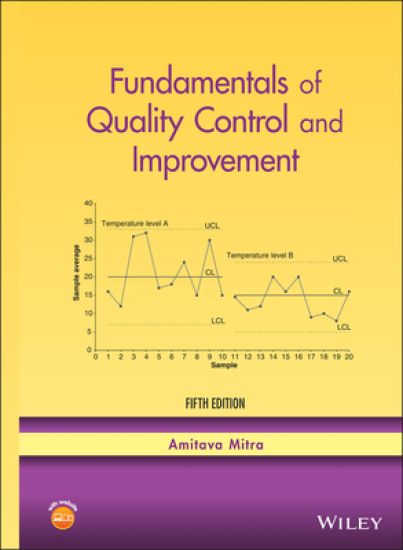
The newest edition of an insightful and practical statistical approach to quality control and management In the newly revised and thoroughly updated Fifth Edition of Fundamentals of Quality Control and Improvement, accomplished academic, consultant, and author Dr. Amitava Mitra delivers a comprehensive and quantitative approach to quality management techniques. The book demonstrates how to integrate statistical concepts with quality assurance methods, incorporating modern ideas, strategies, and philosophies of quality management. You'll discover experimental design concepts and the use of the Taguchi method to incorporate customer needs, improve lead time, and reduce costs. The new edition also includes brand-new case studies at the end of several chapters, references to the statistical software Minitab 19, and chapter updates that add discussions of trending and exciting topics in quality control. The book includes access to supplementary material for instructors consisting of a new instructor's solutions manual and PowerPoint slides, as well as access to data sets for all readers. Readers will also benefit from the inclusion of: A thorough introduction to the evolution of quality and definitions of quality, quality control, quality assurance, quality circles, and quality improvement teamsAn exploration of customer needs and market share, as well as the benefits of quality control and the total quality systemPractical discussions of quality and reliability, quality improvement, product and service costing, and quality costsA concise treatment of how to measure quality costs, the management of quality, and the interrelationship between quality and productivity Perfect for upper-level undergraduate and graduate students in quality control and improvement, the Fifth Edition of Fundamentals of Quality Control and Improvement will also earn a place in the libraries of business students and those undertaking training programs in Six Sigma.