Kirjojen hintavertailu. Mukana 11 627 487 kirjaa ja 12 kauppaa.

Kirjahaku

Etsi kirjoja tekijän nimen, kirjan nimen tai ISBN:n perusteella.

1000 tulosta hakusanalla Amy E Reid

The Ruling Ideas

The Ruling Ideas

Amy E. Wendling

Lexington Books
2012
sidottu
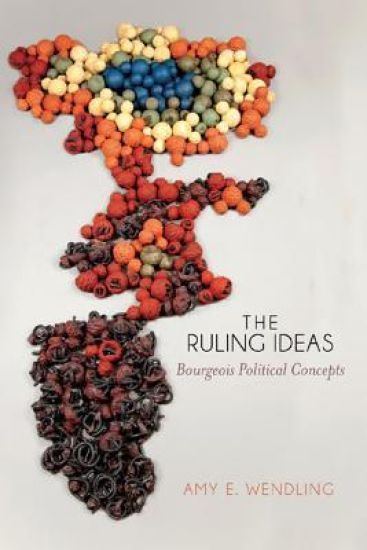
The concepts that organize our thinking wield, by virtue of this fact, a great deal of political power. This book looks at five concepts whose dominion has increased, steadily, during the bourgeois period of modernity: Labor, Time, Property, Value, and Crisis. These ruling ideas are central not only to many academic disciplines— from philosophy and law to the political, social, and economic sciences— but also to everyday life. These ruling ideas explain the cultural attitudes of boredom and multitasking, revealing the inescapable internalized consciousness of time that has become a mode of political domination. They also explain the terrifying environmental problem of privatized property in water and the terrifying humanitarian problem of privatized property in human bodies and body parts. Finally, they explain the affective dimensions of the housing crisis, and especially why capitalism cultivates the desire to own a home that is beyond one’s means.
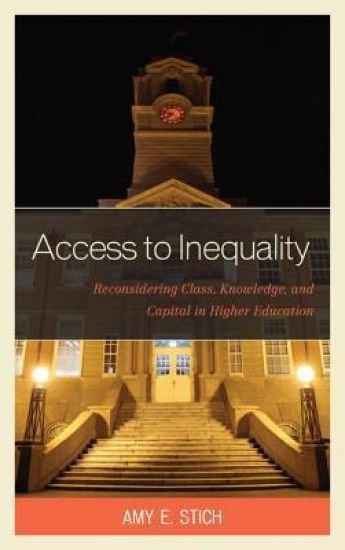
Access to Inequality

Access to Inequality

Amy E. Stich

Lexington Books
2012
sidottu
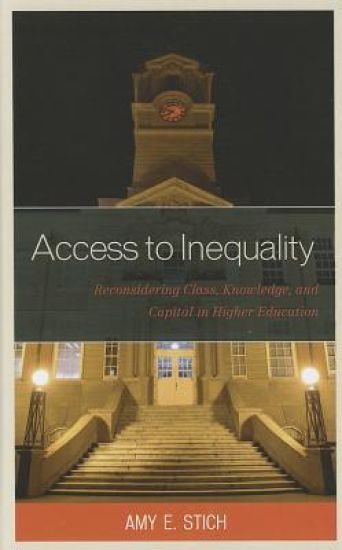
Set against the backdrop of democratization, increased opportunity, and access, income-based gaps in college entry, persistence, and graduation continue to grow, underlining a deep contradiction within American higher education. In other words, despite the well-intended, now mature process of democratization, the postsecondary system is still charged with high levels of inequality. In the interest of uncovering the mechanisms through which democratization, as currently conceived, preserves and perpetuates inequality within the system of higher education, this book reconsiders the role of social class in the production and dissemination of knowledge, the valuation of cultural capital, and the reproduction of social inequalities. Drawing upon the author’s year-long qualitative research study within one “democratized” institution of higher education and its associated art museum, Access to Inequality explores the vestiges of an exclusionary history within higher education and the art world—two related contexts that have arguably failed to adequately respond to the public’s call to democratize.
The Ruling Ideas

The Ruling Ideas

Amy E. Wendling

Lexington Books
2014
nidottu
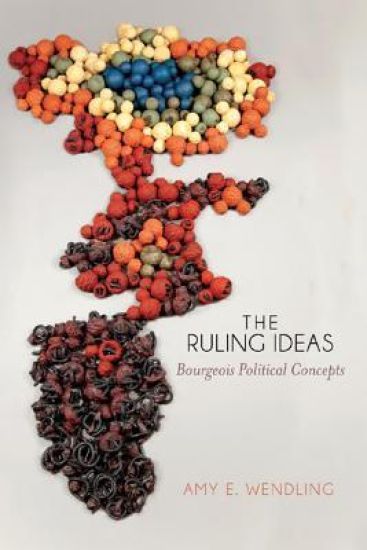
The concepts that organize our thinking wield, by virtue of this fact, a great deal of political power. This book looks at five concepts whose dominion has increased, steadily, during the bourgeois period of modernity: Labor, Time, Property, Value, and Crisis. These ruling ideas are central not only to many academic disciplines— from philosophy and law to the political, social, and economic sciences— but also to everyday life. These ruling ideas explain the cultural attitudes of boredom and multitasking, revealing the inescapable internalized consciousness of time that has become a mode of political domination. They also explain the terrifying environmental problem of privatized property in water and the terrifying humanitarian problem of privatized property in human bodies and body parts. Finally, they explain the affective dimensions of the housing crisis, and especially why capitalism cultivates the desire to own a home that is beyond one’s means.
Access to Inequality

Access to Inequality

Amy E. Stich

Lexington Books
2014
nidottu
Set against the backdrop of democratization, increased opportunity, and access, income-based gaps in college entry, persistence, and graduation continue to grow, underlining a deep contradiction within American higher education. In other words, despite the well-intended, now mature process of democratization, the postsecondary system is still charged with high levels of inequality. In the interest of uncovering the mechanisms through which democratization, as currently conceived, preserves and perpetuates inequality within the system of higher education, this book reconsiders the role of social class in the production and dissemination of knowledge, the valuation of cultural capital, and the reproduction of social inequalities. Drawing upon the author’s year-long qualitative research study within one “democratized” institution of higher education and its associated art museum, Access to Inequality explores the vestiges of an exclusionary history within higher education and the art world—two related contexts that have arguably failed to adequately respond to the public’s call to democratize.
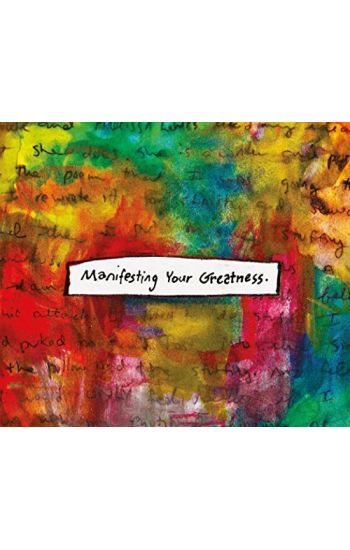
Manifesting Your Greatness

Manifesting Your Greatness

Amy E. Chace

RED Feather
2018
muu
Need an “aha” moment? This deck has an answer for you and will quickly become a close friend—one who is open-minded, savvy, and ready to rock! Prepare to explore your heart with words and images that spark insight with 46 colorful and freshly stylized cards. Offering pearls of wisdom like "Explore Your Depths" or nuggets of truth like "It's Not Even about You," these exciting cards are just what you need to see you through your hectic, question-filled life. Its no rules, no confusion, and no memorization approach makes it easy to get a message you can connect to right away. It reads effortlessly with prominent advice that is clear and concise. The accompanying guidebook provides gentle advice to further interpret the cards’ messages and then takes it to the next level by delivering helpful ideas for solving problems and exploring passions.
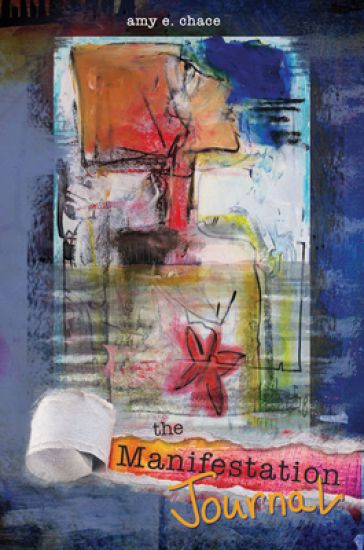
The Manifestation Journal

The Manifestation Journal

Amy E. Chace

RED Feather
2019
sidottu
An artistic journal to inspire writing, drawing, and planning for fostering your creativity and manifestation A hybrid journal, sketchbook, and planner, The Manifestation Journal encourages expansive thinking with whimsical imagery on every page. These images, words, and pages for writing, drawing, creating, and planning are mere jumping-off points for your own creativity. Go off on a tangent, there are no limits. Gallop through this exciting journey anyway you want—back to front . . . upside down . . . It’s not judging you. Add petals to those circles that could be flowers. Draw a house on that big moon. This open-minded book is about enjoying the process of creating. You’re not on a deadline; you’re relaxing and creating with ease. Have FUN.
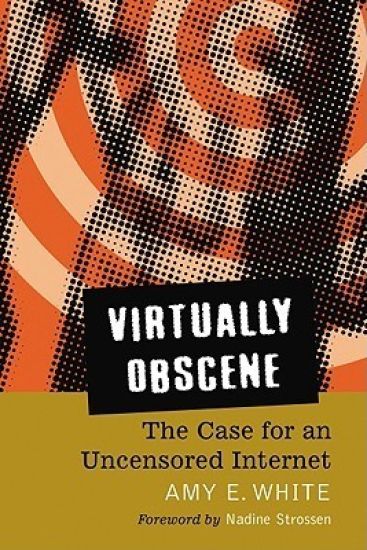
Virtually Obscene

Virtually Obscene

Amy E. White

McFarland Co Inc
2006
pokkari
Free porn. The phrase conjures images of search engine scams, computer viruses and spam emails. It also hints at an important debate--not over cost-free porn, per se, but over a regulation-free internet. As internet usage exploded in the 1990s, so too did the utopian vision of universal access to unregulated information. Differing ideas of obscenity and the United States government's dominion over the web, though, have forced a serious dilemma, centered on internet pornography, that involves regulation, freedom of information, first amendment rights, feminism and morality. This book examines the phenomenon of internet pornography, demonstrating how that debate is an important case study in the wider argument over internet regulation. Chapters objectively uncover the flaws of the most common arguments for and against regulation, and examine efforts to regulate the internet; community standards of obscenity as grounds for regulation; the free speech debate; and harm to children, women and the moral environment. The author offers a final analysis that regulation of sexually explicit materials is ultimately futile, and that the utility of an unregulated internet outweighs arguments against regulated sexually explicit materials.
Fragments

Fragments

Amy E Stein

Routledge Member of the Taylor and Francis Group
2003
sidottu
Explore effective alternative approaches to improving the lives of those diagnosed with attention deficit disorder!This remarkable new book offers fresh perspectives on ADD/ADHD. Even more important, it provides new direction for sufferers, introducing an ecologically based lifestyle that focuses on hands-on interactive learning. Fragments: Coping with Attention Deficit Disorder shows how to use environmental education and activities such as organic farming, community service, mission work, art, yoga, meditation, and spirituality to bring about positive change in people diagnosed with ADD or ADHD.From author Amy E. Stein: “This book is about life. It is written for those who think they have no hope, who struggle with life, with decisions, with addiction, and in search of themselves. I do not believe traditional psychotherapy or medication are solutions for those of us who fall under the label of ADD or ADHD.”Candidly written by a woman who, at age 25, was diagnosed as “a textbook case for attention deficit hyperactivity disorder,” this insightful book examines: the pitfalls of traditional psychotherapy and medication for those diagnosed with ADD/ADHD how an interactive hands-on learning environment can markedly improve the educational experience of ADD/ADHD kids how an organic, holistic approach can benefit those diagnosed with ADD/ADHD the correlation between agriculture and ADD/ADHD and the impact of eliminating pesticides and increasing fatty acid intake in the diets of sufferers how incorporating spirituality and faith into ADD/ADHD sufferers’ lives can help to add discipline and bring greater satisfaction and much more!Five helpful appendices give you easy access to environmental education resources, agricultural resources, a sample agricultural curriculum, a sample ecology curriculum, and an environmental art curriculum.
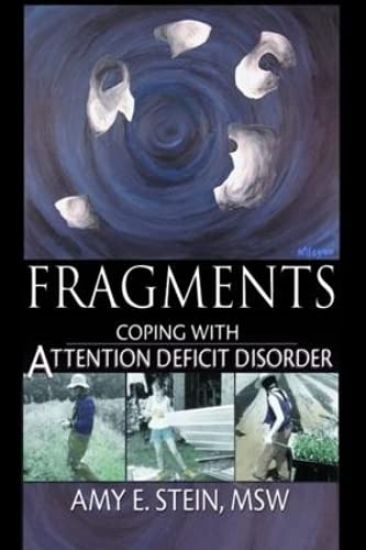
Fragments

Fragments

Amy E Stein

Routledge Member of the Taylor and Francis Group
2002
nidottu
Explore effective alternative approaches to improving the lives of those diagnosed with attention deficit disorder!This remarkable new book offers fresh perspectives on ADD/ADHD. Even more important, it provides new direction for sufferers, introducing an ecologically based lifestyle that focuses on hands-on interactive learning. Fragments: Coping with Attention Deficit Disorder shows how to use environmental education and activities such as organic farming, community service, mission work, art, yoga, meditation, and spirituality to bring about positive change in people diagnosed with ADD or ADHD.From author Amy E. Stein: “This book is about life. It is written for those who think they have no hope, who struggle with life, with decisions, with addiction, and in search of themselves. I do not believe traditional psychotherapy or medication are solutions for those of us who fall under the label of ADD or ADHD.”Candidly written by a woman who, at age 25, was diagnosed as “a textbook case for attention deficit hyperactivity disorder,” this insightful book examines: the pitfalls of traditional psychotherapy and medication for those diagnosed with ADD/ADHD how an interactive hands-on learning environment can markedly improve the educational experience of ADD/ADHD kids how an organic, holistic approach can benefit those diagnosed with ADD/ADHD the correlation between agriculture and ADD/ADHD and the impact of eliminating pesticides and increasing fatty acid intake in the diets of sufferers how incorporating spirituality and faith into ADD/ADHD sufferers’ lives can help to add discipline and bring greater satisfaction and much more!Five helpful appendices give you easy access to environmental education resources, agricultural resources, a sample agricultural curriculum, a sample ecology curriculum, and an environmental art curriculum.
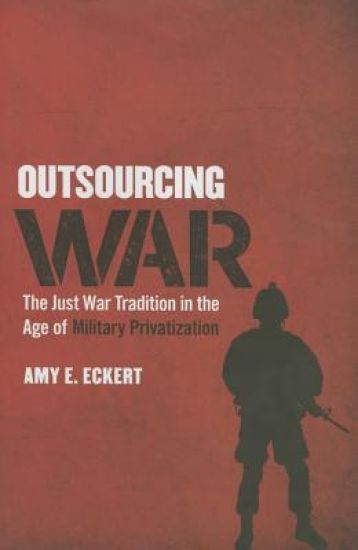
Outsourcing War

Outsourcing War

Amy E. Eckert

Cornell University Press
2016
sidottu
Recent decades have seen an increasing reliance on private military contractors (PMCs) to provide logistical services, training, maintenance, and combat troops. In Outsourcing War, Amy E. Eckert examines the ethical implications involved in the widespread use of PMCs, and in particular questions whether they can fit within customary ways of understanding the ethical prosecution of warfare. Her concern is with the ius in bello (right conduct in war) strand of just war theory. Just war theorizing is generally built on the assumption that states, and states alone, wield a monopoly on the legitimate use of force. Who holds responsibility for the actions of PMCs? What ethical standards might they be required to observe? How might deviations from such standards be punished? The privatization of warfare poses significant challenges because of its reliance on a statist view of the world. Eckert argues that the tradition of just war theory—which predates the international system of states—can evolve to apply to this changing world order. With an eye toward the practical problems of military command, Eckert delves into particular cases where PMCs have played an active role in armed conflict and derives from those cases the modifications necessary to apply just principles to new agents in the landscape of war.
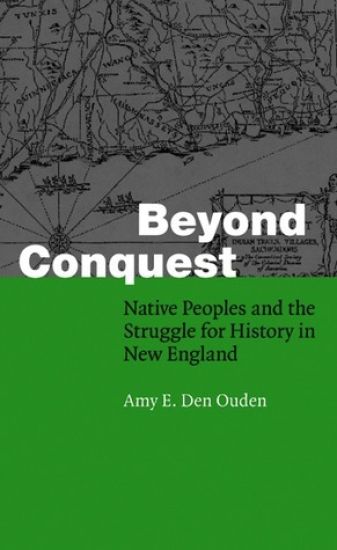
Beyond Conquest

Beyond Conquest

Amy E. Den Ouden

University of Nebraska Press
2005
pokkari
By focusing on the complex cultural and political facets of Native resistance to encroachment on reservation lands during the eighteenth century in southern New England, Beyond Conquest reconceptualizes indigenous histories and debates over Native land rights. As Amy E. Den Ouden demonstrates, Mohegans, Pequots, and Niantics living on reservations in New London County, Connecticut—where the largest indigenous population in the colony resided—were under siege by colonists who employed various means to expropriate reserved lands. Natives were also subjected to the policies of a colonial government that sought to strictly control them and that undermined Native land rights by depicting reservation populations as culturally and politically illegitimate. Although colonial tactics of rule sometimes incited internal disputes among Native women and men, reservation communities and their leaders engaged in subtle and sometimes overt acts of resistance to dispossession, thus demonstrating the power of historical consciousness, cultural connections to land, and ties to local kin. The Mohegans, for example, boldly challenged colonial authority and its land encroachment policies in 1736 by holding a "great dance," during which they publicly affirmed the leadership of Mahomet and, with the support of their Pequot and Niantic allies, articulated their intent to continue their legal case against the colony. Beyond Conquest demonstrates how the current Euroamerican scrutiny and denial of local Indian identities is a practice with a long history in southern New England, one linked to colonial notions of cultural—and ultimately "racial"—illegitimacy that emerged in the context of eighteenth-century disputes regarding Native land rights.
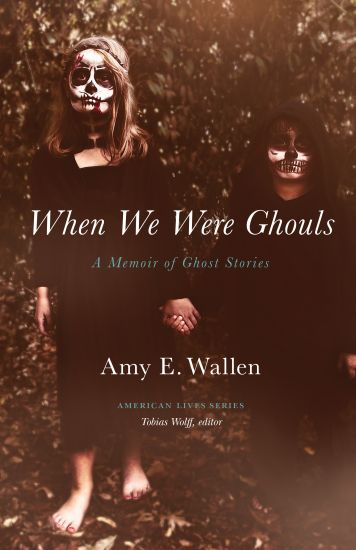
When We Were Ghouls

When We Were Ghouls

Amy E. Wallen

University of Nebraska Press
2018
pokkari
When Amy E. Wallen’s southern, blue-collar, peripatetic family was transferred from Ely, Nevada, to Lagos, Nigeria, she had just turned seven. From Nevada to Nigeria and on to Peru, Bolivia, and Oklahoma, the family wandered the world, living in a state of constant upheaval. When We Were Ghouls follows Wallen’s recollections of her family who, like ghosts, came and went and slipped through her fingers, rendering her memories unclear. Were they a family of grave robbers, as her memory of the pillaging of a pre-Incan grave site indicates? Are they, as the author’s mother posits, “hideous people?” Or is Wallen’s memory out of focus? In this quick-paced and riveting narrative, Wallen exorcizes these haunted memories to clarify the nature of her family and, by extension, her own character. Plumbing the slipperiness of memory and confronting what it means to be a “good” human, When We Were Ghouls links the fear of loss and mortality to childhood ideas of permanence. It is a story about family, surely, but it is also a representation of how a combination of innocence and denial can cause us to neglect our most precious earthly treasures: not just our children but the artifacts of humanity and humanity itself.
The Wisdom of Storytelling in an Information Age
Contemporary storytelling provides a welcome refuge for those seeking the antidote to the increasingly impersonal experiences of the technology age. Bare data and facts don't always have the ability to inspire or teach, but storytelling, if effective, will always touch its audience. Spaulding has compiled and provided written analysis for a series of talks covering subjects all relating to the importance of storytelling here and now in the 'Age of Information'. She campaigns for the 'Virtual Reality of the Mind', and discusses the Story as Social Glue, driving home the point that the word is mightier than the word processor.
The Art of Storytelling

The Art of Storytelling

Amy E. Spaulding

Scarecrow Press
2011
sidottu
Storytelling is an art, as well as a skill. It allows the listener to take an idea and shape it into something that is relatable on a personal level. In The Art of Storytelling: Telling Truths Through Telling Stories, Amy E. Spaulding enables the reader to learn how to develop this skill, while also discovering the tradition of storytelling. Spaulding covers a wide array of important storytelling elements, from advice on choosing, learning, and presenting the stories to discussions on the importance of storytelling through human history and its continued significance today. This book includes an annotated list of stories, as well as a bibliography of collections and a brief list of recommendations for online sources. Designed for anyone who wants to develop the skill of telling stories, The Art of Storytelling is a resource for drama students, teachers, librarians, and for those learning on their own without a formal class setting.
Alter-Nations

Alter-Nations

Amy E Martin

Ohio State University Press
2020
pokkari
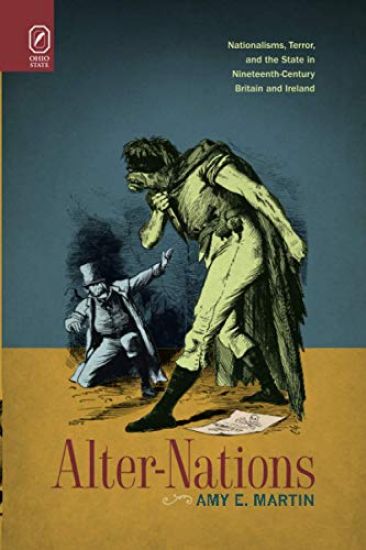
Alter-Nations: Nationalisms, Terror, and the State in Nineteenth-Century Britain and Ireland investigates how Victorian cultural production on both sides of the Irish Sea grappled with the complex relationship between British imperial nationalism and Irish anticolonial nationalism. In the process, this study reconceptualizes the history of modern nationhood in Britain and Ireland. Taking as its archive political theory, polemical prose, novels, political cartoons, memoir, and newspaper writings, Amy E. Martin's Alter-Nations examines the central place of Irish anticolonial nationalism in Victorian culture and provides a new genealogy of categories such as "nationalism" "terror," and "the state." In texts from Britain and Ireland, we can trace the emergence of new narratives of Irish immigration, racial difference, and Irish violence as central to capitalist national crisis in nineteenth-century Britain. In visual culture and newspaper writing of the 1860s, the modern idea of "terrorism" as irrational and racialized anticolonial violence first comes into being. This new ideology of terrorism finds its counterpart in Victorian theorizations of the modern hegemonic state form, which justify the state's monopoly of violence by imagining its apparatuses as specifically anti-terrorist. At the same time, Irish Fenian writings articulate anticolonial critique that anticipates the problematics of postcolonial studies and attempts to reimagine in generative and radical ways anticolonialism's relation to modernity and the state form. By so doing, Alter-Nations argues for the centrality of Irish studies to postcolonial and Victorian studies, and reconceptualizes the boundaries and concerns of those fields.
Remembering Enslavement

Remembering Enslavement

Amy E. Potter; Stephen P. Hanna; Derek H. Alderman; Perry L. Carter; Candace Forbes Bright; David L. Butler

UNIVERSITY OF GEORGIA PRESS
2022
sidottu
Remembering Enslavement explores plantation museums as sites for contesting and reforming public interpretations of slavery in the American South. Emerging out of a three-year National Science Foundation grant (2014–17), the book turns a critical eye toward the growing inclusion of the formerly enslaved within these museums, specifically examining advances but also continuing inequalities in how they narrate and memorialize the formerly enslaved.Using assemblage theory as a framework, Remembering Enslavement offers an innovative approach for studying heritage sites, retelling and remapping the ways that slavery and the enslaved are included in southern plantation museums.It examines multiple plantation sites across geographic areas, considering the experiences of a diversity of actors: tourists, museum managers/owners, and tour guides/interpreters. This approach allows for an understanding of regional variations among plantation museums, narratives, and performances, as well as more in-depth study of the plantation tour experience and public interpretations. The authors conclude the book with a set of questions designed to help professionals reassemble plantation museum narratives and landscapes to more justly position the formerly enslaved at their center.
Remembering Enslavement

Remembering Enslavement

Amy E. Potter; Stephen P. Hanna; Derek H. Alderman; Perry L. Carter; Candace Forbes Bright; David L. Butler

UNIVERSITY OF GEORGIA PRESS
2022
pokkari
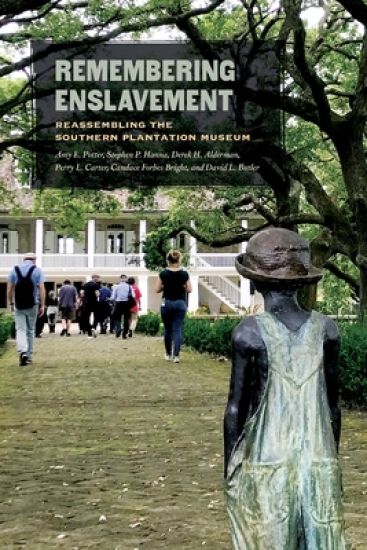
Remembering Enslavement explores plantation museums as sites for contesting and reforming public interpretations of slavery in the American South. Emerging out of a three-year National Science Foundation grant (2014–17), the book turns a critical eye toward the growing inclusion of the formerly enslaved within these museums, specifically examining advances but also continuing inequalities in how they narrate and memorialize the formerly enslaved.Using assemblage theory as a framework, Remembering Enslavement offers an innovative approach for studying heritage sites, retelling and remapping the ways that slavery and the enslaved are included in southern plantation museums.It examines multiple plantation sites across geographic areas, considering the experiences of a diversity of actors: tourists, museum managers/owners, and tour guides/interpreters. This approach allows for an understanding of regional variations among plantation museums, narratives, and performances, as well as more in-depth study of the plantation tour experience and public interpretations. The authors conclude the book with a set of questions designed to help professionals reassemble plantation museum narratives and landscapes to more justly position the formerly enslaved at their center.
Serial Mexico

Serial Mexico

Amy E. Wright

VANDERBILT UNIVERSITY PRESS
2023
nidottu
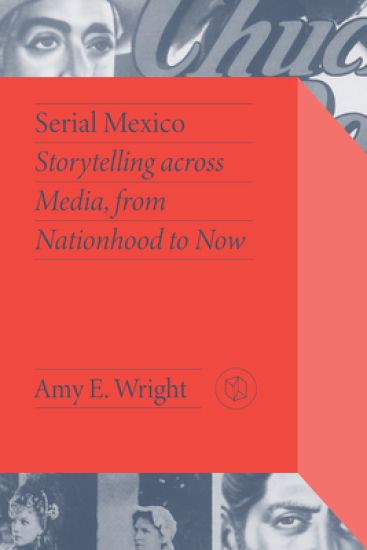
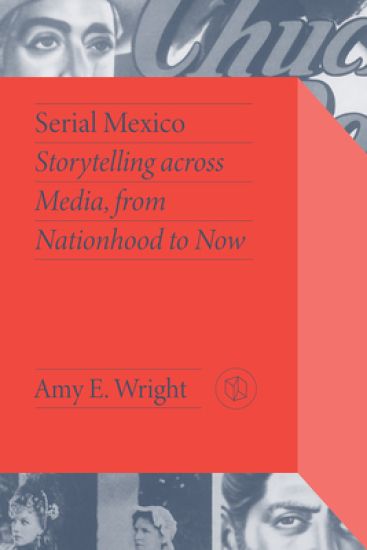
No book until now has tied in two centuries of Mexican serial narratives—striking tales of glory, of fame, of colorful epic characters, grounded in oral folklore—with their subsequent retelling in comics, radio, and television soap operas. Amy Wright's colorful multidisciplinary Serial Mexico delves deep into this rich national storytelling tradition for the first time: examining nostalgic tales told and reimagined from popular novelas to radionovelas then telenovelas and onwards, examining the enduring foundational figures woven into the very fabric of society, from the country's beginnings into the twenty-first century. This panoramic view offers a glimpse into how the Mexican people have experienced their stories from the country's early days until now, showcasing a penchant for protagonists that mock authority, that make light of hierarchy, that embrace the hybridity and mestizaje of Mexico itself. These tales vividly reflect and respond to a variety of crucial cultural concerns such as family, patriarchy, gender roles, racial mixing, urbanization, modernization and political idealism. Serial Mexico shows clearly how serialized storytelling's mix of melodrama and sensationalism was not devoid of revealing political and cultural messaging. In a detailed yet accessible style, Wright highlights how these stories and concerns have continued to morph, along with changing social media, into current times. Will these tropes and traditions carry on within new and reimagined serial storytelling forms? Only time will tell. Stay tuned for the next surprising episode.
Serial Mexico

Serial Mexico

Amy E. Wright

VANDERBILT UNIVERSITY PRESS
2023
sidottu
No book until now has tied in two centuries of Mexican serial narratives—striking tales of glory, of fame, of colorful epic characters, grounded in oral folklore—with their subsequent retelling in comics, radio, and television soap operas. Amy Wright's colorful multidisciplinary Serial Mexico delves deep into this rich national storytelling tradition for the first time: examining nostalgic tales told and reimagined from popular novelas to radionovelas then telenovelas and onwards, examining the enduring foundational figures woven into the very fabric of society, from the country's beginnings into the twenty-first century. This panoramic view offers a glimpse into how the Mexican people have experienced their stories from the country's early days until now, showcasing a penchant for protagonists that mock authority, that make light of hierarchy, that embrace the hybridity and mestizaje of Mexico itself. These tales vividly reflect and respond to a variety of crucial cultural concerns such as family, patriarchy, gender roles, racial mixing, urbanization, modernization and political idealism. Serial Mexico shows clearly how serialized storytelling's mix of melodrama and sensationalism was not devoid of revealing political and cultural messaging. In a detailed yet accessible style, Wright highlights how these stories and concerns have continued to morph, along with changing social media, into current times. Will these tropes and traditions carry on within new and reimagined serial storytelling forms? Only time will tell. Stay tuned for the next surprising episode.