Kirjojen hintavertailu. Mukana 11 244 527 kirjaa ja 12 kauppaa.

Kirjahaku

Etsi kirjoja tekijän nimen, kirjan nimen tai ISBN:n perusteella.

1000 tulosta hakusanalla Amy Farrell

Wonder Classroom Questions

Wonder Classroom Questions

Amy Farrell

Scene by Scene
2017
nidottu
Scene by Scene Classroom Questions are essential resources for teachers, designed to save time and lead to rewarding classroom experiences. The guides are broken down by scene or chapter to complement the text they accompany. These guides provide a clear list of questions for every stage of teaching the text. Classroom Questions guides contain both closed and open questions, exploring student response, opinion and analysis. - Closed comprehension questions check students' understanding and ensure students are on task. - Open higher order questions promote thinking and reflection.Wonder Classroom Questions contains summaries of each chapter of R.J. Palacio's classic novel. There are also 834 questions, divided by chapter, to keep students engaged and actively thinking about the novel. Scene by Scene Classroom Questions teaching guides keep students focused on the text and encourage lively classroom discussions.
The Butterfly Lion Classroom Questions

The Butterfly Lion Classroom Questions

Amy Farrell

Scene by Scene
2018
nidottu
Scene by Scene Classroom Questions are essential resources for teachers, designed to save time and lead to rewarding classroom experiences. The guides are broken down by scene or chapter to complement the text they accompany. These guides provide a clear list of questions for every stage of teaching the text. Classroom Questions guides contain both closed and open questions, exploring student response, opinion and analysis. - Closed comprehension questions check students' understanding and ensure students are on task. - Open higher order questions promote thinking and reflection.The Butterfly Lion Classroom Questions contains summaries of each chapter of Michael Morpurgo's classic novel. There are also 319 questions, divided by chapter, to keep students engaged and actively thinking about the novel. Scene by Scene Classroom Questions teaching guides keep students focused on the text and encourage lively classroom discussions
Juno Classroom Questions for Comparative Study
A 124 page companion guide to Juno for Comparative Study. For use in the classroom or for focussed independent study.Section 1 The film is divided into 5 parts. Outline summary for each part. Notes and Questions on each mode for each part. Modes include: Cultural Context/Social Setting, Literary Genre, General Vision and Viewpoint, Relationships and Hero/Heroine/Villain. Section 2 Notes looking at each mode as a whole across the entire text. Accompanying questions for each mode. Section 3 Comparing your texts: Questions on each mode to compare Juno and your other chosen Comparative Study texts. This book is a companion guide for the Comparative Study of 'Juno', directed by Jason Reitman. Ideally it accompanies a second, detailed viewing and study of the film. For the purposes of classroom study, I have divided the film into five parts. Each part contains an outline summary, a brief note on Cultural Context/Social Setting, Literary Genre, General Vision and Viewpoint, Relationships and Hero/Heroine/Villain, and a set of questions on Cultural Context/Social Setting, Literary Genre, General Vision and Viewpoint, Relationships and Hero/Heroine/Villain. The brief note is intended as a starting point for students, to provide something concrete for each mode that can be developed and built on by exploring the relevant mode-based questions for each part. Towards the back of the book, there are short notes looking at each mode as a whole, across the entire film, and accompanying questions (please note, there may be some similarity with earlier questions to draw attention to key ideas). Lastly, there is a section of questions on each mode, designed to prompt comparisons between 'Juno' and other Comparative Study texts.
Brooklyn Classroom Questions

Brooklyn Classroom Questions

Amy Farrell

Scene by Scene
2018
nidottu
A 162 page companion guide to Brooklyn for Comparative Study. For use in the classroom or for focussed independent study.Section 1 The film is divided into 5 parts. Outline summary for each part. Notes and Questions on each mode for each part. Modes include: Cultural Context/Social Setting, Literary Genre, General Vision and Viewpoint, Relationships and Hero/Heroine/Villain. Section 2 Notes looking at each mode as a whole across the entire text. Accompanying questions for each mode. Section 3 Comparing your texts: Questions on each mode to compare Brooklyn and your other chosen Comparative Study texts. This book is a companion guide for the Comparative Study of 'Brooklyn', directed by John Crowley. Ideally it accompanies a second, detailed viewing and study of the film. For the purposes of classroom study, I have divided the film into five parts. Each part contains an outline summary, a brief note on Cultural Context/Social Setting, Literary Genre, General Vision and Viewpoint, Relationships and Hero/Heroine/Villain, and a set of questions on Cultural Context/Social Setting, Literary Genre, General Vision and Viewpoint, Relationships and Hero/Heroine/Villain. The brief note is intended as a starting point for students, to provide something concrete for each mode that can be developed and built on by exploring the relevant mode-based questions for each part. Towards the back of the book, there are short notes looking at each mode as a whole, across the entire film, and accompanying questions (please note, there may be some similarity with earlier questions to draw attention to key ideas). Lastly, there is a section of questions on each mode, designed to prompt comparisons between 'Brooklyn' and other Comparative Study texts.
The Spinning Heart Comparative Study Guide
A 182 page companion guide to The Spinning Heart for Comparative Study. For use in the classroom or for focussed independent study.Section 1 Outline summary for each chapter. Notes and Questions on each mode for each chapter. Modes include: Cultural Context/Social Setting, Literary Genre, General Vision and Viewpoint, Relationships and Hero/Heroine/Villain. Section 2 Notes looking at each mode as a whole across the entire text. Accompanying questions for each mode. Section 3 Comparing your texts: Questions on each mode to compare Brooklyn and your other chosen Comparative Study texts. This book is a companion guide for the Comparative Study of 'The Spinning Heart, by Donal Ryan. Ideally it accompanies a second, detailed viewing and study of the film. Each chapter contains an outline summary, a brief note on Cultural Context/Social Setting, Literary Genre, General Vision and Viewpoint, Relationships and Hero/Heroine/Villain, and a set of questions on Cultural Context/Social Setting, Literary Genre, General Vision and Viewpoint, Relationships and Hero/Heroine/Villain. The brief note is intended as a starting point for students, to provide something concrete for each mode that can be developed and built on by exploring the relevant mode-based questions for each part. Towards the back of the book, there are short notes looking at each mode as a whole, across the entire novel, and accompanying questions (please note, there may be some similarity with earlier questions to draw attention to key ideas). Lastly, there is a section of questions on each mode, designed to prompt comparisons between 'The Spinning Heart' and other Comparative Study texts.
Eclipsed Comparative Study Guide

Eclipsed Comparative Study Guide

Amy Farrell

Scene by Scene
2019
nidottu
This 173 page study guide is a companion to 'Eclipsed' for the Leaving Cert English Comparative Study, for use in the classroom or for focussed independent study. This guide is intended for both teachers and students.It contains notes and questions on each Comparative Study mode for each chapter. It also has additional notes and questions on each comparative mode considering the text as a whole. Lastly, it has a comparing texts section, looking at comparing Comparative Study texts under each of the comparative study modes.Section 1 Notes and Questions on each mode for each scene of 'Eclipsed'. Modes include: Cultural Context/Social Setting, Literary Genre, General Vision and Viewpoint, Relationships and Hero/Heroine/Villain. Section 2 Notes looking at each mode as a whole across the entire text. Accompanying questions for each mode. Section 3 Comparing your texts: Questions on each mode to compare 'Eclipsed' and your other chosen Comparative Study texts. This book is a companion guide for teachers teaching both Higher and Ordinary Level students the 'Eclipsed' by Patricia Burke Brogan, a prescribed comparative study text for the Leaving Cert English examination. Each chapter contains notes on Cultural Context/Social Setting, Literary Genre, General Vision and Viewpoint, Relationships and Hero/Heroine/Villain, and a set of questions on Cultural Context/Social Setting, Literary Genre, General Vision and Viewpoint, Relationships and Hero/Heroine/Villain. The notes are intended as a starting point for students, to provide something concrete for each mode that can be developed and built on by exploring the relevant mode-based questions for each chapter. Towards the back of the book, there are short notes looking at each mode as a whole, across the entire play, and accompanying questions (please note, there may be some similarity with earlier questions to draw attention to key ideas). Lastly, there is a section of questions on each mode, designed to prompt comparisons between 'Eclipsed' and other Comparative Study texts, preparing students for the Leaving Certificate exam.
The Playboy of the Western World Study Guide 2020
Write better answers for the Comparative Study with the help of this companion guide to The Playboy of the Western World by J.M. Synge. Crack the Comparative with these clear, detailed notes and key moment analysis to help you achieve exam success.This book is a study guide for Leaving Certificate English students sitting their exam in 2020. It provides notes for the Comparative Study of The Playboy of the Western World by J.M. Synge.There are notes and analysis of key moments for Cultural Context/Social Setting, Literary Genre, Theme/Issue (Relationships) and Hero, Heroine, Villain. Understand how the Comparative Study Modes apply to 'The Playboy of the Western World' Notes on Cultural Context/Social Setting, Literary Genre, Theme/Issue - Relationships, Hero, Heroine, Villain Notes on Key Moments for each Mode
Brooklyn Study Guide

Brooklyn Study Guide

Amy Farrell

Scene by Scene
2020
pokkari
Write better answers for the Comparative Study with the help of this companion guide to The Spinning Heart by Donal Ryan. Crack the Comparative with these clear, detailed notes and key moment analysis to help you achieve exam success.
The Spinning Heart Study Guide 2021

The Spinning Heart Study Guide 2021

Amy Farrell

Scene by Scene
2020
pokkari
Write better answers for the Comparative Study with the help of this companion guide to The Spinning Heart by Donal Ryan. Crack the Comparative with these clear, detailed notes and key moment analysis to help you achieve exam success.Understand how the Comparative Study Modes apply to The Spinning HeartCultural Context/Social SettingGeneral Vision and ViewpointTheme/Issue - RelationshipsKey Moments for each Mode
Not Guilty

Not Guilty

Daniel Givelber; Amy Farrell

New York University Press
2012
sidottu
As scores of death row inmates are exonerated by DNA evidence and innocence commissions are set up across the country, conviction of the innocent has become a well-recognized problem. But our justice system makes both kinds of errors—we acquit the guilty and convict the innocent—and exploring the reasons why people are acquitted can help us to evaluate the efficiency and fairness of our criminal justice system. Not Guilty provides a sustained examination and analysis of the factors that lead juries to find defendants "not guilty," as well as the connection between those factors and the possibility of factual innocence, examining why some criminal trials result in not guilty verdicts and what those verdicts suggest about the accuracy of our criminal process.
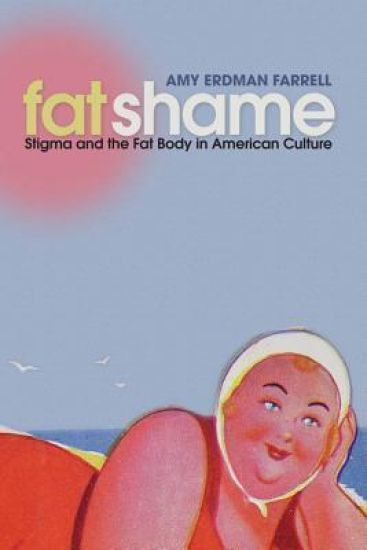
Fat Shame

Fat Shame

Amy Erdman Farrell

New York University Press
2011
sidottu
One of Choice's Significant University Press Titles for Undergraduates, 2010-2011 A necessary cultural and historical discussion on the stigma of fatness To be fat hasn't always occasioned the level of hysteria that this condition receives today and indeed was once considered an admirable trait. Fat Shame: Stigma and the Fat Body in American Culture explores this arc, from veneration to shame, examining the historic roots of our contemporary anxiety about fatness. Tracing the cultural denigration of fatness to the mid 19th century, Amy Farrell argues that the stigma associated with a fat body preceded any health concerns about a large body size. Firmly in place by the time the diet industry began to flourish in the 1920s, the development of fat stigma was related not only to cultural anxieties that emerged during the modern period related to consumer excess, but, even more profoundly, to prevailing ideas about race, civilization and evolution. For 19th and early 20th century thinkers, fatness was a key marker of inferiority, of an uncivilized, barbaric, and primitive body. This idea—that fatness is a sign of a primitive person—endures today, fueling both our $60 billion "war on fat" and our cultural distress over the "obesity epidemic." Farrell draws on a wide array of sources, including political cartoons, popular literature, postcards, advertisements, and physicians' manuals, to explore the link between our historic denigration of fatness and our contemporary concern over obesity. Her work sheds particular light on feminisms' fraught relationship to fatness. From the white suffragists of the early 20th century to contemporary public figures like Oprah Winfrey, Monica Lewinsky, and even the Obama family, Farrell explores the ways that those who seek to shed stigmatized identities—whether of gender, race, ethnicity or class—often take part in weight reduction schemes and fat mockery in order to validate themselves as "civilized." In sharp contrast to these narratives of fat shame are the ideas of contemporary fat activists, whose articulation of a new vision of the body Farrell explores in depth. This book is significant for anyone concerned about the contemporary "war on fat" and the ways that notions of the "civilized body" continue to legitimate discrimination and cultural oppression.
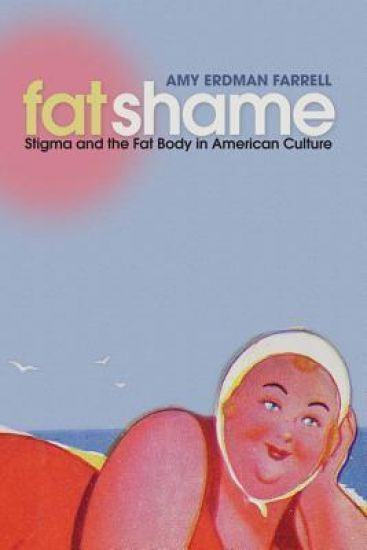
Fat Shame

Fat Shame

Amy Erdman Farrell

New York University Press
2011
pokkari
One of Choice's Significant University Press Titles for Undergraduates, 2010-2011 A necessary cultural and historical discussion on the stigma of fatness To be fat hasn't always occasioned the level of hysteria that this condition receives today and indeed was once considered an admirable trait. Fat Shame: Stigma and the Fat Body in American Culture explores this arc, from veneration to shame, examining the historic roots of our contemporary anxiety about fatness. Tracing the cultural denigration of fatness to the mid 19th century, Amy Farrell argues that the stigma associated with a fat body preceded any health concerns about a large body size. Firmly in place by the time the diet industry began to flourish in the 1920s, the development of fat stigma was related not only to cultural anxieties that emerged during the modern period related to consumer excess, but, even more profoundly, to prevailing ideas about race, civilization and evolution. For 19th and early 20th century thinkers, fatness was a key marker of inferiority, of an uncivilized, barbaric, and primitive body. This idea—that fatness is a sign of a primitive person—endures today, fueling both our $60 billion "war on fat" and our cultural distress over the "obesity epidemic." Farrell draws on a wide array of sources, including political cartoons, popular literature, postcards, advertisements, and physicians' manuals, to explore the link between our historic denigration of fatness and our contemporary concern over obesity. Her work sheds particular light on feminisms' fraught relationship to fatness. From the white suffragists of the early 20th century to contemporary public figures like Oprah Winfrey, Monica Lewinsky, and even the Obama family, Farrell explores the ways that those who seek to shed stigmatized identities—whether of gender, race, ethnicity or class—often take part in weight reduction schemes and fat mockery in order to validate themselves as "civilized." In sharp contrast to these narratives of fat shame are the ideas of contemporary fat activists, whose articulation of a new vision of the body Farrell explores in depth. This book is significant for anyone concerned about the contemporary "war on fat" and the ways that notions of the "civilized body" continue to legitimate discrimination and cultural oppression.
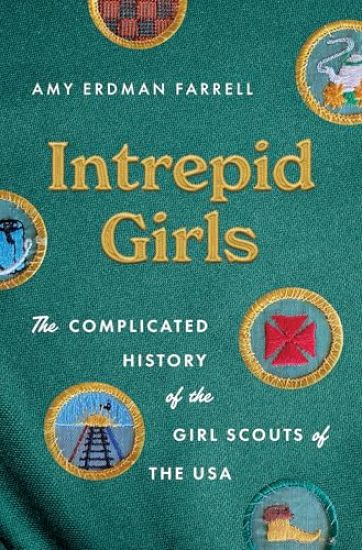
Intrepid Girls

Intrepid Girls

Amy Erdman Farrell

THE UNIVERSITY OF NORTH CAROLINA PRESS
2025
sidottu
When eight-year-old Amy Erdman Farrell moved with her family to Akron, Ohio, in 972, she found herself adrift in a sea of taunting boys and mean girls. Shy by nature, she dreaded her long, unhappy days at school. But a few years later, Farrell found an escape from bullying, the promise of sisterhood, a rising sense of confidence, adventure, and—best of all—lifelong friendship when she joined a Girl Scout troop. Decades later, award-winning author Farrell returns to those formative experiences to explore the complicated and surprising history of the Girl Scouts of the USA.Drawing from extensive archival research, visits to iconic Girl Scout sites around the world, and vivid personal reflections, Farrell uncovers the Girl Scouts intricate history, revealing how the organization has shaped the lives of more than 5 million girls and women since its founding in 9 2. With Farrell as our own intrepid guide, we travel to American Indian Boarding Schools, Japanese American incarceration centers, segregated African American communities, middle-class white neighborhoods, and outposts throughout the globe. Intrepid Girls unpacks how the Girl Scouts navigated tensions over feminism, race, class, and political differences, carving out extraordinary opportunities for girls and women—even as it participated in the very discrimination it promised to transcend.For anyone who has ever worn a uniform or wondered about the hidden history behind this iconic American institution, Intrepid Girls will surprise, inspire, and challenge what we think we know about the Girl Scouts.