Kirjojen hintavertailu. Mukana 12 390 323 kirjaa ja 12 kauppaa.

Kirjahaku

Etsi kirjoja tekijän nimen, kirjan nimen tai ISBN:n perusteella.

1000 tulosta hakusanalla Anaïs Nin

Henry and June

Henry and June

Anaïs Nin

Penguin Classics
2001
pokkari
The brilliant tale of Anais Nin's true love affair with Henry Miller, and her ambiguous, charged relationship with his wife, June. Drawn from the journals of a single momentous year in Paris, Henry and June provides a wildly lyrical account of a woman's sexual awakening and the disillusion of idealized marriage.
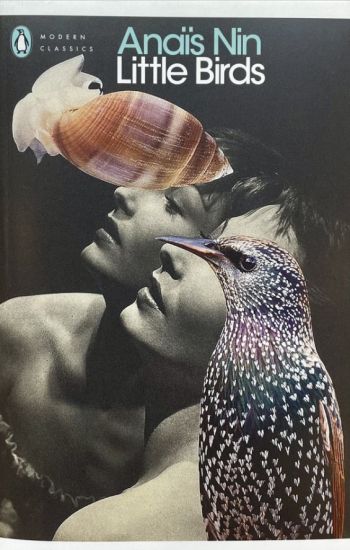
Little Birds

Little Birds

Anaïs Nin

Penguin Classics
2002
pokkari
Anaïs Nin's Little Birds is published in Penguin Modern Classics.Anaïs Nin's second volume of erotic short stories after Delta of Venus, Little Birds is broader in scope, encompassing the entire breadth of human sensuality. Each of the 13 stories captures a moment of pure desire, in all its complexity and paradoxical simplicity.Anaïs Nin (1903-77), born in Paris, was the daughter of a Franco-Danish singer and a Cuban pianist. Her first book - a defence of D. H. Lawrence - was published in the 1930s. Her prose poem, House of Incest (1936) was followed by the collection of three novellas, collected as Winter of Artifice (1939). In the 1940s she began to write erotica for an anonymous client, and these pieces are collected in Delta of Venus and Little Birds (both published posthumously). During her later years Anaïs Nin lectured frequently at universities throughout the USA, in 1974 and was elected to the United States National Institute of Arts and Letters.If you enjoyed Little Birds, you might like Nin's Delta of Venus, also available in Penguin Modern Classics.'One of the most extraordinary and unconventional writers of this century'The New York Times Book Review
A Spy In The House Of Love

A Spy In The House Of Love

Anaïs Nin

Penguin Classics
2001
pokkari
Beautiful, bored and bourgeoise, Sabina leads a double life inspired by her relentless desire for brief encounters with near-strangers. Fired into faithlessness by a desperate longing for sexual fulfilment, she weaves a sensual web of deceit across New York. But when the secrecy of her affairs becomes too much to bear, Sabina makes a late night phone-call to a stranger from a bar, and begins a confession that captivates the unknown man and soon inspires him to seek her out...
Delta of Venus

Delta of Venus

Anaïs Nin

Mariner Books Classics
2004
nidottu
From influential feminist artist and essayist Anais Nin, Delta of Venus is one of the most important works of modern female erotica and "a joyous display of the erotic imagination" (The New York Times Book Review).In this story collection, Anais Nin pens a lush, magical world where the characters of her imagination possess the most universal of desires and exceptional of talents. Among these provocative stories, a Hungarian adventurer seduces wealthy women then vanishes with their money; a veiled woman selects strangers from a chic restaurant for private trysts; and a Parisian hatmaker named Mathilde leaves her husband for the opium dens of Peru. This is an extraordinarily rich and exotic collection from a master of erotic writing."Inventive, sophisticated . . . highly elegant naughtiness."--Cosmopolitan
Little Birds

Little Birds

Anaïs Nin

Mariner Books Classics
2004
nidottu
Evocative and superbly erotic, Little Birds is a powerful journey into the mysterious world of sex and sensuality. From the beach towns of Normandy to the streets of New Orleans, these thirteen vignettes introduce us to a covetous French painter, a sleepless wanderer of the night, a guitar-playing gypsy, and a host of others who yearn for and dive into the turbulent depths of romantic experience.
1931-1934

1931-1934

Anaïs Nin

Mariner Books Classics
1969
nidottu
The Diary of Anais Nin, Vol. 1: 1931-1934 is the first in a nine volume series in the influential artist and thinker's own words, covering the time when Nin is about to publish her first book and ends when she leaves Paris for New York. "One of the most remarkable diaries in the history of letters."--Los Angeles Times"As unique a literary memoir as has been published...lyrical, and singularly potent."--Village VoiceEdited and with a Preface by Gunther Stuhlmann.
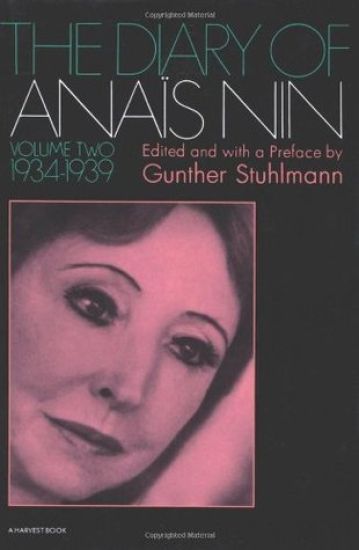
1966-1974

1966-1974

Anaïs Nin

Mariner Books Classics
1981
nidottu
The final volume ends as the author wished-not with her last two years of pain but at a joyous, reflective moment on a trip to Bali. "One of the most remarkable diaries in the history of letters" (Robert Kirsch, Los Angeles Times). Edited and with a Preface by Gunther Stuhlmann; Index; photographs.
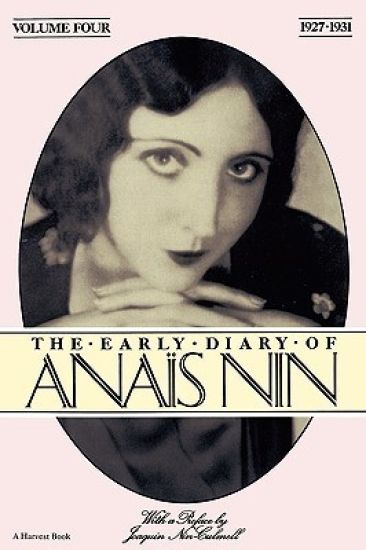
1927-1931

1927-1931

Anaïs Nin

Mariner Books Classics
1986
nidottu
A bridge between the early life of Nin and the first volume of her Diary. In pages more candid than in the preceding diaries, Nin tells how she exorcised the obsession that threatened her marriage and nearly drove her to suicide. Editor's Note by Rupert Pole; Preface by Joaquin Nin-Culmell; Index; photographs.
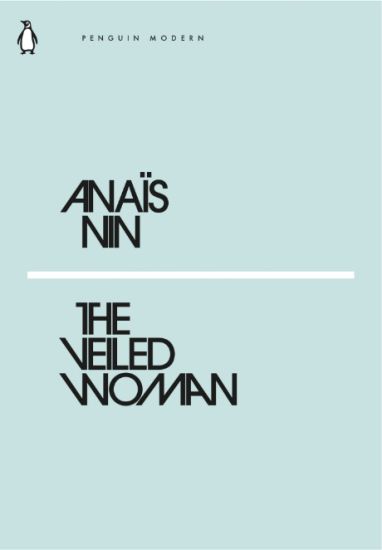
The Veiled Woman

The Veiled Woman

Anaïs Nin

Penguin Classics
2018
nidottu
'What did she expect of him? What was her quest? Did she have an unfulfilled desire?'Transgressive desires and sexual encounters are recounted in these four pieces from one of the greatest writers of erotic fiction.Penguin Modern: fifty new books celebrating the pioneering spirit of the iconic Penguin Modern Classics series, with each one offering a concentrated hit of its contemporary, international flavour. Here are authors ranging from Kathy Acker to James Baldwin, Truman Capote to Stanislaw Lem and George Orwell to Shirley Jackson; essays radical and inspiring; poems moving and disturbing; stories surreal and fabulous; taking us from the deep South to modern Japan, New York's underground scene to the farthest reaches of outer space.
A Spy In The House Of Love

A Spy In The House Of Love

Anaïs Nin

PENGUIN BOOKS LTD
2023
sidottu
Introducing Little Clothbound Classics: irresistible, mini editions of short stories, novellas and essays from the world's greatest writers, designed by the award-winning Coralie Bickford-Smith.Celebrating the range and diversity of Penguin Classics, they take us from snowy Japan to springtime Vienna, from haunted New England to a sun-drenched Mediterranean island, and from a game of chess on the ocean to a love story on the moon. Beautifully designed and printed, these collectible editions are bound in colourful, tactile cloth and stamped with foil.Beautiful, bored and bourgeoise, Sabina leads a double life inspired by her relentless desire for fleeting romance. But when the secrecy of her affairs becomes too much to bear, Sabina makes a late night phone-call to a stranger from a bar, and begins a confession that captivates the unknown man and soon inspires him to seek her out...
Children of the Albatross

Children of the Albatross

Anaïs Nin

Swallow Press
1959
pokkari
Children of the Albatross is divided into two sections: “The Sealed Room” focuses on the dancer Djuna and a set of characters, chiefly male, who surround her; “The Café” brings together a cast of characters already familiar to Nin’s readers, but it is their meeting place that is the focal point of the story. As always, in Children of the Albatross, Nin’s writing is inseparable from her life. From Djuna’s story, told in “The Sealed Room” through hints and allusions, hazy in their details and chronology, the most important event to emerge is her father’s desertion (like Nin’s) when she was sixteen. By rejecting realistic writing for the experience and intuitions she drew from her diary, Nin was able to forge a novelistic style emphasizing free association, spontaneity, and improvisation, a technique that finds its parallel in the jazz music performed at the café where Nin’s characters meet.
D. H. Lawrence

D. H. Lawrence

Anaïs Nin

Swallow Press
1964
pokkari
In 1932, two years after D. H. Lawrence's death, a young woman wrote a book about him and presented it to a Paris publisher. She recorded the event in her diary: "It will not be published and out by tomorrow, which is what a writer would like when the book is hot out of the oven, when it is alive within oneself. He gave it to his assistant to revise." The woman was Anaïs Nin. Nin examined Lawrence's poetry, novels, essays, and travel writing. She analyzed and explained the more important philosophical concepts contained in his writings, particularly the themes of love, death, and religion, as well as his attention to primitivism and to women. But what Anaïs Nin brought to the explication of Lawrence's writing was an understanding of the fusion of imaginative, intuitive, and intellectual elements from which he drew his characters, themes, imagery and symbolism.
The Four-Chambered Heart

The Four-Chambered Heart

Anaïs Nin

Ohio University Press
1959
pokkari
The Four-Chambered Heart, Anaïs Nin's 1950 novel, recounts the real-life affair she conducted with café guitarist Gonzalo Moré in 1936. Nin and Moré rented a house-boat on the Seine, and under the pervading influence of the boat's watchman and Moré's wife Helba, developed a relationship. Moré; named the boat Nanankepichu, meaning "not really a home." In the novel, which Nin drew from her experiences on the boat, the characters are clearly based. Djuna is an embodiment of Nin herself. A young dancer in search of fulfillment, she encapsulates all that the author was striving for at that time. The character of Djuna features in other novels, perhaps weaving a directly autobiographical thread into Nin's fiction. The gypsy musician, Rango, is therefore Moré, and his invalid wife is Zora. The old watchman is present as a force which, along with Zora, works against the lovers in their quest for happiness. Nin's main concern is the "outside," and how it affects the "interior." Water is a cleverly used theme. “I have no great fear of depths,” says Djuna, “and a great fear of shallow living.” Rango and Djuna's relationship is, in effect, their effort to remain afloat. Often, Nin employs a stream of consciousness, especially in her flowing analyses of love, life and music, which continues the water image. Anaïs Nin's writing is typically exquisite in its detail and texture. She describes Paris: its "black lacquered cobblestones" and "silver filigree trees." The "humid scarfs of fog" on the river, and "the sharp incense of roasted chestnuts" reveal their source through their reality: Nin's personal experience.
Cities of the Interior

Cities of the Interior

Anaïs Nin

Swallow Press
1996
pokkari
Ladders to Fire, Children of the Albatross, The Four-Chambered Heart, A Spy in the House of Love, Seduction of the Minotaur. Haunting and hypnotic, these five novels by Anaïs Nin began in 1946 to appear in quiet succession. Though published separately over the next fifteen years, the five were conceived as a continuous experience—a continuous novel like Proust's, real and flowing as a river. The full impact of Anaïs Nin's genius is only to be found through reading the novels in context and in succession. They form a rich, luminous tapestry whose overall theme Nin has called "woman at war with herself." Characters, symbols appear and reappear: now one, now another unfolding, gradually revealing, changing, struggling, growing, and Nin had forged an evocative language all her own for the telling. "The diary taught me that there were no neat ends to novels, no neat denouement, no neat synthesis," she explains. "So I began an endless novel, a novel in which the climaxes consisted of discoveries in awareness, each step in awareness becoming a stage in the growth like the layers in trees." Cities of the Interior fulfills a long–time desire on the part of readers, publisher, and Anaïs Nin herself to reunite the five novels in a single volume.
Waste of Timelessness and Other Early Stories
These stories precede all of Nin’s published work to date. In them are many sources of the more mature work that collectors and growing writers can appreciate. Written when Anaïs Nin was in her twenties and living in Louveciennes, France, these stories contain many elements that will delight her readers: details remembered from childhood, of life in Paris, the cafés, theatres; characters including dancers, artists, writers, women who devote themselves to their work and visions as well as romance, strangers met in the night; themes such as the scruples of lovers, the search for brilliant, imaginative living; the writer’s experimentation with exotic words like “sybaritic” and “violaceous”. In the craft of these stories readers are treated to a deft sense of humor, ironic wit, much conversation as well as ecstatic prose, and surprise endings. Throughout all, the Nin personality shines, a wonderful mixture of feeling and rationality, of vulnerability and strength.
Mirages

Mirages

Anaïs Nin

Swallow Press
2013
sidottu
Mirages opens at the dawn of World War II, when Anaïs Nin fled Paris, where she lived for fifteen years with her husband, banker Hugh Guiler, and ends in 1947 when she meets the man who would be “the One,” the lover who would satisfy her insatiable hunger for connection. In the middle looms a period Nin describes as “hell,” during which she experiences a kind of erotic madness, a delirium that fuels her search for love. As a child suffering abandonment by her father, Anaïs wrote, “Close your eyes to the ugly things,” and, against a horrifying backdrop of war and death, Nin combats the world’s darkness with her own search for light. Mirages collects, for the first time, the story that was cut from all of Nin’s other published diaries, particularly volumes 3 and 4 of The Diary of Anaïs Nin, which cover the same time period. It is the long-awaited successor to the previous unexpurgated diaries Henry and June, Incest, Fire, and Nearer the Moon. Mirages answers the questions Nin readers have been asking for decades: What led to the demise of Nin’s love affair with Henry Miller? Just how troubled was her marriage to Hugh Guiler? What is the story behind Nin’s “children,” the effeminate young men she seemed to collect at will? Mirages is a deeply personal story of heartbreak, despair, desperation, carnage, and deep mourning, but it is also one of courage, persistence, evolution, and redemption that reaches beyond the personal to the universal.
Under a Glass Bell

Under a Glass Bell

Anaïs Nin

Swallow Press
2013
pokkari
Although Under a Glass Bell is now considered one of Anaïs Nin's finest collections of stories, it was initially deemed unpublishable. Refusing to give up on her vision, in 1944 Nin founded her own press and brought out the first edition, illustrated with striking black-and-white engravings by her husband, Hugh Guiler. Shortly thereafter, it caught the attention of literary critic Edmund Wilson, who reviewed the collection in the New Yorker. The first printing sold out in three weeks. This new Swallow Press edition includes an introduction by noted modernist scholar Elizabeth Podnieks, as well as editor Gunther Stuhlmann's erudite but controversial foreword to the 1995 edition. Together, they place the collection in its historical context and sort out the individuals and events recorded in the diary that served as its inspiration. The new Swallow Press edition also restores the thirteen stories to the order Nin specified for the first commercial edition in 1948.
A Spy in the House of Love

A Spy in the House of Love

Anaïs Nin

Swallow Press
2013
pokkari
Although Anaïs Nin found in her diaries a profound mode of self-creation and confession, she could not reveal this intimate record of her own experiences during her lifetime. Instead, she turned to fiction, where her stories and novels became artistic “distillations” of her secret diaries. A Spy in the House of Love, whose heroine Sabina is deeply divided between her drive for artistic and sexual expression and social restrictions and self-created inhibitions, echoes Nin’s personal struggle with sex, love, and emotional fragmentation. Written when Nin’s own life was taut with conflicting loyalties, her protagonist Sabina repeatedly asks herself, can one idulge one’s sensual restlessness, the fantasies, the relentless need for adventure without devastating consequences?
Seduction of the Minotaur

Seduction of the Minotaur

Anaïs Nin

Swallow Press
2014
pokkari
"Some voyages have their inception in the blueprint of a dream, some in the urgency of contradicting a dream. Lillian's recurrent dream of a ship that could not reach the water, that sailed laboriously, pushed by her with great effort, through city streets, had determined her course toward the sea, as if she would give this ship, once and for all, its proper sea bed…. With her first swallow of air she inhaled a drug of forgetfulness well known to adventurers." Seduction of the Minotaur is the fifth and final volume of Anaïs Nin's continuous novel known as Cities of the Interior. First published by Swallow Press in 1961, the story follows the travels of the protagonist Lillian through the tropics to a Mexican city loosely based on Acapulco, which Nin herself visited in 1947 and described in the fifth volume of her Diary. As Lillian seeks the warmth and sensuality of this lush and intriguing city, she travels inward as well, learning that to free herself she must free the "monster" that has been confined in a labyrinth of her subconscious. This new Swallow Press edition includes an introduction by Anita Jarczok, author of Inventing Anaïs Nin: Celebrity Authorship and the Creation of an Icon. Swallow Press publishes all five volumes that make up Cities of the Interior: Ladders to Fire, Children of the Albatross, The Four-Chambered Heart, A Spy in the House of Love, and Seduction of the Minotaur.