Kirjojen hintavertailu. Mukana 11 627 373 kirjaa ja 12 kauppaa.

Kirjahaku

Etsi kirjoja tekijän nimen, kirjan nimen tai ISBN:n perusteella.

1000 tulosta hakusanalla André Kalifa

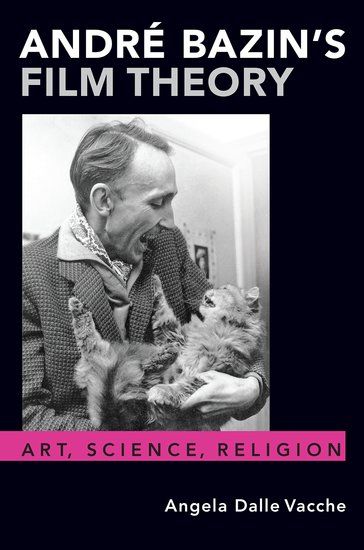
André Bazin's Film Theory

André Bazin's Film Theory

Angela Dalle Vacche

Oxford University Press Inc
2020
sidottu
Through metaphors and allusions to art, science, and religion, André Bazin's writings on the cinema explore a simple yet profound question: what is a human? For the famous French film critic, a human is simultaneously a rational animal and an irrational being. Bazin's idea of the cinema is a mind-machine where the ethical implications have priority over aesthetic issues. And in its ability to function as an art form for the masses, cinema is the only medium that can address an audience at the individual and community levels simultaneously-- the audience sees the same film, but each individual relates to the narrative in a different way. In principle, cinema can unsettle our routines in productive ways and expand our sense of belonging to a much larger picture. By arguing that this dissident Catholic's worldview is anti-anthropocentric, Angela Dalle Vacche concludes that André Bazin's idea of the cinema recapitulates the histories of biological evolution and modern technology inside our consciousness. Through the projection of recorded traces of the world onto a brain-like screen, the cinema can open viewers up to self-interrogation and empathy towards Otherness. Bazin was neither a spiritualist nor an animist or a pantheist, yet his film theory leads also to ideas of a more cosmological persuasion: through editing and camera movement, cinema explores our belonging to a vast universe that extends from the microbes of the microscope to the stars of the telescope. Such ideas of connectedness, coupled with Bazin's well-known emphasis of realism, form the foundation for his film theory's embrace of Italian neorealism. Choosing to avoid a quantitative naturalism based on accumulation of details, Bazin's theory instead promotes the kind of cinema that celebrates perceptual displacement, the objectification of human behavior, and one's own critical self-awareness.
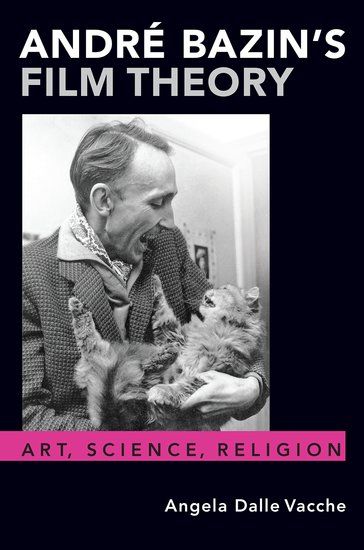
André Bazin's Film Theory

André Bazin's Film Theory

Angela Dalle Vacche

Oxford University Press Inc
2020
nidottu
Through metaphors and allusions to art, science, and religion, André Bazin's writings on the cinema explore a simple yet profound question: what is a human? For the famous French film critic, a human is simultaneously a rational animal and an irrational being. Bazin's idea of the cinema is a mind-machine where the ethical implications have priority over aesthetic issues. And in its ability to function as an art form for the masses, cinema is the only medium that can address an audience at the individual and community levels simultaneously-- the audience sees the same film, but each individual relates to the narrative in a different way. In principle, cinema can unsettle our routines in productive ways and expand our sense of belonging to a much larger picture. By arguing that this dissident Catholic's worldview is anti-anthropocentric, Angela Dalle Vacche concludes that André Bazin's idea of the cinema recapitulates the histories of biological evolution and modern technology inside our consciousness. Through the projection of recorded traces of the world onto a brain-like screen, the cinema can open viewers up to self-interrogation and empathy towards Otherness. Bazin was neither a spiritualist nor an animist or a pantheist, yet his film theory leads also to ideas of a more cosmological persuasion: through editing and camera movement, cinema explores our belonging to a vast universe that extends from the microbes of the microscope to the stars of the telescope. Such ideas of connectedness, coupled with Bazin's well-known emphasis of realism, form the foundation for his film theory's embrace of Italian neorealism. Choosing to avoid a quantitative naturalism based on accumulation of details, Bazin's theory instead promotes the kind of cinema that celebrates perceptual displacement, the objectification of human behavior, and one's own critical self-awareness.
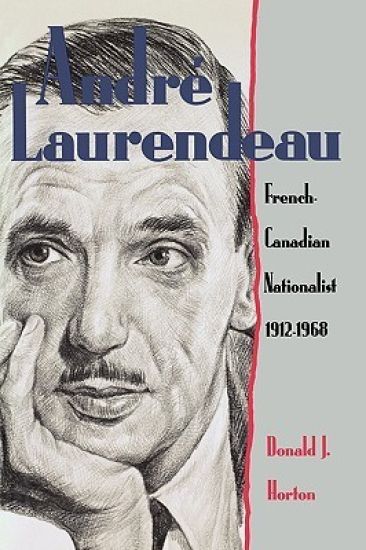
Andre Laurendeau

Andre Laurendeau

Donald J Horton

Oxford University Press, USA
1993
sidottu
Andre Laurendeau was that rarest of Canadian personalities--"a man for all seasons." Known in Quebec as a leading nationalist activist and theorist through the critical decades of societal change from the 1930s to the 1960s, his own generation especially recalled his public role as an anti-conscription dissident and provincial politician during World War II. Younger French Canadians related to him as a gifted political journalist; a media figure in both radio and television; a novelist and tele-theatre dramatist; and through it all, "an engaged intellectual." English Canadians remember him as editor of Montreal's French language newspaper Le Devoir and as co-chairman of the 1960's Royal Commission on Bilingualism and Biculturalism. He was a French Canadian, in other words, whose life story mirrors, in both actions and insights, the agonizing struggle of his people to become modern while remaining distinct.
André Du Ryer and Oriental Studies in Seventeenth-Century France

André Du Ryer and Oriental Studies in Seventeenth-Century France

Alastair Hamilton; Francis Richard

Oxford University Press
2004
sidottu
André Du Ryer was French vice-consul in Egypt from 1623 to 1626, and both as adviser and interpreter to the French ambassador in Istanbul and ambassador extraordinary of the sultan to France in the early 1630s, he assembled a fine collection of Turkish, Persian, and Arabic manuscripts most of which are now in the Bibliothèque Nationale de France. After reconstructing his diplomatic career and his life after his return to France in 1633, the authors assess Du Ryer's contribution to Turkish and Persian studies, his translation of the Quran both in France and in the countries where it was translated (England, Holland, and Germany), and his manuscript collection. Du Ryer is presented in the historical context of French diplomatic relations with the Ottoman Empire and in the context both of contemporary European orientalism and of the development of French literature in the reign of Louis XIII and the minority of Louis XIV. He emerges as an important and influential figure whose significance has never previously been appreciated.
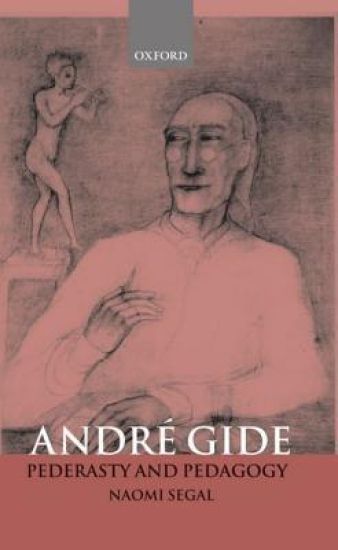
André Gide

André Gide

Naomi Segal

Clarendon Press
1998
sidottu
This book makes a powerful and somtimes contentious contribution to current debates in gender, feminist, and queer theory. Tracing the hydraulic image in a range of theoretical texts on pedagogy, pederasty, reproductive fantasy, and the anthropology of body fluids, Naomi Segal goes on to examine this imagery in the writings of André Gide. Gide's sexuality was explicitly central to everything he wrote, but it was complex and diverse, motivated as much by undesire as by curiosity and the chase. The ventriloquism of the female voice, versions of triangularity, the potentially endless male chain, the desire of sun on skin, a sideways genealogy, and the gratuity of crime, education, virtue, or playthese mobile patterns are found throughout his fiction and non-fiction. In Gide's polemic, it is always better to be loved by an uncle than an aunt; but all love is motivated by the fluidity of the swerve.
André Bazin

André Bazin

Dudley Andrew

Oxford University Press Inc
2013
nidottu
André Bazin, often dubbed the father of the French New Wave, has had an immense impact on film art. He is credited with almost single-handedly establishing the study of film as an accepted intellectual pursuit. The journal that he founded in 1951, Cahiers du Cinéma, remains the most influential archive of cinema criticism. He remains one of the most read, most studied, and most engaging figures ever to have written about film. The last few years have witnessed a massive resurgence of interest in Bazin among critics, scholars, and students of every persuasion. His writings, a mainstay of film theory courses, are now finding a place on the syllabi of core courses in film history, criticism, and appreciation. Andrew's intellectual biography is a landmark in film scholarship.
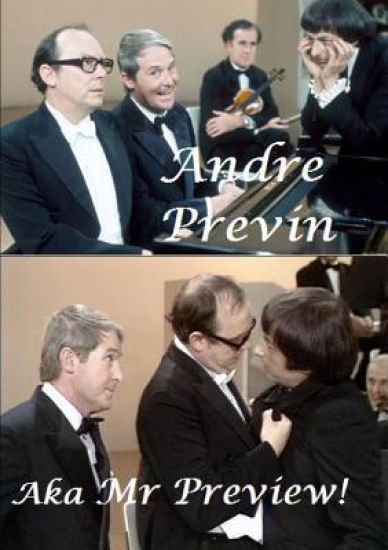
Andre Previn - Aka Mr Preview!
Andr? George Previn, KBE, born Andreas Ludwig Priwin on April 6th, 1929, Berlin, Germany, was a pianist, conductor, and composer. Previn won 4 Academy Awards for his film work, along with 10 Grammy Awards for his recordings, followed by another for his Lifetime Achievement.
Andre Gide

Andre Gide

Patrick Pollard

Yale University Press
1991
sidottu
Andre Gide, renowned French essayist, novelist, and playwright, was also a homosexual apologist whose sexuality was central to the whole of his literary and political discourse. This book by Patrick Pollard—the first serious study of homosexuality in Gide’s theater and fiction—analyzes his ideas and traces the philosophical, anthropological, scientific, and literary movements that influenced his thought. Pollard begins by discussing Corydon, a defense of pederasty that Gide felt was his most important book. He then provided a historical and analytical survey of books that contributed to Gide’s perception of homosexuality, including works on philosophy, social theory, natural history, and medicolegal questions. Pollard goes on to investigate works of fiction—ancient and modern, European and Oriental—in which Gide saw homosexual elements. He concludes by considering the homosexual themes in Gide’s own works, analyzing the ways that Gide constantly tried to resolve conflicts between nature and culture, hypocrisy and honesty, corruption and sound moral judgment, anomaly and conformity, and sexual freedom and religious constraint. The book provides a new perspective on Gide’s work, a reconstruction of the moral and intellectual climate in Europe at the beginning of the twentieth century, and a substantial contribution to the cultural history of homosexuality.
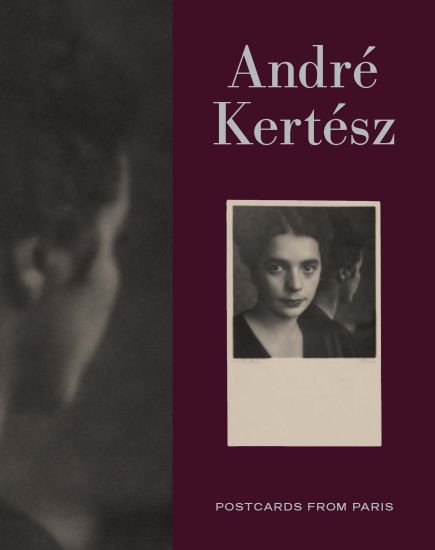
Andre Kertesz

Andre Kertesz

Yale University Press
2021
sidottu
The first comprehensive study of these rare, influential objects, documenting a formative moment in the noted photographer’s early career This elegant book unites all of the known carte postale prints by the photographer André Kertész (1894–1985), including portraits, views of Paris, careful studio scenes, and exquisitely simple still lifes. Essays shed new light on the artist’s most acclaimed images; themes of materiality, exile, and communication; his illustrious and bohemian social circle; and the changing identity of art photography. Playful yet refined, the book’s design reflects the spirit of 1920s Paris while underscoring the modernity of the catalogue’s more than 250 illustrated works. Kertész made his rigorously composed prints on inexpensive but lush postcard stock, sharing them with friends and sending them back to family in Hungary. The works reveal the artist learning his craft as he encountered an international group of modernists—including Piet Mondrian, Fernand Léger, and Joseph Csáky—in the interwar metropolis. Prized by collectors as well as by Kertész himself, the cartes postales influenced his compositions and the intimate scale of his picture making for decades.Distributed for the Art Institute of ChicagoExhibition Schedule:Art Institute of Chicago (October 2, 2021–January 17, 2022)High Museum of Art, Atlanta (February 18–May 29, 2022)
André Malraux

André Malraux

G. Harris

Palgrave Macmillan
1996
sidottu
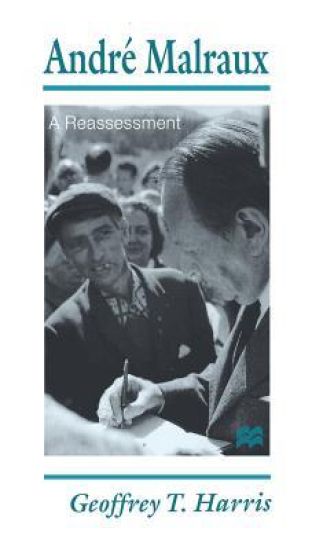
This book analyses Malraux's writing from his journalism in Indochina to his novels, art studies and (anti)memorialist essays. Cutting through the established dual biographical image of Malraux as a committed leftwinger and revolutionary novelist turned unconditional Gaullist and diehard anti-Communist at the Liberation, it makes a balanced assessment of Malraux as a non-ideological if elitist artist who shaped his public role as much as he shaped the existence of his heroes both novelistic and real.
Andre Gide's Politics

Andre Gide's Politics

Na Na

Palgrave Macmillan
2000
sidottu
At the peak of his career, after having established himself as an accomplished writer, astute moraliste, and the foremost spokesperson of his generation for personal freedom and self-realization, Gide became aware, first, that his particular brand of bourgeois individualism was becoming increasingly irrelevant in the contemporary world and, second, that social commitment and even revolution could serve as a powerful source of inspiration and self-renewal. Over a ten-year period that began in the 1920s and ended with his public break with the Soviet Union in 1936, Gide the committed intellectual interacted with society in ways that were for him unprecedented. These essays examine the outcomes of Gide s evolving commitment to a host of controversial issues ranging from the sexual to the political, from the literary to the social.
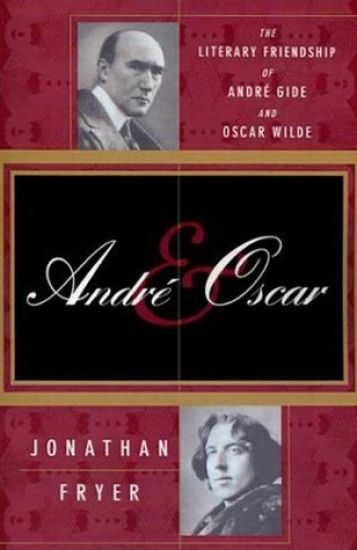
Andre and Oscar: The Literary Friendship of Andre Gide and Oscar Wilde
In the Autumn of 1891, Oscar Wilde set about conquering literary Paris. Gide was dazzled by the Irishman's energy and verve, but was driven to the edge of a nervous breakdown by Wilde's merciless paradoxes and questioning of religious faith. The two writers met repeatedly over the next ten years in France, Italy, and North Africa, both before and after Wilde's imprisonment. But by the time Wilde died in Paris in 1900, the tables had been turned. He was impoverished and disgraced, while Gide was well launched on a literary career that would make him the most famous French writer of his generation and win him the Nobel Prize. Andre and Oscar charts the stormy emotions of the Gide-Wilde friendship as well as the influence they had on each other. But it also looks at the two men's live through the eyes of their mothers, their wives, and their lovers, documented largely through diaries and letters from the period and illustrated with contemporary photographs. The book also provides an often surprising insight into what W. H. Auden would much later call the "Homintern" - an international network of gay men and their young companions - as well as the moral hypocrisy of the 1890s.
Andre Messager

Andre Messager

John Wagstaff

Greenwood Press
1991
sidottu
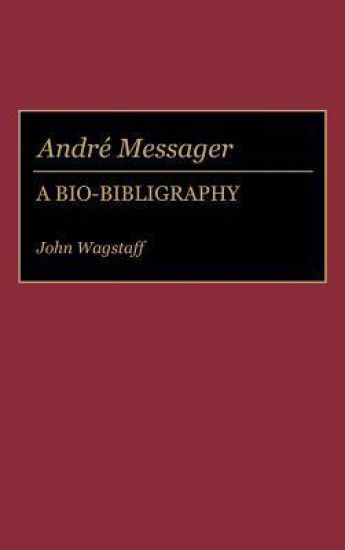
Despite the immense popularity of his works for musical theater in the late nineteenth and early twentieth centuries, Andre Messager has, to a large extent, been neglected by contemporary musicologists and musicians outside France. This book offers a new appraisal of Messager's life and work, correcting errors perpetuated in previous bibliographies, and documenting the broad scope of his contributions as a composer, conductor, and artistic director of several of the great operatic companies of Paris and London. A biographical sketch, the first ever written in English, is followed by a comprehensive list of works that supplies details of first performances, their publication, and principal reviews. The list covers songs and instrumental compositions, as well as operettas and other works for the stage. The bibliography lists not only titles that deal specifically with Messager but also a number of general works that may prove useful in the study of the period in which Messager lived and worked. Archival materials are listed together with more generally available printed sources. The volume includes a discography, appendices, and an index. Providing comprehensive, up-to-date information in a convenient format, this bio-bibliography will be a valuable research tool for studies of French music of the period.
André Malraux

André Malraux

G. Harris

Palgrave Macmillan
1995
sidottu
This book analyses Malraux's writing from his journalism in Indochina to his novels, art studies and (anti)memorialist essays. Cutting through the established dual biographical image of Malraux as a committed leftwinger and revolutionary novelist turned unconditional Gaullist and diehard anti-Communist at the Liberation, it makes a balanced assessment of Malraux as a non-ideological if elitist artist who shaped his public role as much as he shaped the existence of his heroes both novelistic and real.
Andre Gorz and the Sartrean Legacy

Andre Gorz and the Sartrean Legacy

Finn Bowring

Palgrave Macmillan
2000
sidottu
A comprehensive and scholarly exploration of the personal and philosophical origins of André Gorz's work, this book includes a unique analysis of his early untranslated texts, as well as critical discussion of his relationship to the work of Husserl, Sartre, Merleau-Ponty, Marx and Habermas. Reassessing pivotal notions such as the 'lifeworld' and the 'subject', it argues that Gorz has pioneered a person-centred social theory in which the motive and meaning of social critique is firmly rooted in people's lived experience.
Andre Green at the Squiggle Foundation
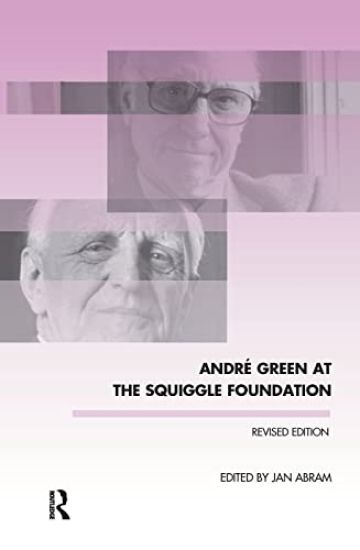
Despite being one of the foremost psychoanalysts working today, much of Andre Green's work has until recently been unavailable in English. This work aims to rectify this, by collecting together five lectures given to the Squiggle Foundation in London. This accessible and clearly written book provides a unique introduction to Green's work and its relation to the work of D.W. Winnicott, as promoted by the Squiggle Foundation itself.The Squiggle Foundation has as its goal "to study and cultivate the tradition of D.W. Winnicott", and has achieved an international reputation in doing so. Dr Green's lectures touch particularly on the links between his thought and that of Winnicott - as can be seen from the lecture titles: "Experience and Thinking in Analytic Practice", "Objects(s) and Subject", "On Thirdness", "The Posthumous Winnicott: On Human Nature", and "The Intuition of the Negative Playing and Reality" .
André Jolivet: Music, Art and Literature
This first book in English on the French composer André Jolivet (1905–1974) investigates his music, life and influence. A pupil of Varèse and colleague of Messiaen in La Jeune France, Jolivet is a major figure in French music of the twentieth century. His music combines innovative language with spirituality, summarised in his self-declared axiom to ‘restore music’s ancient original meaning when it was the magic and incantatory expression of the sacred in human communities’. The book’s contextual introduction is followed by contributions, edited by Caroline Rae, from leading international scholars including the composer’s daughter Christine Jolivet-Erlih. These assess Jolivet’s output and activities from the 1920s through to his last works, exploring creative process, aesthetic, his relationship with the exotic and influences from literature. They also examine, for the first time, the significance of Jolivet’s involvement with the visual arts and his activities as conductor, teacher and critic. A chronology of Jolivet’s life and works with details of first performances provides valuable overview and reference. This fascinating and comprehensive volume is an indispensable source for research into French music and culture of the twentieth century.