Kirjojen hintavertailu. Mukana 12 419 872 kirjaa ja 12 kauppaa.

Kirjahaku

Etsi kirjoja tekijän nimen, kirjan nimen tai ISBN:n perusteella.

1000 tulosta hakusanalla Andre Dacier

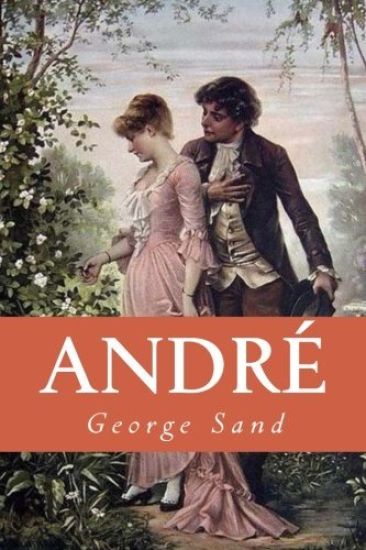
André

André

George Sand

Createspace Independent Publishing Platform
2015
nidottu
Le Marquis de Morand a d daign les activit s frivoles de sa classe pour se consacrer ses terres. Il ne craint pas de travailler durement dans les champs avec ses ouvriers. Il a pourtant souhait que son fils Andr re oive une bonne ducation. Le jeune homme est d'une nature ch tive, toute oppos e celle de son p re, qui le consid re un peu comme son souffre-douleur. Andr se sent mal l'aise au ch teau. Il aime se promener seul dans les champs. Un jour, il aper oit une jeune fille l'air doux, qui semble tr s absorb e par la cueillette de fleurs. Andr se sent tr s attir par elle et il juge imm diatement qu'il s'agit d'une femme exceptionnelle...
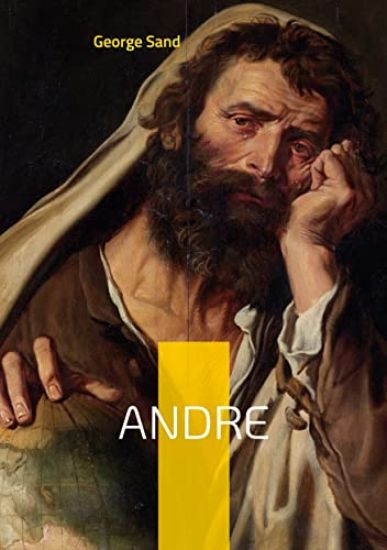
Andre

Andre

George Sand

Createspace Independent Publishing Platform
2017
nidottu
George Sand est le pseudonyme d'Amantine Aurore Lucile Dupin, baronne Dudevant, romanci re, auteur dramatique, critique litt raire fran aise, journaliste, n e Paris le 1er juillet 1804 et morte au ch teau de Nohant-Vic le 8 juin 1876. Elle compte parmi les crivains prolifiques avec plus de soixante-dix romans son actif, cinquante volumes d'oeuvres diverses dont des nouvelles, des contes, des pi ces de th tre et des textes politiques.
André

André

George Sand

Createspace Independent Publishing Platform
2017
nidottu
Andr (1834) est un autre roman puissant, mais tragique, de la p riode dite anti-matrimoniale de George Sand. Le roman, qui se d roule dans la r gion rurale bien-aim e de Berry, dans les Berry, en France, d crit de fa on poignante combien la soci t est mal quip e et malmen e lorsqu'il s'agit d'accepter et d'accorder une place viable la femme dou e. Le livre aborde galement la vuln rabilit d'une femme sup rieure aux comm rages et le concept selon lequel certaines femmes sont si inhabituelles que l'amour traditionnel et le mariage ne peuvent tout simplement pas s'int grer avec bonheur dans leur vie. Comme avec ses trois premiers romans Indiana, Valentine et Jacques, Sand a effectivement vilipend l'effet du mariage son poque sur les jeunes femmes intelligentes.
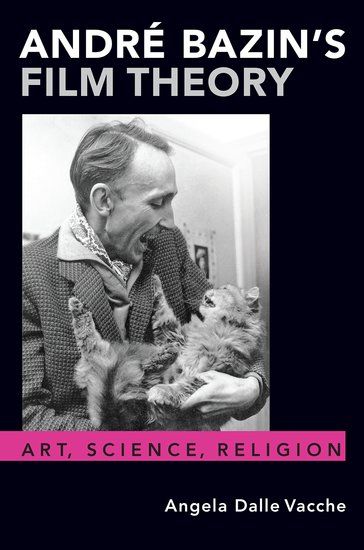
André Bazin's Film Theory

André Bazin's Film Theory

Angela Dalle Vacche

Oxford University Press Inc
2020
sidottu
Through metaphors and allusions to art, science, and religion, André Bazin's writings on the cinema explore a simple yet profound question: what is a human? For the famous French film critic, a human is simultaneously a rational animal and an irrational being. Bazin's idea of the cinema is a mind-machine where the ethical implications have priority over aesthetic issues. And in its ability to function as an art form for the masses, cinema is the only medium that can address an audience at the individual and community levels simultaneously-- the audience sees the same film, but each individual relates to the narrative in a different way. In principle, cinema can unsettle our routines in productive ways and expand our sense of belonging to a much larger picture. By arguing that this dissident Catholic's worldview is anti-anthropocentric, Angela Dalle Vacche concludes that André Bazin's idea of the cinema recapitulates the histories of biological evolution and modern technology inside our consciousness. Through the projection of recorded traces of the world onto a brain-like screen, the cinema can open viewers up to self-interrogation and empathy towards Otherness. Bazin was neither a spiritualist nor an animist or a pantheist, yet his film theory leads also to ideas of a more cosmological persuasion: through editing and camera movement, cinema explores our belonging to a vast universe that extends from the microbes of the microscope to the stars of the telescope. Such ideas of connectedness, coupled with Bazin's well-known emphasis of realism, form the foundation for his film theory's embrace of Italian neorealism. Choosing to avoid a quantitative naturalism based on accumulation of details, Bazin's theory instead promotes the kind of cinema that celebrates perceptual displacement, the objectification of human behavior, and one's own critical self-awareness.