Kirjojen hintavertailu. Mukana 11 244 527 kirjaa ja 12 kauppaa.

Kirjahaku

Etsi kirjoja tekijän nimen, kirjan nimen tai ISBN:n perusteella.

1000 tulosta hakusanalla Andrew C. McLaughlin

The Sons of Remus

The Sons of Remus

Andrew C. Johnston

Harvard University Press
2017
sidottu
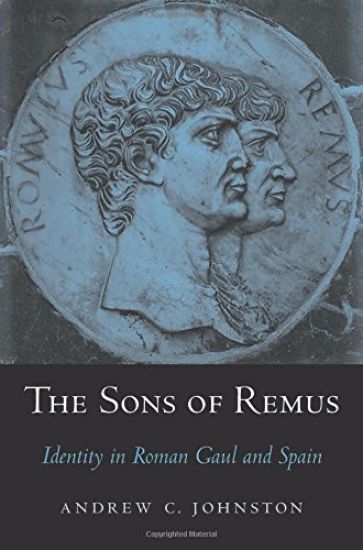
Histories of ancient Rome have long emphasized the ways in which the empire assimilated the societies it conquered, bringing civilization to the supposed barbarians. Yet interpretations of this “Romanization” of Western Europe tend to erase local identities and traditions from the historical picture, leaving us with an incomplete understanding of the diverse cultures that flourished in the provinces far from Rome.The Sons of Remus recaptures the experiences, memories, and discourses of the societies that made up the variegated patchwork fabric of the western provinces of the Roman Empire. Focusing on Gaul and Spain, Andrew Johnston explores how the inhabitants of these provinces, though they willingly adopted certain Roman customs and recognized imperial authority, never became exclusively Roman. Their self-representations in literature, inscriptions, and visual art reflect identities rooted in a sense of belonging to indigenous communities. Provincials performed shifting roles for different audiences, rehearsing traditions at home while subverting Roman stereotypes of druids and rustics abroad.Deriving keen insights from ancient sources—travelers’ records, myths and hero cults, timekeeping systems, genealogies, monuments—Johnston shows how the communities of Gaul and Spain balanced their local identities with their status as Roman subjects, as they preserved a cultural memory of their pre-Roman past and wove their own narratives into Roman mythology. The Romans saw themselves as the heirs of Romulus, the legendary founder of the eternal city; from the other brother, the provincials of the west received a complicated inheritance, which shaped the history of the sons of Remus.
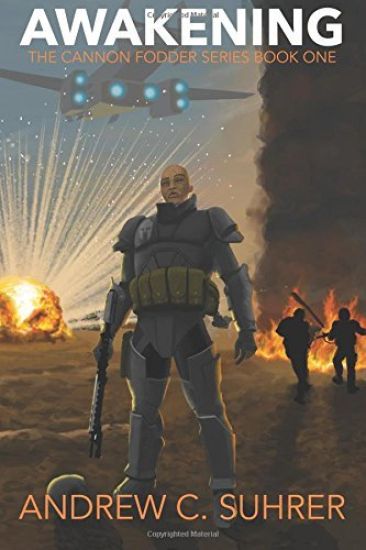
Awakening (the Cannon Fodder Series Book 1)

Awakening (the Cannon Fodder Series Book 1)

Andrew C. Suhrer

Andrew C. Suhrer
2016
nidottu
WHAT YOU DON'T REMEMBER CAN HURT YOU Set in a time that will never be, humanity survived an invasion just to end up the pawns of aliens. A man without a memory is handed a gun and some armor and told to salvage a failed revolution for freedom. Mankind struggles to overthrow their alien controlled government. They've got the upper hand, but the fight isn't over yet. One soldier could make all the difference. Alec Dumont and his team must keep the revolution alive. As the struggle continues, he soon finds out that the past can and will come back to haunt him in more ways than one.
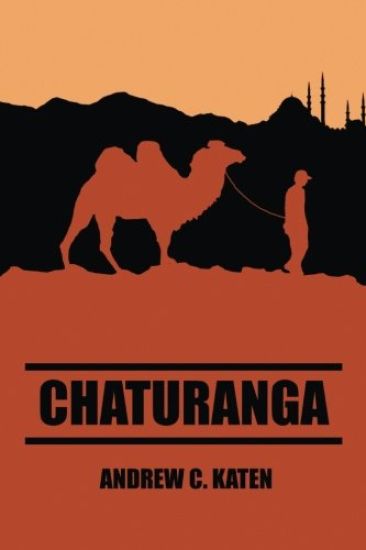
Chaturanga

Chaturanga

Andrew C. Katen

Inner Compass
2016
nidottu
When fourteen-year-old Patrick Eaton embarks on a summer trip to Central Asia with his geologist father, he's expecting dusty rocks and endless landscapes. What he doesn't expect is to stumble upon a hidden world of secrets that could change everything he knows about his family's past.Patrick's father is on a quest to negotiate a petroleum pipeline in the heart of Central Asia. But when Patrick uncovers a long-lost family journal, he finds himself on an extraordinary journey of his own. The journal, filled with cryptic maps and enigmatic writings, hints at a hidden legacy and a long-forgotten mystery connected to Patrick's ancestors.As Patrick and his father navigate treacherous terrains and unravel the journal's secrets, they encounter fascinating cultures, face thrilling challenges, and forge unbreakable bonds. With each clue, Patrick gets closer to unveiling a powerful secret about the most important person in his life. Why You'll Love This Book: Epic Adventure: Join Patrick on a breathtaking journey through the stunning landscapes of Central Asia, filled with danger, excitement, and discovery.Intriguing Mystery: Unravel the enigmatic secrets of a hidden journal and uncover a family legacy that will leave you on the edge of your seat.Rich Cultural Exploration: Experience the vibrant cultures and traditions of Central Asia as Patrick and his father immerse themselves in new and exciting surroundings.Relatable Characters: Follow Patrick's transformation from a curious middle schooler into a courageous adventurer, discovering bravery and resilience within himself.Embark on the adventure of a lifetime with Patrick Eaton in "Chaturanga." Perfect for readers of all ages who love thrilling quests and unforgettable discoveries.Grab your copy today and start your journey into the heart of mystery and adventure
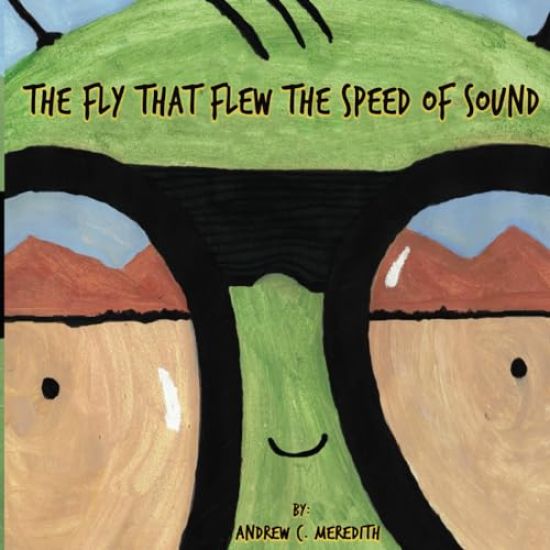
The Fly That Flew The Speed of Sound

The Fly That Flew The Speed of Sound

Andrew C Meredith

Tree Tree Publishing
2023
pokkari
The Fly That Flew the Speed of Sound is the story of a little Fly named Fuzz and his incredible journey to becoming the Fastest Fly in the World. On his Journey of happenstance, he falls in love, makes new friends and navigates hardships that inevitably lead him in the hot seat of the Fastest Car in the world, where the rest becomes history Edited by Lauren TaykowskiAdditional Editing by Michael Buchananwww.theflythatflew.com
Politics and Paradigms

Politics and Paradigms

Andrew C. Janos

Stanford University Press
1986
pokkari
Recent economic and political developments in the Third World and in Communist and advanced industrial societies have challenged some of the most cherished assumptions of social science, forcing social scientists to rethink many of the categories of their discipline. In a concisely written and provocative book, the author traces this process of rethinking. He does so by going back to the nineteenth-century origins of political sociology and economy, and by exploring more recent attempts by American scholarship to fashion from the writings of Smith, Marx, Spencer, Weber, and Durkheim a new universal theory of modernization and political change. The author argues that these attempts led to a new intellectual crisis, which could be resolved only by a "paradigm shift," that is, by refocusing the discipline from the classical concept of social relations to a new global concept of the division of labor and systems of exchange. Overall, the volume may be read both as an intellectual history of modern political science, and as an attempt to fashion an analytical tool for empirical research. As such, it will be of interest to students of political philosophy as well as of comparative politics.
East Central Europe in the Modern World

East Central Europe in the Modern World

Andrew C. Janos

Stanford University Press
2002
pokkari
Combining engaging narrative with analytic power, this book presents the past and present of East Central Europe in the larger context of the political and economic history of the Continent. The central theme of the book is best summarized by the familiar French proverb that the more things change the more they are the same. For while the historical experience of East Central Europe in the modern world may be described as one of endemic political change—from Western liberalism to corrupted parliamentarism, from fascism to state socialism imposed by the Soviet Union, and now to a fledgling new liberalism under Western auspices—all these political systems faced the same stubborn facts of life: the region's economic backwardness vis-à-vis the West, the debilities of small nationhood, and the cultural divide between the lands of eastern and western Christianity. In dealing with this volatile mix of continuity and change, this book provides a new interpretation of the politics of the region in the modern period. At the same time, it also contributes to the ongoing dialogue among disciplines by attempting to strike a better balance between cultural and economic explanations of conflict, between structural and institutional approaches to politics, and, above all, between intra- and extra-societal forces that shape power and politics in national states. For the purposes of this book, East Central Europe is defined as the territory of the historical precursors, and contemporary successors, of the eight lesser member states of the former Soviet Bloc.
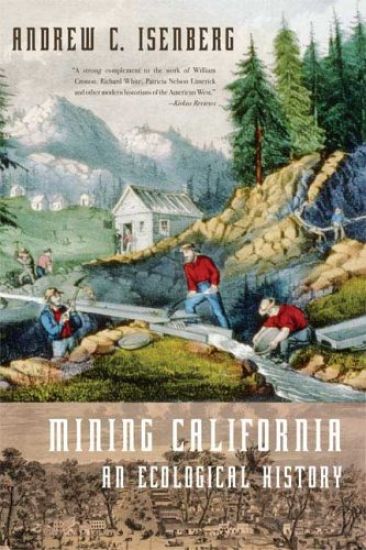
Mining California

Mining California

Andrew C Isenberg

Hill Wang Inc.,U.S.
2006
pokkari
An environmental History of California during the Gold Rush Between 1849 and 1874 almost $1 billion in gold was mined in California. With little available capital or labor, here's how: high-pressure water cannons washed hillsides into sluices that used mercury to trap gold but let the soil wash away; eventually more than three times the amount of earth moved to make way for the Panama Canal entered California's rivers, leaving behind twenty tons of mercury every mile rivers overflowed their banks and valleys were flooded, the land poisoned. In the rush to wealth, the same chain of foreseeable consequences reduced California's forests and grasslands.Not since William Cronon's" Nature's Metropolis" has a historian so skillfully applied John Muir's insight "When we try to pick out anything by itself, we find it hitched to everything else in the universe" to the telling of the history of the American West. Beautifully told, this is western environmental history at its finest."
Wyatt Earp

Wyatt Earp

Andrew C. Isenberg

Hill Wang Inc.,U.S.
2014
pokkari
As Andrew C. Isenberg shows in Wyatt Earp: A Vigilante Life, the Hollywood Earp is largely a fiction created by Earp himself, whose life was characterized not by an unflinching devotion to law and order but by inconstancy, defiance of authority, and repeated self-invention. The Earp played on - screen by Henry Fonda and Burt Lancaster is stubbornly duty bound; in actuality, Earp led a life of impulsive law-breaking and shifting identities. When he wasn't wearing a badge, he was variously a thief, a brothel bouncer, a gambler, and a confidence man. He spent his last decades in Los Angeles, where his plastic identity and his penchant for reinvention freely lent themselves to Hollywood mythmaking. Befriending Western silent-film actors and directors, he presented himself to them as a lawman singularly committed to justice. Having tried and failed over the course of his life to invent a better future for himself, in the end Earp invented a better past. Though Earp, who died in 1929, did not live to see it, Hollywood's embrace of him as a paragon of law and order was his last and undoubtedly greatest confidence game.
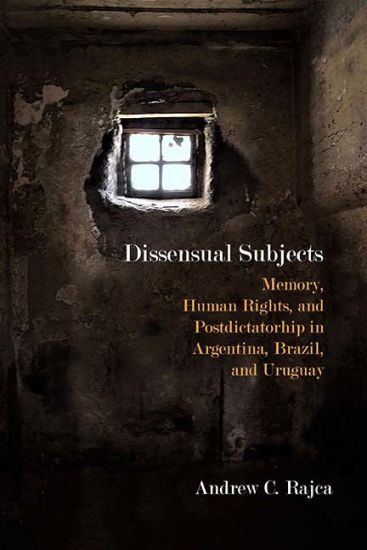
Dissensual Subjects

Dissensual Subjects

Andrew C. Rajca

Northwestern University Press
2018
nidottu
Dissensual Subjects examines the relationship between memory and human rights in postdictatorial Argentina, Brazil, and Uruguay. Combining cultural studies and critical theory, Andrew C. Rajca explores how the aftereffects of dictatorship are used to formulate dominant notions of human rights in the present. In so doing he critiques the exclusionary nature of these processes and highlights who and what count (and do not count) as subjects of human rights as a result.Through an engaging exploration of the concept of “never again” (nunca más/nunca mais) and close analysis of photography exhibits, audiovisual installations, and other art forms in spaces of cultural memory, the book explores how aesthetic interventions can suggest alternative ways of framing human rights subjectivity beyond the rhetoric of liberal humanitarianism. The book visits sites of memory, two of which functioned as detention and torture centers during dictatorships, to highlight the tensions between the testimonial tenor of permanent exhibits and the aesthetic interventions of temporary visual culture installations there. Rajca thus introduces perspectives that both undo common understandings of authoritarian violence and its effects as well as reconfigure who or what are made visible as subjects of memory and human rights in postdictatorship countries.Dissensual Subjects offers much to those concerned with several interlocking fields: memory, human rights, political subjectivity, aesthetics, cultural studies, visual culture, Southern Cone studies, postdictatorship studies, and sites of memory.
Ultimate Questions

Ultimate Questions

Andrew C. Wicks; Alexander S. Bleiberg; John K. Nolan

UNIVERSITY OF VIRGINIA PRESS
2025
sidottu
The accumulated wisdom of a beloved business professor's signature course Who are we, and who am I? Why are we here, and why am I here? What is the good life, and what is my good life? For years, business ethics professor Andrew Wicks pursued these lines of inquiry in his perennially popular course Ultimate Questions and Creating Value for Stakeholders. Now his book distills the intellectual explorations and hard conversations he and his students navigated together in the classroom into an accessible form available to readers everywhere. Ultimate Questions is grounded in stakeholder theory: the idea that business leaders need to consider the humanity and complexity of all stakeholders— employees, community members, suppliers, and more— to thrive in ways that go beyond profit. It takes as a given that money is not the only goal of life or work and, like the course, encourages constant curiosity and a spirit of exploration.
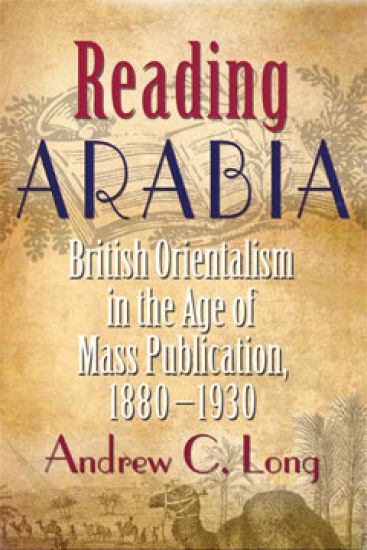
Reading Arabia

Reading Arabia

Andrew C. Long

Syracuse University Press
2014
sidottu
In Reading Arabia, Long explores the change in the tradition of British Orientalism in the late nineteenth and early twentieth centuries. He examines the role of mass print culture, including travel literature, newspapers, and silent films, in the construction of the British public’s perception of “Arabia”.
Hard Aground

Hard Aground

Andrew C. A. Jampoler

THE UNIVERSITY OF ALABAMA PRESS
2023
sidottu
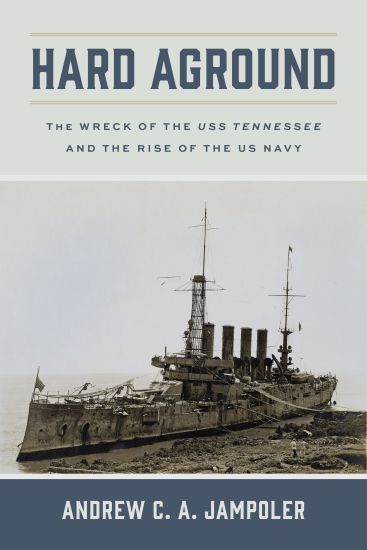
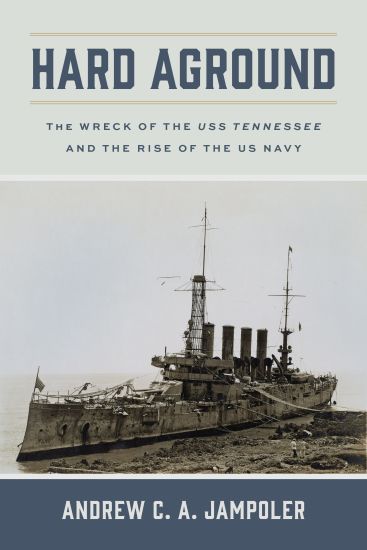
Three intertwined stories highlighting the many challenges the US Navy faced during strategic and material evolutionHard Aground brings together three intertwined stories documenting the US Navy’s strategic and matÉriel evolution following the end of the Civil War through the First World War. These incidents had lasting consequences for how the navy would modernize itself throughout the rest of the twentieth century.The first story focuses on the reconstruction of the US Navy following the swift and near-total dismantling of the Union Navy infrastructure after the Civil War. This reconstruction began with barely enough time for the navy’s campaigns in the Spanish-American War, and for its role in the First World War. Jampoler argues that the federal government discovered that the fleet requested by the navy, and paid for by Congress, was the wrong fleet. Focus was on battleships and cruisers rather than destroyers and other small combat vessels needed to hunt submarines and serve as convoy escorts.The second story relates the short, tragic life of the USS Tennessee (later renamed Memphis), one of the steel-hulled ships of the new Armored Cruiser Squadron that was a centerpiece of the navy’s modernization effort. The USS Tennessee was ordered on two unusual missions in the early months of World War I, long before the United States formally entered the war. These little know missions and the sudden destruction of the ship by a storm surge in the Caribbean serves as the centerpiece of the story. Threaded through the narrative are biographical sketches of the principal players in the drama that unfolded following the ship’s demise, including two of Tennessee’s commanding officers: Vice Admiral Sims, who commanded the US Navy squadrons deployed to Europe in support of the Royal Navy; Rear Admiral William Caperton, who commanded the Caribbean squadron before the Memphis (formerly the Tennessee) was lost; Charles Pond, squadron commander during the wreck; and the American ambassador to the Ottoman court, President Wilson’s enthusiastic supporter, Henry Morgenthau. Jampoler concludes with an account of how the USS Tennessee’s destruction prompted fierce deliberations about the US Navy’s operations and chains of command for the remainder of the First World War and the high-level political wrangling inside the Department of the Navy immediately after the war, as civilian appointees and senior officers wrestled to reshape the department in their image.
Hard Aground

Hard Aground

Andrew C. A. Jampoler

THE UNIVERSITY OF ALABAMA PRESS
2023
nidottu
Three intertwined stories highlighting the many challenges the US Navy faced during strategic and material evolutionHard Aground brings together three intertwined stories documenting the US Navy’s strategic and matÉriel evolution following the end of the Civil War through the First World War. These incidents had lasting consequences for how the navy would modernize itself throughout the rest of the twentieth century.The first story focuses on the reconstruction of the US Navy following the swift and near-total dismantling of the Union Navy infrastructure after the Civil War. This reconstruction began with barely enough time for the navy’s campaigns in the Spanish-American War, and for its role in the First World War. Jampoler argues that the federal government discovered that the fleet requested by the navy, and paid for by Congress, was the wrong fleet. Focus was on battleships and cruisers rather than destroyers and other small combat vessels needed to hunt submarines and serve as convoy escorts.The second story relates the short, tragic life of the USS Tennessee (later renamed Memphis), one of the steel-hulled ships of the new Armored Cruiser Squadron that was a centerpiece of the navy’s modernization effort. The USS Tennessee was ordered on two unusual missions in the early months of World War I, long before the United States formally entered the war. These little know missions and the sudden destruction of the ship by a storm surge in the Caribbean serves as the centerpiece of the story. Threaded through the narrative are biographical sketches of the principal players in the drama that unfolded following the ship’s demise, including two of Tennessee’s commanding officers: Vice Admiral Sims, who commanded the US Navy squadrons deployed to Europe in support of the Royal Navy; Rear Admiral William Caperton, who commanded the Caribbean squadron before the Memphis (formerly the Tennessee) was lost; Charles Pond, squadron commander during the wreck; and the American ambassador to the Ottoman court, President Wilson’s enthusiastic supporter, Henry Morgenthau. Jampoler concludes with an account of how the USS Tennessee’s destruction prompted fierce deliberations about the US Navy’s operations and chains of command for the remainder of the First World War and the high-level political wrangling inside the Department of the Navy immediately after the war, as civilian appointees and senior officers wrestled to reshape the department in their image.
Bulldozer Revolutions

Bulldozer Revolutions

Andrew C. Baker; James C. Giesen

University of Georgia Press
2018
sidottu
By examining the metropolitan fringes of Houston in Montgomery County, Texas, and Washington, D.C., in Loudoun County, Virginia, this book combines rural, environmental, and agricultural history to disrupt our view of the southern metropolis.Andrew C. Baker examines the local boosters, gentlemen farmers, historical preservationists, and nature-seeking suburbanites who abandoned the city to live in the metropolitan countryside during the twentieth century. These property owners formed the vanguard of the antigrowth movement that has defined metropolitan fringe politics across the nation. In the rural South, subdivisions, reservoirs, homesteads, and historical villages each obscured the troubling legacies of racism and rural poverty and celebrated a refashioned landscape. That landscape’s historical and environmental “authenticity” served as a foil to the alienation and ugliness of suburbia. Using a source base that includes the records of preservation organizations and local, state, and federal government agencies, as well as oral histories, Baker explores the distinct roots of the environmental politics and the shifting relationship between city and country within these metropolitan fringe regions.
Bulldozer Revolutions

Bulldozer Revolutions

Andrew C. Baker; James C. Giesen

UNIVERSITY OF GEORGIA PRESS
2022
pokkari
By examining the metropolitan fringes of Houston in Montgomery County, Texas, and Washington, D.C., in Loudoun County, Virginia, this book combines rural, environmental, and agricultural history to disrupt our view of the southern metropolis.Andrew C. Baker examines the local boosters, gentlemen farmers, historical preservationists, and nature-seeking suburbanites who abandoned the city to live in the metropolitan countryside during the twentieth century. These property owners formed the vanguard of the antigrowth movement that has defined metropolitan fringe politics across the nation. In the rural South, subdivisions, reservoirs, homesteads, and historical villages each obscured the troubling legacies of racism and rural poverty and celebrated a refashioned landscape. That landscape’s historical and environmental “authenticity” served as a foil to the alienation and ugliness of suburbia. Using a source base that includes the records of preservation organizations and local, state, and federal government agencies, as well as oral histories, Baker explores the distinct roots of the environmental politics and the shifting relationship between city and country within these metropolitan fringe regions.
Tamils and the Haunting of Justice

Tamils and the Haunting of Justice

Andrew C. Willford

University of Hawai'i Press
2014
sidottu
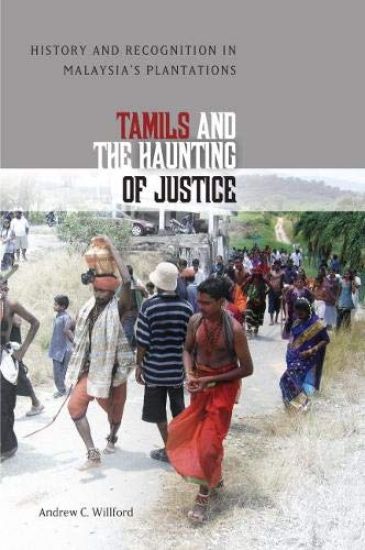
In 2006 dejected members of the Bukit Jalil Estate community faced eviction from their homes in Kuala Lumpur where they had lived for generations. City officials classified plantation residents as squatters and, unaware of years of toil, attachment to the land, and past official promises, questioned any right they might have to stay, wondering “How can there be a plantation in Kuala Lumpur?”This story epitomizes the dilemma faced by Malaysian Tamils in recent years as they confront the moment when the plantation system where they have lived and worked for generations finally collapses. Foreign workers from Indonesia and Bangladesh have been brought in to replace Tamil workers to cut labour costs. As the new migrant workers do not bring their whole families with them, the community structures—schools, temples, churches, community halls, recreational fields—need no longer be sustained, allowing more land to be converted to mechanized palm oil production or lucrative housing developments. In short, the old, long-term community-based model of rubber plantation production introduced by British and French companies in colonial Malaya has been replaced by a model based upon migrant labour, mechanization, and a gradual contraction of the plantation economy. Tamils find themselves increasingly resentful of the fact that lands that were developed and populated by their ancestors are now claimed by Malays as their own; and that the land use patterns in these new townships, are increasingly hostile to the most symbolic vestiges of the Tamil and Hindu presence, the temples. In addition to issues pertaining to land, legal cases surrounding religious conversion have exacerbated a sense of insecurity among Tamil Hindus.Based on seventeen months of ethnographic fieldwork, this compelling book is about much more than the fast-approaching end to a way of life. Tamils and the Haunting of Justice addresses critical issues in the study of race and ethnicity. It is a study of how notions of justice, as imagined by an aggrieved minority, complicate legal demarcations of ethnic difference in post-colonial states. Through its ethnographic breadth, it demonstrates which strategies, as enacted by local communities in conjunction with NGOs and legal advisors/activists, have been most “successful” in navigating the legal and political system of ethnic entitlement and compensation. It shows how, through a variety of strategies, Tamils try to access justice beyond the law—sometimes by using the law, and sometimes by turning to religious symbols and rituals in the murky space between law and justice. The book will thus appeal not only to scholars of Southeast Asia and the Indian diaspora, but also to ethnic studies and development scholars and those interested in postcolonial nationalism.