Kirjojen hintavertailu. Mukana 11 244 527 kirjaa ja 12 kauppaa.

Kirjahaku

Etsi kirjoja tekijän nimen, kirjan nimen tai ISBN:n perusteella.

1000 tulosta hakusanalla Angela Levin

Angela Carter

Angela Carter

Linden Peach

Red Globe Press
2009
nidottu
This revised new edition reviews Carter's novels in the light of recent critical developments and offers entirely new perspectives on her work. There is now extended discussion of Carter's most widely-studied novels, including The Passion of New Eve and Nights at the Circus, and discussion of the long essay The Sadeian Woman.
Angela Carter and Decadence

Angela Carter and Decadence

M. Tonkin

Palgrave Macmillan
2012
sidottu
By reading key Carter texts alongside their Decadent intertexts, Tonkin interrogates the claim that Carter was in thrall to a fetishistic aesthetic antithetical to her feminism. Through historical contextualization of the woman-as-doll, muse and femme fatale, Tonkin tests Carter's own description of her fiction as a form of literary criticism.
Angela Carter

Angela Carter

S. Gamble

Palgrave Macmillan
2005
nidottu
By the time of her death in 1992, Angela Carter had come to be regarded as one of the most successful and original British authors of the twentieth-century, and her writing has subsequently become the focus of a burgeoning body of criticism. This book disentangles the cult of Angela Carter as 'the fairy godmother of magical realism' from her own claims to be a materialist and a 'demythologiser' by placing her within the social, political and theoretical context within which she wrote. Drawing on Carter's own autobiographical articles as well as her novels and short stories, this study examines her engagement with topical issues such as national (particularly English) identity, class, politics and feminism, assessing the relationship between her life, her times and her art.
Angela Carter

Angela Carter

S. Gamble

Palgrave Macmillan
2005
sidottu
By the time of her death in 1992, Angela Carter had come to be regarded as one of the most successful and original British authors of the twentieth-century, and her writing has subsequently become the focus of a burgeoning body of criticism. This book disentangles the cult of Angela Carter as 'the fairy godmother of magical realism' from her own claims to be a materialist and a 'demythologiser' by placing her within the social, political and theoretical context within which she wrote. Drawing on Carter's own autobiographical articles as well as her novels and short stories, this study examines her engagement with topical issues such as national (particularly English) identity, class, politics and feminism, assessing the relationship between her life, her times and her art.
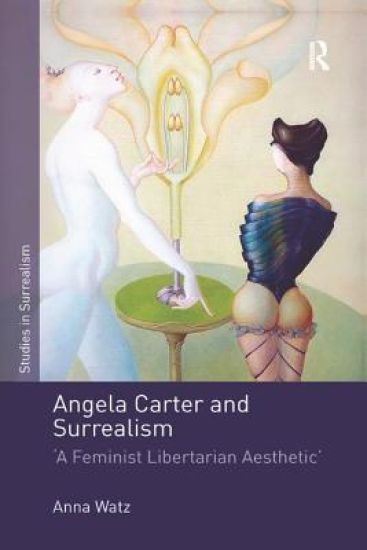
Angela Carter and Surrealism

Angela Carter and Surrealism

Anna Watz

Routledge
2019
nidottu
In 1972, Angela Carter translated Xavière Gauthier’s ground-breaking feminist critique of the surrealist movement, Surréalisme et sexualité (1971). Although the translation was never published, the project at once confirmed and consolidated Carter’s previous interest in surrealism, representation, gender and desire and aided her formulation of a new surrealist-feminist aesthetic. Carter’s sustained engagement with surrealist aesthetics and politics as well as surrealist scholarship aptly demonstrates what is at stake for feminism at the intersection of avant-garde aesthetics and the representation of women and female desire. Drawing on previously unexplored archival material, such as typescripts, journals, and letters, Anna Watz’s study is the first to trace the full extent to which Carter’s writing was influenced by the surrealist movement and its critical heritage. Watz’s book is an important contribution to scholarship on Angela Carter as well as to contemporary feminist debates on surrealism, and will appeal to scholars across the fields of contemporary British fiction, feminism, and literary and visual surrealism.
Angela Carter: Surrealist, Psychologist, Moral Pornographer
Contributing to the conversation regarding Angela Carter's problematic relationship with what she viewed as the interrelated traditions of surrealism and psychoanalysis, Scott Dimovitz explores the intricate connections between Carter's private life and her public writing. He begins with Carter's assertion that it was through her "sexual and emotional life" that she was radicalized, drawing extensively on the British Library's recently archived collection of Carter's private papers, journals, and letters to show how that radicalization happened and what it meant both for her worldview and for her writings. Through close textual analysis and a detailed study of her papers, Dimovitz analyzes the ways in which this second-wave feminist's explorations of sexuality merged with her investigations into surrealism and psychoanalysis, an engagement that ultimately led to the explosively surreal allegories of Carter's later, more complex, and more accomplished work. His study not only offers a new way to view Carter's oeuvre, but also makes the case for the importance of Angela Carter's vision in understanding the transformations in feminist thinking from the postwar to the postfeminist generation.
Angela Carter's Nights at the Circus
A highly original and influential work of modern British literature, Angela Carter’s Nights at the Circus combines a fantastically creative plot with a strong political undertone. The result is an emotive and provocative novel, which has attracted much critical attention from a range of perspectives including poststructuralism, gender studies, postmodernism and psychoanalysis.This guide to Angela Carter’s complex novel, presents:an accessible introduction to the text and contexts of Nights at the Circus a critical history, surveying the many interpretations of the text from publication to the present a selection of new critical essays on the Nights at the Circus, by Heather Johnson, Jeannette Baxter, Sarah Sceats and Helen Stoddart, providing a variety of perspectives on the novel and extending the coverage of key critical approaches identified in the survey section cross-references between sections of the guide, in order to suggest links between texts, contexts and criticism suggestions for further reading. Part of the Routledge Guides to Literature series, this volume is essential reading for all those beginning detailed study of Nights at the Circus and seeking not only a guide to the novel, but a way through the wealth of contextual and critical material that surrounds Carter’s text.
Angela Carter's Nights at the Circus
A highly original and influential work of modern British literature, Angela Carter’s Nights at the Circus combines a fantastically creative plot with a strong political undertone. The result is an emotive and provocative novel, which has attracted much critical attention from a range of perspectives including poststructuralism, gender studies, postmodernism and psychoanalysis.This guide to Angela Carter’s complex novel, presents:an accessible introduction to the text and contexts of Nights at the Circus a critical history, surveying the many interpretations of the text from publication to the present a selection of new critical essays on the Nights at the Circus, by Heather Johnson, Jeannette Baxter, Sarah Sceats and Helen Stoddart, providing a variety of perspectives on the novel and extending the coverage of key critical approaches identified in the survey section cross-references between sections of the guide, in order to suggest links between texts, contexts and criticism suggestions for further reading. Part of the Routledge Guides to Literature series, this volume is essential reading for all those beginning detailed study of Nights at the Circus and seeking not only a guide to the novel, but a way through the wealth of contextual and critical material that surrounds Carter’s text.
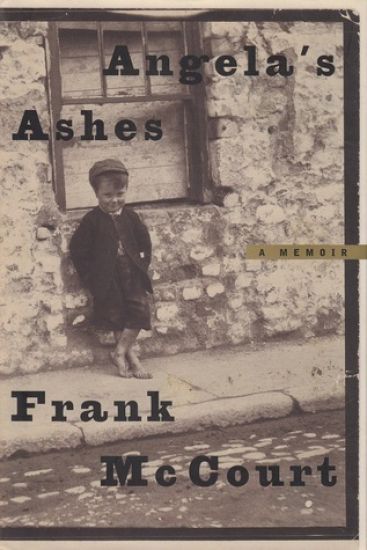
Angela's Ashes

Angela's Ashes

Frank McCourt

Scribner Book Company
1997
pokkari
" "When I look back on my childhood I wonder how I managed to survive at all. It was, of course, a miserable childhood: the happy childhood is hardly worth your while. Worse than the ordinary miserable childhood is the miserable Irish childhood, and worse yet is the miserable Irish Catholic childhood."" So begins the luminous memoir of Frank McCourt, born in Depression-era Brooklyn to recent Irish immigrants and raised in the slums of Limerick, Ireland. Frank's mother, Angela, has no money to feed the children since Frank's father, Malachy, rarely works, and when he does he drinks his wages. Yet Malachy-- exasperating, irresponsible and beguiling-- does nurture in Frank an appetite for the one thing he can provide: a story. Frank lives for his father's tales of Cuchulain, who saved Ireland, and of the Angel on the Seventh Step, who brings his mother babies. Perhaps it is story that accounts for Frank's survival. Wearing rags for diapers, begging a pig's head for Christmas dinner and gathering coal from the roadside to light a fire, Frank endures poverty, near-starvation and the casual cruelty of relatives and neighbors--yet lives to tell his tale with eloquence, exuberance and remarkable forgiveness. "Angela's Ashes," imbued on every page with Frank McCourt's astounding humor and compassion, is a glorious book that bears all the marks of a classic.
Angela's Ashes

Angela's Ashes

Frank McCourt

Prentice Hall IBD
1996
sidottu
" "When I look back on my childhood I wonder how I managed to survive at all. It was, of course, a miserable childhood: the happy childhood is hardly worth your while. Worse than the ordinary miserable childhood is the miserable Irish childhood, and worse yet is the miserable Irish Catholic childhood."" So begins the luminous memoir of Frank McCourt, born in Depression-era Brooklyn to recent Irish immigrants and raised in the slums of Limerick, Ireland. Frank's mother, Angela, has no money to feed the children since Frank's father, Malachy, rarely works, and when he does he drinks his wages. Yet Malachy-- exasperating, irresponsible and beguiling-- does nurture in Frank an appetite for the one thing he can provide: a story. Frank lives for his father's tales of Cuchulain, who saved Ireland, and of the Angel on the Seventh Step, who brings his mother babies. Perhaps it is story that accounts for Frank's survival. Wearing rags for diapers, begging a pig's head for Christmas dinner and gathering coal from the roadside to light a fire, Frank endures poverty, near-starvation and the casual cruelty of relatives and neighbors--yet lives to tell his tale with eloquence, exuberance and remarkable forgiveness. "Angela's Ashes," imbued on every page with Frank McCourt's astounding humor and compassion, is a glorious book that bears all the marks of a classic.
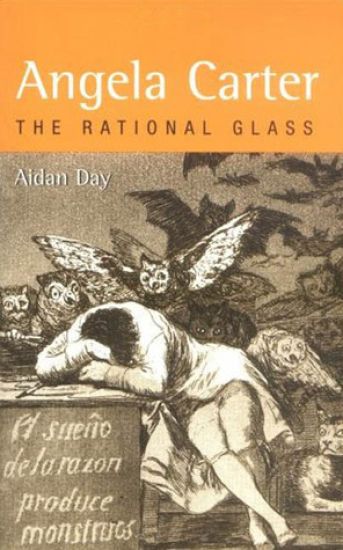
Angela Carter

Angela Carter

Aidan Day

Manchester University Press
1998
nidottu
This full scale study discusses Angela Carter’s fiction in chronological order, and notes that although her themes are fairly consistent throughout her work, consistency of theme is not the same as repetition. The new angles and emphases that develop are partly from Carter’s immersion in the changing intellectual debates of the times and, concurrently, arise from the reading she was doing at the different stages of her life, which stretched from the medieval through de Sade to Foucault.
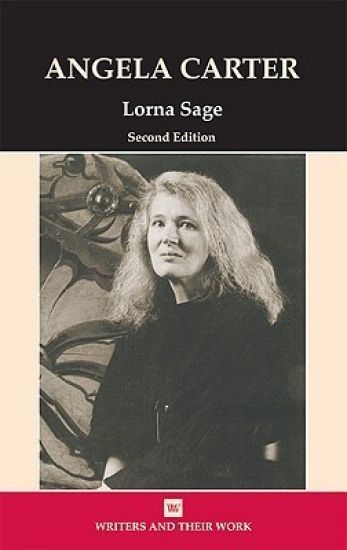
Angela Carter

Angela Carter

Lorna Sage

Liverpool University Press
2006
nidottu
Although much of Carter’s work is considered part of the contemporary canon, its true strangeness is still only partially understood. Lorna Sage argues that one key to a better understanding of Carter’s writings is the extraordinary intelligence with which she read the cultural signs of our times. From structuralism and the study of folk tales in the 1960s to fairy stories, gender politics and the theoretical ‘pleasure of the text’, which she makes so real in her writing. Carter legitimised the life of fantasy and celebrated the fertility of the female imagination more than any other writer.
Angela Carter

Angela Carter

Sarah Gamble

Edinburgh University Press
1997
nidottu
In this book Sarah Gamble explores Angela Carter's celebration of the marginal, the balance in her work between history and fantasy, fairy tale and reality, excessive desire and love and looks at how these tensions influenced both the form and content of her fiction. Providing close, perceptive readings of all of Carter's fiction, many of the short stories, as well as the non-fiction writing, Sarah Gamble demonstrates how, throughout her career, Carter wrote with the intention of subverting consensus views of any kind, in particular, the conception of history as unalterable 'master narrative', conventional social codes regarding propriety and 'woman's place', and the artificial distinction between 'high' and 'low' literature. This is an illuminating study of a startlingly original and influential writer which will appeal to students and the general reader alike.
Angela The Upside-Down Girl

Angela The Upside-Down Girl

Hiestand Emily

BEACON PRESS
1999
pokkari
A childhood shaped by her zestful aunt Nan Dean of Tuscaloosa County, Alabama; a girlhood spent in Oak Ridge (Atom City), Tennessee; a journey north to a seedy seaside town where a stripper named Angela the Upside-Down Girl is her first neighbor--these are only some of the geographical and spiritual journeys in this dazzling, seriously funny guide to the art of being human.
Angela of Foligno

Angela of Foligno

Paulist Press International,U.S.
1992
nidottu
The Classics of Western Spirituality™series, which has inspired many less-successful imitations over the years, has fulfilled its promise and given us an invaluable resource of the soul. The Catholic Historical Review In one series, the original writings of the universally acknowledged teachers of the Catholic, Protestant, Eastern Orthodox, Jewish and Islamic traditions have been critically selected, translated and introduced by internationally recognized scholars and spiritual leaders. ANGELA OF FOLIGNO-COMPLETE WORKS translated, with an introduction by Paul Lachance, O.F.M. preface by Romana Guarnieri Suddenly, a divine word sounded in my soul: "My love for you has not been a hoax." These words struck me a mortal blow. For immediately the eyes of my soul were opened and I saw that what he had said was true. I saw his acts of love, everything that the Son of God had done, all that he had endured in life and in death-this suffering God-man-because of his inexpressible and visceral love. Seeing in him all the deeds of true love, I understood the perfect truth of what he had said, that "his love for me had not been a hoax," but that he had loved me with a most perfect and visceral love. I saw, on the other hand, the exact opposite in myself, because my love for him had never been anything but playing games, never true. Angela of Foligno (c. 1248–1309) "The superabundant one," "the saint of the double abyss," "the queen of the explorers of the beyond," "the one who lies," "the bedded, swooning saint," "the teacher of theologians"—thus have various commentators characterized the Blessed Angela of Foligno, one of the most outstanding, yet still too little known, representatives of the Franciscan and Christian mystical tradition. The dramatic story of Angela's passionate love affair with the "suffering God-man," how she is transformed and led into the deep abysses of the Trinitarian life, is recorded in the Memorial, the first part of her Book, which she dictated to her Franciscan scribe and confessor, Brother Arnaldo. The searing intensity of her account is unmatched in mystical literature. After her immersion in the fathomless depths of the Trinity, Angela emerged as a spiritual mother, gathering around her a network of disciples. The second part of her Book, the Instructions, contains her teachings in the form of letters and exhortations to her spiritual progeny, along with accounts of further visions and locutions, a testament, and an epilogue. This is the first translation into English of Angela's Book in its entirety. The translation is based on the new critical edition of the Latin text. A comprehensive introduction sets it in the context of the times, and summarizes Angela's inner journey, spirituality, and influence. †