When the telephone awakened Thomas at three in the morning, he wasn't expecting to hear the voice of Angela; someone believed to have died five years earlier. Confused and in shock, he reluctantly agreed to fly to Brazil, where he would discover that he was unexpectedly committed to a dangerous rescue mission encompassing Sao Paulo, Curitiba, Rio, Brasilia, and Manaus, culminating a thousand miles up the Amazon River. How many, and whose lives would it cost?
"Life offers you more when you have your purpose in perspective," says author Dr. Angela E. Thomas-DuPree. "Your purpose is what will maneuver you around your challenges, your pain, and your current situation."Growing up in a small, poverty-stricken community in South Louisiana, Angela turned to God's promises, committed to her purpose, and grew beyond her environment. With hard work, strong faith in God's word, and flat-out resilience, she manifested a purposeful and financially free life for herself and her family.In One Step at a Time, Angela walks readers through her life story and proves that anything you put your mind to-while staying in harmony with God's word-must come to pass. This short, power-packed book is not only filled with inspiration but also motivating questions and true insight on how to put God's words in action.
'She got up, without meeting his eyes, and went into the bedroom to dress. That was life all over; you wanted to make a good exit, and you remembered you were still in your housecoat.' Single girl Liza leaps into an exciting new sexual relationship with Walter after the couple meet at a New Year's party. Written by Angela Milne, the niece of A. A. Milne, and originally published in 1942, the story shines a light on subtly changing societal attitudes and deftly captures Liza's euphoria and frustrations as she navigates a relationship outside of marriage. Warm, witty and surprising, it leaves you wondering why Milne only wrote one novel.
This document reports on a study to assist the Army, geographic combatant commands, and the rest of the U.S. Department of Defense in better aligning security cooperation missions with national interests and security goals. In addition, the report provides some recommendations and analytic tools for the Army's leadership and regionally aligned force planners to improve regionally aligned force implementation.
Angela O'Mahony; Thomas S Szayna; Christopher G Pernin; Laurinda L Rohn; Derek Eaton; Elizabeth Bodine-Baron; Joshua Mendelsohn; Osonde A Osoba; Sherry Oehler; Katharina Ley Best; Leila Bighash
The U.S. Army has introduced the global landpower network (GLN) concept as a means to integrate, sustain, and advance the Army's considerable ongoing efforts to meet U.S. national security guidance emphasizing the importance of working closely with partner nations to achieve U.S. strategic objectives. This report develops the GLN concept further.
Writing requirements is one of the core competencies for anyone in an organization responsible for defining future Information Technology (IT) applications. However, nearly every independently executed, root-cause analysis of IT project problems and failures in the past half-century have identified "misunderstood or incomplete requirements" as the primary cause. This has made writing requirements the bane of many projects. The real problem is the subtle differences between "understanding" someone else's requirement and "sharing a common understanding" with the author. "How to Write Effective Requirements for IT - Simply Put " gives you a set of 4 simple rules that will make your requirement statements more easily understood by all target audiences. The focus is to increase the " common understanding" between the author of a requirement and the solution providers (e.g., in-house or outsourced IT designers, developers, analysts, and vendors). The rules we present in this book will reduce the failure rate of projects suffering from poor requirements. Regardless of your job title or role, if you are tasked with communicating your future needs to others, this book will guide you step by step. It includes optional exercises with instant feedback to increase retention. Who should read this book? Anyone involved in capturing, writing, analyzing, or understanding requirements for Information Technology solutions, including (but not limited to): Subject Matter Experts (SME) Agile Product Owners Business Process Managers Business Process Users Business Analysts and anyone wearing the BA hat Regardless of your title or role, if you are involved in defining requirements, this book is for you. Specifically, this book will give you techniques to: Express business and stakeholder requirements in simple, complete sentences Write requirements that focus on the business need Test the relevance of each requirement to ensure that it is in scope for your project Translate business needs and wants into requirements as the primary tool for defining a future solution and setting the stage for testing Create and maintain a question file to reduce the impact of incorrect assumptions Minimize the risk of scope creep caused by missed requirements Ensure that your requirements can be easily understood by all target audiences Confirm that each audience shares a common understanding of the requirements Isolate and address ambiguous words and phrases in requirements. Use our Peer Perception technique to find words and phrases that can lead to misunderstandings. Reduce the ambiguity of a statement by adding context and using standard terms and phrases How to get the most out of this book? To maximize the learning effect, you will have optional, online exercises to assess your understanding of each presented technique. You will run across chapter titles prefaced with the phrase "Exercise". Those chapters contain a link to a web-based exercise that we have prepared to give you an opportunity to try the presented technique yourself.
Requirement elicitation is the first step in gathering user requirements; it is the process of understanding and acquiring the business needs of all involved stakeholders. The importance of requirements elicitation cannot be overstated. The requirements you elicit and gather are the foundation for the remainder of ALL of the work on the project.This book is a continuation of our Requirements Elicitation series. The previously published "Requirements Elicitation Interviews and Workshops - Simply Put" deals with soft skills needed to elicit requirements. This book, "Requirements Elicitation Techniques - Simply Put", is all about specific techniques designed to improve the outcomes of your elicitation interviews and workshops.The presented techniques will help practicing business analysts, future business analysts, subject matter experts, managers, product owners, project managers, and anyone responsible for getting the right requirements from the right people. Many people elicit requirements in an organization under the guise of 'business analysis' although it is not in their job description. Whether you are the CEO, COO, Director, Manager, or on the front lines, you may be involved in defining how technology can benefit you and your organization. When you are in that awesome role, you are at that time "the one wearing the Business Analysis (BA) hat".So what are you going to learn? This book presents the nuts and bolts of "requirements elicitation" which will help you: Identify potential stakeholders early in the project Manage the requirements elicitation process with a Question File Recognize, track, and report progress toward requirements completion Define, document, and analyze business problems to ferret out hidden requirements Facilitate effective requirements brainstorming sessions to uncover additional requirements Use 10 critical questions to initiate the requirements elicitation process Capture and communicate assumptions about your requirements Avoid "analysis paralysis" by recognizing when it is time to stop eliciting and start deciding About the Authors Angela and Tom Hathaway have authored and delivered hundreds of training courses and publications for business analysts around the world. They have facilitated hundreds of Requirements Gathering Workshops for information technology projects under a variety of acronyms (JAD, ASAP, JADr, JRP, etc.).Based on their personal journey and experiences reported by their students, they recognized how much anyone can benefit from improving their requirements elicitation skills. Their mission is to allow anyone, anywhere access to simple, easy-to-learn techniques by sharing their experience and expertise in their training seminars, blogs, eBooks, video courses, and public presentations.
Defining solution-level requirements (aka functional and non-functional requirements) is a core competency for anyone in an organization responsible for defining future Information Technology (IT) applications. "Functional and Non-Functional Requirements - Simply Put " will give Business Analysts, Systems Analysts, Agile Product Owners, Product Managers, Subject Matter Experts (a.k.a. SMEs), and really "anyone wearing the BA hat" simple, repeatable techniques for extracting solution-level specifications from business and stakeholder requirements that are expressed in complete sentence form. My co-author, Angela, and I have used these techniques on hundreds of IT projects around the globe and we know the value each provides. Using these approaches will improve your ability to identify and document requirements at the level of detail that solution providers (vendors or developers) need to deliver the right technology for their organization. The presented techniques will work on any set of well-expressed requirement statements. However, they were specifically designed for and work best with requirement statements that follow the "Rules for Writing Effective Requirements" that we present in our course and book "Writing Effective Requirements for IT - Simply Put ". Regardless of your job title or role, if you are involved in defining future business solutions, this book will help you communicate your business needs to solution providers. It will reduce the potential for misunderstandings that undermine IT's ability to deliver the right technology for the business.Upon successful completion of this course, you can: Decompose Business and Stakeholder Requirement Statements to identify Functional and Non-Functional Requirements Give those responsible for designing, building, and/or buying the solution the kind of information they need to make the decisions that are right for the business Identify Informational, Performance, and Constraining Requirements from a list of Functional Requirements Document and manage Business, Stakeholder, Functional and Non-Functional Requirements Capture and clarify Business Rules and External Constraints that mandate limits to the delivered solution Develop measurable Solution Requirements that facilitate End-User Acceptance TestingThe course includes optional, online exercises with immediate feedback featuring our recommended resolution and the rationale behind it. At the end of the course, a "Final Exam' will allow you to test your understanding of how all of the presented ideas work together to make your requirements more easily understood by all respective target audiences.About the Authors: Angela and Tom Hathaway have trained, consulted, mentored and coached thousands of business analysts around the world for organizations from small businesses to Fortune 100. Based on their combined 70+ years of experience in information technology and business analysis, they serve up a unique perspective on this burgeoning field of knowledge.
A Data Flow Diagram (DFD) is a phenomenal tool for visualizing and analyzing dependencies and interactions amongst manual and automated business processes. In today's wired world, software applications often take center stage in optimizing workflow and increasing productivity. Unfortunately, the process of delivering the right software to the right people at the right time is challenging to say the least. DFDs are powerful tools for recognizing and eliminating two of the major problems that haunt IT projects, namely Scope Creep and Project Overruns caused by late project change requests. Data Flow Diagrams - Simply Put explains WHAT a DFD is, WHY you need one, and HOW to create it.You will learn the benefits of process visualization for the business community, for the one wearing the BA hat, for those tasked with developing the solution, and ultimately for the entire organization. Specifically, Data Flow Diagrams - Simply Put explains and demonstrates the answers to these questions: What is a Data Flow Diagram (DFD) and what does it do for you? What is the difference between a Rigorous Physical Process Model and a Context-Level DFD? What symbols can I use on each type of diagram? What is the business value of doing exploding or levelling a DFD What is a simple approach for drilling down into a process? How can I show the internal processes and flows that produce the results? What does balancing a Data Flow Diagram mean and what is the business value? What is the most efficient approach to balancing a DFD? What business value do detailed process specifications offer? How can I express detailed specifications for processes and data? What is "metadata" and why do you need it? Why should I draw a Data Flow Diagram? What does a fully balanced DFD look like? What value does a DFD fragment provide?About the Authors Angela and Tom Hathaway have authored and delivered hundreds of training courses and publications to thousands of business analysts around the world. They have facilitated numerous requirements discovery sessions for information technology projects under a variety of acronyms (JAD, ASAP, JADr, JRP, RGW, etc.). Based on their personal journey and experiences reported by their students, they recognized how much anyone can benefit from a basic understanding of what Data Flow Diagrams are, what they represent, who needs them, and how to get started creating them.Angela's and Tom's mission is to allow anyone, anywhere access to simple, easy-to-learn techniques by sharing their experience and expertise in their training seminars, blog posts, books, video courses, KnowledgeKnuggets(TM), and public presentations.
Lonely Planet's local travel experts reveal all you need to know to plan the ultimate short trip to Hong Kong - and discover twice the city in half the time!Discover Hong Kong's most popular experiences, must-see attractions, and unexpected surprises - neighbourhood by neighbourhood - with our handy-sized Pocket travel guide. From embarking on one of Hong Kong's well-known hikes, Dragon's Back, for stunning coastal vistas, to relaxing on the white sand of Deep Water Bay, and basking in the spiritual atmosphere of Man Mo Temple.Build a trip to remember with Lonely Planet's Pocket Hong Kong travel guide:Our Pocket guidebook format provides you with the best insider knowledge and local know-how for planning trips between 1 - 7 days Find what you're looking for fast with this guide's all-new structure and design and navigate Hong Kong with ease Get fresh takes on must-visit sights including Tai Kwun, Aberdeen Harbour, and Temple Street Night MarketExciting Three Perfect Days itineraries help you to create your ideal trip with suggestions of unmissable attractions and activities to match your passions Find the local vibe on foot! Walking tours in every chapter introduce each neighbourhood's personality and get you to those 'don't miss' sights Discover 'A Few Surprises' in a new feature that showcases Hong Kong's best kept secrets and rising trends Navigate public transport confidently with clear instructions and tips in our 'Getting Around' sectionMake quick travel decisions using 'Trip Planning' pages that include top pick lists and tips about what to book in advance Eat, drink, and shop like a local with extensive listings of the top restaurants, bars, markets, and street vendorsEssential information toolkit containing tips on arriving; transport; making the most of your time and money; LGBTIQ+ travel advice; useful words and phrases; accessibility; and responsible travelInspiring full-colour travel photography and maps including a pull out map of Hong KongCovers: Central District; The Peak & Northwest Hong Kong Island; Wan Chai & the Northeast; Aberdeen & South Hong Kong Island; Kowloon; Macau Get straight to the heart of this extraordinary city - neighbourhood by neighbourhood - and hit the ground running with Lonely Planet's Pocket Hong Kong.
Nyckeln till det förflutna Miljardären Xavier de la Vega har gjort allt för att glömma sitt förflutna och det faktum att han inte har blodsband till sin aristokratiska familj. Så när den vackra Jordan plötsligt kommer in i hans liv med en påminnelse om det som varit är det inte konstigt att han först stöter bort henne. Men Jordan är förtrollande och snart dras Xavier till henne av en oemotståndlig kraft. Är det verkligen värt risken? Nattens lockelser En sak har Lydia Carter-Wilson och Raul Valdez gemensamt de vill inte gifta sig. Och absolut inte med varandra. Men avtalet som deras pappor har skrivit är tydligt och om de bryter kontraktet riskerar de att förlora allt. Så om Lydia inte lyckas hitta Rauls halvbror måste hon gifta sig med Raul på julafton. Från att ha varit en mardröm verkar den tanken allt mer lockande. Särskilt när det hettar till under en helg i Madrid
I mars 2008 bildades den oberoende stiftelsen Tryggare Sverige. Verksamheten syftar till att förbättra hjälpen till brottsdrabbade och att främja utvecklingen inom det brottsförebyggande området. Föreslagen för att åstadkomma detta handlar ofta om bättre lagstiftning, hårdare tag och ökade resurser. Vi menar emellertid att det är andra åtgärder som krävs för att i praktiken minska brottsligheten och säkerställa att de som drabbas av brott får hjälp, stöd och skydd. Det fortsatta utvecklingsarbetet måste därför enligt vår mening inriktas mot följande strategiska områden:Rättsväsendet - alla brott måste utredasKommunerna - problemet med stöd till brottsdrabbade måste lösas.Skolan - rollen som mönsterbildare för hot och våld måste brytas. Med denna bok vill vi sammanfatta de gångna fem årens arbete och blicka framåt för att se vad som ytterligare kan göras för att minska brottsligheten, öka tryggheten och säkerställa att de som drabbas av brott får hjälp, stöd och skydd. Boken innehåller ett urval av de artiklar som Stiftelsen Tryggare Sveriges medarbetare har skrivit mellan åren 2009-2012. Artiklarna handlar om uppmärksammade händelser som inträffat, till exempel mordet på Carla Saado i Huskvarna år 2010, men de handlar framför allt so situationen inom rättsväsendet, o kommunernas brottsförebyggande arbete och om situationen för barn och unga som drabbas av brott i skolan.
Future conflict projections suggest a continued decline in both interstate and intrastate conflict is likely through 2040. RAND researchers conclude the Army should help to support these trends by preparing for conventional wars against other states, although its most likely future missions will continue to involve irregular warfare against nonstate actors.
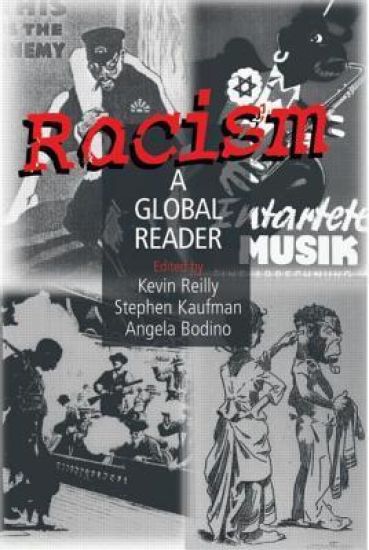
Racism has existed throughout the world for centuries and has been at the root of innumerable conflicts and human tragedies, including war, genocide, slavery, bigotry, and discrimination. Defined broadly, racism has had many forms and effects, from caste prejudice in India and mass extermination in Tasmania to slavery in the Americas and the Holocaust in Europe. Put simply, racism has been one of the overriding forces in world history for more than a millennium. This book provides a global perspective of racism in its myriad forms. Consisting of twelve parts and fifty-one articles, it focuses on racism worldwide over the past thousand years. It includes three types of articles: original documents, scholarly essays, and journalistic accounts.
Racism has existed throughout the world for centuries and has been at the root of innumerable conflicts and human tragedies, including war, genocide, slavery, bigotry, and discrimination. Defined broadly, racism has had many forms and effects, from caste prejudice in India and mass extermination in Tasmania to slavery in the Americas and the Holocaust in Europe. Put simply, racism has been one of the overriding forces in world history for more than a millennium. This book provides a global perspective of racism in its myriad forms. Consisting of twelve parts and fifty-one articles, it focuses on racism worldwide over the past thousand years. It includes three types of articles: original documents, scholarly essays, and journalistic accounts.