
Kirjahaku
Etsi kirjoja tekijän nimen, kirjan nimen tai ISBN:n perusteella.
1000 tulosta hakusanalla Anil Ahuja
This volume reprints eight of Anil Gupta's essays, some with additional material. The essays bring a refreshing new perspective to central issues in philosophical logic, philosophy of language, and epistemology. Gupta argues that logical interdependence is legitimate, and that it provides a key to understanding a variety of topics of interest to philosophers--including truth, rationality, and experience. The essays are highly accessible and provide a good introduction to ideas Gupta has been developing over the last three decades.
Anil Gupta asks one of the key questions in philosophy: what is the contribution of experience of knowledge? Gupta develops an account of experience that allows it to inform knowledge while respecting two constraints - the contribution of experience to knowledge must be both rational and substantial. He says that these constraints cannot be met if we make the assumption that experience only aquaints us with partial truth about the world. Instead he uses tools from philosophical logic, specifically the logic of interdependent concepts, to show that a natural account of experience is available using the interdependence of views and perceptual judgements. In essence he argues for a reformed empiricism that embraces experience as conditional.
This book offers a novel account of the relationship of experience to knowledge. The account builds on the intuitive idea that our ordinary perceptual judgments are not autonomous, that an interdependence obtains between our view of the world and our perceptual judgments. Anil Gupta shows in this important study that this interdependence is the key to a satisfactory account of experience. He uses tools from logic and the philosophy of language to argue that his account of experience makes available an attractive and feasible empiricism.

Anil Gupta here offers a systematic account of the concept of truth, with a particular focus on the role this concept plays in metaphysics. He examines functions the concept serves in everyday thinking and mounts, on their basis, an argument for a particular logic of truth. This logic enables, he argues, a new and powerful critique of deflationism--of the idea that the concept of truth is fit to serve only a logical role. The logic shows that deflationist claims about the contents of truth-attributions have only limited validity, and consequently, the accounts deflationists provide of truth are untenable. His book goes on to offer novel accounts of "appearance" and "phenomenon" and uses them, in conjunction with the newly improved understanding of the concept of truth, to clarify the metaphysical quest to understand reality. Gupta argues that the metaphysical inquiry into the nature of reality can equally well be described as an inquiry into the nature of truth. It is a distinctive merit of his book that Gupta brings together three streams of thinking about truth, streams that often run parallel to one another: the logical, the linguistic, and the metaphysical streams. He shows that ideas in the linguistic stream help overcome impasse in the logic of truth, and gains made in the latter help overcome stubborn misconceptions about the meaning and function of "'true". These gains, in turn, help correct metaphysical claims about the nature of truth, and indeed they help illuminate the metaphysical enterprise itself.

This bestselling handbook provides an accessible overview of key surgical principles, techniques and procedures. Thoroughly revised with the latest guidelines, management algorithms, and guidance on decision-making, it covers core anatomy and physiology and information on emergencies with increased focus on evidence-based practice.

We are self-conscious creatures thrown into a world which is not of our making. What is the connection between being self-conscious and being related to an objective world? Descartes and Kant, in different ways and with different emphases, argued that self-conscious subjects such as us must be related to an objective world. Philosophers in the twentieth century were less ambitious: self-conscious subjects must only think or experience the world as objective. The Practical Self argues that the answer to our question lies in a set of enigmatic remarks by the eighteenth-century philosopher, physicist, and aphorist Georg Christoph Lichtenberg. 'One should say it is thinking, just as one says, it is lightning', Lichtenberg writes. 'To say cogito is already too much To assume the I, to postulate it, is a practical requirement.' Lichtenberg is raising a puzzle here about our grounds for recognising ourselves as the agents of our thinking. Its solution is to understand that we have practical grounds to think of ourselves as the intellectual agents. We are thus practical selves: intellectual agents who have distinctively practical grounds to recognise ourselves as such. And our faith in ourselves as practical selves is sustained through interaction with others. The argument of this book is that self-consciousness requires faith in ourselves as the agents of our thinking and that this faith is sustained by a practices which relate us to other thinkers. Self-consciousness connects us to a world of others.
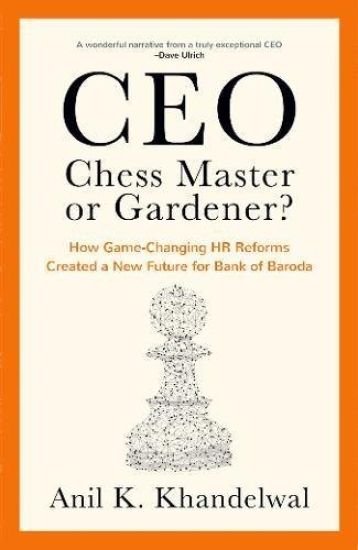
This volume is based on the author's experiences as a chief executive officer (CEO) at the Bank of Baroda and his research findings of almost five decades (mid-1950s to 2000) on several CEO's strategies in industrial relations (IR) across organizations. The study underlines the need for an effective integration of industrial relations and human resource (HR) development to achieve positive business outcomes. Using personal interviews and archival material, Khandelwal examines the evolution of IR strategies in the context of changing environmental and organizational factors and its impact on the relations between the management and trade unions within the bank over an extended period of time. He submits it is crucial that employees are engaged and formal institutional mechanisms instituted to deal with the concerns of employees as well as of trade unions as a whole in order to transform the paradigm of employee relations from a narrow, union-focused perspective to a broader approach of empowering operating managers. Such a paradigm shift could, this work asserts, pave the way for significant changes, such as the introduction of new technology, customer-centric initiatives, new HR initiatives and rebranding with dramatic business outcomes within a short period of time.
India is in transition. It is simultaneously passing through a number of economic transformations, some of them historically momentous. The driving forces for some of the changes are peculiar to the nation, or even to particular sectors. But others are shared with other parts of the world and are influenced by international pressures and examples. This book analyses an ongoing economic transformation in the natural gas sector, which exemplifies the main question underlying policy debates: how to make the transition to a more efficient economy, whilst meeting distributional objectives that are imperative to bringing India's population out of poverty. This is a classic dilemma encountered in any economy in transition, and the experience in India's natural gas sector offers an insight into potential solutions. The transition in the gas sector is part of the larger movement of the economy from a centrally planned and administered system to one based on market principles. During transition, the situation cannot be understood simply in terms of the conventional paradigm of demand and supply being balanced by price. Demand and supply are influenced by different factors, but have been kept broadly in balance by a complex system of administered pricing and quantitative allocation. The resulting distortions have been spread across the main gas consuming sectors. As distortions mount, parts of the system are modified, usually in the broad direction of liberalisation and reform. But partial reform often has the effect of displacing the problems, presenting further challenges, and requiring further changes. In order to allow for a liberalised policy framework without sacrificing social objectives, policy makers have had to evolve newer forms of policy implementation, including, perhaps, more targeted forms of subsidisation. This book is the first to meticulously explore these challenges and analyse the existing policy framework in the gas sector, including the system of awarding acreages, the systems of gas allocation and pricing, and the likely demand and supply scenarios for domestic and imported gas. It draws together different pieces of a larger gas sector story, viewed against the backdrop of India's broader transitions and its increasingly important role within the world economy.
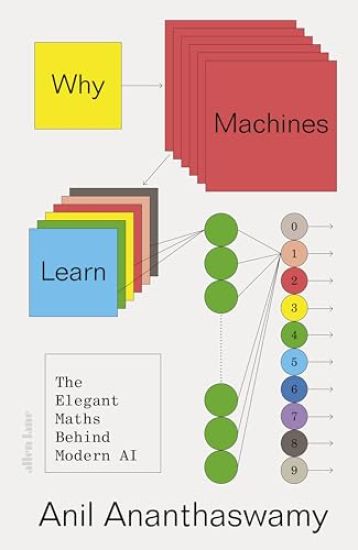
'An invaluable companion for anyone who wants a deep understanding of what’s under the hood of often inscrutable machines' Melanie Mitchell A rich, narrative explanation of the mathematics that has brought us machine learning and the ongoing explosion of artificial intelligenceMachine-learning systems are making life-altering decisions for us: approving mortgage loans, determining whether a tumour is cancerous, or deciding whether someone gets bail. They now influence discoveries in chemistry, biology and physics - the study of genomes, extra-solar planets, even the intricacies of quantum systems.We are living through a revolution in artificial intelligence that is not slowing down. This major shift is based on simple mathematics, some of which goes back centuries: linear algebra and calculus, the stuff of eighteenth-century mathematics. Indeed by the mid-1850s, a lot of the groundwork was all done. It took the development of computer science and the kindling of 1990s computer chips designed for video games to ignite the explosion of AI that we see all around us today. In this enlightening book, Anil Ananthaswamy explains the fundamental maths behind AI, which suggests that the basics of natural and artificial intelligence might follow the same mathematical rules.As Ananthaswamy resonantly concludes, to make the most of our most wondrous technologies we need to understand their profound limitations - the clues lie in the maths that makes AI possible.
In this rigorous investigation into the logic of truth Anil Gupta and Nuel Belnap explain how the concept of truth works in both ordinary and pathological contexts. The latter include, for instance, contexts that generate Liar Paradox. Their central claim is that truth is a circular concept. In support of this claim they provide a widely applicable theory (the "revision theory") of circular concepts. Under the revision theory, when truth is seen as circular both its ordinary features and its pathological features fall into a simple understandable pattern.The Revision Theory of Truth is unique in placing truth in the context of a general theory of definitions. This theory makes sense of arbitrary systems of mutually interdependent concepts, of which circular concepts, such as truth, are but a special case.
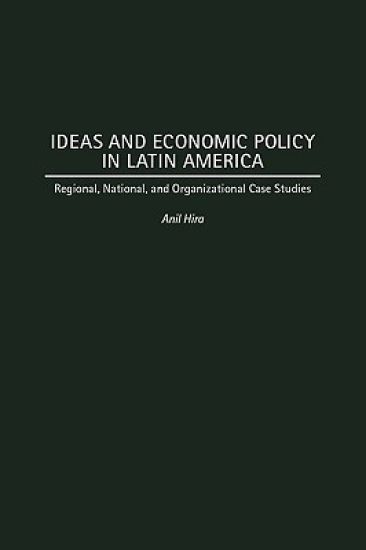
How are the economic policies which developing countries adopt selected and how do they change? Who are the key players in economic development policies? Professor Anil Hira answers these questions head on by suggesting new ways of looking at how ideas affect economic policy. He first traces the way that ideas become wedded to interest groups over time, and he interprets the debate over economic development policy as a series of changes in idea-interest networks, often marked by crises. He then looks closely at economic idea entrepreneurs.Through concrete case studies of networks in Latin America, with a focus on Chilean economic policy, Hira explains not only how ideas are introduced, but which ones win out in the economic policy process and why. He introduces the concept of economic knowledge networks to understand groups of economists wedded to certain sets of ideas, such as neoliberalism or structuralism. Economic knowledge networks extend beyond Latin America and can be found in such diverse places as Indonesia and Egypt. Hira identifies the characteristics of these groups and shows how they create political action through their organizational activities and ideas. Hira not only sheds light on how ideas affect economic policy, but also provides an inside story on the groups responsible for the new economic revolution that is sweeping Latin America and transforming the regional economy. An important resource for scholars, students, and policy makers involved with international political economy, emerging economies, and Latin American studies.
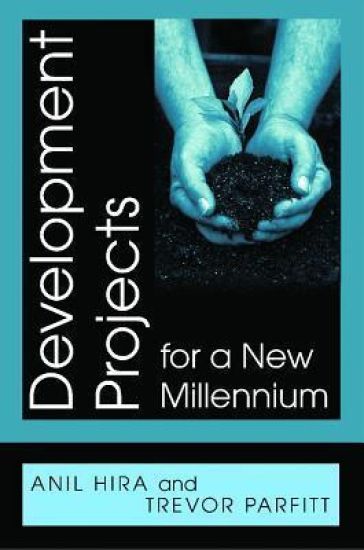
Development Projects for a New Millennium
Anil Hira; Trevor Parfitt
Praeger Publishers Inc
2004
sidottu
Economic matters entered a new phase of importance in the wake of the Cold War. Concerns within development-assistance efforts to the Third World have also shifted. The current macro-environment of development has been accompanied by a plethora of new concerns and methods, such as how to consider gender in development projects and how to develop participatory-centered projects. Yet no text has covered many of the new approaches and techniques related to development projects, including issues of participation, gender, and evaluation—until now. Hira and Parfitt bridge these serious gaps, drawing on their hands-on experience and teaching in the field.The end of the Cold War was supposed to bring a new era of peace prosperity, and development. However, the post-Cold War world has not led to any major improvements in development. In this book, Hira and Parfitt examine why 50 years of development have not led to the wiping out of poverty. In the first part of the book, they break down the political agendas behind development in the post-Cold War World, as well as the serious flaws in current development project management. In the remainder of the book they look carefully at a number of new initiatives that seek to correct these problems, examining carefully their promise for bringing about more tangible results.This book provides a thorough overview of the classic concerns and approaches of development project management, including clear explanations of predominant planning and evaluation practices. In addition, the book introduces the major new initiatives in development project management, including those regarding environmental sustainability, participation, gender, and the steps needed to create a real learning environment in development project planning. The result is a guide for the project manager and policymaker who want to know the implications of recent development ideas in terms of everyday practices, as well as for the student and interested citizen seeking to move beyond theory and critique to see how new practices can change the way that development projects are administered.
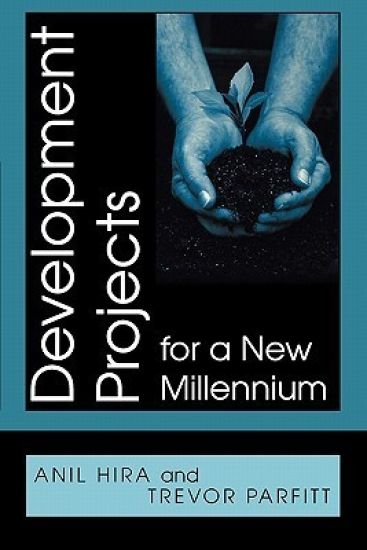
Development Projects for a New Millennium
Anil Hira; Trevor Parfitt
Praeger Publishers Inc
2004
nidottu
Economic matters entered a new phase of importance in the wake of the Cold War. Concerns within development-assistance efforts to the Third World have also shifted. The current macro-environment of development has been accompanied by a plethora of new concerns and methods, such as how to consider gender in development projects and how to develop participatory-centered projects. Yet no text has covered many of the new approaches and techniques related to development projects, including issues of participation, gender, and evaluation—until now. Hira and Parfitt bridge these serious gaps, drawing on their hands-on experience and teaching in the field. The end of the Cold War was supposed to bring a new era of peace prosperity, and development. However, the post-Cold War world has not led to any major improvements in development. In this book, Hira and Parfitt examine why 50 years of development have not led to the wiping out of poverty. In the first part of the book, they break down the political agendas behind development in the post-Cold War World, as well as the serious flaws in current development project management. In the remainder of the book they look carefully at a number of new initiatives that seek to correct these problems, examining carefully their promise for bringing about more tangible results. This book provides a thorough overview of the classic concerns and approaches of development project management, including clear explanations of predominant planning and evaluation practices. In addition, the book introduces the major new initiatives in development project management, including those regarding environmental sustainability, participation, gender, and the steps needed to create a real learning environment in development project planning. The result is a guide for the project manager and policymaker who want to know the implications of recent development ideas in terms of everyday practices, as well as for the student and interested citizen seeking to move beyond theory and critique to see how new practices can change the way that development projects are administered.

Hira explores the impact of the neoliberal revolution in Latin America, which claims the superiority of markets that are freed from government intervention and restrictions on trade and investment. He examines changes in the energy policy of the Southern Cone (Argentina, Bolivia, Brazil, Chile, Paraguay, and Uruguay) and finds that, contrary to what is claimed and expected, there is a great deal of state intervention that continues through regulatory policy.All around the world, economic markets are in flux. Policies to change these markets are part of the neoliberal revolution that claims the superiority of markets freed from government intervention and restrictions on trade and investment. The general conclusion among most academic and policy analysts who study developing countries is that market liberalization is a foregone conclusion. Developing countries' choices are constrained by two primary factors: first, the burden of massive external debt that forces them to court international finance, and second, the need to gain access to the world's largest markets in Europe and/or the United States, optimally through free trade agreements. The effects of market liberalization, including deregulation, privatization, and integration, require further scrutiny.Hira examines the effects of international market pressures on energy policy at the national, regional, and sectoral levels in Latin America's Southern Cone—Argentina, Bolivia, Brazil, Chile, Paraguay, and Uruguay—who belong to the MERCOSUR common market. Contrary to what is claimed and expected, he finds that a great deal of state intervention continues through regulatory policy. He also provides an thorough set of comparative political economy case studies, along with a discussion of the MERCOSUR process with regards to energy. His analysis of the political economy of electricity and natural gas deregulation is especially relevant in the wake of the California energy crisis, the Enron debacle, and international discussions about energy deregulation. This book is of particular interest to scholars, students, and other researchers involved with Latin American economic development and energy policy.
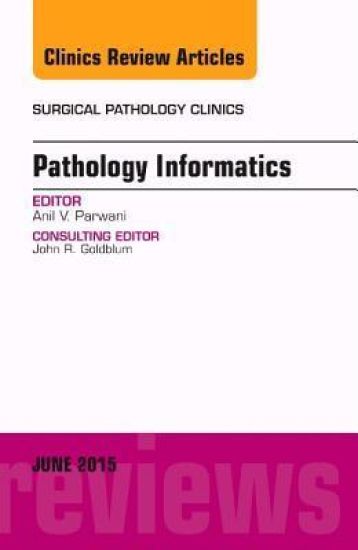
Pathology Informatics, An Issue of Surgical Pathology Clinics
Anil V. Parwani
Elsevier - Health Sciences Division
2015
sidottu
This issue of Surgical Pathology Clinics takes a departure from its presentation of Differential Diagnosis, Histopathology, Staging, and Prognosis of tumors in different anatomic sites. This special issue is devoted to topics in pathology informatics as they relate to the practice of surgical pathology. Topics include: Basics of Information Systems (Hardware, Software); Networks, Interfaces and Communications; Databases; Data Representation, Coding and Communication Standards; Laboratory Information Systems; Enhancing and Customizing Laboratory Information Systems to Improve/Enhance Pathologist Workflow; Laboratory Management and Operations; Specialized Laboratory Information Systems; Middleware and Laboratory Automation; Synoptic Reporting in Anatomical Pathology; Bar Coding and Tracking; Molecular Pathology Informatics; Informatics and Autopsy Pathology; Pathology Informatics and Project Management; Digital Imaging Basics; Use of Digital Images in Clinical Practice; Whole Slide Imaging; Telepathology; Mobile Technologies for the Surgical Pathologist; Image Analysis; Advanced Imaging Techniques; Healthcare Information Systems; Data Security and Reliability; Role of Informatics in Patient Safety and Quality Assurance; Role of Pathology Informatics in IT Leadership; Selection and Implementation of New Information Systems; Biomedical Informatics and Research Informatics; Training in Pathology Informatics; and Building Tools for the Surgical Pathologist: Next Generation Pathologist. Editor of this issue, Dr Anil Parwani, is Professor of Pathology and Biomedical Informatics and Director of Division of Pathology Informatics. Dr. Parwani is well known as expert in the area of Anatomical Pathology Informatics, which includes design of quality assurance tools, tissue banking informatics, clinical and research data integration and mining, synoptic reporting in anatomical pathology, clinical applications of whole slide imaging, digital imaging, telepathology, image analysis and lab automation and workflow processes, such as barcoding and voice recognition.
Pathology Informatics, An Issue of the Clinics in Laboratory Medicine
Anil V. Parwani
Elsevier - Health Sciences Division
2016
sidottu
This issue of the Clinics in Laboratory Medicine, edited by Dr. Anil Parwani, is a special issue is devoted to topics in Pathology Informatics. Topics include but are not limited to: Basics of Information Systems (Hardware, Software); Networks, Interfaces and Communications; Databases; Data Representation, Coding and Communication Standards; Laboratory Information Systems; Enhancing and Customizing Laboratory Information Systems; Laboratory Management and Operations; Specialized Laboratory Information Systems; Middleware and Laboratory Automation; Bar Coding and Tracking; Molecular Pathology Informatics; Pathology Informatics and Project Management; Digital Imaging; Telepathology; Healthcare Information Systems; Data Security and Reliability; Role of Informatics in Patient Safety and Quality Assurance; Role of Pathology Informatics in IT Leadership; Selection and Implementation of New Information Systems; Biomedical Informatics and Research Informatics; Training in Pathology Informatics; and more.

Time is of the essence in the effective management of trauma patients, requiring quick evaluation, immediate lifesaving procedures, and a definitive treatment of a wide variety of injuries. Trauma Surgery Essentials: A Must-Know Guide to Emergency Management has been written and designed to provide need-to-know information in a visually appealing, easy-to-read format. Expert trauma surgeon Dr. Anil K. Srivastava has identified the essential trauma surgery facts and procedures you must know, based on authoritative textbooks, practice guidelines, and current peer-reviewed journals, and compiled all of this information into a handy guide, ideal for quick reference at the point of care. Covers the emergent evaluation and management of trauma patients, as well as the emergency management of specific injuries. Uses an easy-to-digest, bullet-point format to convey information in a way that’s easy to follow and understand. Contains dozens of full-color illustrations that focus on surgical anatomy and surgical procedures, as well as numerous algorithms that aid in surgical decision making. A valuable resource for medical students, trainee surgical residents, trauma surgery fellows, general surgeons, trauma surgeons, ER physicians, and midlevel providers, as well as other non-surgical physicians who are interested in the management of trauma patients. An eBook version is included with purchase. The eBook allows you to access all of the text, figures and references, with the ability to search, customize your content, make notes and highlights, and have content read aloud.

Urban Governance and Local Democracy in South India
Anil Kumar Vaddiraju
Routledge India
2020
sidottu
This book examines the issues of urban governance and local democracy in South India. It is the first comprehensive volume that offers comparative frameworks on urban governance across all states in the region: Karnataka, Andhra Pradesh, Telangana, Tamil Nadu and Kerala. The book focuses on governance in small district-level cities and raises crucial questions such as the nature of urban planning, major outstanding issues for urban local governance, conditions of civic amenities such as drinking water and sanitation and problems of social capital in making urban governance work in these states. It emphasizes on both efficient urban governance and effective local democracy to meet the challenges of fast-paced urbanization in these states while presenting policy lessons from their urbanization processes. Rich in empirical data, this book will be useful to scholars and researchers of political studies, public administration, governance, public policy, development studies and urban studies, as well as practitioners and non-governmental organizations.
Energy Management
Anil Kumar; Om Prakash; Prashant Singh Chauhan; Samsher Gautam
CRC Press
2020
sidottu
Energy Management: Conservation and Audit discusses the energy scenario, including energy conservation, management, and audit, along with the methodology supported by industrial examples. Energy economics of systems has been elaborated with concepts of life cycle assessment and costing, and rate of return. Topics such as energy storage, co-generation, and waste heat recovery to energy efficiency have discussed. The challenges faced in conserving energy sources (steam and electricity) have elaborated along with the improvements in the lighting sector. Further, it covers optimization procedures for the development in the industry related to energy conservation. The researchers, senior undergraduate, and graduate students focused on Energy Management, Sustainable Energy, Renewable Energy, Energy Audits, and Energy Conservation. This book covers current information related to energy management and includes energy audit and review all the leading equipment (boilers, CHP, pumps, heat exchangers) as well as procedural frameworks (energy audits, action planning, monitoring). It includes energy production and management from an industrial perspective, along with highlighting the various processes involved in energy conservation and auditing in various sectors and associated methods. It also explores future energy options and directions for energy security and sustainability.