Kirjojen hintavertailu. Mukana 12 405 573 kirjaa ja 12 kauppaa.

Kirjahaku

Etsi kirjoja tekijän nimen, kirjan nimen tai ISBN:n perusteella.

1000 tulosta hakusanalla Anna M Morrison Reed

Pipe Dreams

Pipe Dreams

Anna M McGrath; John Fones McGrath

Writer's Showcase Press
2001
pokkari
Professor Bill Thayer plans to spend his sabbatical working on a solution to the world's energy problems. We follow him from underground caves to exotic romantic places as he undergoes a baptism by fire into the worlds of big business and international manipulations.
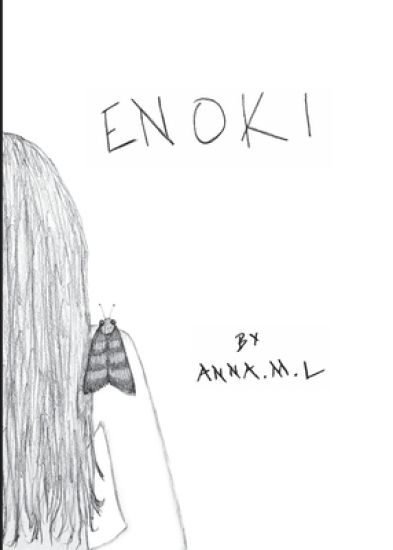
Enoki

Enoki

Anna M L

The Darkest Sea
2023
pokkari
Enoki walks into a forest. A moth dashes up and attaches to her shoulder after rousing her from sleep. She embarks on a journey into unknown terrain.Enoki is a fable about forced predicaments and the shadows that follow. A short novella with illustrations, highly recommended in its print format.PG13. Contains strong themes.
The Door Between Us

The Door Between Us

Anna M L

The Darkest Sea
2023
pokkari
Damien is smart and shows an affinity with music. He finds music's lifeblood and its magic to transcend the gloominess of his room, another world far beyond the one he inhabits. Abandoned to a world of imagination a bond is formed beyond all boundaries.The Door Between Us is a coming-of-age tale of a young boy growing up in a small town, the friends he makes and the paths he faces. It is a story about love.PG13. Adult themes, strong language and drug references.
Crafting a Collection

Crafting a Collection

Anna M. Shields

Harvard University Press
2006
sidottu
Compiled in 940 at the court of the kingdom of Shu, the Huajian ji is the earliest extant collection of song lyrics by literati poets. The collection has traditionally been studied as the precursor to the lyrics of the Song dynasty, or in terms of what it contributed to the later development of the genre. But scholars have rarely examined the work as an anthology, and have more often focused on the work of individual poets and their respective contributions to the genre. In this book, Anna Shields examines the influence of court culture on the creation of the anthology and the significance of imitation and convention in its lyrics. Shields suggests that by considering the Huajian ji only in terms of its contributions to a later "model," we unnecessarily limit ourselves to a single literary form, and risk overlooking the broader influence of Tang culture on the Huajian ji. By illuminating the historical and literary contexts of the anthology, the author aims to situate the Huajian ji within larger questions of Chinese literary history, particularly the influence of cultural forces on the emergence of genres and the development of romantic literature.
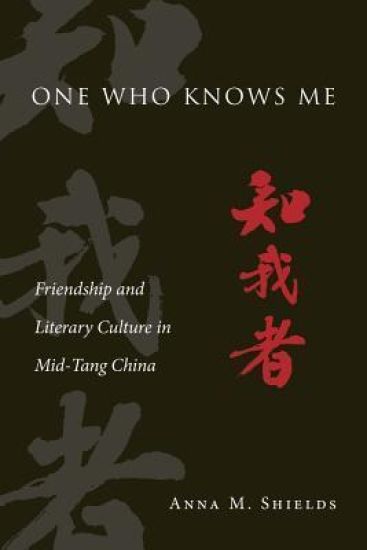
One Who Knows Me

One Who Knows Me

Anna M. Shields

Harvard University, Asia Center
2015
sidottu
The friendships of writers of the mid-Tang era (780s–820s)—between literary giants like Bai Juyi and Yuan Zhen, Han Yu and Meng Jiao, Liu Zongyuan and Liu Yuxi—became famous through the many texts they wrote to and about one another. What inspired mid-Tang literati to write about their friendships with such zeal? And how did these writings influence Tang literary culture more broadly? In One Who Knows Me, the first book to delve into friendship in medieval China, Anna M. Shields explores the literature of the mid-Tang to reveal the complex value its writers discovered in friendship—as a rewarding social practice, a rich literary topic, a way to negotiate literati identity, and a path toward self-understanding. Shields traces the evolution of the performance of friendship through a wide range of genres, including letters, prefaces, exchange poetry, and funerary texts, and interweaves elegant translations with close readings of these texts. For mid-Tang literati, writing about friendship became a powerful way to write about oneself and to reflect upon a shared culture. Their texts reveal the ways that friendship intersected the public and private realms of experience and, in the process, reshaped both.
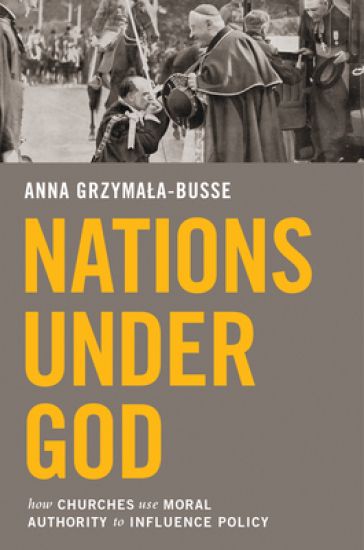
Nations under God

Nations under God

Anna M. Grzymala-Busse

Princeton University Press
2015
sidottu
In some religious countries, churches have drafted constitutions, restricted abortion, and controlled education. In others, church influence on public policy is far weaker. Why? Nations under God argues that where religious and national identities have historically fused, churches gain enormous moral authority--and covert institutional access. These powerful churches then shape policy in backrooms and secret meetings instead of through open democratic channels such as political parties or the ballot box. Through an in-depth historical analysis of six Christian democracies that share similar religious profiles yet differ in their policy outcomes--Ireland and Italy, Poland and Croatia, and the United States and Canada--Anna Grzyma?a-Busse examines how churches influenced education, abortion, divorce, stem cell research, and same-sex marriage. She argues that churches gain the greatest political advantage when they appear to be above politics. Because institutional access is covert, they retain their moral authority and their reputation as defenders of the national interest and the common good. Nations under God shows how powerful church officials in Ireland, Canada, and Poland have directly written legislation, vetoed policies, and vetted high-ranking officials. It demonstrates that religiosity itself is not enough for churches to influence politics--churches in Italy and Croatia, for example, are not as influential as we might think--and that churches allied to political parties, such as in the United States, have less influence than their notoriety suggests.
Nations under God

Nations under God

Anna M. Grzymala-Busse

Princeton University Press
2015
pokkari
In some religious countries, churches have drafted constitutions, restricted abortion, and controlled education. In others, church influence on public policy is far weaker. Why? Nations under God argues that where religious and national identities have historically fused, churches gain enormous moral authority--and covert institutional access. These powerful churches then shape policy in backrooms and secret meetings instead of through open democratic channels such as political parties or the ballot box. Through an in-depth historical analysis of six Christian democracies that share similar religious profiles yet differ in their policy outcomes--Ireland and Italy, Poland and Croatia, and the United States and Canada--Anna Grzyma?a-Busse examines how churches influenced education, abortion, divorce, stem cell research, and same-sex marriage. She argues that churches gain the greatest political advantage when they appear to be above politics. Because institutional access is covert, they retain their moral authority and their reputation as defenders of the national interest and the common good. Nations under God shows how powerful church officials in Ireland, Canada, and Poland have directly written legislation, vetoed policies, and vetted high-ranking officials. It demonstrates that religiosity itself is not enough for churches to influence politics--churches in Italy and Croatia, for example, are not as influential as we might think--and that churches allied to political parties, such as in the United States, have less influence than their notoriety suggests.
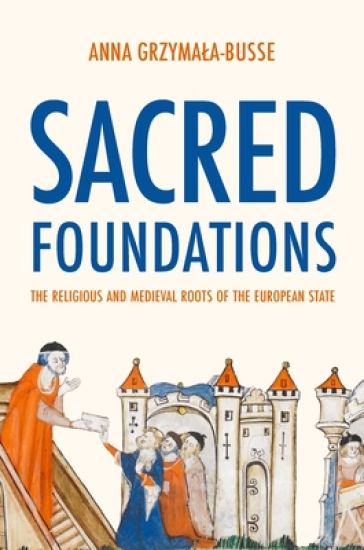
Sacred Foundations

Sacred Foundations

Anna M. Grzymala-Busse

PRINCETON UNIVERSITY PRESS
2023
sidottu
How the medieval church drove state formation in EuropeSacred Foundations argues that the medieval church was a fundamental force in European state formation. Existing accounts focus on early modern warfare or contracts between the rulers and the ruled. In contrast, this major study shows that the Catholic Church both competed with medieval monarchs and provided critical templates for governing institutions, the rule of law, and parliaments.The Catholic Church was the most powerful, wealthiest, and best-organized political actor in the Middle Ages. Starting in the eleventh century, the papacy fought for the autonomy of the church, challenging European rulers and then claiming authority over people, territory, and monarchs alike. Anna Grzymala-Busse demonstrates how the church shaped distinct aspects of the European state. Conflicts with the papacy fragmented territorial authority in Europe for centuries to come, propagating urban autonomy and ideas of sovereignty. Thanks to its organizational advantages and human capital, the church also developed the institutional precedents adopted by rulers across Europe—from chanceries and taxation to courts and councils. Church innovations made possible both the rule of law and parliamentary representation.Bringing to light a wealth of historical evidence about papal conflict, excommunications, and ecclesiastical institutions, Sacred Foundations reveals how the challenge and example of powerful religious authorities gave rise to secular state institutions and galvanized state capacity.
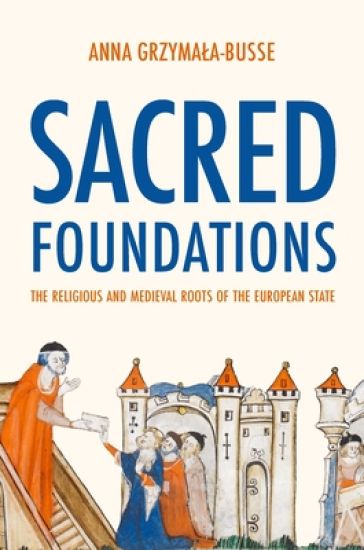
Sacred Foundations

Sacred Foundations

Anna M. Grzymala-Busse

PRINCETON UNIVERSITY PRESS
2023
pokkari
How the medieval church drove state formation in EuropeSacred Foundations argues that the medieval church was a fundamental force in European state formation. Existing accounts focus on early modern warfare or contracts between the rulers and the ruled. In contrast, this major study shows that the Catholic Church both competed with medieval monarchs and provided critical templates for governing institutions, the rule of law, and parliaments.The Catholic Church was the most powerful, wealthiest, and best-organized political actor in the Middle Ages. Starting in the eleventh century, the papacy fought for the autonomy of the church, challenging European rulers and then claiming authority over people, territory, and monarchs alike. Anna Grzymala-Busse demonstrates how the church shaped distinct aspects of the European state. Conflicts with the papacy fragmented territorial authority in Europe for centuries to come, propagating urban autonomy and ideas of sovereignty. Thanks to its organizational advantages and human capital, the church also developed the institutional precedents adopted by rulers across Europe—from chanceries and taxation to courts and councils. Church innovations made possible both the rule of law and parliamentary representation.Bringing to light a wealth of historical evidence about papal conflict, excommunications, and ecclesiastical institutions, Sacred Foundations reveals how the challenge and example of powerful religious authorities gave rise to secular state institutions and galvanized state capacity.
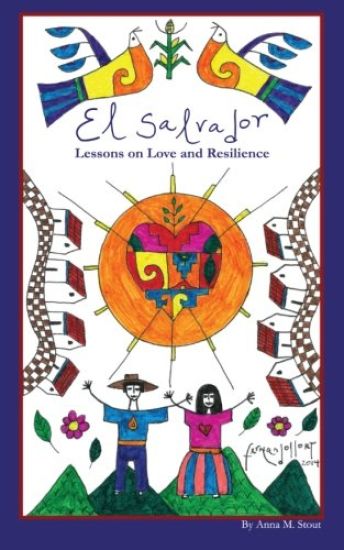
El Salvador: Lessons on Love and Resilience

El Salvador: Lessons on Love and Resilience

Anna M. Stout

Foundation for Cultural Exchange
2014
nidottu
Ten years ago, 19-year-old Anna Stout made her first trip to a small community in El Salvador. The people of El Espino soon became her family and the town her second home. She helped form the Foundation for Cultural Exchange, a Colorado-based nonprofit, which has been changing lives in El Espino and in Colorado ever since.November 2014 marks 10 years since that relationship began and this book is a celebration of that first decade. Stout writes of the culture's beauty and suffering, its struggles and survival. Her stories pay homage to the resilience, generosity, and warmth of the Salvadoran people.This book offers a narrative that is distinct from the hopelessness and bloodshed reported in the media, and instead humanizes the struggle to overcome the unimaginable odds to succeed and thrive in El Salvador.
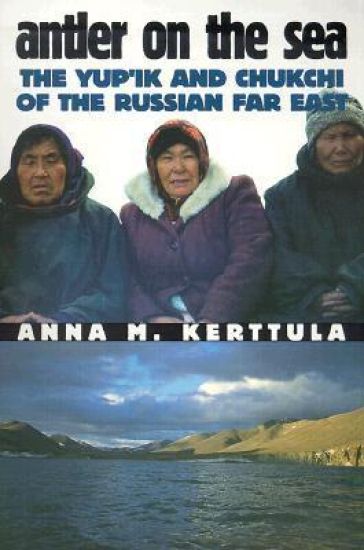
Antler on the Sea

Antler on the Sea

Anna M. Kerttula

Cornell University Press
2000
pokkari
Antler on the Sea is a fascinating, important, and near-unique study of a threatened culture.-Colin Thubron, author of In Siberia Anna M. Kerttula, an anthropologist, offers a vivid portrayal of life in Sireniki, a Siberian village on the Bering Sea. Once a traditional Yup'ik community, it was by the final years of the Soviet Empire home to three cultural groups: the Yup'ik, native hunters of sea mammals; the Chukchi, nomadic reindeer herders who had been required by the state to turn their animals over to cooperative farms; and Russians of European ancestry enticed to the region by incentive programs designed to colonize the Russian Far East. Kerttula, who lived among the villagers for eighteen months, draws on her experiences to explore how each group's beliefs and customs have transformed those of the other two. Her book shows the endurance of the indigenous cultures of Far Eastern Russia despite years of intrusion by the Soviet state. The author describes in rich detail how the Yup'ik, the Chukchi, and the Russian "newcomers" developed a sense of cultural difference because of their separate symbolic systems and yet cohered as a community. She explains that relations among the groups have become tenuous since the breakup of the Soviet Union and the subsequent collapse of the local economy. Kerttula's research provides a unique perspective on today's ethnic rivalries within the former USSR. She maintains that these conflicts, not always expressions of ancient animosities, may be efforts toward mutual understanding during times of economic and social change.