

Kirjahaku
Etsi kirjoja tekijän nimen, kirjan nimen tai ISBN:n perusteella.
1000 tulosta hakusanalla Anna M. Morrison
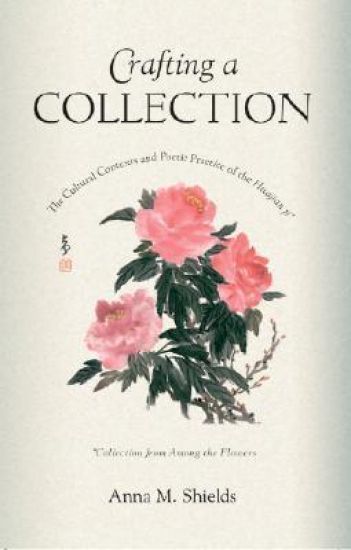
Compiled in 940 at the court of the kingdom of Shu, the Huajian ji is the earliest extant collection of song lyrics by literati poets. The collection has traditionally been studied as the precursor to the lyrics of the Song dynasty, or in terms of what it contributed to the later development of the genre. But scholars have rarely examined the work as an anthology, and have more often focused on the work of individual poets and their respective contributions to the genre. In this book, Anna Shields examines the influence of court culture on the creation of the anthology and the significance of imitation and convention in its lyrics. Shields suggests that by considering the Huajian ji only in terms of its contributions to a later "model," we unnecessarily limit ourselves to a single literary form, and risk overlooking the broader influence of Tang culture on the Huajian ji. By illuminating the historical and literary contexts of the anthology, the author aims to situate the Huajian ji within larger questions of Chinese literary history, particularly the influence of cultural forces on the emergence of genres and the development of romantic literature.
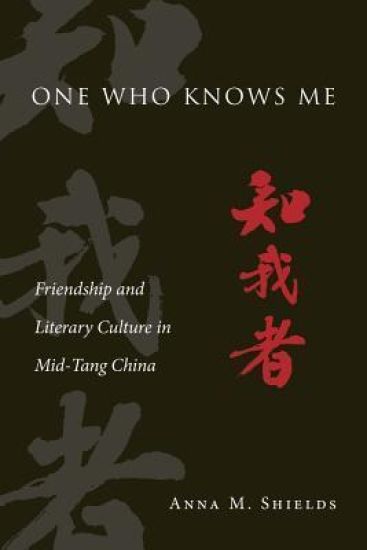
The friendships of writers of the mid-Tang era (780s–820s)—between literary giants like Bai Juyi and Yuan Zhen, Han Yu and Meng Jiao, Liu Zongyuan and Liu Yuxi—became famous through the many texts they wrote to and about one another. What inspired mid-Tang literati to write about their friendships with such zeal? And how did these writings influence Tang literary culture more broadly? In One Who Knows Me, the first book to delve into friendship in medieval China, Anna M. Shields explores the literature of the mid-Tang to reveal the complex value its writers discovered in friendship—as a rewarding social practice, a rich literary topic, a way to negotiate literati identity, and a path toward self-understanding. Shields traces the evolution of the performance of friendship through a wide range of genres, including letters, prefaces, exchange poetry, and funerary texts, and interweaves elegant translations with close readings of these texts. For mid-Tang literati, writing about friendship became a powerful way to write about oneself and to reflect upon a shared culture. Their texts reveal the ways that friendship intersected the public and private realms of experience and, in the process, reshaped both.

In some religious countries, churches have drafted constitutions, restricted abortion, and controlled education. In others, church influence on public policy is far weaker. Why? Nations under God argues that where religious and national identities have historically fused, churches gain enormous moral authority--and covert institutional access. These powerful churches then shape policy in backrooms and secret meetings instead of through open democratic channels such as political parties or the ballot box. Through an in-depth historical analysis of six Christian democracies that share similar religious profiles yet differ in their policy outcomes--Ireland and Italy, Poland and Croatia, and the United States and Canada--Anna Grzyma?a-Busse examines how churches influenced education, abortion, divorce, stem cell research, and same-sex marriage. She argues that churches gain the greatest political advantage when they appear to be above politics. Because institutional access is covert, they retain their moral authority and their reputation as defenders of the national interest and the common good. Nations under God shows how powerful church officials in Ireland, Canada, and Poland have directly written legislation, vetoed policies, and vetted high-ranking officials. It demonstrates that religiosity itself is not enough for churches to influence politics--churches in Italy and Croatia, for example, are not as influential as we might think--and that churches allied to political parties, such as in the United States, have less influence than their notoriety suggests.
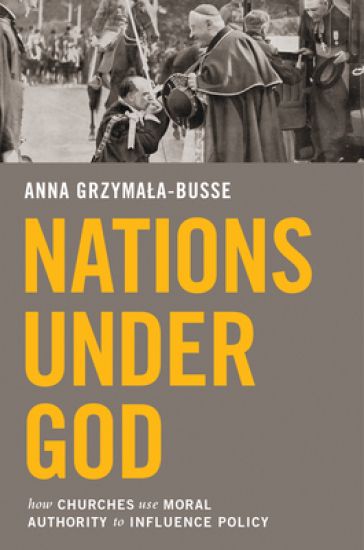
In some religious countries, churches have drafted constitutions, restricted abortion, and controlled education. In others, church influence on public policy is far weaker. Why? Nations under God argues that where religious and national identities have historically fused, churches gain enormous moral authority--and covert institutional access. These powerful churches then shape policy in backrooms and secret meetings instead of through open democratic channels such as political parties or the ballot box. Through an in-depth historical analysis of six Christian democracies that share similar religious profiles yet differ in their policy outcomes--Ireland and Italy, Poland and Croatia, and the United States and Canada--Anna Grzyma?a-Busse examines how churches influenced education, abortion, divorce, stem cell research, and same-sex marriage. She argues that churches gain the greatest political advantage when they appear to be above politics. Because institutional access is covert, they retain their moral authority and their reputation as defenders of the national interest and the common good. Nations under God shows how powerful church officials in Ireland, Canada, and Poland have directly written legislation, vetoed policies, and vetted high-ranking officials. It demonstrates that religiosity itself is not enough for churches to influence politics--churches in Italy and Croatia, for example, are not as influential as we might think--and that churches allied to political parties, such as in the United States, have less influence than their notoriety suggests.
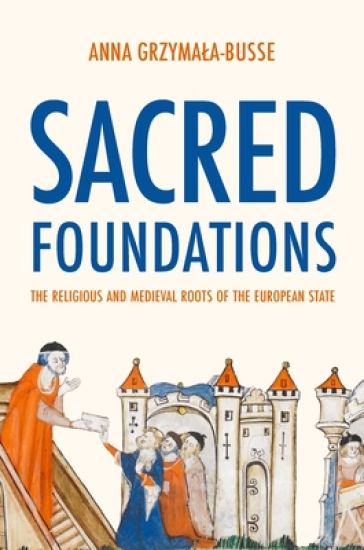
How the medieval church drove state formation in EuropeSacred Foundations argues that the medieval church was a fundamental force in European state formation. Existing accounts focus on early modern warfare or contracts between the rulers and the ruled. In contrast, this major study shows that the Catholic Church both competed with medieval monarchs and provided critical templates for governing institutions, the rule of law, and parliaments.The Catholic Church was the most powerful, wealthiest, and best-organized political actor in the Middle Ages. Starting in the eleventh century, the papacy fought for the autonomy of the church, challenging European rulers and then claiming authority over people, territory, and monarchs alike. Anna Grzymala-Busse demonstrates how the church shaped distinct aspects of the European state. Conflicts with the papacy fragmented territorial authority in Europe for centuries to come, propagating urban autonomy and ideas of sovereignty. Thanks to its organizational advantages and human capital, the church also developed the institutional precedents adopted by rulers across Europe—from chanceries and taxation to courts and councils. Church innovations made possible both the rule of law and parliamentary representation.Bringing to light a wealth of historical evidence about papal conflict, excommunications, and ecclesiastical institutions, Sacred Foundations reveals how the challenge and example of powerful religious authorities gave rise to secular state institutions and galvanized state capacity.
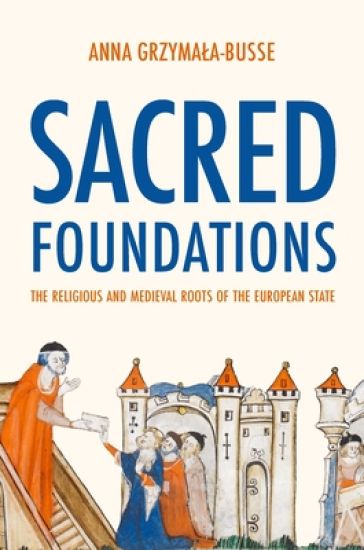
How the medieval church drove state formation in EuropeSacred Foundations argues that the medieval church was a fundamental force in European state formation. Existing accounts focus on early modern warfare or contracts between the rulers and the ruled. In contrast, this major study shows that the Catholic Church both competed with medieval monarchs and provided critical templates for governing institutions, the rule of law, and parliaments.The Catholic Church was the most powerful, wealthiest, and best-organized political actor in the Middle Ages. Starting in the eleventh century, the papacy fought for the autonomy of the church, challenging European rulers and then claiming authority over people, territory, and monarchs alike. Anna Grzymala-Busse demonstrates how the church shaped distinct aspects of the European state. Conflicts with the papacy fragmented territorial authority in Europe for centuries to come, propagating urban autonomy and ideas of sovereignty. Thanks to its organizational advantages and human capital, the church also developed the institutional precedents adopted by rulers across Europe—from chanceries and taxation to courts and councils. Church innovations made possible both the rule of law and parliamentary representation.Bringing to light a wealth of historical evidence about papal conflict, excommunications, and ecclesiastical institutions, Sacred Foundations reveals how the challenge and example of powerful religious authorities gave rise to secular state institutions and galvanized state capacity.
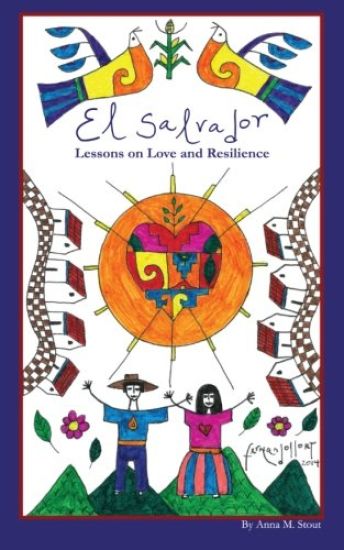
El Salvador: Lessons on Love and Resilience
Anna M. Stout
Foundation for Cultural Exchange
2014
nidottu
Ten years ago, 19-year-old Anna Stout made her first trip to a small community in El Salvador. The people of El Espino soon became her family and the town her second home. She helped form the Foundation for Cultural Exchange, a Colorado-based nonprofit, which has been changing lives in El Espino and in Colorado ever since.November 2014 marks 10 years since that relationship began and this book is a celebration of that first decade. Stout writes of the culture's beauty and suffering, its struggles and survival. Her stories pay homage to the resilience, generosity, and warmth of the Salvadoran people.This book offers a narrative that is distinct from the hopelessness and bloodshed reported in the media, and instead humanizes the struggle to overcome the unimaginable odds to succeed and thrive in El Salvador.

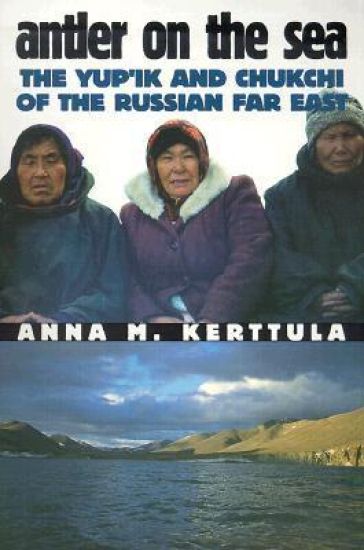
Antler on the Sea is a fascinating, important, and near-unique study of a threatened culture.-Colin Thubron, author of In Siberia Anna M. Kerttula, an anthropologist, offers a vivid portrayal of life in Sireniki, a Siberian village on the Bering Sea. Once a traditional Yup'ik community, it was by the final years of the Soviet Empire home to three cultural groups: the Yup'ik, native hunters of sea mammals; the Chukchi, nomadic reindeer herders who had been required by the state to turn their animals over to cooperative farms; and Russians of European ancestry enticed to the region by incentive programs designed to colonize the Russian Far East. Kerttula, who lived among the villagers for eighteen months, draws on her experiences to explore how each group's beliefs and customs have transformed those of the other two. Her book shows the endurance of the indigenous cultures of Far Eastern Russia despite years of intrusion by the Soviet state. The author describes in rich detail how the Yup'ik, the Chukchi, and the Russian "newcomers" developed a sense of cultural difference because of their separate symbolic systems and yet cohered as a community. She explains that relations among the groups have become tenuous since the breakup of the Soviet Union and the subsequent collapse of the local economy. Kerttula's research provides a unique perspective on today's ethnic rivalries within the former USSR. She maintains that these conflicts, not always expressions of ancient animosities, may be efforts toward mutual understanding during times of economic and social change.
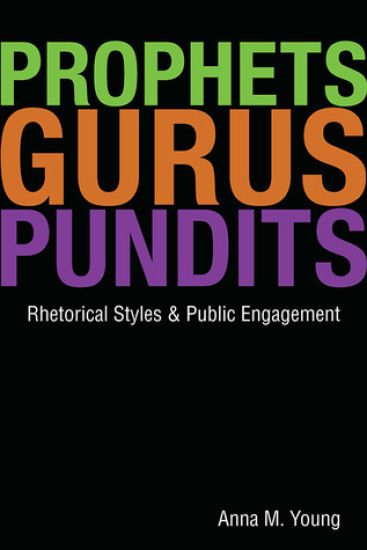
In Prophets, Gurus, and Pundits, author Anna M. Young proposes that the difficulty of bridging the gap between intellectuals and the public is not a failure of ideas; rather, it is an issue of rhetorical strategy. By laying a rhetorical foundation and presenting analytical case studies of contemporary “public intellectuals”, Young creates a training manual for intellectuals who seek to connect with a public audience and effect change writ large.Young begins by defining key aspects of rhetorical style before moving on to discuss the specific ways in which intellectuals may present ideas to a general audience in order to tackle large-scale social problems. Next, she defines the ways in which five crucial turning points in our nation—the rise of religious fundamentalism, a growing lack of trust in our institutions, the continued destruction of the environment, the ubiquity of media and information in our daily lives, and the decline of evidence-based reasoning—have set the stage for opportunities in the current public-intellectual dialogue.Via case studies of such well-known personalities as Deepak Chopra and Professor Cornel West, Young goes on to reveal the six types of public intellectuals who achieve success in presenting scholarly ideas to audiences at large: The Prophet presents the public’s sins for contemplation, then offers a path to redemption. The Guru shepherds his or her flock to enlightenment and a higher power. The Sustainer draws upon our natural and human resources to proffer solutions for social, political, and ecological systems. The Pundit utilises wit and brevity to bring crucial issues to the attention of the public. The Narrator combines a variety of perspectives to create a story the average person can connect with and understand. The Scientist taps into the dreams of the public to offer ideas from above and beyond the typical scope of public discourse. At once a rallying cry and roadmap, Prophets, Gurus, and Pundits draws upon rhetorical expertise and analysis of contemporary public intellectuals to offer a model for scholars to effectively engage the public—and in doing so, perhaps forever change the world in which we live.
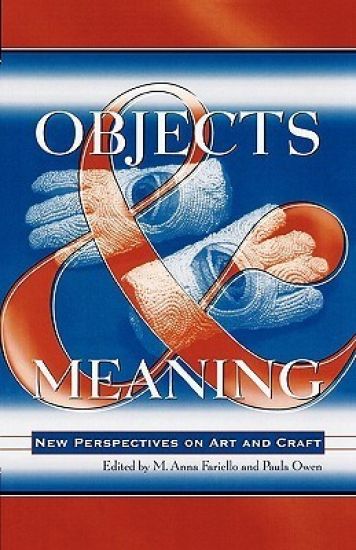
Throughout the 20th century, there were increasing numbers of artists who chose to work within a fine art aesthetic (i.e., expressive, communicative, innovative, unique) while simultaneously embracing qualities associated with craft production (i.e., intimacy, materiality, labor, ritual). At the periphery of their world loomed issues of status, gender, community, and economics. This fluid situation made for an exciting mix of ideas that helped perpetuate an ongoing debate within an art world no longer as monothematic as it appeared in print. Objects and Meaning expands upon a national conversation questioning how various academic disciplines and cultural institutions approach and assign meaning to artist-made objects in postmodern North America. Although most of the discourse since the mid 20th century revolved around the split between art and craft, the contributors to this collection of essays take a broader view, examining the historical, cultural, and theoretical perspectives that defined the parameters of that conversation. Their focus is on issues concerning works that appeared to 'cross over' from mainstream art to an amorphous and pluralistic aesthetic milieu that has yet to be defined. The essays collected for this volume, loosely organized into three groupings_Historical Contexts, Cultural Systems, and Theoretical Frames_contribute to a deeper understanding of the meaning of objects and how that meaning comes to be defined. Although the style of writing in this collection ranges from passionate conviction to cool observation with points of view from different professional backgrounds, each essay reflects original ideas introduced into the cultural dialogue during this period.
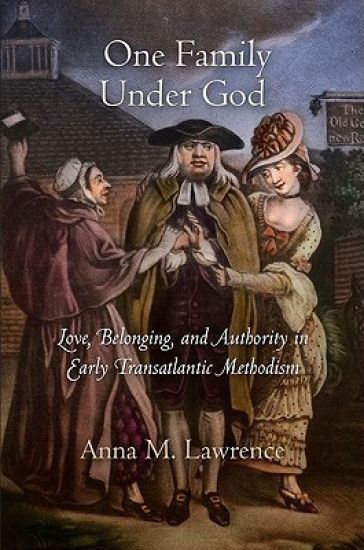
Originally a sect within the Anglican church, Methodism blossomed into a dominant mainstream religion in America during the nineteenth century. At the beginning, though, Methodists constituted a dissenting religious group whose ideas about sexuality, marriage, and family were very different from those of their contemporaries. Focusing on the Methodist notion of family that cut across biological ties, One Family Under God speaks to historical debates over the meaning of family and how the nuclear family model developed over the eighteenth century. Historian Anna M. Lawrence demonstrates that Methodists adopted flexible definitions of affection and allegiance and emphasized extended communal associations that enabled them to incorporate people outside the traditional boundaries of family. They used the language of romantic, ecstatic love to describe their religious feelings and the language of the nuclear family to describe their bonds to one another. In this way, early Methodism provides a useful lens for exploring eighteenth-century modes of family, love, and authority, as Methodists grappled with the limits of familial and social authority in their extended religious family. Methodists also married and formed conjugal families within this larger spiritual framework. Evangelical modes of marriage called for careful, slow courtships, and often marriages happened later in life and produced fewer children. Religious views of the family offered alternatives to traditional coupling and marriage-through celibacy, spiritual service, and the idea of finding one's true spiritual match, which both challenged the role of parental authority within marriage-making and accelerated the turn within the larger society toward romantic marriage. By examining the language and practice of evangelical sexuality and family, One Family Under God highlights how the Methodist movement in the eighteenth century was central to the rise of romantic marriage and the formation of the modern family.
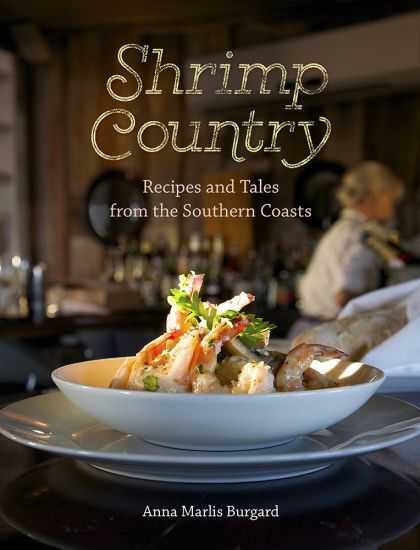
Embark on a fresh and delicious culinary tour of coastal America! Shrimp Country invites readers to discover the southern shoreline from Texas to the Carolinas, savoring the region’s sea air, saltwater, and succulent shrimp.Shrimp is a perfect ingredient. Mild enough to be a part of delicately-flavored dishes and succulent enough to be eaten on its own, it pairs well with both spicy and sweet ingredients and can be fried, sautéed, steamed, broiled, or grilled. In this savory homage to the crustacean, culinarian Anna Marlis Burgard gathers more than 100 tempting recipes, from regional classics like perloo, wiggle, and bog to global fare such as shrimp empanadas, shrimp saganaki, and tom kha gai. Coastal families share their favorite recipes, and seaside restaurants reveal the tasty secrets that lure in customers.Brimming with the larger-than-life personalities of trawler captains, food truck masters, diner cooks, and award-winning chefs, Shrimp Country is a love letter to coastal communities and their joy-filled, soul-fueling kitchens. Kick off your shoes, roll up your sleeves, and dig in!
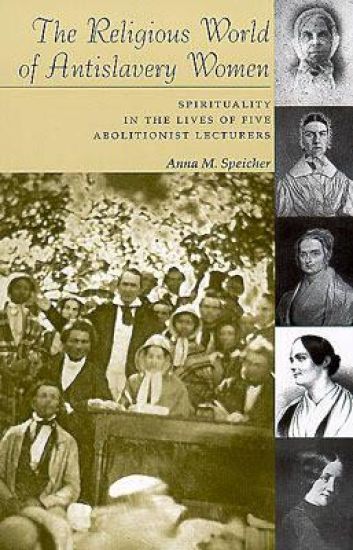
Nineteenth-century women reformers such as the radical abolitionists have frequently been seen as having abandoned the constraints of religion in order to pursue their personal and political goals. The subjects of this book - Angelina Grimke, Sarah Grimke, Sallie Holley, Abby Kelley, and Lucretia Mott - did indeed reject what they found to be the repressive features of the Christianity of their day. Their religiosity, however, remained fundamental to their world view. In this book, Anna M. Speicher explores the dimentions of this evolving faith, which was critical in shaping their decisions and actions throughout their lives.
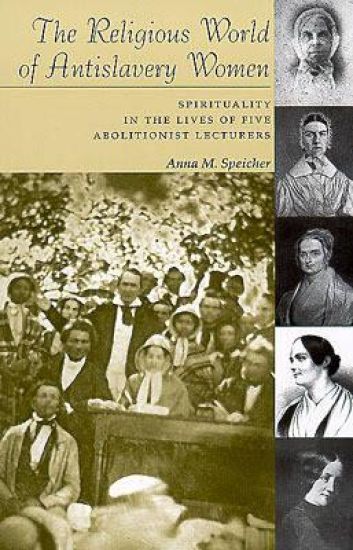
Nineteenth-century women reformers such as the radical abolitionists have frequently been seen as having abandoned the constraints of religion in order to pursue their personal and political goals. The subjects of this book - Angelina Grimke, Sarah Grimke, Sallie Holley, Abby Kelley, and Lucretia Mott - did indeed reject what they found to be the repressive features of the Christianity of their day. Their religiosity, however, remained fundamental to their world view. In this book, Anna M. Speicher explores the dimentions of this evolving faith, which was critical in shaping their decisions and actions throughout their lives.
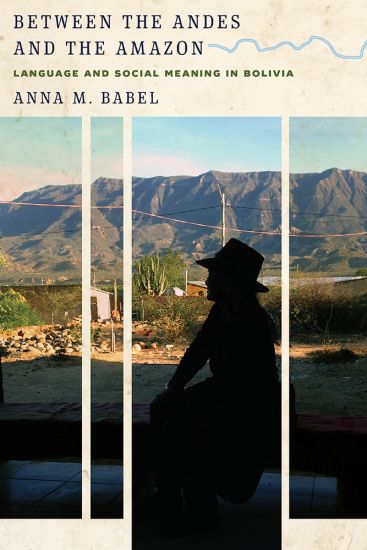
Why can't a Quechua speaker wear pants? Anna M. Babel uses this question to open an analysis of language and social structure at the border of eastern and western, highland and lowland Bolivia. Through an exploration of categories such as political affiliation, ethnic identity, styles of dress, and histories of migration, she describes the ways that people understand themselves and others as Quechua speakers, Spanish speakers, or something in between.Between the Andes and the Amazon is ethnography in storytelling form, a rigorous yet sensitive exploration of how people understand themselves and others as members of social groups through the words and languages they use.Drawing on fifteen years of ethnographic research, Babel offers a close examination of how people produce oppositions, even as they might position themselves "in between" those categories. These oppositions form the raw material of the social system that people accept as "normal" or "the way things are." Meaning-making happens through language use and language play, Babel explains, and the practice of using Spanish versus Quechua is a claim to an identity or a social position. Babel gives personal perspectives on what it is like to live in this community, focusing on her own experiences and those of her key consultants. Between the Andes and the Amazon opens new ways of thinking about what it means to be a speaker of an Indigenous or colonial language-or a mix of both.
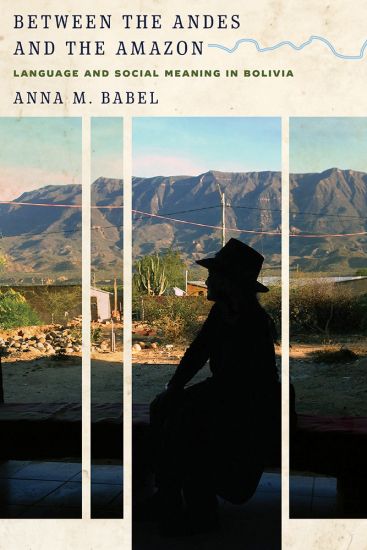
Why can’t a Quechua speaker wear pants? Anna M. Babel uses this question to open an analysis of language and social structure at the border of eastern and western, highland and lowland Bolivia. Through an exploration of categories such as political affiliation, ethnic identity, style of dress, and history of migration, she describes the ways that people understand themselves and others as Quechua speakers, Spanish speakers, or something in between.Between the Andes and the Amazon is ethnography in storytelling form, a rigorous yet sensitive exploration of how people understand themselves and others as members of social groups through the words and languages they use.Drawing on fifteen years of ethnographic research, Babel offers a close examination of how people produce oppositions, even as they might position themselves “in between” those categories. These oppositions form the raw material of the social system that people accept as “normal” or “the way things are.” Meaning-making happens through language use and language play, Babel explains, and the practice of using Spanish versus Quechua is a claim to an identity or a social position. Babel gives personal perspectives on what it is like to live in this community, focusing on her own experiences and those of her key consultants. Between the Andes and the Amazon opens new ways of thinking about what it means to be a speaker of an indigenous or colonial language—or a mix of both.

Sisters in Blue/Hermanas de azul
Anna M. Nogar; Enrique R. Lamadrid; Amy Córdova
University of New Mexico Press
2017
sidottu
Sisters in Blue tells the story of two young women—one Spanish, one Puebloan—meeting across space and time. Sor María de Jesús de Ágreda, New Mexico’s famous Lady in Blue, is said to have traveled to New Mexico in the seventeenth century. Here Anna M. Nogar and Enrique R. Lamadrid bring her to life, imagining an encounter between a Pueblo woman and Sor María during the nun’s mystical spiritual journeys. Tales of Sor María, who described traveling across the earth and the heavens, have traditionally presented her as an evangelist who helped bring Catholicism to the Pueblos. Instead this book, which includes an essay providing historical context, shows a connection between Sor María and her friend Paf Sheuri. The two women find more similarities than differences in their shared experiences, and what they learn from each other has an impact for centuries to come.