

Kirjahaku
Etsi kirjoja tekijän nimen, kirjan nimen tai ISBN:n perusteella.
1000 tulosta hakusanalla Anne E Carr

All around the planet in the 21st century, there are calls for changes to how we manage natural resources, as the ravages of deprivation, resource depletion and unemployment bite harshly on many fronts. We need to rejuvenate resources, not continue to deplete them. Fields such as human settlements, medicine, ecology, economics, natural resource management and climate change have lagged some one hundred years behind in implementing the principles of exciting scientific discoveries about the biophysical principles that underpin the growth of all living creatures.It is in this context that the planetary Light Garden model that is presented in this book brings new hope. It describes the scientific, economic and cultural basis for a new decision making process that will support and rejuvenate the living systems and climate of our planet. It is not a human centered approach, nor one that is based on abstract concepts such as economic growth. It makes living systems the focus and priority of our human activities, rather than limiting the criteria for making our major resource sharing decisions to abstract concepts such as economic growth. We can't expect abstract concepts such as economic growth to help fix problems with the growth of living organisms and the functioning of living, natural entities such as ecosystems or climate. No wonder we've been failing We need to make decisions that align with, and draw upon the Laws of Nature. One of the beauties of this approach is that it is peaceful and does not require warfare or competitive consumption of resources. As Anne Whittingham describes, the Light Garden principles provide some common ground between the individual citizen and the elite entities of the advancing global biotech, financial and digital technologies.This is because we are all threatened by disastrous climate change and the loss of healthy livelihoods, as the protective envelope of biodiversity in which we have evolved continues to disintegrate. The Light Garden decision making model provides a way for humanity to make the changes that are needed now. As illustrated with examples from cultures on every continent, these changes are feasible. They can be made at a scale and pace that gives us an opportunity to regenerate the living systems, climate, societies and lives of the millions of young people who call this planet home.
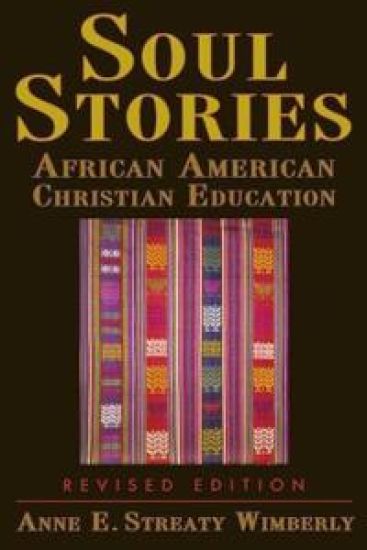
In this revision of Soul Stories, Dr. Wimberly moves even more in the direction of Christian Education with African American families. Soul stories link persons' everyday life with the Christian Scriptures. The soul stories in this revised volume take on a cross-generational orientation with emphasis on linking stories of family identities, events, relationships, and story plot with Bible stories and exemplary Christian faith stories found in the African Diaspora. This orientation builds on an awareness of the continued fragmentation of Black family life and the disconnect between generations on one hand, yet, on the other hand, the profound yearning of Black people for a common family history. The goal of Dr. Wimberly's model is to enliven the values associated with the image of "village" in order to empower and equip African Americans today.

The Trinidadian guppy (Poecilia reticulata) is well known to biologists and home aquarium enthusiasts alike. Scientists have studied guppies for most of the twentieth century. Some of the most intensive recent research has been conducted by behavioral ecologists, who have found that the guppy mating system makes guppies especially useful in the study of sexual selection and mate choice. By observing guppy behavior in aquaria, researchers hope to obtain new insights into how selection operates in natural populations. Here Anne Houde summarizes and synthesizes the scientific work done to date, relates the empirical findings on guppies to current themes in sexual selection theory, and suggests new directions for future research. This book describes the sexual behavior of guppies and examines how mate choice by females leads to the evolution of the conspicuous colors and the courtship displays for which guppies are widely recognized. The author shows that female guppies prefer males with bright color patterns, especially those with orange spots, and that the mating preferences of females lead to sexual selection on both color patterns and courtship displays of males. Houde's work addresses a number of areas that are of interest in sexual selection, including the remarkable degree of plasticity and evolutionary lability of sexual behavior in guppies, geographic variation in mating preferences, possible mechanisms for the evolution of female mating preferences, and the role of sexual selection in speciation. In conclusion, the author explores the implications of her findings for behavioral ecologists who study sexual selection in other species.
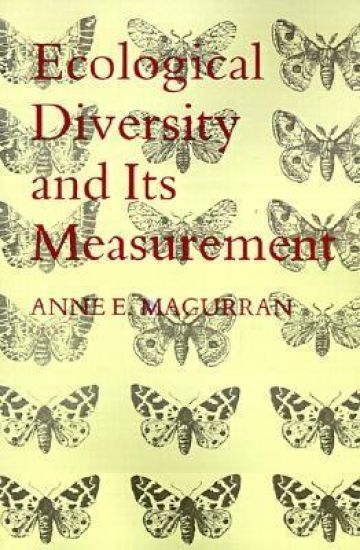
Ecological diversity, or the variety and abundance of species in different habitats and communities, is one of the central themes of ecology. However, much of the existing literature on this subject is diffuse, often confusing, and in many cases complicated by unnecessarily difficult mathematics. This book aims to provide a succinct and clear summary of the relevant literature and a practical guide to the measurement of diversity. The author discusses the methods of describing ecological diversity in conjunction with specific recommendations for the selection and interpretation of diversity measures. In addition, she considers the sampling problems often encountered in ecological censusing. The work concludes with a discussion of the empirical value of diversity measures. A special feature that makes the book particularly accessible to readers without great expertise in mathematics is the inclusion of worked examples of the main diversity measures and models.

Why are countries often able to communicate critical information using diplomacy? Why do countries typically use diplomacy honestly, despite incentives to bluff? Why are they often able to deter attacks using merely verbal threats? International relations theory is largely pessimistic about the prospects for effective diplomacy, yet leaders nevertheless expend much time and energy trying to resolve conflicts through verbal negotiations and public statements. Deterrence by Diplomacy challenges standard understandings of deterrence by analyzing it as a form of talk and reaches conclusions about the effectiveness of diplomacy that are much more optimistic. Anne Sartori argues that diplomacy works precisely because it is so valuable. States take pains to use diplomacy honestly most of the time because doing so allows them to maintain reputations for honesty, which in turn enhance their ability to resolve future disputes using diplomacy rather than force. So, to maintain the effectiveness of their diplomacy, states sometimes acquiesce to others' demands when they might have been able to attain their goals through bluffs. Sartori theorizes that countries obtain a "trade" of issues over time; they get their way more often when they deem the issues more important, and concede more often when they deem the issues less important. Departing from traditional theory, this book shows that rather than always fighting over small issues to show resolve, states can make their threats more credible by sometimes honestly acquiescing over lesser issues--by not crying "wolf."
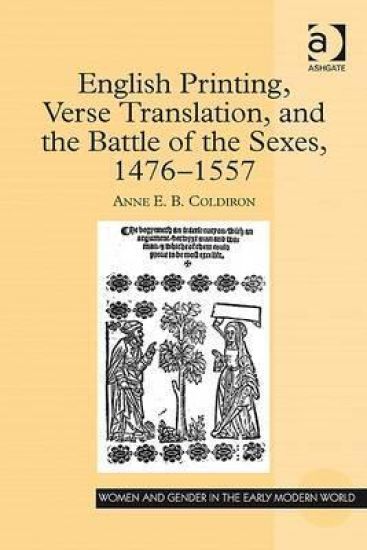
English Printing, Verse Translation, and the Battle of the Sexes, 1476-1557
Anne E.B. Coldiron
Ashgate Publishing Limited
2009
sidottu
Bringing to light new material about early print, early modern gender discourses, and cultural contact between France and England in the revolutionary first phase of English print culture, this book focuses on a dozen or so of the many early Renaissance verse translations about women, marriage, sex, and gender relations. Anne Coldiron here analyzes such works as the Interlocucyon; the Beaute of Women; the Fyftene Joyes of Maryage; and the Complaintes of the Too Soone and Too Late Maryed as well as the printed translations of writings of Christine de Pizan. Her selections identify an insufficiently discussed strand of English poetry, in that they are non-elite, non-courtly, and non-romance writings on women's issues. She investigates the specific effects of translation on this alternative strand of poetry, showing how some French poems remain stable in the conversion, others subtly change emphasis in their new context, but some are completely transformed. Coldiron also emphasizes the formal and presentational dimensions of the early modern poetic book, assessing the striking differences the printers' paratexts and visual presentation strategies make to the meaning and value of the poems. A series of appendices presents the author's transcriptions of the texts that are otherwise inaccessible, never having been edited in modern times.
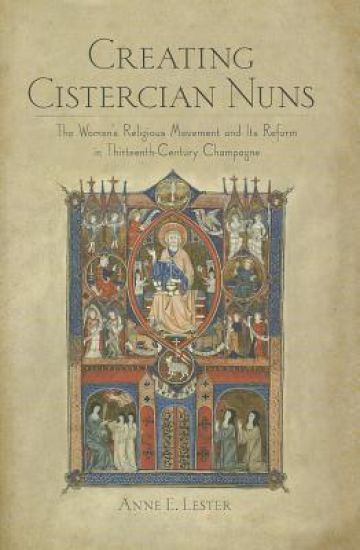
In Creating Cistercian Nuns, Anne E. Lester addresses a central issue in the history of the medieval church: the role of women in the rise of the religious reform movement of the thirteenth century. Focusing on the county of Champagne in France, Lester reconstructs the history of the women's religious movement and its institutionalization within the Cistercian order. The common picture of the early Cistercian order is that it was unreceptive to religious women. Male Cistercian leaders often avoided institutional oversight of communities of nuns, preferring instead to cultivate informal relationships of spiritual advice and guidance with religious women. As a result, scholars believed that women who wished to live a life of service and poverty were more likely to join one of the other reforming orders rather than the Cistercians. As Lester shows, however, this picture is deeply flawed. Between 1220 and 1240 the Cistercian order incorporated small independent communities of religious women in unprecedented numbers. Moreover, the order not only accommodated women but also responded to their interpretations of apostolic piety, even as it defined and determined what constituted Cistercian nuns in terms of dress, privileges, and liturgical practice. Lester reconstructs the lived experiences of these women, integrating their ideals and practices into the broader religious and social developments of the thirteenth century—including the crusade movement, penitential piety, the care of lepers, and the reform agenda of the Fourth Lateran Council. The book closes by addressing the reasons for the subsequent decline of Cistercian convents in the fourteenth century. Based on extensive analysis of unpublished archives, Creating Cistercian Nuns will force scholars to revise their understanding of the women's religious movement as it unfolded during the thirteenth century.

In the 1890s the Apollo Iron and Steel Company ended a bitterly contested labor dispute by hiring replacement workers from the surrounding countryside. To avoid future unrest, however, the company sought to gain tighter control over its workers not only at the factory but also in their homes. Drawing upon a philosophy of reform movements in Europe and the United States, the firm decided that providing workers with good housing and a good urban environment would make them more loyal and productive. In 1895, Apollo Iron and Steel built a new, integrated, non-unionized steelworks and hired the nation's preeminent landscape architectural firm (Olmsted, Olmsted, and Eliot) to design the model industrial town: Vandergrift. In Capital's Utopia: Vandergrift, Pennsylvania, 1855-1916, Anne E. Mosher offers the first comprehensive geographical overview of the industrial restructuring of an American steelworks and its workforce in the late nineteenth-century. In addition, by offering a thorough analysis of the Olmsted plan, Mosher integrates historical geography and labor history with landscape architectural history and urban studies. As a result, this book is far more than a case study. It is a window into an important period of industrial development and its consequences on communities and environments in the world-famous steel country of southwestern Pennsylvania.
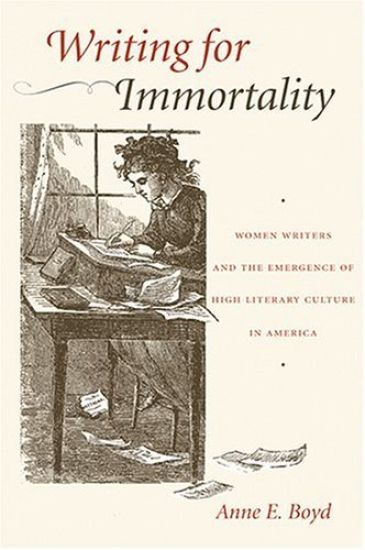
Before the Civil War, American writers such as Catharine Maria Sedgwick and Harriet Beecher Stowe had established authorship as a respectable profession for women. But though they had written some of the most popular and influential novels of the century, they accepted the taboo against female writers, regarding themselves as educators and businesswomen. During and after the Civil War, some women writers began to challenge this view, seeing themselves as artists writing for themselves and for posterity. Writing for Immortality studies the lives and works of four prominent members of the first generation of American women who strived for recognition as serious literary artists: Louisa May Alcott, Elizabeth Stuart Phelps, Elizabeth Stoddard, and Constance Fenimore Woolson. Combining literary criticism and cultural history, Anne E. Boyd examines how these authors negotiated the masculine connotation of "artist," imagining a space for themselves in the literary pantheon. Redrawing the boundaries between male and female literary spheres, and between American and British literary traditions, Boyd shows how these writers rejected the didacticism of the previous generation of women writers and instead drew their inspiration from the most prominent "literary" writers of their day: Emerson, James, Barrett Browning, and Eliot. Placing the works and experiences of Alcott, Phelps, Stoddard, and Woolson within contemporary discussions about "genius" and the "American artist," Boyd reaches a sobering conclusion. Although these women were encouraged by the democratic ideals implicit in such concepts, they were equally discouraged by lingering prejudices about their applicability to women.
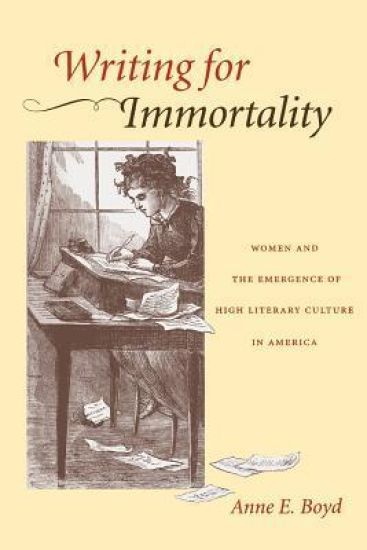
Before the Civil War, American writers such as Catharine Maria Sedgwick and Harriet Beecher Stowe had established authorship as a respectable profession for women. But though they had written some of the most popular and influential novels of the century, they accepted the taboo against female writers, regarding themselves as educators and businesswomen. During and after the Civil War, some women writers began to challenge this view, seeing themselves as artists writing for themselves and for posterity. Writing for Immortality studies the lives and works of four prominent members of the first generation of American women who strived for recognition as serious literary artists: Louisa May Alcott, Elizabeth Stuart Phelps, Elizabeth Stoddard, and Constance Fenimore Woolson. Combining literary criticism and cultural history, Anne E. Boyd examines how these authors negotiated the masculine connotation of "artist," imagining a space for themselves in the literary pantheon. Redrawing the boundaries between male and female literary spheres, and between American and British literary traditions, Boyd shows how these writers rejected the didacticism of the previous generation of women writers and instead drew their inspiration from the most prominent "literary" writers of their day: Emerson, James, Barrett Browning, and Eliot. Placing the works and experiences of Alcott, Phelps, Stoddard, and Woolson within contemporary discussions about "genius" and the "American artist," Boyd reaches a sobering conclusion. Although these women were encouraged by the democratic ideals implicit in such concepts, they were equally discouraged by lingering prejudices about their applicability to women.
Anne E. Becker examines the cultural context of the embodied self through her ethnography of bodily aesthetics, food exchange, care, and social relationships in Fiji. She contrasts the cultivation of the body/self in Fijian and American society, arguing that the motivation of Americans to work on their bodies' shapes as a personal endeavor is permitted by their notion that the self is individuated and autonomous. On the other hand, because Fijians concern themselves with the cultivation of social relationships largely expressed through nurturing and food exchange, there is a vested interest in cultivating others' bodies rather than one's own.
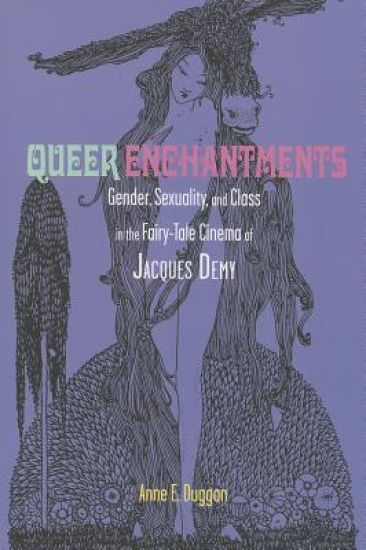
To the uninitiated, the films of French New Wave director Jacques Demy can seem strange and even laughable, with their gaudy colour schemes and sung dialogue. Yet since the late 1990s, a generation of queer filmmakers in France have found new inspiration in Demy's cinema. In this volume, author Anne E. Duggan examines Jacques Demy's queer sensibility in connection with another understudied characteristic of his oeuvre: his recurrent use of the fairy tale. In Queer Enchantments: Gender, Sexuality, and Class in the Fairy-Tale Cinema of Jacques Demy, Duggan demonstrates that Demy uses fairy-tale devices to explore and expand the identity categories of his characters, while he broadens the possibilities of the genre of the fairy tale through his cinematic revisions. In each chapter, Duggan examines how Demy strategically unfolds, challenges, and teases out the subversive qualities of fairy-tale paradigms. In chapter 1, Duggan reads Demy's Lola and The Umbrellas of Cherbourg through the lens of ""Cinderella"" and ""Sleeping Beauty,"" while in chapter 2, she explores Demy's revision of Charles Perrault's ""Donkey Skin"" from the particular angle of gay aesthetics. In chapter 3, Duggan situates Demy's rendition of The Pied Piper in relation to a specifically Franco-American tradition of the legend, which thus far has not received critical attention. Finally, in Chapter 4, she examines the ways in which Demy's Lady Oscar represents the undoing of the figure of the maiden warrior. An epilogue reads Demy's fairy-tale cinema as exemplary of the postmodern tale. Duggan shows that Demy's cinema heightens the inherent tensions and troubles that were already present in fairy-tale texts and uses them to illustrate both the constraints and utopian possibilities of the fairy tale. Both film and fairy-tale studies scholars will enjoy Duggan's fresh look at the distinctive cinema of Jacques Demy.
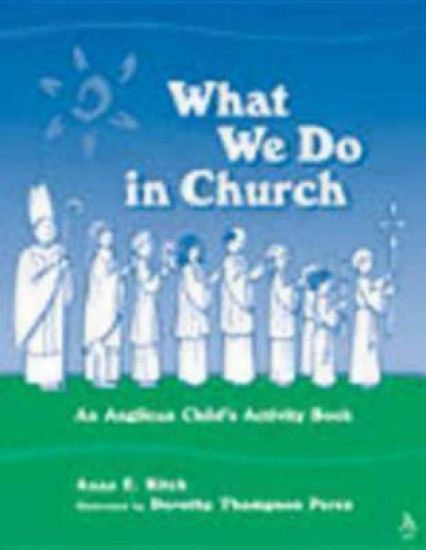
The wonderful sights, sounds, and smells of the Anglican liturgy can engage the imagination of young children and draw them into enthusiastic worship. But it can be a bit confusing as well. Through the interactive games and puzzles in this fun-filled activity book, children ages 4-7 can grow to a deeper understanding of Anglican worship life. From learning about the participants in the entry processional, to coloring the vestments of the priest and deacon, to identifying the amazing things their senses tell them about the Eucharist, this book is a treasure trove for kids and adults. Forty one-page activities are followed by a four-page parent guide designed to promote parenting in the pews and offer tips for parents and other educators using these activities with children. Permission to copy the pages for non-profit use in church or school is included in the book.
You've chosen the godparents, dressed the baby in yards of white, and headed to church for the christening. Now what? What does the sacrament of baptism mean in your child's life - and yours? In Taking the Plunge, parents explore how the Baptismal Covenant helps to shape the experience of raising children. What are you promising when you baptize your child? Why are "please" and "thank you" theological words, not simply polite things to say? Anne Kitch writes with a light touch and includes plenty of real-life stories.
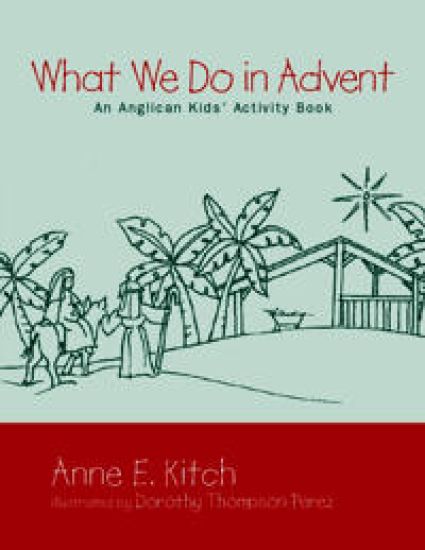
Fun-filled activity book for kids ages 4 to 7 shows how to make an Advent wreath, help Mary and Joseph find their way to Bethlehem, and count the gifts the Magi bring to the Christ Child. Filled with mazes, crossword puzzles, connect-the-dots, and word searches. A great way for kids and their parents to focus on the true meaning of the Advent and Christmas seasons. An invaluable resource for families and Christian formation teams alike.
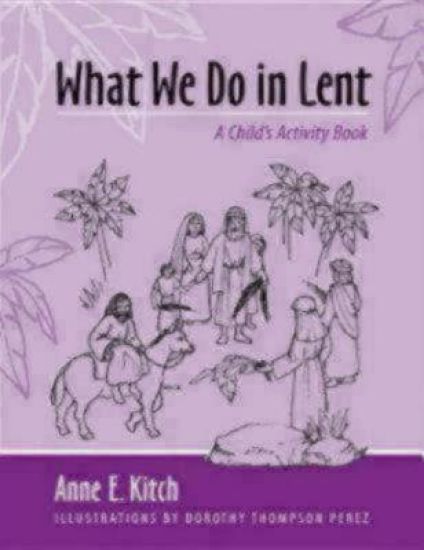
This is the latest in this series aimed at young Anglicans. The previous ones have included "What We Do In Church" and "What We Do In Advent".The idea behind the series is that it teaches families about aspects of the faith. The key word here is "families", because although the books themselves are clearly for children, and 4-7 years old at that, they actually have something to teach the whole family and there are Parent Pages that contain background information and advice for parenting in the pews (and let's be honest, some parents really need to learn this!).Although these books are written by Episcopalians, they are more than suitable for any denomination that uses the liturgical calendar.Illustrated throughout, and with mazes, crosswords, join the dots and more, this is a fun way to teach children about what is traditionally a solemn season.
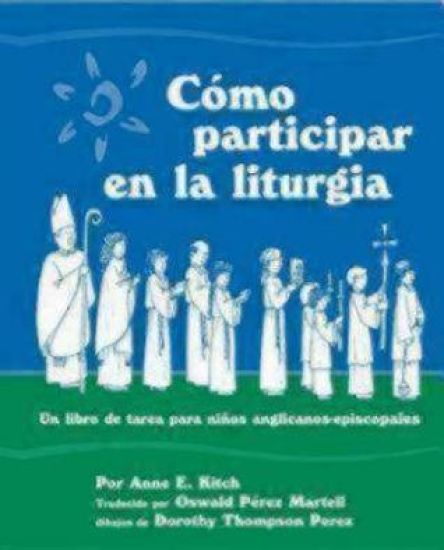
A medida que las congregaciones latinas continuan aumentando en la Iglesia Episcopal, le acompana una gran necesidad de desarrollar mas recursos de formacion en espanol para todos los grupos y edades. Las maravillosas vistas, sonidos, y aromas de la liturgia anglicana pueden captar la imaginacion hasta de los ninos mas pequenos y lanzarles a participar de manera muy entusiasta en la vida liturgica de la Iglesia. Pero todo tambien puede parecer ser muy confuso. A traves de juegos interactivos y los crucigramas, este muy divertido libro de actividades puede ayudar a los ninos de 4 a 7 anos de edad a comprender mejor la vida liturgica en la Iglesia Anglicana. De tener conocimiento sobre los que participan en la procesion de entrada, y colorear las vestimentas de los sacerdotes y diaconos, hasta identificar las nociones maravillosas que sus sentidos captan sobre la Eucaristia, este libro es un tesoro oculto tanto para los ninos como adultos. Con cuarenta y una paginas de actividades seguidas de una guia de cuatro paginas para asistir a los padres a adiestrar desde las bancas, este libro ofrece consejos a los padres y a otros educadores utilizando estas actividades con los ninos. El libro tambien extiende permiso a las iglesias y escuelas para libremente fotocopiar las paginas e utilizarlas para ensenar. As Latino congregations continue to grow in the Episcopal Church, there is a concomitant need for good Spanish-language formation resources for all age groups. The wonderful sights, sounds, and smells of the Anglican liturgy can engage the imagination of young children and draw them into enthusiastic worship. But it can all be a bit confusing, too. Through the interactive games and puzzles in this fun-filled activity book, children ages 4-7 can grow to a deeper understanding of Anglican worship life. From learning about the participants in the entry processional, to coloring the vestments of the priest and deacon, to identifying the amazing things their senses tell them about the Eucharist, this book is a treasure trove for kids and adults. Forty-one pages of activities are followed by a four-page parent guide designed to promote parenting in the pews and offer tips for parents and other educators using these activities with children. Permission to copy the pages for use in church or school is included in the book.
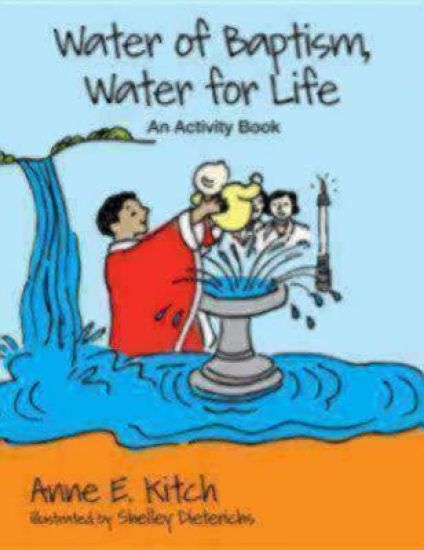
Water for Life is an illustrated activity book for 8-11 year olds (although adults will also find it informative) and families. It can be used in an educational or devotional setting at home, church, or school. Water connects all physical and spiritual life. Besides being essential for life, water is the visible sign of Baptism, which calls us to serve others in the world. Having clean water for all God’s children is an act of justice, love, respect and a core value of what it means to be a Christian. These illustrated workbook activities tap into multiple learning levels and offer a variety of ways for children to interact with this core value of our faith, making a direct connection for young people between their faith and daily life. Activities also connect clean water and the Millennium Development Goals.
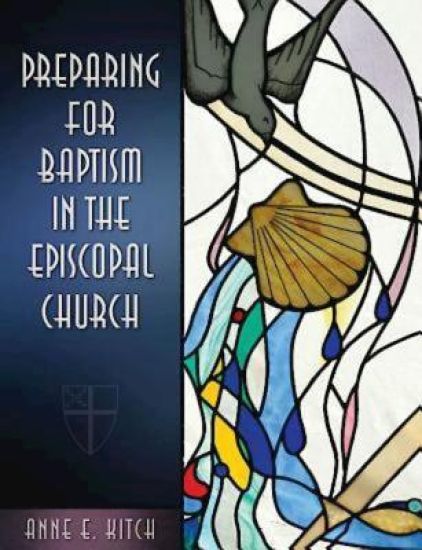
A primer or refresher on the sacrament of Baptism for new parents, new members, and godparents.This book is about preparing for Christian baptism in the Episcopal Church. While we may hear people say, “I was baptized a Methodist,” or “I was baptized Catholic, or “I was baptized Episcopalian,” people are not baptized into a denomination; they are baptized into the Christian faith. While various Christian denominations differ both their theology of baptism as it is understood and practiced in the Episcopal Church following the rite found in the Book of Common Prayer 1979.“This short book is full of helpful information, solid history, sound theology, and thoughtful reflection. It is the perfect book to give to adults or to parents of young children seeking baptism through the Episcopal Church. I am happy that I will be able to offer this book to my students for their future use when guiding baptismal candidates. A truly welcome resource.”—The Reverend Dr. Nathan Jennings, associate professor of liturgics and Anglican studies, Seminary of the Southwest