
Kirjahaku
Etsi kirjoja tekijän nimen, kirjan nimen tai ISBN:n perusteella.
1000 tulosta hakusanalla Anon

The Identification Of The Writer Of The Anonymous Letter To Lord Monteagle In 1605
Anonymous
Kessinger Pub
2007
pokkari

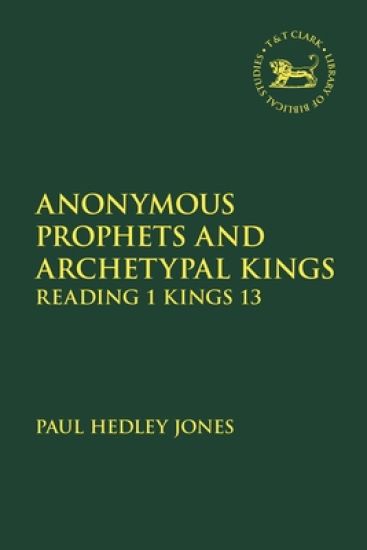
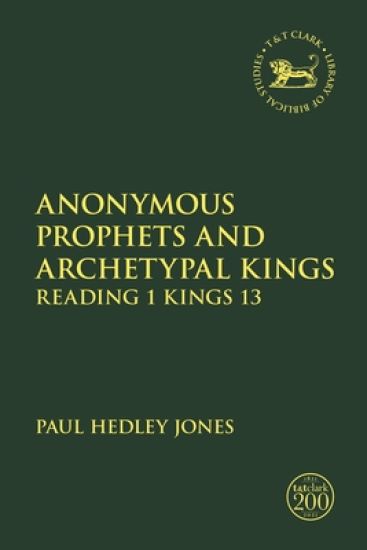
Paul Hedley Jones presents a coherent reading of 1 Kings 13 that is attentive to literary, historical and theological concerns. Beginning with a summary and evaluation of Karl Barth’s overtly theological exposition of the chapter – as set out in his Church Dogmatics – Jones explores how this analysis was received and critiqued by Barth's academic peers, who focused on very different questions, priorities and methods. By highlighting substantive material in the text for further investigation, Jones sheds light on a range of hermeneutical issues that support exegetical work unseen, and additionally provides a wider scope of opinion into the conversation by reviewing the work of other scholars whose methods and priorities also diverge from those of Barth and his contemporaries. After evaluating four additional in-depth readings of 1 Kings 13, Jones presents a more theoretical discussion about perceived dichotomies in biblical studies that tend to surface regularly in methodological debates. This volume culminates with Jones’ original exposition of the chapter, which offers an interpretation that reads 1 Kings 13 as a narrative analogy, where the figure of Josiah functions as a hermeneutical key to understanding the dynamics of the story.
Paul Hedley Jones presents a coherent reading of 1 Kings 13 that is attentive to literary, historical and theological concerns. Beginning with a summary and evaluation of Karl Barth’s overtly theological exposition of the chapter – as set out in his Church Dogmatics – Jones explores how this analysis was received and critiqued by Barth's academic peers, who focused on very different questions, priorities and methods. By highlighting substantive material in the text for further investigation, Jones sheds light on a range of hermeneutical issues that support exegetical work unseen, and additionally provides a wider scope of opinion into the conversation by reviewing the work of other scholars whose methods and priorities also diverge from those of Barth and his contemporaries. After evaluating four additional in-depth readings of 1 Kings 13, Jones presents a more theoretical discussion about perceived dichotomies in biblical studies that tend to surface regularly in methodological debates. This volume culminates with Jones’ original exposition of the chapter, which offers an interpretation that reads 1 Kings 13 as a narrative analogy, where the figure of Josiah functions as a hermeneutical key to understanding the dynamics of the story.

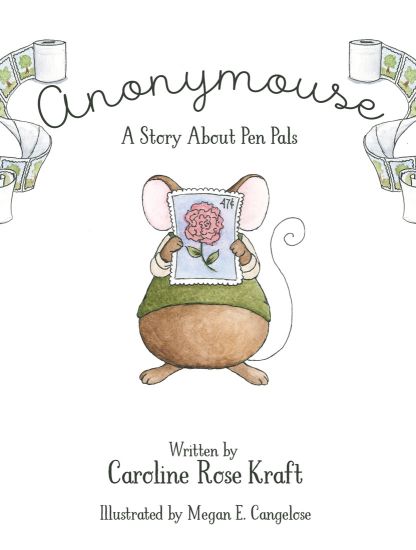
Parsnip Peppersnatch is an unassuming mouse who resides in P.O. Box 12. Every night he scavenges for food, but he's always careful to get home before the people come If there's one thing Parsnip simply cannot bear, it's people Eek But one day, Parsnip sees a small person who looks very sad. Suddenly he finds himself involved in a scheme that will take courage, know-how and even a few anonymous letters
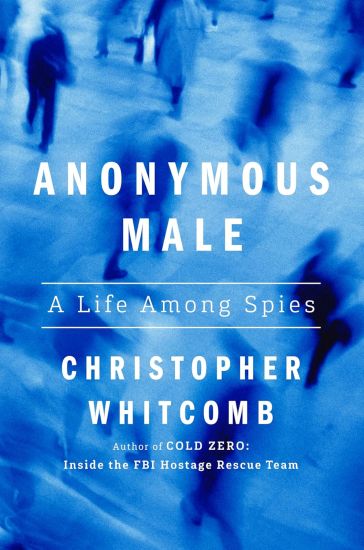
A no-holds-barred memoir about identity, from a former Hostage Rescue Team sniper who left the FBI on 9/11 only to lose himself, moving deeper into a world of spies. In September 2001, Christopher Whitcomb was the most visible FBI agent in the world. His bestselling memoir, Cold Zero, had led to novels, articles in GQ, and op-eds in The New York Times. He appeared on Imus in the Morning, Larry King, and Meet the Press; he was nominated for a Peabody reporting for CNBC. He played poker with Brad Pitt while contracting for the CIA. Then one day in 2006, without warning, Whitcomb packed a bag, flew into Somalia, and dropped off the face of the earth. For fifteen years, he waged a mercenary war on himself, traveling the world with aliases, cash, and guns. He built a private army in the jungles of Timor-Leste, working contracts for intelligence agencies, where he survived a coup d' tat only to lose his friends, abandon his family, and give up on God. And though many stories might have ended there, Anonymous Male is a tale of redemption. While surfing the wilds of Indonesia, Whitcomb found himself trapped beneath a giant wave, where, at the edge of drowning, he came to terms with the chaos of his own clandestine life. He survived the wave to find his way home and rebuild the world that he had abandoned. Anonymous Male is a riveting memoir about loss and recovery, a deeply intimate story that spans continents, war, politics and the media. It is a confession, and a cautionary tale of what happens to people whom the government trains to lie, even to themselves.
Anonymous Old English Lives of Saints
Harvard University Press
2020
sidottu
From the first centuries of Christianity, believers turned to the perfection modeled by saints for inspiration, and a tradition of recounting saints’ Lives flourished. The Latin narratives followed specific forms, dramatizing a virgin’s heroic resolve or a martyr’s unwavering faith under torture.In early medieval England, saints’ Lives were eagerly received and translated into the vernacular. The stories collected here by unknown authors are preserved in manuscripts dating from the eleventh and twelfth centuries. They include locally venerated saints like the abbess Seaxburh, as well as universally familiar ones like Nicholas and Michael the Archangel, and are set everywhere from Antioch to Rome, from India to Ephesus. These Lives also explore such topics as the obligations of rulers, marriage and gender roles, private and public devotion, the environment, education, and the sweep of human history. This volume presents new Old English editions and modern English translations of twenty-two unattributed saints’ Lives.
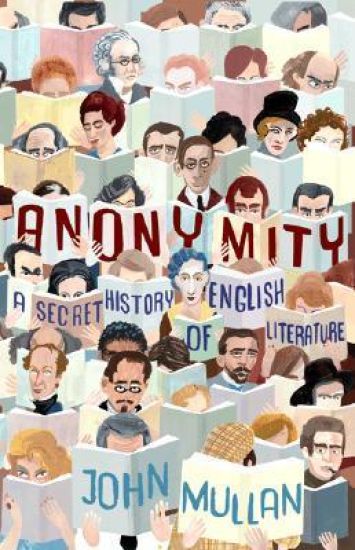
Some of the greatest works in English literature were first published without their authors' names. Why did so many authors want to be anonymous--and what was it like to read their books without knowing for certain who had written them? In Anonymity, John Mullan gives a fascinating and original history of hidden identity in English literature. From the sixteenth century to today, he explores how the disguises of writers were first used and eventually penetrated, how anonymity teased readers and bamboozled critics--and how, when book reviews were also anonymous, reviewers played tricks of their own in return. Today we have forgotten that the first readers of Gulliver's Travels and Sense and Sensibility had to guess who their authors might be, and that writers like Sir Walter Scott and Charlotte Bronte went to elaborate lengths to keep secret their authorship of the best-selling books of their times. But, in fact, anonymity is everywhere in English literature. Spenser, Donne, Marvell, Defoe, Swift, Fanny Burney, Austen, Byron, Thackeray, Lewis Carroll, Tennyson, George Eliot, Sylvia Plath, and Doris Lessing--all hid their names. With great lucidity and wit, Anonymity tells the stories of these and many other writers, providing a fast-paced, entertaining, and informative tour through the history of English literature.
Anonymums
HARPERCOLLINS PUBLISHERS (AUSTRALIA) PTY LTD
2011
nidottu
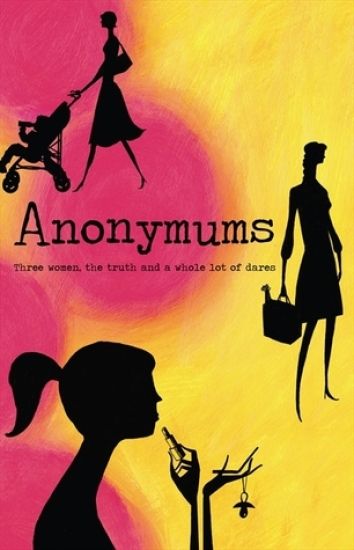
Truth or dare? Bored with their suburban existence, Mum A, Mum B and Mum C - the Anonymums - prove that sometimes a dash of spice, two good friends and ripping all the hair from your body (dare number three) is all you need to get you back on track. Once upon a time, there were three mums - Mum A, Mum B and Mum C. Bored with their suburban existence, they decided to add some spice to their lives. For three months, they would dare each other to do things. Mum B would find herself wearing firecracker red lipstick for a whole week (yes, even to swimming lessons); Mum C would tell her atheist husband she'd found religion; and Mum A would have a secret tryst with Santa in a shopping centre. they also dared each other to tell the truth ...the truth about motherhood. the truth about their lives. the truth about who they'd become, compared to who they wanted to be. By turns jaw-achingly funny, touching, sad and sensible, Anonymums proves that sometimes a dash of spice, two good friends and ripping all the hair from your body (dare number three) is all you need to get you back on track.

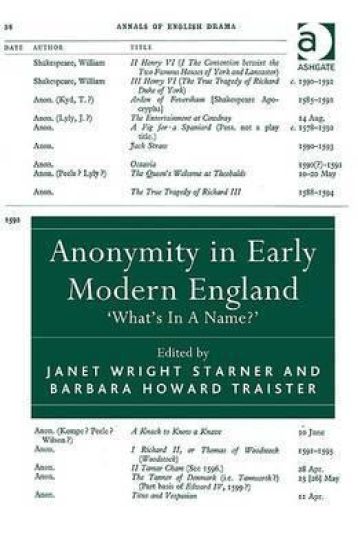
Expanding the scholarly conversation about anonymity in Renaissance England, this essay collection explores the phenomenon in all its variety of methods and genres as well as its complex relationship with its alter ego, attribution studies. Contributors address such questions as these: What were the consequences of publishing and reading anonymous texts for Renaissance writers and readers? What cultural constraints and subject positions made anonymous publication in print or manuscript a strategic choice? What are the possible responses to Renaissance anonymity in contemporary classrooms and scholarly debate? The volume opens with essays investigating particular texts-poetry, plays, and pamphlets-and the inflection each genre gives to the issue of anonymity. The collection then turns to consider more abstract consequences of anonymity: its function in destabilizing scholarly assumptions about authorship, its ethical ramifications, and its relationship to attribution studies.

In Anonymous, learn to recognize the riches in the uncelebrated seasons of your life. When your potential is unseen and your abilities are unappreciated, use those times as opportunities to develop an unshakable identity and to find rest in God's timing—just as Jesus did.Unsettling spaces are actually the surprising birthplace of true spiritual strength.Most of Jesus’ first thirty years went unnoticed by the world, but that season of quiet anonymity prepared Him for true greatness...and made Him unshakable when His time had come. Using Jesus' hidden years as inspiration, Alicia Chole memorably demonstrates how to:Resist resentment when your accomplishments go unnoticedRepurpose your own hidden years and experience deep growthResolutely live out God's dreams for you with integrity and confidenceWe all experience times of hiddenness, when our potential is unseen and our abilities remain uncelebrated. This book will encourage you to not rush through those times by reminding you that these anonymous seasons of the soul hold enormous power to cultivate character traits that cannot be developed any other way!
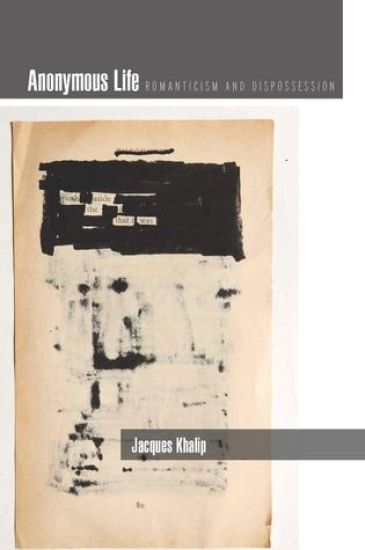
Romanticism is often synonymous with models of identity and action that privilege individual empowerment and emotional autonomy. In the last two decades, these models have been the focus of critiques of Romanticism's purported self-absorption and alienation from politics. While such critiques have proven useful, they often draw attention to the conceptual or material tensions of romantic subjectivity while accepting a conspicuous, autonomous subject as a given, thus failing to appreciate the possibility that Romanticism sustains an alternative model of being, one anonymous and dispossessed, one whose authority is irreducible to that of an easily recognizable, psychologized persona. In Anonymous Life, Khalip goes against the grain of these dominant critical stances by examining anonymity as a model of being that is provocative for writers of the era because it resists the Enlightenment emphasis on transparency and self-disclosure. He explores how romantic subjectivity, even as it negotiates with others in the social sphere, frequently rejects the demands of self-assertion and fails to prove its authenticity and coherence.
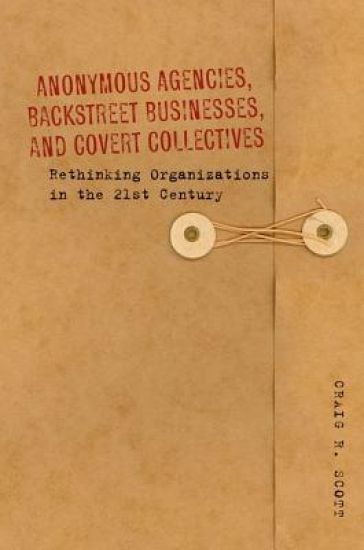
Anonymous Agencies, Backstreet Businesses, and Covert Collectives
Craig Scott
Stanford University Press
2013
sidottu
Many of today's organizations "live in public"; they devote extensive resources to branding, catching the public eye, and capitalizing on the age of transparency. But, at the same time, a growing number of companies and other collectives are flying under the radar, concealing their identities and activities. This book offers a framework for thinking about how organizations and their members communicate identity to relevant audiences. Considering the degree to which organizations reveal themselves, the extent to which members express their identification with the organization, and whether the audience is public or local, author Craig R. Scott describes collectives as residing in "regions" that range from transparent to shaded, from shadowed to dark. Taking a closer look at groups like EarthFirst!, the Church of Scientology, Alcoholics Anonymous, the KKK, Skull and Bones, U.S. special mission units, men's bathhouses, and various terrorist organizations, this book draws attention to shaded, shadowed, and dark collectives as important organizations in the contemporary landscape.
In this book the author explores the radical novel in the United States which has been identified with the writings produced during the early part of the twentieth century by writers associated with socialist and communist ideologies, whose productions advocated the overthrow of the capitalist system. Contents: The Tradition of Literary Radicalism; Conditions of the Radical Novel in the Twentieth Century: Social Inequality; The Appearance of the Modern Artist/Intellectual; The New Periodicals; Socialism; Proletarian Literature; World War I; The Russian Influence; "The Inferiority of the Radical Novel"; Some Exits; The Depression; Bourgeois Literary Theory; Dismissal of the Radical Novel; The Reunification of the Radical Novel; An Alternative Reality; Reading and the Twentieth-Century Radical Novel: A Pedagogy; Bibliography; Index.