This book describes a blend of insight-oriented, behavioral, and strategic family therapy, which the author has developed over thirty-four years of dealing with suicidal adolescents. It aims not to replace other forms of therapy but to augment the therapist’s own therapeutic style. The book offers an informative and personally told story bringing together scholarship and meaningful glimpses into the thought processes of suicidal youth. Written in an understandable, friendly, and practical style, it will appeal to those in clinical practice, as well as graduate-level students pursuing clinical work.
In 1957 the Western Region of BR identified a need for 400 Type 1 diesel locomotives for short-haul freight duties but it was 1964 before the first was introduced. General-purpose Type 1s were being delivered elsewhere but WR management regarded these as too expensive for their requirements. After completion of design work on the Western' locomotives, Swindon turned to creating a cheap no-frills' Type 1. At 65% of the cost of the Bo-Bo alternative, the Swindon 0-6-0 represented a better fit' for the trip-freight niche. Since 1957 the privatised road-haulage industry had decimated BR's wagon-load sector; whilst the 1962 Transport Act released BR from its financially-debilitating public-service obligations, the damage had been done, and the 1963 Beeching Plan focused on closing unprofitable routes and associated services. By 1963 the original requirement for 400 Type 1s had been massively reduced. Fifty-six locomotives were constructed in 1964/65. Continuing traffic losses resulted in the whole class becoming redundant by 1969. Fortuitously, a demand for high-powered diesels on the larger industrial railway systems saw the bulk of the locomotives finding useful employment for a further twenty years. This companion book to "Their Life on British Railways" provides an extensive appraisal of "Their Life in Industry" for the forty-eight locomotives which made the successful transition after withdrawal from BR in 1968/69.
The British Railways ‘Pilot Scheme’ orders of 1955 included six Type 2 diesel-hydraulic locomotives built by the North British Locomotive Co., these being introduced during 1959 for use on the Western Region. Without operational experience, a further fifty-two locomotives were delivered between 1959 and 1962. The fleet survived intact until 1968, when approximately half of the class was withdrawn as a result of declining traffic levels across the UK, with successive National Traction Plans progressively selecting the less successful, non-standard and ‘numerically challenged’ classes for removal from traffic. All fifty-eight locomotives were withdrawn by New Years Day, 1972. This book, the first of two, sets the scene surrounding the short history of the Class 22s covering the introduction of the fleet, technical aspects, appearance design, delivery and acceptance testing, works histories and allocations. Detailed individual histories of each of the fifty-eight locomotives are included.
The British Railways ‘Pilot Scheme’ orders of 1955 included ten English Electric Type 2 diesel-electric locomotives deploying Napier ‘Deltic’ engines. These locomotives, more colloquially known as the ‘Baby Deltics’, were introduced into traffic during 1959 for use on the Eastern Region of British Railways. This book looks at the history of the Class 23s, making extensive use of available but previously unpublished archive material, covering their introduction, technical idiosyncrasies, appearance design and performance. Issues with the original ‘Deltic’ engines were ultimately dealt with via a major rehabilitation exercise during the 1963-65 period; whilst various re-engining options were considered , including a new ‘U’ series English Electric high-speed engine design, the original Napier engines were ultimately retained. The work involved in the whole rehabilitation process is discussed in detail using internal English Electric archive material and forms a central focus of research. The fleet survived intact until 1968, when withdrawal commenced as a direct result of declining traffic levels across the UK, with successive National Traction Plans progressively selecting the less successful, non-standard and ‘numerically-challenged’ classes for removal from traffic. All ten locomotives were withdrawn by March 1971. Individual locomotive histories, allocations, fire and accident incidents, liveries and detail differences, storage and disposals are provided for each locomotive.
The British Railways ‘Pilot Scheme’ orders of 1955 included six North British Type 2 diesel-hydraulic locomotives, these being introduced during 1959 for use on the Western Region. Without operational experience, a further fifty-two locomotives were delivered between 1959 and 1962\. The fleet survived intact until 1968, when half of the class was withdrawn due to declining traffic levels across the UK, with successive National Traction Plans progressively selecting the less successful, non-standard and ‘numerically-challenged’ classes for removal from traffic. All fifty-eight locomotives were withdrawn by New Years Day, 1972. This book, the second of two, builds on the overview of the class provided in Volume 1, and makes extensive use of available archive material and the personal observations of numerous enthusiasts. Previously unpublished information, covering the performance issues of these locomotives, form a central focus, together with details of fire incidents and accidents. Liveries and detail differences are given in-depth treatment to illustrate that there really were reasons and a logical progression behind the complicated series of design modifications applied to the Class. Volume 2 concludes with sections on storage, withdrawal and final disposal.
In this timely and unique study, the innovations in India's information (IT) industry are examined in detail. Globally the IT Industry has experienced phenomenal growth. For many economies, IT is expected to be the engine of growth for many countries. Already in India, the IT industry has made a mark in the global economy. However, India faces major challenges in meeting the basic needs of all its people and simultaneously meeting the requirements of competing in the increasingly globalized post-WTO world economy. The Indian IT sector provides a unique window to understand the process of development in an era of global economic integration. This unique study examines the issues surrounding the analysis of the Indian IT sector on a global, national, regional, firm, and product level and the significance of national policies to sustain the competitiveness of the Indian IT sector.
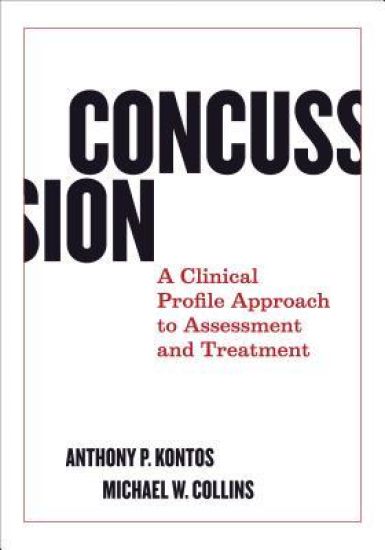
Medical consensus once held that all concussions were the same, and treatment for all concussion patients therefore followed the same standard approach. In this volume, Anthony Kontos and Michael Collins debunk the one-size-fits-all approach, arguing instead that individuals who experience concussion respond best to targeted interventions based on their specific clinical profile of symptoms and impairment. In fact, the most commonly prescribed management strategy-rest-can actually prolong recovery time for some individuals. The authors present a comprehensive, team-based model for assessment and treatment of concussion. Assessment should involve an interdisciplinary lineup that evaluates the patient across multiple domains, including vestibular and oculomotor function, cognitive fatigue, post-traumatic migraine, and anxiety/mood. Based on the individual amp rsquo s clinical profile, treatment should actively target the affected domains. The book combines empirical evidence with case examples, with special attention to at-risk populations such as athletes, military, and youth. This resource is essential reading for those who assess, treat, or research concussion, including professionals and students in clinical-counseling psychology, neuropsychology, neurology, neurosurgery, optometry, pediatrics, physical therapy, primary care, sports medicine, and athletic training.
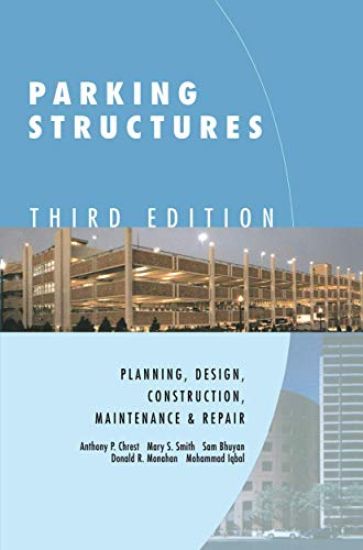
Parking Structures provides a single-source reference for parking structure designers, builders, and owners. This third edition is still the only such book. It addresses how to select the best functional and structural designs for a given situation, ensure long-term durability, design for easy maintenance, decide on the number and placement of entrances and exits, design an easily understood wayfinding system, design for ADA compliance, plan for internal auto and pedestrian traffic circulation, select the most effective and energy efficient lighting system, avoid the most common design and construction pitfalls, provide for adequate patron safety and security, carry out needed repairs, and extend the parking structure life. Parking Structures addresses all the major issues related to parking garages. It is an essential reference for parking structure owners, structural engineers, architects, contractors, and other professionals. New in the third edition: This third edition of Parking Structures includes new material on metric dimensions and recommendations for functional design globally, new research on flow capacity and queuing at parking entry/exits, an entirely new chapter on planning for a new parking structure, including cost issues and alternatives to structure construction, pedestrian considerations, safety in parking facilities, plazas above parking structures, an expanded chapter on seismic design, seismic retrofit, life cycle cost analysis, and upgrades to existing structures.
Drawing on the combined expertise of three of the world's leading parking structure experts, this updated edition provides the only single-source guide to planning, designing, and maintaining parking structures. It provides readers with design solutions, including material on how to ensure long-term durability, design for easy maintenance, select the most energy efficient lighting system, decide on the number and placement of entrances and exits, and avoid the most common construction pitfalls. Reflecting recent advances in technological innovations, this volume features significantly revised mterial and contains five new chapters on the Americans with Disabilities Act, lighting, graphics, seismic design, and designing for maintenance. The Second Edition of Parking Structures offers architects, engineers, parking facility owners, and contractors a unique and comprehensive guide to designing safe and effective parking structures.In addition, institutions providing education courses for professional registration in related fields will benefit from this timely, authoritative account.
School safety is paramount in today’s educational system. Now, more than ever, the need to be proactive and systematic when it comes to handling even the most minor infractions in schools must be required, as demonstrated by the tragic events of recent school violence. An administrator’s work revolves around investigating. Whether it involves issues with parents or students, disciplinary incidents or teacher situations, being able to investigate in a non-biased and systematic manner is paramount for success. Yet, despite this premise, guidance for new and experienced administrators concerning how to investigate an incident is limited at best. Common Threads is a straightforward, practical guide for administrators in the job or professors to use as a guide for principal preparatory training.