Kirjojen hintavertailu. Mukana 11 342 296 kirjaa ja 12 kauppaa.

Kirjahaku

Etsi kirjoja tekijän nimen, kirjan nimen tai ISBN:n perusteella.

884 tulosta hakusanalla Appian

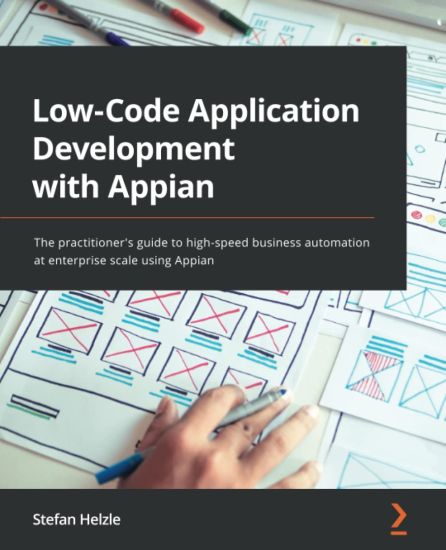
Low-Code Application Development with Appian

Low-Code Application Development with Appian

Stefan Helzle

PACKT PUBLISHING LIMITED
2022
nidottu
Go from no-code to low-code and translate your business requirements into full-fledged enterprise-ready applicationsKey FeaturesDigitize and automate your business processes quickly using Appian's powerful low-code functionalitiesUnderstand enterprise data models and turn them into actionable Appian RecordsUse declarative code-style UI building to design intuitive UIs and reusable components in AppianBook DescriptionThis book is an exhaustive overview of how the Appian Low-Code BPM Suite enables tech-savvy professionals to rapidly automate business processes across their organization, integrating people, software bots, and data. This is crucial as 80% of all software development is expected to be carried out in low code by 2024. This practical guide helps you master business application development with Appian as a beginner low-code developer. You'll learn to automate business processes using Appian low-code, records, processes, and expressions quickly and on an enterprise scale. In a fictional development project, guided by step-by-step explanations of the concepts and practical examples, this book will empower you to transform complex business processes into software. At first, you'll learn the power of no-code with Appian Quick Apps to solve some of your most crucial business challenges. You'll then get to grips with the building blocks of an Appian, starting with no-code and advancing to low-code, eventually transforming complex business requirements into a working enterprise-ready application. By the end of this book, you'll be able to deploy Appian Quick Apps in minutes and successfully transform a complex business process into low-code process models, data, and UIs to deploy full-featured, enterprise-ready, process-driven, mobile-enabled apps.What you will learnUse Appian Quick Apps to solve the most urgent business challengesLeverage Appian's low-code functionalities to enable faster digital innovation in your organizationModel business data, Appian records, and processesPerform UX discovery and UI building in AppianConnect to other systems with Appian Integrations and Web APIsWork with Appian expressions, data querying, and constantsWho this book is forThis book empowers software developers and tech-savvy business users with a new tool that'll help them increase efficiency by a huge margin and speed up the delivery of new features to meet the demands of business departments. Business users with a maker's attitude finally have the chance to develop their own business applications, as low-code drastically reduces the complexity of traditional software development. Prior experience with automation solutions and low-code programming is needed to help you get the most out of this book.
Tombs and Catacombs of the Appian Way

Tombs and Catacombs of the Appian Way

Olinto L Spadoni

Hansebooks
2017
pokkari
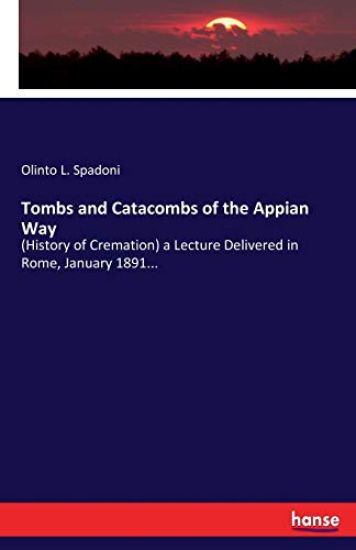
Tombs and Catacombs of the Appian Way - (History of Cremation) a Lecture Delivered in Rome, January 1891... is an unchanged, high-quality reprint of the original edition of 1892. Hansebooks is editor of the literature on different topic areas such as research and science, travel and expeditions, cooking and nutrition, medicine, and other genres. As a publisher we focus on the preservation of historical literature. Many works of historical writers and scientists are available today as antiques only. Hansebooks newly publishes these books and contributes to the preservation of literature which has become rare and historical knowledge for the future.
All Roads Lead to Rome: The History of the Appian Way

All Roads Lead to Rome: The History of the Appian Way

Charles River

Createspace Independent Publishing Platform
2018
nidottu
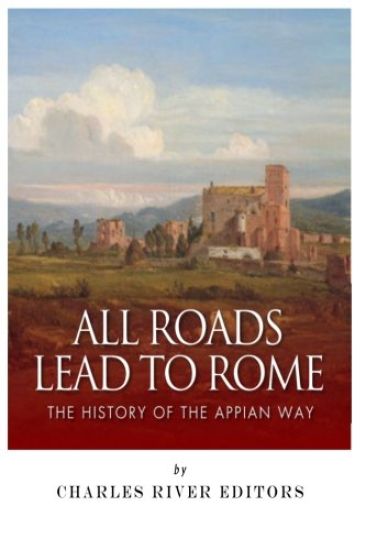
*Includes pictures. *Includes ancient accounts of the Appian Way's history and construction. *Explains the Appian Way's role during the Second Punic War and Spartacus' rebellion. *Includes a bibliography for further reading. "Appia teritur regina longarum viarum" ("The Appian Way is the queen of the long roads") - Statius The modern world has the ancient Romans to thank for the origins of many modern technologies, conveniences, and ideas such as running water, baths, and republican style government, but roads are another influence the Romans have had on the modern world that are often taken for granted. Although Roman roads may not have attained the glamorous status of other inventions, their influence is just as profound; roads provide essential communication and transport lines for any country - they are the veins and arteries that move the life-blood of trade and peoples that make a country thrive. Indeed, throughout the hundreds of years when Rome was ascendant in the ancient world, the roads they built held together first their republic and then their empire into a cohesive unit. Many of these roads were important, but one road stands above all others: the Appian Way (or Via Appia as it was called in the Latin spoken by the Romans). Since the Appian Way was first built in 312 BC, it has inspired poets, slaves, and conquerors, and Mark Antony, Spartacus, Hannibal, and Horace are just a few of the notable historical personalities who traveled on the Appian Way. For some, marching along the Appian Way became an integral part of their lives, while others lost their lives along the road (Hamblin and Grunsfeld 1974, 4-5). Fittingly, the road's construction was part of a long process in road building that was also indicative of Roman expansion across the Mediterranean, and at the peak of Roman power, the Appian Way extended over 300 miles. Due to its importance in world history and its primacy among other ancient Roman roads, a Roman named Publius Painius Statius assigned the moniker "lungarum regina viarum" ("Queen of long-distance roads") to the Appian Way in the 1st century AD, over 300 years after it was first built (Hamblin and Grunsfeld 1974, 3). The moniker stuck, and it has been called the Queen of Roads ever since. But while the Appian Way will always be associated with Ancient Rome, it was not only important to the ancient Romans but also in later periods of world history. It was deemed crucial enough that the Vatican ordered a parallel road network constructed alongside it during the Middle Ages, and it played an important role as recently as World War II. At the same time, the Appian Way has been so well-preserved that people can still walk along it today, even as they see Roman ruins on the sides of the road that remind tourists and viewers of both Rome's proud history and its eventual collapse. All Roads Lead to Rome: The History of the Appian Way chronicles the construction and history of Rome's most important road. Along with pictures of important people, places, and events, you will learn about the Appian Way like never before, in no time at all.
Te La Do IO La Cuccagna: Calcio E Campane Ad Appiano Gentile
Non si vive di solo calcio ad Appiano Gentile. C' molto altro. La celebre cittadina della bassa comasca, nota nel mondo per essere il quartier generale della F.C. Internazionale, la squadra meneghina dell'Inter, ha una vita propria, fatta di eventi reali e leggende. Storie di paese, direbbe qualcuno, ma che fanno divertire chi le ascolta. La vita appianese del 1980, anno in cui ambientato il racconto, animata dalle tribolazioni di don Giustino, dalle passioni amorose dell'avvocato Nasazzi, dalle arrabbiature della sarta Pina Pistocchi e da quel buontempone del Mariuccio, campione incontrastato del palo della cuccagna. Il racconto, frutto della fantasia dell'autore, stato annaffiato dall'ottimo vino del Garibaldi, che ha accompagnato l'ultima partita di campionato della locale squadra di calcio. Poi ci sono i temporali, sia quelli meteorologici che quelli ormonali, e le campane che, notte e giorno, suonano all'impazzata.