Kids can count their way from 1 to 101 to complete dozens of adorable sea life scenes These 38 dot-to-dot picture puzzles include a shark, stingray, sea turtle, blowfish, and many more marine animal favorites. Plus, each finished drawing can be colored Solutions are included.
Explore the prehistoric world while learning to count from 1 to 101 Kids ages 4 to 8 will come face-to-face with dinosaurs and other incredible creatures when they connect the dots to reveal 38 hidden pictures that include a T. rex, Mosasaurus, triceratops, saber-toothed tiger, woolly mammoth, and many other amazing animals. Plus, they can have fun coloring the finished drawings. Solutions included.
Embark on a fantastical journey into the world of mythical beasts and their loyal human companions. Thirty-nine images of awe-inspiring dragons — from graceful guardians to fearsome fire-breathers — and their courageous riders in various dramatic scenes are just waiting to be brought to life with color. Inspired by classic and contemporary books, movies, and TV series, this coloring book isn't just a collection of images; it's a ticket to your favorite fantasy realm! So grab your pencils or markers and enjoy this epic coloring adventure.
One Soldier's War is a visceral and unflinching memoir of a young Russian soldier's experience in the Chechen wars that brilliantly captures the fear, drudgery, chaos, and brutality of modern combat. An excerpt of the book was hailed by Tibor Fisher in the Guardian as "right up there with Catch-22 and Michael Herr's Dispatches," and the book won Russia's inaugural Debut Prize, which recognizes authors who write "despite, not because of, their life circumstances." In 1995, Arkady Babchenko was an eighteen-year-old law student in Moscow when he was drafted into the Russian army and sent to Chechnya. It was the beginning of a torturous journey from naive conscript to hardened soldier that took Babchenko from the front lines of the first Chechen War in 1995 to the second in 1999. He fought in major cities and tiny hamlets, from the bombed-out streets of Grozny to anonymous mountain villages. Babchenko takes the raw and mundane realities of war--the constant cold, hunger, exhaustion, filth, and terror--and twists it into compelling, haunting, and eerily elegant prose. Acclaimed by reviewers around the world, this is a devastating first-person account of war by an extraordinary storyteller.
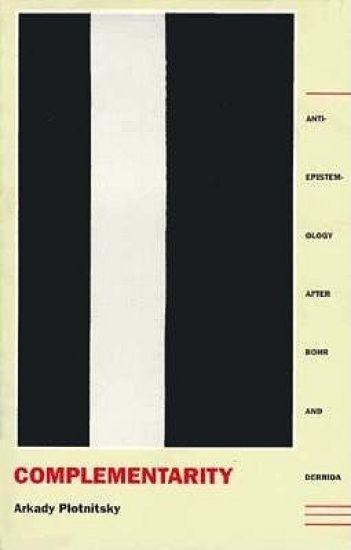
Many commentators have remarked in passing on the resonance between deconstructionist theory and certain ideas of quantum physics. In this book, Arkady Plotnitsky rigorously elaborates the similarities and differences between the two by focusing on the work of Niels Bohr and Jacques Derrida. In detailed considerations of Bohr’s notion of complementarity and his debates with Einstein, and in analysis of Derrida’s work via Georges Bataille’s concept of general economy, Plotnitsky demonstrates the value of exploring these theories in relation to each other. Bohr’s term complementarity describes a situation, unavoidable in quantum physics, in which two theories thought to be mutually exclusive are required to explain a single phenomenon. Light, for example, can only be explained as both wave and particle, but no synthesis of the two is possible. This theoretical transformation is then examined in relation to the ways that Derrida sets his work against or outside of Hegel, also resisting a similar kind of synthesis and enacting a transformation of its own. Though concerned primarily with Bohr and Derrida, Plotnitsky also considers a wide range of anti-epistemological endeavors including the work of Nietzsche, Bataille, and the mathematician Kurt Gödel. Under the rubric of complementarity he develops a theoretical framework that raises new possiblilities for students and scholars of literary theory, philosophy, and philosophy of science.
Many commentators have remarked in passing on the resonance between deconstructionist theory and certain ideas of quantum physics. In this book, Arkady Plotnitsky rigorously elaborates the similarities and differences between the two by focusing on the work of Niels Bohr and Jacques Derrida. In detailed considerations of Bohr’s notion of complementarity and his debates with Einstein, and in analysis of Derrida’s work via Georges Bataille’s concept of general economy, Plotnitsky demonstrates the value of exploring these theories in relation to each other. Bohr’s term complementarity describes a situation, unavoidable in quantum physics, in which two theories thought to be mutually exclusive are required to explain a single phenomenon. Light, for example, can only be explained as both wave and particle, but no synthesis of the two is possible. This theoretical transformation is then examined in relation to the ways that Derrida sets his work against or outside of Hegel, also resisting a similar kind of synthesis and enacting a transformation of its own. Though concerned primarily with Bohr and Derrida, Plotnitsky also considers a wide range of anti-epistemological endeavors including the work of Nietzsche, Bataille, and the mathematician Kurt Gödel. Under the rubric of complementarity he develops a theoretical framework that raises new possiblilities for students and scholars of literary theory, philosophy, and philosophy of science.
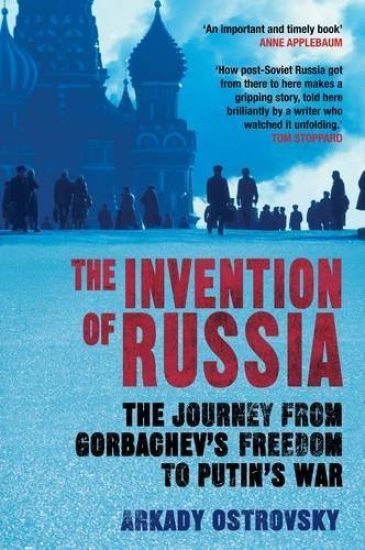
The definitive and award-winning history of Vladimir Putin's rise to power following the collapse of the Soviet Union, by The Economist's Russia editor.'Fast-paced and excellently written' New York Times'A real insiders' story of Russia's post-Soviet "counter-revolution" - an important and timely book.' Anne ApplebaumWINNER OF THE ORWELL PRIZE How did a country that embraced freedom over twenty-five years ago end up as an autocratic police state bent once again on confrontation with the West? In this Orwell Prize-winning book, Arkady Ostrovsky reaches back to the darkest days of the Cold War to tell the story of Russia's stealthy and largely unchronicled post-Soviet transformation.Ostrovsky's knowledge of many of the key players allows him to explain the rise of Vladimir Putin and to reveal how he pioneered a new form of demagogic populism. In a new preface he examines Putin's influence on the US election and explores how his methods - weaponizing the media and serving up fake news - came to enter Western politics.
A neglected masterpiece by Russian science fiction greats Arkady and Boris Strugatsky, who thought of it as their "most complete and important work," The Snail on the Slope disappeared almost immediately after it was first published in a small mass-market edition in the United States in 1980. In the meantime, however, it went through twenty-seven editions in fifteen other countries, making it one of the Strugatsky brothers' most popular works worldwide, along with Roadside Picnic and Hard to Be a God. Now, in a stunning new translation, this tour de force is ready to be introduced to a new generation of American readers. The novel takes place in two worlds. One is the Administration, an institution run by a surreal, Kafkaesque bureaucracy whose aim is to govern the forest below. The other is the forest, a place of fear, weird creatures, primitive but garrulous people, and violence. Peretz, who works at the Administration, wants to visit the forest. Candide crashed in the forest years ago and wants to return to the Administration. Their journeys are surprising and bizarre, and readers are left to puzzle out the mysteries of these foreign environments. Brilliant, enigmatic, evocative, and revelatory, The Snail on the Slope is one of the greatest literary works to come out of Soviet Russia.
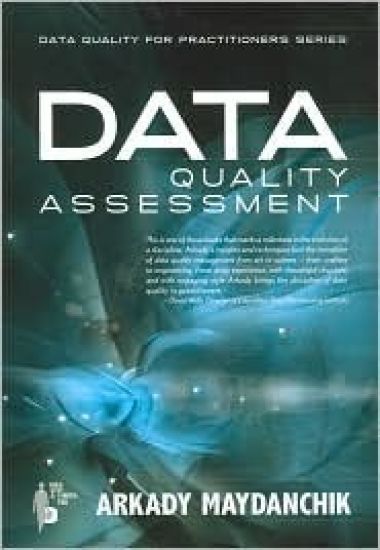
The success of corporations and government institutions largely depends on the efficiency with which they can collect, organize, and utilize data about products, customers, competitors, and employees. Fortunately, improving your data quality doesn't have to be such a mammoth task. DATA QUALITY ASSESSMENT is a must read for anyone who needs to understand, correct, or prevent data quality issues in their organization. Skipping theory and focusing purely on what is practical and what works, this text contains a proven approach to identifying, warehousing, and analyzing data errors the first step in any data quality program. Master techniques in: Data profiling and gathering metadata Identifying, designing, and implementing data quality rules Organizing rule and error catalogues Ensuring accuracy and completeness of the data quality assessment Constructing the dimensional data quality scorecard Executing a recurrent data quality assessment
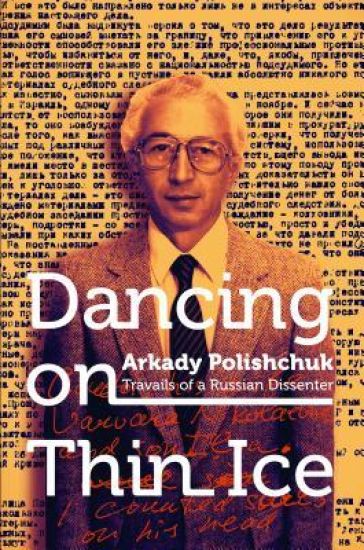
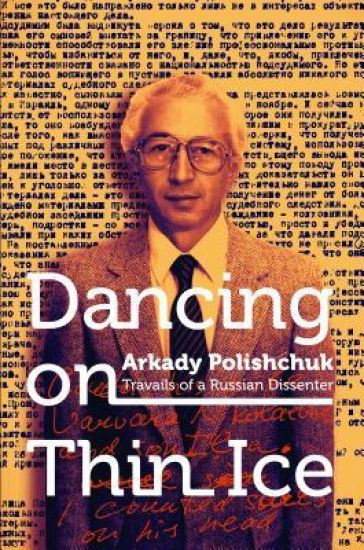
In this memoir, replete with Jewish humor and sardonic Russian irony, exiled Russian journalist and human rights advocate Arkady Polishchuk (b. 1930) colorfully narrates his evolution as a dissenter and his work on behalf of persecuted Christians in 1970s Soviet Russia. Told primarily through dialog, this thrilling account puts the reader in the middle of a critical time in history, when thousands of people who had been denied emigration drew international attention while suffering human rights abuses, staged show trials, forced labor, and constant surveillance. From 1950-1973, Polishchuk worked as a journalist for Russian state-run media and at Asia and Africa Today, where all of the foreign correspondents were KGB operatives using their cover jobs to meddle in international affairs. His close understanding of Russian propaganda, the use of "kompromat" against enemies and his knowledge of "pripiski" (defined as "positive distortions of achieved results and fake reports") makes this memoir especially eye-opening for American readers in today's political climate. Through the course of the narrative, we are along with Polishchuk as he covers an anti-Semitic show trial, writes samizdat (underground political self-publications), is arrested, followed and surveilled, collaborates with refuseniks and smuggles eyewitness testimony to the west. The absurdity of his experiences is reflected in his humor, which belies the anxieties of the life he lived.
In this memoir, replete with Jewish humor and sardonic Russian irony, exiled Russian journalist and human rights advocate Arkady Polishchuk (b. 1930) colorfully narrates his evolution as a dissenter and his work on behalf of persecuted Christians in 1970s Soviet Russia. Told primarily through dialog, this thrilling account puts the reader in the middle of a critical time in history, when thousands of people who had been denied emigration drew international attention while suffering human rights abuses, staged show trials, forced labor, and constant surveillance. From 1950-1973, Polishchuk worked as a journalist for Russian state-run media and at Asia and Africa Today, where all of the foreign correspondents were KGB operatives using their cover jobs to meddle in international affairs. His close understanding of Russian propaganda, the use of "kompromat" against enemies and his knowledge of "pripiski" (defined as "positive distortions of achieved results and fake reports") makes this memoir especially eye-opening for American readers in today's political climate. Through the course of the narrative, we are along with Polishchuk as he covers an anti-Semitic show trial, writes samizdat (underground political self-publications), is arrested, followed and surveilled, collaborates with refuseniks and smuggles eyewitness testimony to the west. The absurdity of his experiences is reflected in his humor, which belies the anxieties of the life he lived.
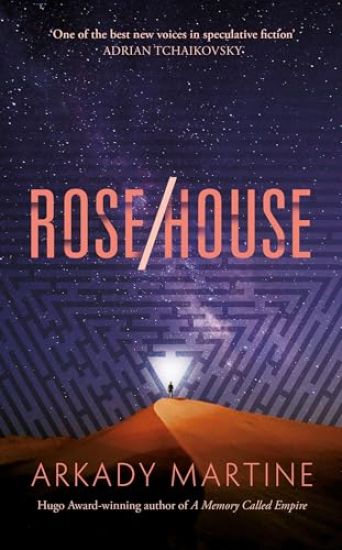
AI meets The Haunting of Hill House in Rose/House, a brilliantly clever sci-fi gothic thriller from Arkady Martine, the Hugo Award-winning author of A Memory Called Empire and A Desolation of Peace.
&b>&i>Rose/House &/i>is a brilliantly clever sci-fi gothic thriller from Arkady Martine, the Hugo Award-winning author of &i>A Memory Called Empire &/i>and &i>A Desolation of Peace. &/i>&/b>
A taut, uncanny sci-fi thriller from Arkady Martine, Hugo Award-winning author of A Memory Called Empire.‘Exquisitely creepy’ADRIAN TCHAIKOVSKY, Hugo Award-winning author of the Children of Time series‘I'm a piece of architecture, Detective. How should I know how humans are like to die?’Basit Deniau’s houses were haunted to begin with.A house embedded with an artificial intelligence is a common thing: a house that is an artificial intelligence, infused in every load-bearing beam and fine marble tile with a thinking creature that is not human? That is something else altogether. But now Deniau’s been dead a year, and Rose House is locked up tight, as commanded by the architect’s will.Dr. Selene Gisil, a former protégé, is the sole person permitted to come into Rose House once a year. Now, there is a dead person in Rose House. It is not Basit Deniau, and it is not Dr. Gisil. It is someone else. But Rose House won’t communicate any further.No one can get inside Rose House, except Dr. Gisil. Dr. Gisil was not in North America when Rose House called in the death. But someone did. And someone died there.And someone may be there still.'A sharp, clever blend of science fictional gothic and crime'The Guardian
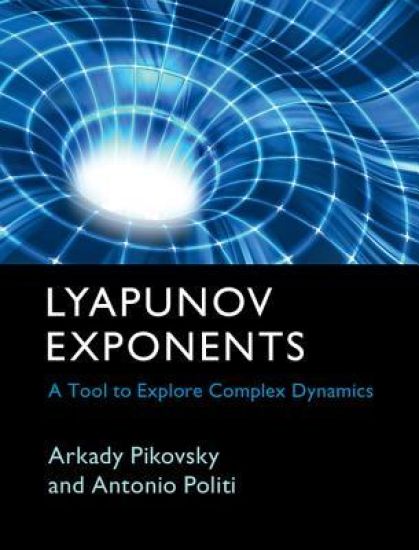
Lyapunov exponents lie at the heart of chaos theory, and are widely used in studies of complex dynamics. Utilising a pragmatic, physical approach, this self-contained book provides a comprehensive description of the concept. Beginning with the basic properties and numerical methods, it then guides readers through to the most recent advances in applications to complex systems. Practical algorithms are thoroughly reviewed and their performance is discussed, while a broad set of examples illustrate the wide range of potential applications. The description of various numerical and analytical techniques for the computation of Lyapunov exponents offers an extensive array of tools for the characterization of phenomena such as synchronization, weak and global chaos in low and high-dimensional set-ups, and localization. This text equips readers with all the investigative expertise needed to fully explore the dynamical properties of complex systems, making it ideal for both graduate students and experienced researchers.
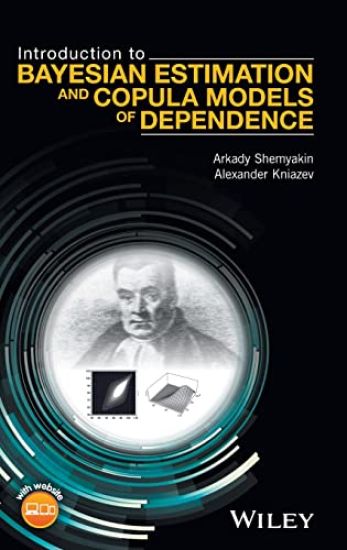
Presents an introduction to Bayesian statistics, presents an emphasis on Bayesian methods (prior and posterior), Bayes estimation, prediction, MCMC,Bayesian regression, and Bayesian analysis of statistical modelsof dependence, and features a focus on copulas for risk management Introduction to Bayesian Estimation and Copula Models of Dependence emphasizes the applications of Bayesian analysis to copula modeling and equips readers with the tools needed to implement the procedures of Bayesian estimation in copula models of dependence. This book is structured in two parts: the first four chapters serve as a general introduction to Bayesian statistics with a clear emphasis on parametric estimation and the following four chapters stress statistical models of dependence with a focus of copulas. A review of the main concepts is discussed along with the basics of Bayesian statistics including prior information and experimental data, prior and posterior distributions, with an emphasis on Bayesian parametric estimation. The basic mathematical background of both Markov chains and Monte Carlo integration and simulation is also provided. The authors discuss statistical models of dependence with a focus on copulas and present a brief survey of pre-copula dependence models. The main definitions and notations of copula models are summarized followed by discussions of real-world cases that address particular risk management problems. In addition, this book includes: • Practical examples of copulas in use including within the Basel Accord II documents that regulate the world banking system as well as examples of Bayesian methods within current FDA recommendations • Step-by-step procedures of multivariate data analysis and copula modeling, allowing readers to gain insight for their own applied research and studies • Separate reference lists within each chapter and end-of-the-chapter exercises within Chapters 2 through 8 • A companion website containing appendices: data files and demo files in Microsoft® Office Excel®, basic code in R, and selected exercise solutions Introduction to Bayesian Estimation and Copula Models of Dependence is a reference and resource for statisticians who need to learn formal Bayesian analysis as well as professionals within analytical and risk management departments of banks and insurance companies who are involved in quantitative analysis and forecasting. This book can also be used as a textbook for upper-undergraduate and graduate-level courses in Bayesian statistics and analysis. ARKADY SHEMYAKIN, PhD, is Professor in the Department of Mathematics and Director of the Statistics Program at the University of St. Thomas. A member of the American Statistical Association and the International Society for Bayesian Analysis, Dr. Shemyakin's research interests include informationtheory, Bayesian methods of parametric estimation, and copula models in actuarial mathematics, finance, and engineering. ALEXANDER KNIAZEV, PhD, is Associate Professor and Head of the Department of Mathematics at Astrakhan State University in Russia. Dr. Kniazev's research interests include representation theory of Lie algebras and finite groups, mathematical statistics, econometrics, and financial mathematics.
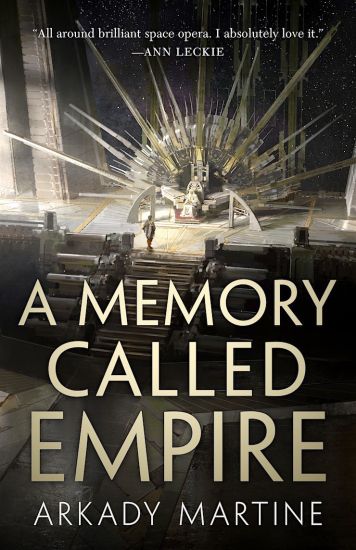
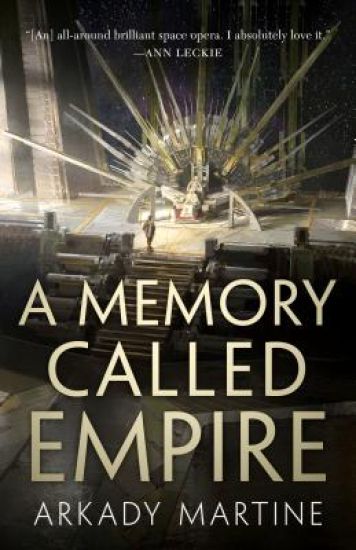
Winner of the 2020 Hugo Award for Best NovelA Locus, and Nebula Award nominee for 2019An NPR Favorite Book of 2019An Esquire Best Sci-Fi Book of All TimeA Guardian Best Science Fiction and Fantasy Book of 2019 and "Not the Booker Prize" NomineeA Goodreads Biggest SFF Book of 2019 and Choice Awards Nominee "A Memory Called Empire perfectly balances action and intrigue with matters of empire and identity. All around brilliant space opera, I absolutely love it."--Ann Leckie, author of Ancillary Justice Ambassador Mahit Dzmare arrives in the center of the multi-system Teixcalaanli Empire only to discover that her predecessor, the previous ambassador from their small but fiercely independent mining Station, has died. But no one will admit that his death wasn't an accident--or that Mahit might be next to die, during a time of political instability in the highest echelons of the imperial court. Now, Mahit must discover who is behind the murder, rescue herself, and save her Station from Teixcalaan's unceasing expansion--all while navigating an alien culture that is all too seductive, engaging in intrigues of her own, and hiding a deadly technological secret--one that might spell the end of her Station and her way of life--or rescue it from annihilation. Arkady Martine's debut novel A Memory Called Empire is a fascinating space opera and an interstellar mystery adventure. "The most thrilling ride ever. This book has everything I love."--Charlie Jane Anders, author of All the Birds in the SkyAlso by Arkady Martine: A Desolation Called PeaceRose/House
Winner of the 2020 Hugo Award for Best NovelA Locus, and Nebula Award nominee for 2019An NPR Favorite Book of 2019An Esquire Best Sci-Fi Book of All TimeA Guardian Best Science Fiction and Fantasy Book of 2019 and "Not the Booker Prize" NomineeA Goodreads Biggest SFF Book of 2019 and Choice Awards Nominee "A Memory Called Empire perfectly balances action and intrigue with matters of empire and identity. All around brilliant space opera, I absolutely love it."--Ann Leckie, author of Ancillary Justice Ambassador Mahit Dzmare arrives in the center of the multi-system Teixcalaanli Empire only to discover that her predecessor, the previous ambassador from their small but fiercely independent mining Station, has died. But no one will admit that his death wasn't an accident--or that Mahit might be next to die, during a time of political instability in the highest echelons of the imperial court. Now, Mahit must discover who is behind the murder, rescue herself, and save her Station from Teixcalaan's unceasing expansion--all while navigating an alien culture that is all too seductive, engaging in intrigues of her own, and hiding a deadly technological secret--one that might spell the end of her Station and her way of life--or rescue it from annihilation. Arkady Martine's debut novel A Memory Called Empire is a fascinating space opera and an interstellar mystery adventure. "The most thrilling ride ever. This book has everything I love."--Charlie Jane Anders, author of All the Birds in the SkyAlso by Arkady Martine: A Desolation Called PeaceRose/House