

Kirjahaku
Etsi kirjoja tekijän nimen, kirjan nimen tai ISBN:n perusteella.
1000 tulosta hakusanalla Arrian

Unver nderter Nachdruck der Originalausgabe von 1887. Der Verlag Antigonos spezialisiert sich auf die Herausgabe von Nachdrucken historischer B cher. Wir achten darauf, dass diese Werke der ffentlichkeit in einem guten Zustand zug nglich gemacht werden, um ihr kulturelles Erbe zu bewahren.
Unver nderter Nachdruck der Originalausgabe von 1887. Der Verlag Antigonos spezialisiert sich auf die Herausgabe von Nachdrucken historischer B cher. Wir achten darauf, dass diese Werke der ffentlichkeit in einem guten Zustand zug nglich gemacht werden, um ihr kulturelles Erbe zu bewahren.

A Historical Commentary on Arrian's History of Alexander: Volume I. Books I-III
A. B. Bosworth
Clarendon Press
1980
sidottu
A Historical Commentary on Arrian's History of Alexander Volume I. Books I-III

A Historical Commentary on Arrian's History of Alexander: Volume II. Books IV-V
A. B. Bosworth
Clarendon Press
1995
sidottu
This, the second volume of a magisterial commentary on the work of the historian Arrian, deals in depth with a crucial period (329-326 BC) of the reign of Alexander the Great. It discusses some of the earliest datable evidence for the history of Central Asia and Pakistan, and analyses Alexander's views of sovereignty and divinity. Professor Bosworth is the leading authority on Arrian, and his commentary should become a classic work of reference for historians.
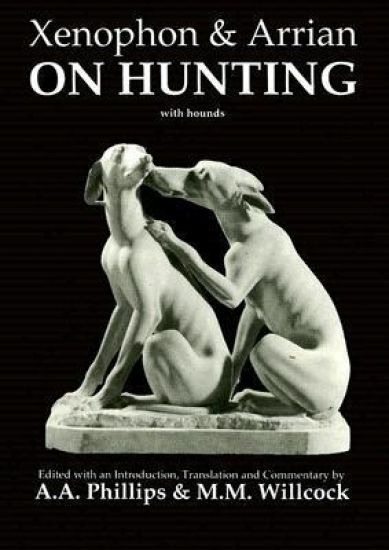
While hunting generates such fierce debate in Britain today, these are two examinations by classical authors on the subject. Both give a vivid picture of the daily life of two wealthy Greeks at leisure which the modern huntsman should find familiar.
Cariappa Annaiah's published poems and illustrator Warsha Lath's visual translation of his poetry come together in this anthology. The poems offer an incisive reflection on life, living, and relationships.
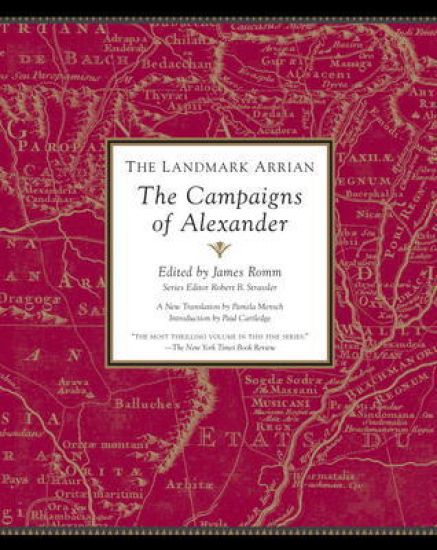
During twelve years of continuous campaigns, Alexander conquered an empire that stretched from the shores of the Adriatic to the edge of modern India. Arrian's history of those conquests, the most reliable and detailed account to emerge from the ancient world, is a work that will fascinate readers interested in classical studies, the history of warfare, and the origins of East-West tensions that still simmer today in Iraq, Iran, and Afghanistan. Drawing on Ptolemy's memoirs and other sources that have not survived antiquity, Arrian's portrait of Alexander is unmatched for its accuracy and immediacy. Having served as a high Roman official with command of an army, Arrian had a unique perspective on Alexander, imbued with a level of understanding that only firsthand military experience can provide.In the richly illustrated and annotated style of the Landmark series, The Campaigns of Alexander, which features an engaging and eloquent new translation by Pamela Mensch, brings together some of the pre-eminent classics scholars at work today to create what is certain to be the definitive edition of this essential work of history.About the AuthorJames Romm is Professor of Classics at Bard College. He has received fellowships from the Guggenheim Foundation and the National Endowment for the Humanities. His books include The Edges of the Earth in Ancient Thought and the forthcoming Ghost on the Throne: The Death of Alexander the Great and the War for Crown and Empire.
Arrian’s Alexandrou Anabasis constitutes the most reliable account at our disposal about Alexander the Great's campaign in Asia. However, whereas the work has been thoroughly studied as a historical source, its literary qualities have been relatively neglected, with no autonomous monograph existing on this matter. Vasileios Liotsakis fills this gap in the studies of Alexander the Great’s literary tradition, by offering the first monograph on Arrian’s compositional strategies. Liotsakis focuses on the narrative techniques and verbal choices, through which Arrian allows praise and criticism to intermingle in his portrait of the Macedonian king. His main point of argument is that Arrian systematically exploits an abundance of narrative means (military descriptions, presentation of peoples, march-narratives, anachronies, and epic elements) in order to draw the reader’s attention not only to Alexander’s intellectual skills but also to the fact that the king was gradually corrupted by his success. This book puts Arrian’s literary contrivances under the microscope, sheds new light on unexplored aspects of the Anabasis’ narrative arrangement, and contributes to the studies of Alexander’s prosopography in Classical historiography.

Dissertationes Ab Arriano Digestae
Johann Schweighäuser; Flavius Arrianus
Hutson Street Press
2025
sidottu
Dissertationes Ab Arriano Digestae
Johann Schweighäuser; Flavius Arrianus
Hutson Street Press
2025
pokkari


Ueber den Sprachgebrauch Arrians, besonders in der Anabasis Alexandrou
Friedrich Newie
Outlook Verlag
2024
pokkari
Unver nderter Nachdruck der Originalausgabe von 1882.
Ueber den Sprachgebrauch Arrians, besonders in der Anabasis Alexandrou
Friedrich Newie
Outlook Verlag
2024
sidottu
Unver nderter Nachdruck der Originalausgabe von 1882.
Epicteti Dissertationum ab Arriano digestarum libri 4. Eiusdem Enchiridion, et ex deperditis sermonibus fragmenta post Io. Vptoni aliorumque curas, denuo ad codicum msstorum fidem recensuit, Latina versione, adnotationibus, indicibus illustravit Ioha
Epicteus
Hansebooks
2016
pokkari
Ueber den Sprachgebrauch Arrians, besonders in der Anabasis Alexandrou
Friedrich Newie
Outlook Verlag
2025
nidottu
Ueber den Sprachgebrauch Arrians, besonders in der Anabasis Alexandrou
Friedrich Newie
Outlook Verlag
2025
sidottu
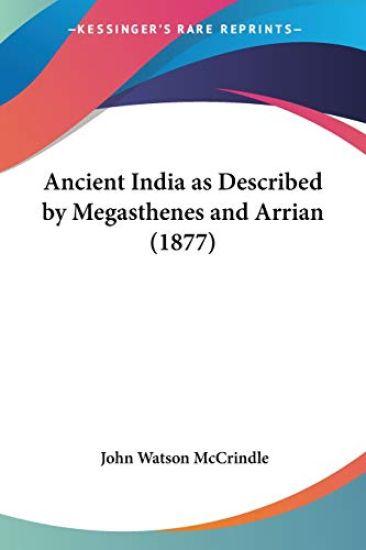
Ancient India As Described by Megasthenes and Arrian
John Watson Mccrindle
Kessinger Pub
2009
pokkari