Kirjojen hintavertailu. Mukana 12 390 323 kirjaa ja 12 kauppaa.

Kirjahaku

Etsi kirjoja tekijän nimen, kirjan nimen tai ISBN:n perusteella.

1000 tulosta hakusanalla Arvind Yadav

Parametric Sensitivity in Chemical Systems

Parametric Sensitivity in Chemical Systems

Arvind Varma; Massimo Morbidelli; Hua Wu

Cambridge University Press
2005
pokkari
The behavior of a chemical system is affected by many physicochemical parameters. The sensitivity of the system's behavior to changes in parameters is known as parametric sensitivity. When a system operates in a parametrically sensitive region, its performance becomes unreliable and changes sharply with small variations in parameters. Thus, it would be of great value to predict sensitivity behavior in chemical systems. This book is the first to provide a thorough treatment of the concept of parametric sensitivity and the mathematical tool it generated, sensitivity analysis. The emphasis is on applications to real situations. The book begins with definitions of various sensitivity indices and describes the numerical techniques used for their evaluation. Extensively illustrated chapters discuss sensitivity analysis in a variety of chemical reactors - batch, tubular, continuous-flow, fixed-bed - and in combustion systems, air pollution, and metabolic processes. Chemical engineers, chemists, graduate students, and researchers will welcome this valuable resource.
Politics after Television

Politics after Television

Arvind Rajagopal

Cambridge University Press
2001
sidottu
In January 1987, the Indian state-run television began broadcasting a Hindu epic in serial form, The Ramayana, to nationwide audiences, violating a decades-old taboo on religious partisanship. What resulted was the largest political campaign in post-independence times, around the symbol of Lord Ram, led by Hindu nationalists. The complexion of Indian politics was irrevocably changed thereafter. In this book, Arvind Rajagopal analyses this extraordinary series of events. While audiences may have thought they were harking back to an epic golden age, Hindu nationalist leaders were embracing the prospects of neoliberalism and globalisation. Television was the device that hinged these movements together, symbolising the new possibilities of politics, at once more inclusive and authoritarian. Simultaneously, this study examines how the larger historical context was woven into and changed the character of Hindu nationalism.
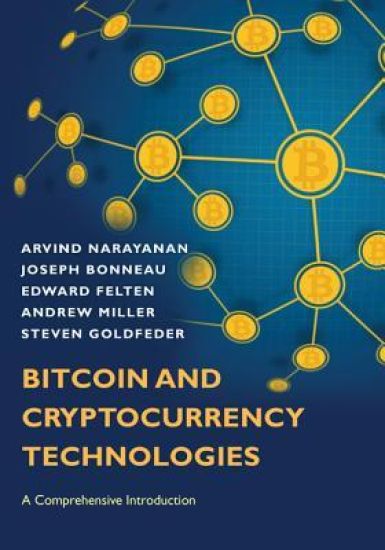
Bitcoin and Cryptocurrency Technologies

Bitcoin and Cryptocurrency Technologies

Arvind Narayanan; Joseph Bonneau; Edward Felten; Andrew Miller; Steven Goldfeder

PRINCETON UNIVERSITY PRESS
2016
sidottu
Bitcoin and Cryptocurrency Technologies provides a comprehensive introduction to the revolutionary yet often misunderstood new technologies of digital currency. Whether you are a student, software developer, tech entrepreneur, or researcher in computer science, this authoritative and self-contained book tells you everything you need to know about the new global money for the Internet age. How do Bitcoin and its block chain actually work? How secure are your bitcoins? How anonymous are their users? Can cryptocurrencies be regulated? These are some of the many questions this book answers. It begins by tracing the history and development of Bitcoin and cryptocurrencies, and then gives the conceptual and practical foundations you need to engineer secure software that interacts with the Bitcoin network as well as to integrate ideas from Bitcoin into your own projects. Topics include decentralization, mining, the politics of Bitcoin, altcoins and the cryptocurrency ecosystem, the future of Bitcoin, and more. * An essential introduction to the new technologies of digital currency* Covers the history and mechanics of Bitcoin and the block chain, security, decentralization, anonymity, politics and regulation, altcoins, and much more* Features an accompanying website that includes instructional videos for each chapter, homework problems, programming assignments, and lecture slides* Also suitable for use with the authors' Coursera online course* Electronic solutions manual (available only to professors)
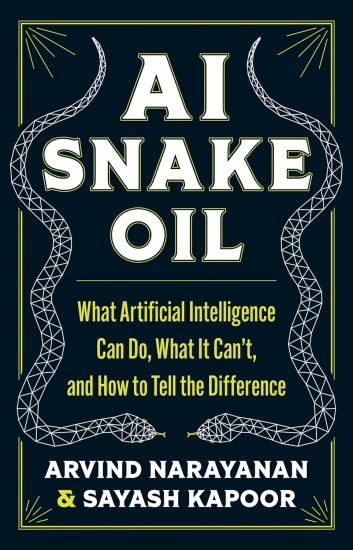
AI Snake Oil

AI Snake Oil

Arvind Narayanan; Sayash Kapoor

PRINCETON UNIVERSITY PRESS
2024
sidottu
From two of TIME’s 100 Most Influential People in AI, what you need to know about AI—and how to defend yourself against bogus AI claims and productsConfused about AI and worried about what it means for your future and the future of the world? You’re not alone. AI is everywhere—and few things are surrounded by so much hype, misinformation, and misunderstanding. In AI Snake Oil, computer scientists Arvind Narayanan and Sayash Kapoor cut through the confusion to give you an essential understanding of how AI works and why it often doesn’t, where it might be useful or harmful, and when you should suspect that companies are using AI hype to sell AI snake oil—products that don’t work, and probably never will.While acknowledging the potential of some AI, such as ChatGPT, AI Snake Oil uncovers rampant misleading claims about the capabilities of AI and describes the serious harms AI is already causing in how it’s being built, marketed, and used in areas such as education, medicine, hiring, banking, insurance, and criminal justice. The book explains the crucial differences between types of AI, why organizations are falling for AI snake oil, why AI can’t fix social media, why AI isn’t an existential risk, and why we should be far more worried about what people will do with AI than about anything AI will do on its own. The book also warns of the dangers of a world where AI continues to be controlled by largely unaccountable big tech companies.By revealing AI’s limits and real risks, AI Snake Oil will help you make better decisions about whether and how to use AI at work and home.
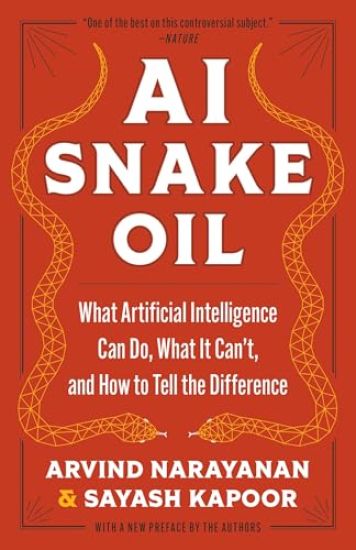
AI Snake Oil

AI Snake Oil

Arvind Narayanan; Sayash Kapoor

PRINCETON UNIVERSITY PRESS
2025
pokkari
From two of TIME’s 100 Most Influential People in AI, what you need to know about AI—and how to defend yourself against bogus AI claims and productsConfused about AI and worried about what it means for your future and the future of the world? You’re not alone. AI is everywhere—and few things are surrounded by so much hype, misinformation, and misunderstanding. In AI Snake Oil, computer scientists Arvind Narayanan and Sayash Kapoor cut through the confusion to give you an essential understanding of how AI works and why it often doesn’t, where it might be useful or harmful, and when you should suspect that companies are using AI hype to sell AI snake oil—products that don’t work, and probably never will.While acknowledging the potential of some AI, such as ChatGPT, AI Snake Oil uncovers rampant misleading claims about the capabilities of AI and describes the serious harms AI is already causing in how it’s being built, marketed, and used in areas such as education, medicine, hiring, banking, insurance, and criminal justice. The book explains the crucial differences between types of AI, why organizations are falling for AI snake oil, why AI can’t fix social media, why AI isn’t an existential risk, and why we should be far more worried about what people will do with AI than about anything AI will do on its own. The book also warns of the dangers of a world where AI continues to be controlled by largely unaccountable big tech companies.By revealing AI’s limits and real risks, AI Snake Oil will help you make better decisions about whether and how to use AI at work and home.
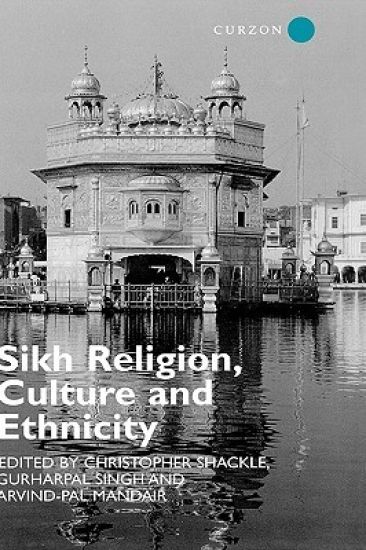
Sikh Religion, Culture and Ethnicity

Sikh Religion, Culture and Ethnicity

Arvind-Pal S. Mandair; Christopher Shackle; Gurharpal Singh

RoutledgeCurzon
2000
sidottu
This book brings together new approaches to the study of Sikh religion, culture and ethnicity being pursued in the diaspora by Sikh academics in western universities in Britain and North America. An important aspect of the volume is the diversity of topics that are engaged - including film and gender theory, theology, hermeneutics, deconstruction, semiotics and race theory - and brought to bear on the individual contributors' specialism within Sikh studies, thereby helping to explode previously static dichotomies such as insider vs. outsider or history vs. tradition. The volume should have strong appeal both to an academic market including students of politics, religious studies and South Asian studies, and to a more general English-speaking Sikh readership.
Agrarian Movements in India

Agrarian Movements in India

Arvind N. Das

Routledge
1982
sidottu
First published in 1982. In this volume we present a collection of original papers, edited by Arvind N. Das, on agrarian movements in the populous Indian state of Bihar. These movements are traced from the early twentieth century through to the Naxalite activity of the recent past; their content and the forces which gave rise to them are examined; and the response of the state — both the colonial state and the post-colonial state — is identified. Believed to be a significant contribution to the literature on agrarian movements, which should be of considerable value to both specialists on India and to those with a more general interest in the agrarian question.
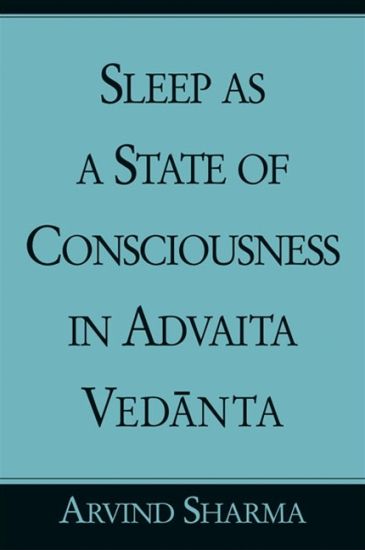
Sleep as a State of Consciousness in Advaita Vedanta

Sleep as a State of Consciousness in Advaita Vedanta

Arvind Sharma

State University of New York Press
2004
sidottu
Explores deep sleep (susupti), one of the three states of consciousness in Advaita Vedanta, and the major role it plays in this philosophy. Indian philosophy bases itself on three states of consciousness: waking, dreaming, and deep sleep. Deep sleep, or susupti, plays an important role in Advaita Vedanta, the major philosophical school that advocates a doctrine of pure consciousness. Explaining and savoring this paradox, this book shows how the concept of deep sleep can be used in Advaita Vedanta to reveal a philosophical insight, validate an argument, illustrate a moral, or adorn a tale. Arvind Sharma explores why sleep is a phenomenon that philosophers should be interested in and examines it in classical Hindu religious texts, including the Upanisads, and in foundational, early, and modern Advaita Vedanta.
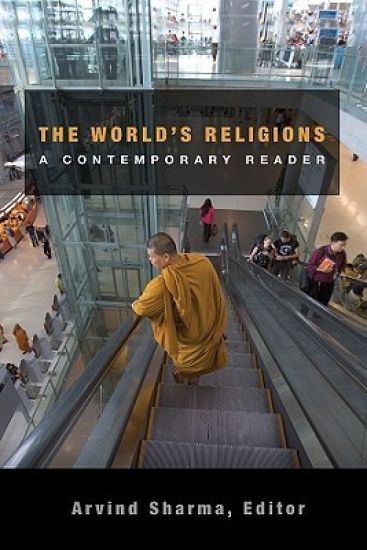
The World's Religions

The World's Religions

Arvind Sharma

Augsburg Fortress
2010
pokkari
Watch Arvind Sharma discuss his new book, The World's ReligionsThis wide-ranging reader combines some of the best and most valuable contemporary perspectives from leading and significant writers, teachers, and thinkers who together address critical challenges and opportunities for the world's religions in a post 9/11 world. Edited by Arvind Sharma and organized by topic, the essays in this reader consider broad questions such as, What influence does religion have on contemporary life? Can religion destroy or preserve us? Could the world's religions join together as a force for good? The thematic arrangement of topics includes diverse religious perspectives on: pluralism, human rights, war, peace, globalization, science, spirituality and other topics. A special foreword by John Hick speaks to the value of this reader in broadening our needed understanding of religion.
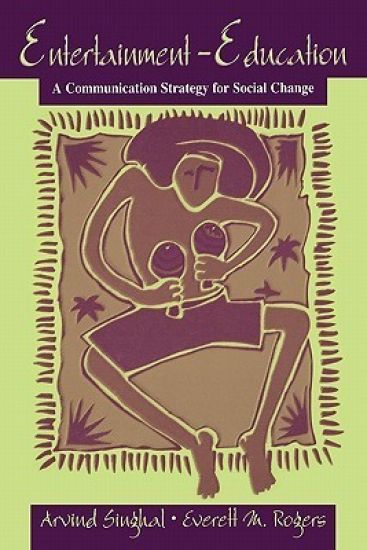
Entertainment-Education

Entertainment-Education

Arvind Singhal; Everett Rogers

Routledge Member of the Taylor and Francis Group
1999
nidottu
Arvind Singhal and Everett M. Rogers have developed this unique volume focused on the history and development of entertainment-education. This approach to communication is the process of designing and implementing a media message to both entertain and educate to increase audience members' knowledge about an educational issue, create favorable attitudes, and change overt behavior. It uses the universal appeal of entertainment to show individuals how they can live safer, healthier, and happier lives. Entertainment formats such as soap operas, rock music, feature films, talk shows, cartoons, comics, and theater are utilized in various countries to promote messages about educational issues. This book presents a balanced picture of the entertainment-education strategy, identifying ethical and other problems that accompany efforts to bring about social change.
Why Should I Write a Poem Now

Why Should I Write a Poem Now

Arvind Krishna Mehrotra; Paul Mariani

University of New Mexico Press
2018
sidottu
In October 1949 the poet William Carlos Williams received a letter from a young man from India who was studying engineering at Stanford University but wanted to write poetry. Williams was intrigued enough to write back. Their intense epistolary relationship, lasting almost a decade and little known up to now, is chronicled in this edition of their letters.Rayaprol returned to India and lived a quiet life as a civil engineer. Yet his commitment to poetry, spurred by Dr. Williams's long-distance mentoring, never faltered, and the three collections he published eventually gained him a lasting position in the canon of postcolonial Anglophone poetry in India. Rich in personal details, feelings, and moods, the Rayaprol-Williams correspondence is particularly significant as it provides valuable information about transnational literary modernism in the context of American cultural influence during the Cold War as well as the role played by US philanthropic organizations and their relationship to overt and covert CIA operations in India.
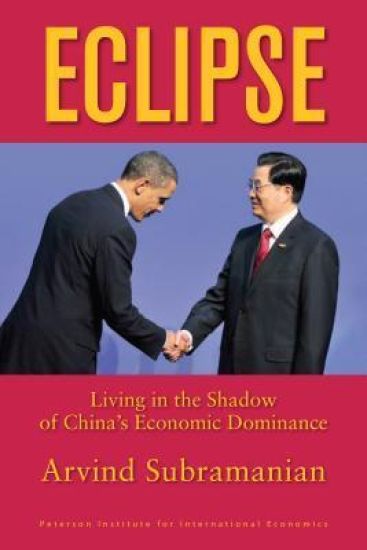
Eclipse – Living in the Shadow of China`s Economic Dominance

Eclipse – Living in the Shadow of China`s Economic Dominance

Arvind Subramanian

The Peterson Institute for International Economics
2011
nidottu
In his new book, Arvind Subramanian presents the following possibilities: What if, contrary to common belief, China's economic dominance is a present-day reality rather than a faraway possibility? What if the renminbi's takeover of the dollar as the world's reserve currency is not decades, but mere years, away? And what if the United States's economic preeminence is not, as many economists and policymakers would like to believe, in its own hands, but China's to determine? Subramanian's analysis is based on a new index of economic dominance grounded in a historical perspective. His examination makes use of real-world examples, comparing China's rise with the past hegemonies of Great Britain and the United States. His attempt to quantify and project economic and currency dominance leads him to the conclusion that China's dominance is not only more imminent, but also broader in scope, and much larger in magnitude, than is currently imagined. He explores the profound effect this might have on the United States, as well as on the global financial and trade system.Subramanian concludes with a series of policy proposals for other nations to reconcile China's rise with continued openness in the global economic order, and to insure against China becoming a malign hegemon.
Textile Management

Textile Management

Arvind Kumar Upadhyay

TAYLOR FRANCIS LTD
2024
sidottu
This book covers the core principles of managing textiles, covering everything from sourcing and production to distribution and sustainability.The objective of this book is to provide relevant information about critical business aspects of the textile industry and its ancillary tools. It covers important concepts of business in a brief and simplified, yet practical way through examples in the form of reports, formats, figures related to respective subjects.Print edition not for sale in South Asia (Bangladesh, Bhutan, India, Nepal, Pakistan and Sri Lanka)
Textile Management

Textile Management

Arvind Kumar Upadhyay

TAYLOR FRANCIS LTD
2025
nidottu
This book covers the core principles of managing textiles, covering everything from sourcing and production to distribution and sustainability.The objective of this book is to provide relevant information about critical business aspects of the textile industry and its ancillary tools. It covers important concepts of business in a brief and simplified, yet practical way through examples in the form of reports, formats, figures related to respective subjects.Print edition not for sale in South Asia (Bangladesh, Bhutan, India, Nepal, Pakistan and Sri Lanka)
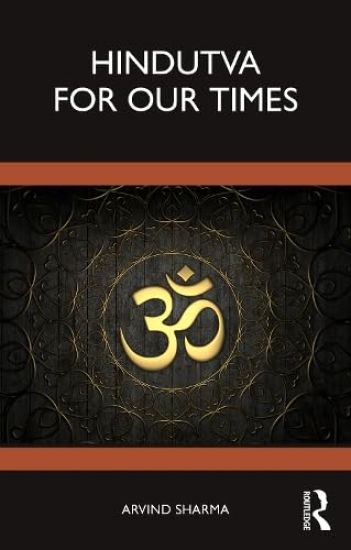
Hindutva for Our Times

Hindutva for Our Times

Arvind Sharma

TAYLOR FRANCIS LTD
2025
sidottu
This book studies Hindu nationalism and deliberates on the forms Hindu self-assertion might take in the future. It examines the intersection of Hindu nationalism with the contemporary reality of India, as represented by a religiously plural society with a secular state, which possesses a social system characterised by caste, and one whose vision has been shaped by a mainstream version of Indian history. The ideology of Hindutva has had two major orientations—of how Hindus should relate to each other, and how Hindus should relate to the followers of other religions. The author provides a new orientation to both these dimensions of Hindutva ideology.A unique contribution, this book will be an essential read for scholars and researchers of religion studies, history, postcolonialism, nationalism, pluralism, Indian political thought, Indian history, caste studies, political science, Hindu studies, Hindusim, sociology and political ideology, and South Asian studies.
Hindutva for Our Times

Hindutva for Our Times

Arvind Sharma

TAYLOR FRANCIS LTD
2025
nidottu
This book studies Hindu nationalism and deliberates on the forms Hindu self-assertion might take in the future. It examines the intersection of Hindu nationalism with the contemporary reality of India, as represented by a religiously plural society with a secular state, which possesses a social system characterised by caste, and one whose vision has been shaped by a mainstream version of Indian history. The ideology of Hindutva has had two major orientations—of how Hindus should relate to each other, and how Hindus should relate to the followers of other religions. The author provides a new orientation to both these dimensions of Hindutva ideology.A unique contribution, this book will be an essential read for scholars and researchers of religion studies, history, postcolonialism, nationalism, pluralism, Indian political thought, Indian history, caste studies, political science, Hindu studies, Hindusim, sociology and political ideology, and South Asian studies.