John Stuart Mill (1806-1873) und Friedrich August von Hayek (1899-1992) haben die jeweils bedeutsamsten Schriften zur Verteidigung der Freiheit im 19. und 20. Jahrhundert geschrieben. Das Buch will die Aktualitat ihres Denkens begreifbar machen. Zugleich schliesst es eine Lucke innerhalb der wissenschaftlichen Literatur, in der bisher ein systematischer Vergleich beider Theorien fehlt. Die Arbeit zeigt, dass Hayeks Theorie in permanenter Auseinandersetzung mit Person und Werk Mills entstanden ist. Aus den Aporien Mills erfolgt bei Hayek der Umschlag ins Gegenteil: der Ausschluss jedes Denkens in ethischen Kategorien und die Konstruktion einer a-ethischen, zugleich ethiklosen und ethikablehnenden Theorie. Doch auch sie ist zum Scheitern verurteilt."
A scholarly edition of the letters and diaries of John Henry Newman. The edition presents an authoritative text, together with an introduction, commentary notes, and scholarly apparatus.
John Dryden (19 August O.S. 9 August] 1631 - 12 May O.S. 1 May] 1700) was an English poet, literary critic, translator, and playwright who was made England's first Poet Laureate in 1668. He is seen as dominating the literary life of Restoration England to such a point that the period came to be known in literary circles as the Age of Dryden. Walter Scott called him "Glorious John". Early life: Dryden was born in the village rectory of Aldwincle near Thrapston in Northamptonshire, where his maternal grandfather was rector of All Saints. He was the eldest of fourteen children born to Erasmus Dryden and wife Mary Pickering, paternal grandson of Sir Erasmus Dryden, 1st Baronet (1553-1632), and wife Frances Wilkes, Puritan landowning gentry who supported the Puritan cause and Parliament. He was a second cousin once removed of Jonathan Swift. As a boy Dryden lived in the nearby village of Titchmarsh, where it is likely that he received his first education. In 1644 he was sent to Westminster School as a King's Scholar where his headmaster was Dr. Richard Busby, a charismatic teacher and severe disciplinarian.Having recently been re-founded by Elizabeth I, Westminster during this period embraced a very different religious and political spirit encouraging royalism and high Anglicanism. Whatever Dryden's response to this was, he clearly respected the headmaster and would later send two of his sons to school at Westminster. As a humanist public school, Westminster maintained a curriculum which trained pupils in the art of rhetoric and the presentation of arguments for both sides of a given issue. This is a skill which would remain with Dryden and influence his later writing and thinking, as much of it displays these dialectical patterns. The Westminster curriculum included weekly translation assignments which developed Dryden's capacity for assimilation. This was also to be exhibited in his later works. His years at Westminster were not uneventful, and his first published poem, an elegy with a strong royalist feel on the death of his schoolmate Henry, Lord Hastings from smallpox, alludes to the execution of King Charles I, which took place on 30 January 1649, very near the school where Dr. Busby had first prayed for the King and then locked in his schoolboys to prevent their attending the spectacle. In 1650 Dryden went up to Trinity College, Cambridge. Here he would have experienced a return to the religious and political ethos of his childhood: the Master of Trinity was a Puritan preacher by the name of Thomas Hill who had been a rector in Dryden's home village.Though there is little specific information on Dryden's undergraduate years, he would most certainly have followed the standard curriculum of classics, rhetoric, and mathematics. In 1654 he obtained his BA, graduating top of the list for Trinity that year. In June of the same year Dryden's father died, leaving him some land which generated a little income, but not enough to live on.Returning to London during the Protectorate, Dryden obtained work with Cromwell's Secretary of State, John Thurloe. This appointment may have been the result of influence exercised on his behalf by his cousin the Lord Chamberlain, Sir Gilbert Pickering. At Cromwell's funeral on 23 November 1658 Dryden processed with the Puritan poets John Milton and Andrew Marvell. Shortly thereafter he published his first important poem, Heroic Stanzas (1658), a eulogy on Cromwell's death which is cautious and prudent in its emotional display. In 1660 Dryden celebrated the Restoration of the monarchy and the return of Charles II with Astraea Redux, an authentic royalist panegyric. In this work the interregnum is illustrated as a time of anarchy, and Charles is seen as the restorer of peace and order................
Studienarbeit aus dem Jahr 2005 im Fachbereich Politik - Politische Theorie und Ideengeschichte, Note: 1,25, Johann Wolfgang Goethe-Universit t Frankfurt am Main (Gesellschaftswissenschaften), Veranstaltung: Seminar, 28 Quellen im Literaturverzeichnis, Sprache: Deutsch, Abstract: Aristoteles unterscheidet zwei Arten der Gerechtigkeit: die iusitia directiva und die iustitia distributiva. Erstere ist eine ausgleichende, entsch digende Gerechtigkeit, die entweder durch Rechtsbruch (ex delictu) oder Vertragsverpflichtungen (ex contractu) bindend eingefordert werden kann. Letztere, die iustitia distributiva, die verteilende Gerechtigkeit, besitzt diese rechtsf rmige Verbindlichkeit nicht. Sie wird heute synonym zur Verteilungsgerechtigkeit oder der sozialen Gerechtigkeit gebraucht (Kersting 2000a: 17) und ist je nach weltanschaulicher Orientierung umstritten. Eben diese iustitia distributiva wird in ihrer unterschiedlichen Ausdeutung im Zentrum dieser Arbeit stehen. Die iustitia directiva wird hier nicht in die Er rterung mit einbezogen werden Die Verteilungsgerechtigkeit wurde im Verlaufe des 20. Jahrhunderts lange und h ufig nur als die gleiche a priori Verteilung von Rechten und insbesondere die gerechte ex post Verteilung von G tern und monet ren Transfers verstanden. Darauf bauen die meisten demokratischen Wohlfahrtsstaaten des europ ischen Kontinents auf. Dies, so eine sich verbreiternde Erkenntnis, scheint in den ausdifferenzierten Gesellschaften der postindustriellen Staaten nicht mehr auszureichen, um verkrustete Statuszuweisungen und vererbte Klassenzugeh rigkeiten aufzubrechen und sich einer einsehbar fairen Verteilung von Lebenschancen anzun hern. Die gerechte Verteilung von Chancen hat nicht zuletzt deshalb in den neueren politischen Gerechtigkeitstheorien an Bedeutung gewonnen. Das Wissen darum, dass Lebenschancen die eigentlichen Entscheidungsfaktoren f r ein selbst bestimmtes, "gutes Leben" (Aristoteles) sein k nnen, ist insbesondere den liberalen Gerecht
The 18th century was a wealth of knowledge, exploration and rapidly growing technology and expanding record-keeping made possible by advances in the printing press. In its determination to preserve the century of revolution, Gale initiated a revolution of its own: digitization of epic proportions to preserve these invaluable works in the largest archive of its kind. Now for the first time these high-quality digital copies of original 18th century manuscripts are available in print, making them highly accessible to libraries, undergraduate students, and independent scholars.This collection reveals the history of English common law and Empire law in a vastly changing world of British expansion. Dominating the legal field is the Commentaries of the Law of England by Sir William Blackstone, which first appeared in 1765. Reference works such as almanacs and catalogues continue to educate us by revealing the day-to-day workings of society.++++The below data was compiled from various identification fields in the bibliographic record of this title. This data is provided as an additional tool in helping to insure edition identification: ++++British LibraryT117256London: printed for J. Thompson; and may be had at the pamphlet shops sic], and of the news sellers, 1746?]. 24p.; 8
The 18th century was a wealth of knowledge, exploration and rapidly growing technology and expanding record-keeping made possible by advances in the printing press. In its determination to preserve the century of revolution, Gale initiated a revolution of its own: digitization of epic proportions to preserve these invaluable works in the largest archive of its kind. Now for the first time these high-quality digital copies of original 18th century manuscripts are available in print, making them highly accessible to libraries, undergraduate students, and independent scholars.Delve into what it was like to live during the eighteenth century by reading the first-hand accounts of everyday people, including city dwellers and farmers, businessmen and bankers, artisans and merchants, artists and their patrons, politicians and their constituents. Original texts make the American, French, and Industrial revolutions vividly contemporary.++++The below data was compiled from various identification fields in the bibliographic record of this title. This data is provided as an additional tool in helping to insure edition identification: ++++Bodleian Library (Oxford)T186387With a half-title. A variant issue has "Cottle" in the imprint.London: sold by Messrs. Dilly and Button; and by Brown, James and Cottel, Bristol, 1796. 2],52p.; 8
The 18th century was a wealth of knowledge, exploration and rapidly growing technology and expanding record-keeping made possible by advances in the printing press. In its determination to preserve the century of revolution, Gale initiated a revolution of its own: digitization of epic proportions to preserve these invaluable works in the largest archive of its kind. Now for the first time these high-quality digital copies of original 18th century manuscripts are available in print, making them highly accessible to libraries, undergraduate students, and independent scholars.The Age of Enlightenment profoundly enriched religious and philosophical understanding and continues to influence present-day thinking. Works collected here include masterpieces by David Hume, Immanuel Kant, and Jean-Jacques Rousseau, as well as religious sermons and moral debates on the issues of the day, such as the slave trade. The Age of Reason saw conflict between Protestantism and Catholicism transformed into one between faith and logic -- a debate that continues in the twenty-first century.++++The below data was compiled from various identification fields in the bibliographic record of this title. This data is provided as an additional tool in helping to insure edition identification: ++++Bodleian Library (Oxford)T196116Hereford: printed by D. Walker; and sold by all the booksellers in Hereford, 1797. 16p.; 8
The 18th century was a wealth of knowledge, exploration and rapidly growing technology and expanding record-keeping made possible by advances in the printing press. In its determination to preserve the century of revolution, Gale initiated a revolution of its own: digitization of epic proportions to preserve these invaluable works in the largest archive of its kind. Now for the first time these high-quality digital copies of original 18th century manuscripts are available in print, making them highly accessible to libraries, undergraduate students, and independent scholars.The Age of Enlightenment profoundly enriched religious and philosophical understanding and continues to influence present-day thinking. Works collected here include masterpieces by David Hume, Immanuel Kant, and Jean-Jacques Rousseau, as well as religious sermons and moral debates on the issues of the day, such as the slave trade. The Age of Reason saw conflict between Protestantism and Catholicism transformed into one between faith and logic -- a debate that continues in the twenty-first century.++++The below data was compiled from various identification fields in the bibliographic record of this title. This data is provided as an additional tool in helping to insure edition identification: ++++Cambridge University LibraryN023860London: printed for J. Buckland; T. Field; E. Dilly; and A. Mason, 1763. 2],30p.; 8
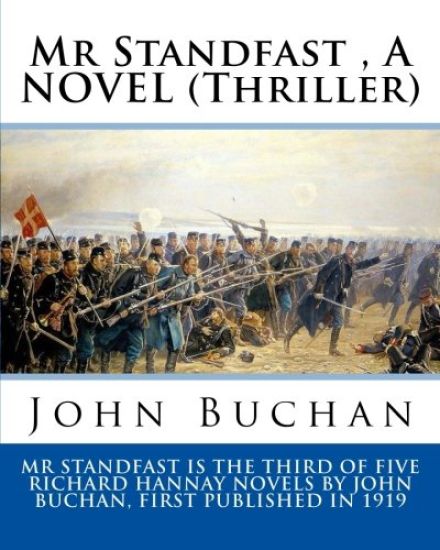
Mr Standfast is the third of five Richard Hannay novels by John Buchan, first published in 1919 by Hodder & Stoughton, London. It is one of two Hannay novels set during the First World War, the other being Greenmantle (1916); Hannay's first and best-known adventure, The Thirty-Nine Steps (1915), is set in the period immediately before the war started. The title refers to a character in John Bunyan's Pilgrim's Progress, to which there are many other references in the novel; Hannay uses a copy of Pilgrim's Progress to decipher coded messages from his contacts, and letters from his friend Peter Pienaar.Plot introduction Set in the later years of World War I, Brigadier-General Hannay is recalled from active service on the Western Front to undertake a secret mission hunting for a dangerous German agent at large in Britain. Hannay is required to work undercover disguised as a pacifist, roaming the country incognito to investigate a German spy and his agents, and then heads to the Swiss Alps to save Europe from being overwhelmed by the German army. Plot summary Part One--Dick Hannay, under forty and already a successful Brigadier-General with good prospects of advancement, is called out of uniform by his old comrade, spymaster Sir Walter Bullivant, and sent to Fosse Manor in the Cotswolds to receive further instructions. He must pose as a South African, an objector to the war, and once more takes on the name Cornelius Brand (an Anglicisation of the name he had used on his adventures in Germany in Greenmantle). He is upset by the idea of such a pose, but comforted by thoughts of his friend Peter Pienaar, briefly a successful airman and now a prisoner in Germany, and by the beauty of the Cotswold countryside.At Fosse, he meets two middle-aged spinsters, their cousin Launcelot Wake, a conscientious objector, and their niece Mary Lamington, a girl whose prettiness had struck Hannay earlier, while visiting a shell-shocked friend in the hospital where she works. It emerges that she is his contact, but she can tell him little more than that he must immerse himself in the world of pacifists and objectors, picking up "atmosphere". She gives him a label to paste inside his watch, an address where he will be staying, and advises him to pick up a copy of Pilgrim's Progress............ John Buchan, 1st Baron Tweedsmuir, ( 26 August 1875 - 11 February 1940) was a Scottish novelist, historian and Unionist politician who served as Governor General of Canada, the 15th since Canadian Confederation. After a brief legal career, Buchan simultaneously began his writing career and his political and diplomatic careers, serving as a private secretary to the colonial administrator of various colonies in southern Africa. He eventually wrote propaganda for the British war effort in the First World War. Buchan was in 1927 elected Member of Parliament for the Combined Scottish Universities, but he spent most of his time on his writing career, notably writing The Thirty-Nine Steps and other adventure fiction. In 1935 he was appointed Governor General of Canada by King George V, on the recommendation of Prime Minister of Canada R. B. Bennett, to replace the Earl of Bessborough. He occupied the post until his death in 1940. Buchan proved to be enthusiastic about literacy, as well as the evolution of Canadian culture, and he received a state funeral in Canada before his ashes were returned to the United Kingdom. Early life and education...........
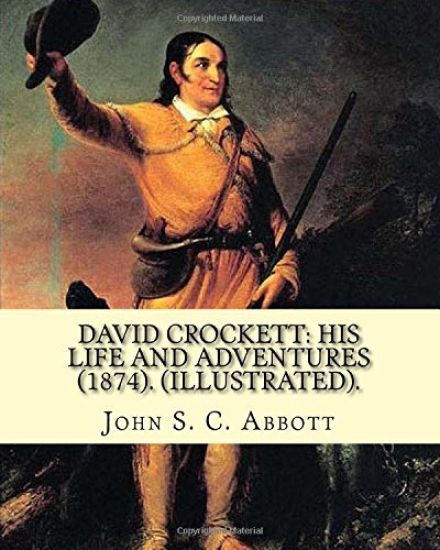
John Stevens Cabot Abbott (September 19, 1805 - June 17, 1877), an American historian, pastor, and pedagogical writer, was born in Brunswick, Maine to Jacob and Betsey Abbott. Early life: He was a brother of Jacob Abbott, and was associated with him in the management of Abbott's Institute, New York City, and in the preparation of his series of brief historical biographies. Dr. Abbott graduated at Bowdoin College in 1825, prepared for the ministry at Andover Theological Seminary, and between 1830 and 1844, when he retired from the ministry in the Congregational Church, preached successively at Worcester, Roxbury and Nantucket, all in Massachusetts. Literary career: Owing to the success of a little work, The Mother at Home, he devoted himself, from 1844 onwards, to literature. He was a voluminous writer of books on Christian ethics, and of popular histories, which were credited with cultivating a popular interest in history. He is best known as the author of the widely popular History of Napoleon Bonaparte (1855), in which the various elements and episodes in Napoleon's career are described. Abbott takes a very favourable view towards his subject throughout. Also among his principal works are: History of the Civil War in America (1863-1866), and The History of Frederick II, Called Frederick the Great (New York, 1871). He also did a forward to a book called Life of Boone by W.M. Bogart, about Daniel Boone in 1876. In general, except that he did not write juvenile fiction, his work in subject and style closely resembles that of his brother, Jacob Abbott.... David "Davy" Crockett (August 17, 1786 - March 6, 1836) was a 19th-century American folk hero, frontiersman, soldier, and politician. He is commonly referred to in popular culture by the epithet "King of the Wild Frontier". He represented Tennessee in the U.S. House of Representatives and served in the Texas Revolution. Crockett grew up in East Tennessee, where he gained a reputation for hunting and storytelling. He was made a colonel in the militia of Lawrence County, Tennessee and was elected to the Tennessee state legislature in 1821. In 1825, he was elected to the U.S. Congress where he vehemently opposed many of the policies of President Andrew Jackson, most notably the Indian Removal Act. Crockett's opposition to Jackson's policies led to his defeat in the 1831 elections. He won again in 1833, then narrowly lost in 1835, prompting his angry departure to Texas (then the Mexican state of Tejas) shortly thereafter. In early 1836, he took part in the Texas Revolution and was killed at the Battle of the Alamo in March. Crockett became famous in his own lifetime for larger-than-life exploits popularized by stage plays and almanacs. After his death, he continued to be credited with acts of mythical proportion. These led in the 20th century to television and movie portrayals, and he became one of the best-known American folk heroes................




![All for Love (1677). By: John Dryden: John Dryden (19 August [O.S. 9 August] 1631 - 12 May [O.S. 1 May] 1700) was an English poet, literary cri](/covers/9781984182456.jpg)