Kirjojen hintavertailu. Mukana 11 627 624 kirjaa ja 12 kauppaa.

Kirjahaku

Etsi kirjoja tekijän nimen, kirjan nimen tai ISBN:n perusteella.

1000 tulosta hakusanalla Avana Lexie

Avant Garde

Avant Garde

Robin Maconie

Scarecrow Press
2012
sidottu
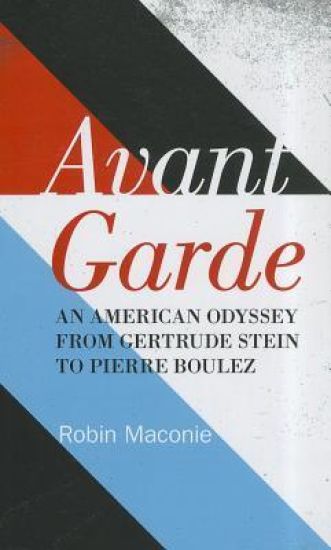
Gertrude Stein and philosopher Alfred North Whitehead were unlikely friends who spent most of their mature lives in exile: Stein in France and Whitehead in the United States. Their friendship was based on a mutual admiration for the philosophical pragmatism of William James and skepticism toward the European tradition of intellectual abstraction extending as far back as Plato and Aristotle. Though neither was musical, both were leading exponents of a new orientation toward time and knowledge acquisition that would go on to influence succeeding generations of composers. Through Virgil Thomson, Stein came to influence John Cage and the New York school of abstract music; through his teaching in the United States, Whitehead’s philosophy of time and cognition came to be seen in America and abroad as an alternative to Newtonian neoclassicism, an alternative clearly acknowledged in the metric modulations of Elliott Carter and Conlon Nancarrow as well as the post-1950 total serialism of Pierre Boulez and Karlheinz Stockhausen. The seemingly unlikely influence of Stein and Whitehead on Thomson, Cage, Carter, and the minimalists tells a remarkable story of transmission within and among the arts and philosophy, one that Robin Maconie unravels through his series of essays in Avant Garde: An American Odyssey from Gertrude Stein to Pierre Boulez. Maconie explores, from Hollywood to Harvard, the way in which music functions as a form of communication across the boundaries of language, serving the causes of trade and diplomacy through its representation of national identity, emotional character, honorable intention, and social discipline. The study of music as a language inevitably became the object of information science after World War II, but, as Maconie notes, 60 years on, music’s refusal to yield to scientific elucidation has generated a stream of anti-music propaganda by a powerful collective of celebrity science writers. In a sequence of linked essays, Stockhausen specialist Robin Maconie reconsiders the role of music and music technology through careful examination of key modern concepts with respect to time, existence, identity, and relationship as formulated by such thinkers as Einstein, Russell, Whitehead, and Stein, along with Freud, Schoenberg, Wittgenstein, and Marcel Duchamp. This foray into art, music, science, and philosophy is ideally suited for students and scholars of these disciplines, as well as those seeking to understand more deeply the influence these individuals had on one another’s work and modern music.
Avant Rock

Avant Rock

Bill Martin; Robert Fripp

Open Court Publishing Co ,U.S.
2002
pokkari
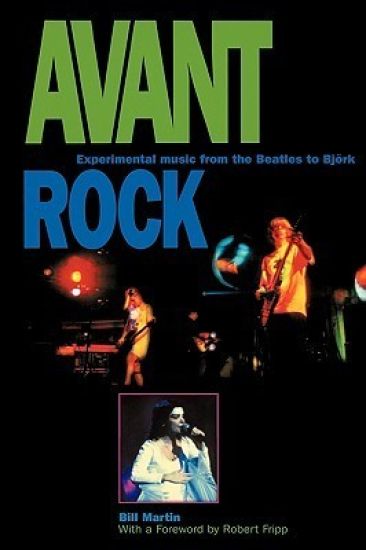
Critiquing avant-garde rock bands from the 1960s to the present, Bill Martin examines how social upheaval gave rise to this new form of musical expression. He covers early experimentation by artists such as James Brown; initiation into the mainstream and the resulting adaptations by the Beatles and the Who; and continues into the present looking at how groups like Stereolab, Sonic Youth, Jim O’Rourke, and others continue to innovate. An annotated discography is included.
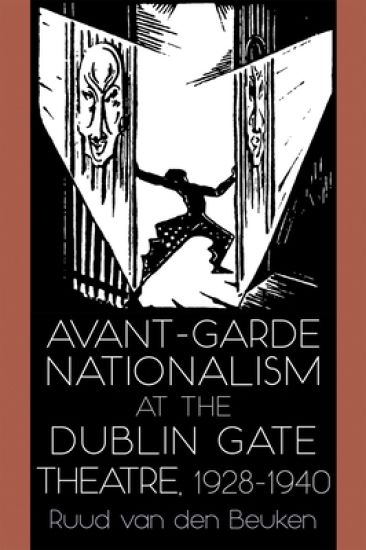
Avant-Garde Nationalism at the Dublin Gate Theatre, 1928-1940

Avant-Garde Nationalism at the Dublin Gate Theatre, 1928-1940

Ruud van den Beuken

Syracuse University Press
2021
sidottu
In 1928, Hilton Edwards and Micheál mac Liammóir founded the Dublin Gate Theatre, which quickly became renowned for producing stylistically and dramaturgically innovative plays in a uniquely avant-garde setting. While the Gate’s lasting importance to the history of Irish theater is generally attributed to its introduction of experimental foreign drama to Ireland, Van den Beuken shines a light on the Gate’s productions of several new Irish playwrights, such as Denis Johnston, Mary Manning, David Sears, Robert Collis, and Edward and Christine Longford. Having grown up during an era of political turmoil and bloodshed that led to the creation of an independent yet in many ways bitterly divided Ireland, these dramatists chose to align themselves with an avant-garde theater that explicitly sought to establish Dublin as a modern European capital. In examining an extensive corpus of archival resources, Van den Beuken reveals how the Gate Theatre became a site of avant-garde nationalism during Ireland’s tumultuous first post-independence decades.
Avant-Garde Nationalism at the Dublin Gate Theatre, 1928-1940

Avant-Garde Nationalism at the Dublin Gate Theatre, 1928-1940

Ruud van den Beuken

Syracuse University Press
2021
nidottu
In 1928, Hilton Edwards and Micheál mac Liammóir founded the Dublin Gate Theatre, which quickly became renowned for producing stylistically and dramaturgically innovative plays in a uniquely avant-garde setting. While the Gate’s lasting importance to the history of Irish theater is generally attributed to its introduction of experimental foreign drama to Ireland, Van den Beuken shines a light on the Gate’s productions of several new Irish playwrights, such as Denis Johnston, Mary Manning, David Sears, Robert Collis, and Edward and Christine Longford. Having grown up during an era of political turmoil and bloodshed that led to the creation of an independent yet in many ways bitterly divided Ireland, these dramatists chose to align themselves with an avant-garde theater that explicitly sought to establish Dublin as a modern European capital. In examining an extensive corpus of archival resources, Van den Beuken reveals how the Gate Theatre became a site of avant-garde nationalism during Ireland’s tumultuous first post-independence decades.
Avant-Garde Museology

Avant-Garde Museology

University of Minnesota Press
2015
nidottu
The museum of contemporary art might be the most advanced recording device ever invented. It is a place for the storage of historical grievances and the memory of forgotten artistic experiments, social projects, or errant futures. But in late nineteenth and early twentieth-century Russia, this recording device was undertaken by artists and thinkers as a site for experimentation. Arseny Zhilyaev’s Avant-Garde Museology presents essays documenting the wildly encompassing progressivism of this period by figures such as Nikolai Fedorov, Aleksandr Rodchenko, Kazimir Malevich, Alexander Bogdanov, and others-many which are translated from the Russian for the first time. Here the urgent question is: How might the contents of the museum be reanimated so as to transcend even the social and physical limits imposed on humankind? Contributors: David Arkin; Vladimir Bekhterev; Alexander Bogdanov; Osip Brik; Vasiliy Chekrygin; Leonid Chetyrkin; Nikolai Druzhinin; Nikolai Fedorov; Pavel Florensky; R. N. Frumkina; M. S. Ilkovskiy; V. I. Karmilov; V. Karpov; Valentin Kholtsov; P. N. Khrapov; Yuriy Kogan; Natalya Kovalenskaya; Nadezhda Krupskaya; S. P. Lebedyansky; A. F. Levitsky; Vera Leykina (Leykina-Svirskaya); Ivan Luppol; Kazimir Malevich; Andrey Platonov; Nikolay Punin; Aleksandr Rodchenko; Yuriy Samarin; I. F. Sheremet; Andrey Shestakov; Natan Shneerson; Ivan Skulenko; M. Vorobiev; N. Vorontsovsky; Boris Zavadovsky; I. M. Zykov.
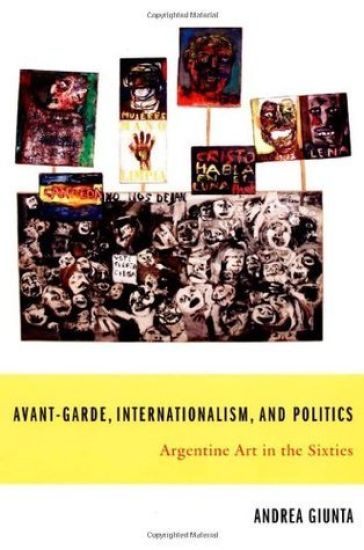
Avant-Garde, Internationalism, and Politics

Avant-Garde, Internationalism, and Politics

Andrea Giunta

Duke University Press
2007
sidottu
The 1960s were heady years in Argentina. Visual artists, curators, and critics sought to fuse art and politics; to broaden the definition of art to encompass happenings and assemblages; and, above all, to achieve international recognition for new, cutting-edge Argentine art. A bestseller in Argentina, Avant-Garde, Internationalism, and Politics is an examination of the 1960s as a brief historical moment when artists, institutions, and critics joined to promote an international identity for Argentina’s visual arts. The renowned Argentine art historian and critic Andrea Giunta analyzes projects specifically designed to internationalize Argentina’s art and avant-garde during the 1960s: the importation of exhibitions of contemporary international art, the sending of Argentine artists abroad to study, the organization of prize competitions involving prestigious international art critics, and the export of exhibitions of Argentine art to Europe and the United States. She looks at the conditions that made these projects possible-not least the Alliance for Progress, a U.S. program of “exchange” and “cooperation” meant to prevent the spread of communism through Latin America in the wake of the Cuban Revolution-as well as the strategies formulated to promote them. She describes the influence of Romero Brest, prominent art critic, supporter of abstract art, and director of the Centro de Artes Visuales del Instituto Tocuato Di Tella (an experimental art center in Buenos Aires); various group programs such as Nueva FiguraciÓn and Arte Destructivo; and individual artists including Antonio Berni, Alberto Greco, LeÓn Ferrari, Marta Minujin, and Luis Felipe NoÉ. Giunta’s rich narrative illuminates the contentious postwar relationships between art and politics, Latin America and the United States, and local identity and global recognition.
Avant-Garde, Internationalism, and Politics

Avant-Garde, Internationalism, and Politics

Andrea Giunta

Duke University Press
2007
pokkari
The 1960s were heady years in Argentina. Visual artists, curators, and critics sought to fuse art and politics; to broaden the definition of art to encompass happenings and assemblages; and, above all, to achieve international recognition for new, cutting-edge Argentine art. A bestseller in Argentina, Avant-Garde, Internationalism, and Politics is an examination of the 1960s as a brief historical moment when artists, institutions, and critics joined to promote an international identity for Argentina’s visual arts. The renowned Argentine art historian and critic Andrea Giunta analyzes projects specifically designed to internationalize Argentina’s art and avant-garde during the 1960s: the importation of exhibitions of contemporary international art, the sending of Argentine artists abroad to study, the organization of prize competitions involving prestigious international art critics, and the export of exhibitions of Argentine art to Europe and the United States. She looks at the conditions that made these projects possible-not least the Alliance for Progress, a U.S. program of “exchange” and “cooperation” meant to prevent the spread of communism through Latin America in the wake of the Cuban Revolution-as well as the strategies formulated to promote them. She describes the influence of Romero Brest, prominent art critic, supporter of abstract art, and director of the Centro de Artes Visuales del Instituto Tocuato Di Tella (an experimental art center in Buenos Aires); various group programs such as Nueva FiguraciÓn and Arte Destructivo; and individual artists including Antonio Berni, Alberto Greco, LeÓn Ferrari, Marta Minujin, and Luis Felipe NoÉ. Giunta’s rich narrative illuminates the contentious postwar relationships between art and politics, Latin America and the United States, and local identity and global recognition.
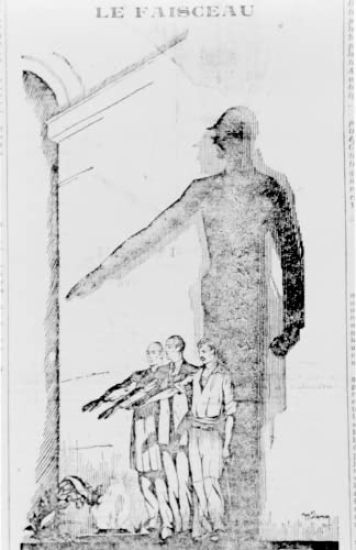
Avant-Garde Fascism

Avant-Garde Fascism

Mark Antliff

Duke University Press
2007
sidottu
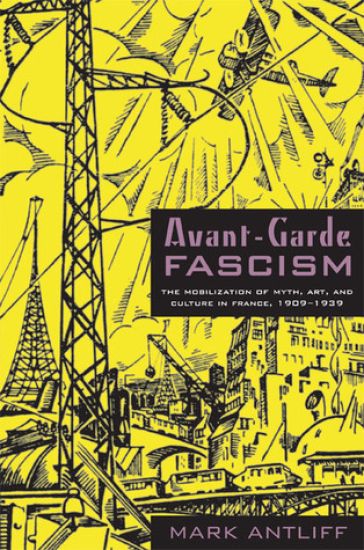
Investigating the central role that theories of the visual arts and creativity played in the development of fascism in France, Mark Antliff examines the aesthetic dimension of fascist myth-making within the history of the avant-garde. Between 1909 and 1939, a surprising array of modernists were implicated in this project, including such well-known figures as the symbolist painter Maurice Denis, the architects Le Corbusier and Auguste Perret, the sculptors Charles Despiau and Aristide Maillol, the “New Vision” photographer Germaine Krull, and the fauve Maurice Vlaminck.Antliff considers three French fascists: Georges Valois, Philippe Lamour, and Thierry Maulnier, demonstrating how they appropriated the avant-garde aesthetics of cubism, futurism, surrealism, and the so-called Retour à l’Ordre (“Return to Order”), and, in one instance, even defined the “dynamism” of fascist ideology in terms of Soviet filmmaker Sergei Eisenstein’s theory of montage. For these fascists, modern art was the mythic harbinger of a regenerative revolution that would overthrow existing governmental institutions, inaugurate an anticapitalist new order, and awaken the creative and artistic potential of the fascist “new man.”In formulating the nexus of fascist ideology, aesthetics, and violence, Valois, Lamour, and Maulnier drew primarily on the writings of the French political theorist Georges Sorel, whose concept of revolutionary myth proved central to fascist theories of cultural and national regeneration in France. Antliff analyzes the impact of Sorel’s theory of myth on Valois, Lamour, and Maulnier. Valois created the first fascist movement in France; Lamour, a follower of Valois, established the short-lived Parti Fasciste Révolutionnaire in 1928 before founding two fascist-oriented journals; Maulnier forged a theory of fascism under the auspices of the journals Combat and Insurgé.
Avant-Garde Fascism

Avant-Garde Fascism

Mark Antliff

Duke University Press
2007
pokkari
Investigating the central role that theories of the visual arts and creativity played in the development of fascism in France, Mark Antliff examines the aesthetic dimension of fascist myth-making within the history of the avant-garde. Between 1909 and 1939, a surprising array of modernists were implicated in this project, including such well-known figures as the symbolist painter Maurice Denis, the architects Le Corbusier and Auguste Perret, the sculptors Charles Despiau and Aristide Maillol, the “New Vision” photographer Germaine Krull, and the fauve Maurice Vlaminck.Antliff considers three French fascists: Georges Valois, Philippe Lamour, and Thierry Maulnier, demonstrating how they appropriated the avant-garde aesthetics of cubism, futurism, surrealism, and the so-called Retour à l’Ordre (“Return to Order”), and, in one instance, even defined the “dynamism” of fascist ideology in terms of Soviet filmmaker Sergei Eisenstein’s theory of montage. For these fascists, modern art was the mythic harbinger of a regenerative revolution that would overthrow existing governmental institutions, inaugurate an anticapitalist new order, and awaken the creative and artistic potential of the fascist “new man.”In formulating the nexus of fascist ideology, aesthetics, and violence, Valois, Lamour, and Maulnier drew primarily on the writings of the French political theorist Georges Sorel, whose concept of revolutionary myth proved central to fascist theories of cultural and national regeneration in France. Antliff analyzes the impact of Sorel’s theory of myth on Valois, Lamour, and Maulnier. Valois created the first fascist movement in France; Lamour, a follower of Valois, established the short-lived Parti Fasciste Révolutionnaire in 1928 before founding two fascist-oriented journals; Maulnier forged a theory of fascism under the auspices of the journals Combat and Insurgé.
Avant-garde to New Wave

Avant-garde to New Wave

Jonathan L. Owen

Berghahn Books
2011
sidottu
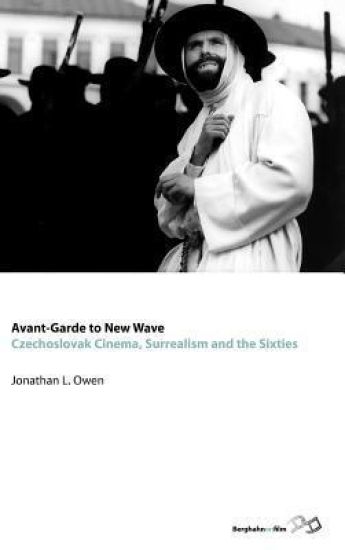
The cultural liberalization of communist Czechoslovakia in the 1960s produced many artistic accomplishments, not least the celebrated films of the Czech New Wave. This movement saw filmmakers use their new freedom to engage with traditions of the avant-garde, especially Surrealism. This book explores the avant-garde's influence over the New Wave and considers the political implications of that influence. The close analysis of selected films, ranging from the Oscar-winning Closely Observed Trains to the aesthetically challenging Daisies, is contextualized by an account of the Czech avant-garde and a discussion of the films' immediate cultural and political background.
Avant-garde to New Wave

Avant-garde to New Wave

Jonathan L. Owen

Berghahn Books
2013
pokkari
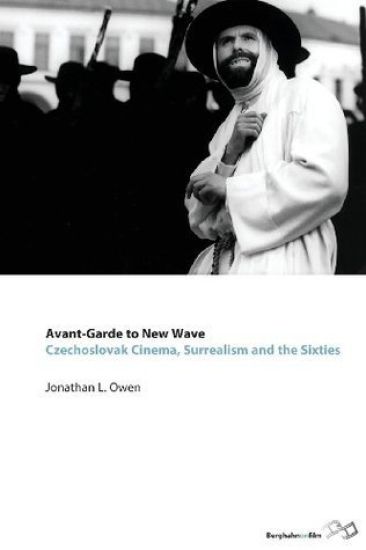
The cultural liberalization of communist Czechoslovakia in the 1960s produced many artistic accomplishments, not least the celebrated films of the Czech New Wave. This movement saw filmmakers use their new freedom to engage with traditions of the avant-garde, especially Surrealism. This book explores the avant-garde's influence over the New Wave and considers the political implications of that influence. The close analysis of selected films, ranging from the Oscar-winning Closely Observed Trains to the aesthetically challenging Daisies, is contextualized by an account of the Czech avant-garde and a discussion of the films' immediate cultural and political background.
Alana's Tale: Book 2 of Corwin's Chronicle
Princess Alana, now eighteen, is betrothed to the son of Lord Mallow, and Gwalhafed prospers under the peaceful rule of her father, King Galeschin. But Prince Rolf sends his brother a heartfelt note, repenting of his misdeeds, and requesting to return from exile.Rolf's arrival brings a string of disasters. At last, she and her champion, Murdoch, find themselves alone, on a desolate journey that will lead them to the realm of the faer. There, the ancient prophecy, "When the child who was stolen returns a man, we will become the elders and teachers of the quetan," begins to unfold.
Alana Bites Back

Alana Bites Back

K. Elle Collier

Pentical Publishing
2013
nidottu
Betrayal and manipulation... it's what Alana does best and she's back to reclaim what's hers After two and a half years of wedded bliss while raising their son, Todd and Kai are faced with an upheaval of their lives when Todd is forced to close his practice in Brooklyn.After landing a new gig out in Los Angeles at a small entertainment firm, Todd is shocked to hear that his firm has recently acquired a new client - someone he hoped to never see again - Ms Alana Brooks. Desperate to keep his new client a secret from Kai, Todd struggles through Alana's manipulations as she puts her ultimate plan in motion to reclaim what she believes is hers and prove to Kai once and for all, that her bite is much worse than her bark...
Amana

Amana

Kama Sywor Kamanda

Books Of Africa Ltd
2016
pokkari
In ancient Nubia, the child Amana was born. Looked after by his grandfather, he was protected from men and spirits and taught how to use weapons and to command men with pride and energy. This is well-loved tale from one of Africa's most celebrated storytellers is lavishly illustrated in colour by the Japanese artist Izumi Ishikawa.
Avant-Garde

Avant-Garde

Kelly Fields

Amazon.com
2018
nidottu
Two atomic bombs fell on Japan, a year later the High Council from the Pleiades began sending 144,000 Wayshowers to Earth. These Wayshowers were sent to help bring in the new Earth. While experiencing some important events during their lifetime, they learned to live consciously, and to receive instructions in their dreams.Eighteen years after the second great world war, the Avant-garde Wayshowers are ready to go to college, or to be drafted for another war. They remember hearing the stories about the last war and they aren't too keen about being involved in any war. While this new war is starting to unfold, the High Council will be on track with the plan of the ages, and it's now in full swing. These Wayshowers were told by the High Council that there will be Avatars along the way to help them.In what is nearly a twenty-five year period that an adult life is lived, marriage, children, buying houses, therefore full of exciting surprises, and challenges. The Wayshowers performed their mission, which is to learn, and experience this time of their life on planet Earth. They certainly contributed to helping make the planet a better place to live and after working in their occupations, raising their families, they are ready to transition into the next phase of the plan. They will receive some help, but it won't always be easy, and after they are gone the people on Earth will need to carry on without them. As they move into the final phase of this plan, they will continue to learn, and to be prepared for more of the adventures that are there throughout the galaxy.
Avant-Garde on Record

Avant-Garde on Record

Jonathan Goldman

Cambridge University Press
2023
sidottu
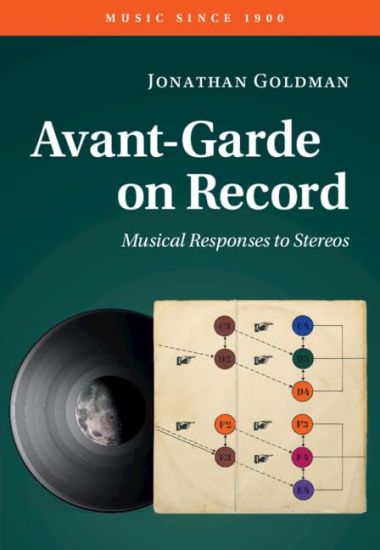
An innovative contribution to music history, cultural studies, and sound studies, Avant-garde on Record revisits post-war composers and their technologically oriented brand of musical modernism. It describes how a broad range of figures (including Pierre Boulez, Karlheinz Stockhausen, Henri Pousseur, Toshiro Mayuzumi, Claire Schapira, Anthony Braxton and Gunther Schuller) engaged with avant-garde aesthetics while responding to a rapidly changing, technologically fuelled, spatialized audio culture. Jonathan Goldman focuses on how contemporary listeners understood these composers' works in the golden age of LPs and explores how this reception was mediated through consumer-oriented sound technology that formed a prism through which listeners processed the 'music of their time'. His account reveals unexpected aspects of twentieth-century audio culture: from sonic ping-pong to son et lumière shows, from Venetian choral music by Stravinsky to the soundscape of Niagara Falls, from a Buddhist Cantata to an LP box set cast as a parlour game.
Avant-Garde and Psychotechnics

Avant-Garde and Psychotechnics

Margarete Vöhringer

TAYLOR FRANCIS LTD
2023
sidottu
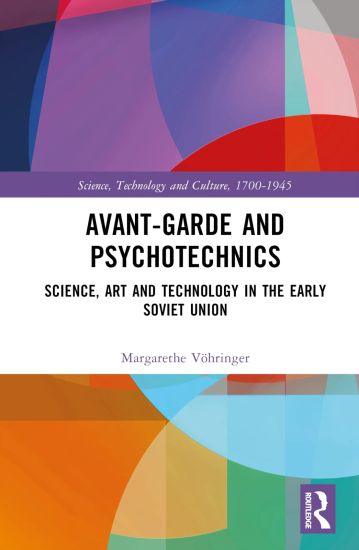
Avant-Garde and Psychotechnics presents an innovative look at the Russian avant-garde and its cultural encounters with the sciences in the 1920s. The book examines some of the lesser known entanglements between architects, filmmakers and philosophers, on the one hand, and experimental psychologists and physiologists on the other. In Russia, famous avant-garde artists, such as El Lissitzky, Vassily Kandinsky and Dziga Vertov, helped propagate a movement referred to as "psychotechnics" that was emerging at the time in Germany and the United States and eventually led to a "psychotechnical boom." At the end of the story told in the book, it becomes clear that this boom continues to the present day. By analyzing concrete projects undertaken by Russian artists and scientists in cooperation with one another, and by drawing on as-yet-unpublished archival material, Avant-Garde and Psychotechnics challenges the established notion of socialist sciences. At the same time, it provides an entirely new picture of what was thought to be modern art, thereby demonstrating that artistic experimentation had much more than a mere metaphorical meaning in Russian arts in the 1920s. In 2007 Avant-Garde and Psychotechnics was acknowledged with an award for interdisciplinary research by the Wilhelm-Ostwald-Society, Großbothen. In 2011 the book received funding from the VolkswagenStiftung to be translated into English and Russian (the Russian edition was published by NLO books in 2019). The original German edition also received favorable reviews in NZZ, NTM, Derive, Junge Welt and Sehepunkte.