"As visually arresting as it is informative."—The Boston Globe "Du Bois's bold colors and geometric shapes were decades ahead of modernist graphic design in America."—Fast Company's Co.Design W.E.B. Du Bois's Data Portraits is the first complete publication of W.E.B. Du Bois's groundbreaking charts, graphs, and maps presented at the 1900 Paris Exposition. Famed sociologist, writer, and Black rights activist W.E.B. Du Bois fundamentally changed the representation of Black Americans with his exhibition of data visualizations at the 1900 Paris Exposition. Beautiful in design and powerful in content, these data portraits make visible a wide spectrum of African American culture, from advances in education to the lingering effects of slavery. They convey a literal and figurative representation of what he famously referred to as "the color line," collected here in full color for the first time. A landmark collection for social history, graphic design, and data science. • Data display, visualizations, and infographics far ahead of their time • Colorful graphs and charts are mesmerizing pieces of art in their own right • A valuable companion to W.E. B. Du Bois's The Souls of Black Folk • Includes contributions from Aldon Morris, Silas Munro, and Mabel O. Wilson W.E.B. Du Bois's Data Portraits is an informative and provocative history, data, and graphic design book that continues to resonate with audiences today.
A collection of rediscovered fantasy, horror, and speculative stories from an icon of the Harlem Renaissance and cofounder of the NAACP, many published here for the first time.
Ci sono progetti e progetti. I progetti strategici sono quelli destinati a costituire un vantaggio competitivo. Essi sono naturalmente innovativi e quindi rischiosi, in quanto costringono le organizzazioni a muoversi in territori nuovi caratterizzati da elevata incertezza e dinamicit . Come documentato da una attenta analisi delle esperienze pi positive in tal senso, passare con successo dalla definizione all'implementazione di una strategia non una questione di fortuna ma di metodo e rigore. Lo scopo di questo libro sulla selezione e la gestione dei progetti strategici fornire al management i pi aggiornati principi, metodi e strumenti atti ad aumentare in maniera sensibile le loro chance di successo e minimizzare l'impatto di eventuali insuccessi. Il tutto seguendo un percorso estremamente strutturato che ripercorre le fasi ideali dello sviluppo della strategia: definizione, dispiegamento, esecuzione e verifica, senza trascurare gli aspetti organizzativi e della comunicazione.
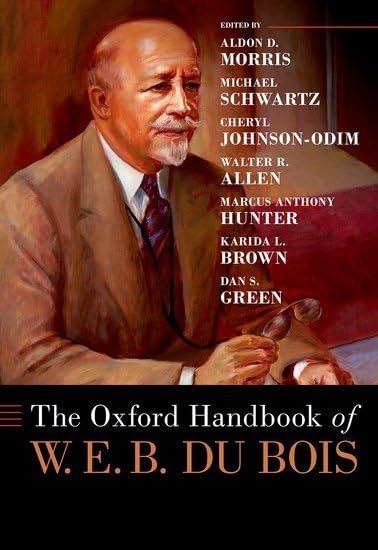
The Oxford Handbook of W. E. B. Du Bois is a work detailing the life and works of the twentieth century scholar and activist, W. E. B. Du Bois. It contains fifty chapters covering the multidimensional life and works of Du Bois. The contributing authors are experts on the topics about Du Bois which they authored. Because Du Bois was a prodigious twentieth century scholar and activist, these chapters delve into the numerous contributions he made in these domains. The Handbook is written in a clear accessible style enabling scholars, students, and the public to understand this complex and controversial historical figure. Du Bois is a fascinating figure because he lived for 95 years and often changed his ideas and activism as he grew over time. Du Bois's scholarship and activism addressed numerous historical developments and major social movements. The Handbook follows these tumultuous times where Du Bois struggled to make sense of the role that race, and racism, played in the development of the modern world. In so doing, this volume excavates the many lessons Du Bois's scholarship and activism hold for the contemporary world. The Handbook will serve as a guidepost for the emerging Du Boisian scholarship that has developed among scholars and students within and beyond the academy. It will assist in clarifying and enhancing the paradigm shifts Du Bois's work is currently generating in numerous intellectual disciplines and activist circles. The Oxford Handbook of W. E. B. Du Bois will stir needed debates for many years that are crucial for democracy to remain vital and flourishing.
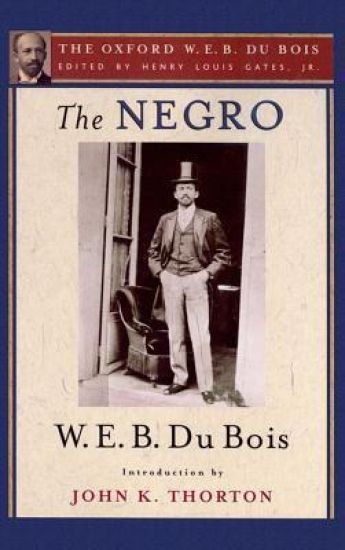
W. E. B. Du Bois was a public intellectual, sociologist, and activist on behalf of the African American community. He profoundly shaped black political culture in the United States through his founding role in the NAACP, as well as internationally through the Pan-African movement. Du Bois's sociological and historical research on African-American communities and culture broke ground in many areas, including the history of the post-Civil War Reconstruction period. Du Bois was also a prolific author of novels, autobiographical accounts, innumerable editorials and journalistic pieces, and several works of history. Intended as an accessible, up-to-date introduction to African American history by its 1915 publisher, The Negro was much more to W. E. B. Du Bois. The chance to write on African American History for a wide audience became his chance to write a manifesto on African history worldwide. Du Bois focuses on the continent of Africa, giving justice to its oft-neglected positive history. Drawing on anthropological and linguistic literature of the time, Du Bois captures a succinct portrait of African and African American history ready for any reader no matter their prior knowledge. His argument enters the narrative fully, revealing his quest for the vindication of black history. With a series introduction by editor Henry Louis Gates, Jr., and an introduction by John K. Thornton, this edition is essential for anyone interested in African American history.
W. E. B. Du Bois was a public intellectual, sociologist, and activist on behalf of the African American community. He profoundly shaped black political culture in the United States through his founding role in the NAACP, as well as internationally through the Pan-African movement. Du Bois's sociological and historical research on African-American communities and culture broke ground in many areas, including the history of the post-Civil War Reconstruction period. Du Bois was also a prolific author of novels, autobiographical accounts, innumerable editorials and journalistic pieces, and several works of history. The Dark Princess is a story of magical love and radical politics, a romance facing obstacles in a white-dominated world. Du Bois's allegorical tale follows Mathew Townes from his political disillusionment to his association with a powerful and seductive revolutionary leader, Kautilya, the princess of the Tibetan Kingdom of Bwodpur. With Dark Princess, Du Bois explores the color line from a fantastical angle while inserting his signature sociological style. With a series introduction by editor Henry Louis Gates, Jr., and an introduction by Homi Bhahba, this edition is essential for anyone interested in African American history.
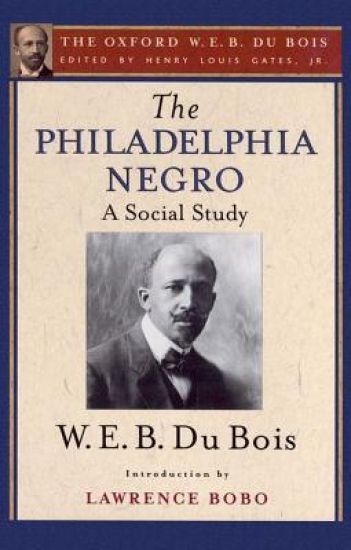
W. E. B. Du Bois was a public intellectual, sociologist, and activist on behalf of the African American community. He profoundly shaped black political culture in the United States through his founding role in the NAACP, as well as internationally through the Pan-African movement. Du Bois's sociological and historical research on African-American communities and culture broke ground in many areas, including the history of the post-Civil War Reconstruction period. Du Bois was also a prolific author of novels, autobiographical accounts, innumerable editorials and journalistic pieces, and several works of history. First published in 1899 at the dawn of sociology, The Philadelphia Negro: A Social Study is a landmark in empirical sociological research. Du Bois was the first sociologist to document the living circumstances of urban Black Americans. The Philadelphia Negro provides a framework for studying black communities, and it has steadily grown in importance since its original publication. Today, it is an indispensable model for sociologists, historians, political scientists, anthropologists, educators, philosophers, and urban studies scholars. With a series introduction by editor Henry Louis Gates, Jr., and an introduction by Lawrence Bobo, this edition is essential for anyone interested in African American history and sociology.
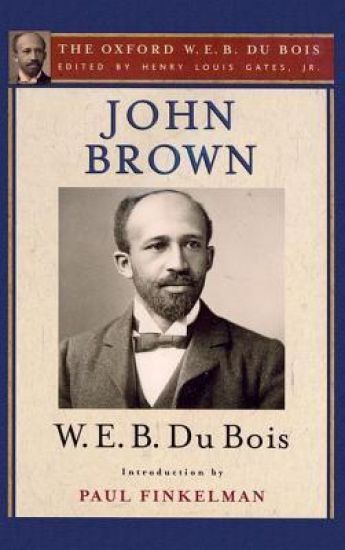
W. E. B. Du Bois was a public intellectual, sociologist, and activist on behalf of the African American community. He profoundly shaped black political culture in the United States through his founding role in the NAACP, as well as internationally through the Pan-African movement. Du Bois's sociological and historical research on African-American communities and culture broke ground in many areas, including the history of the post-Civil War Reconstruction period. Du Bois was also a prolific author of novels, autobiographical accounts, innumerable editorials and journalistic pieces, and several works of history. John Brown is W. E. B. Du Bois's groundbreaking political biography that paved the way for his transition from academia to a lifelong career in social activism. This biography is unlike Du Bois's earlier work; it is intended as a work of consciousness-raising on the politics of race. Less important are the historical events of John Brown's life than the political revelations found within the pages of this biography. At the time that he wrote it in 1909, Du Bois had begun his transformation into the most influential civil rights leader of his time. With a series introduction by editor Henry Louis Gates, Jr., and an introduction by Paul Finkelman, this edition is essential for anyone interested in African American history.
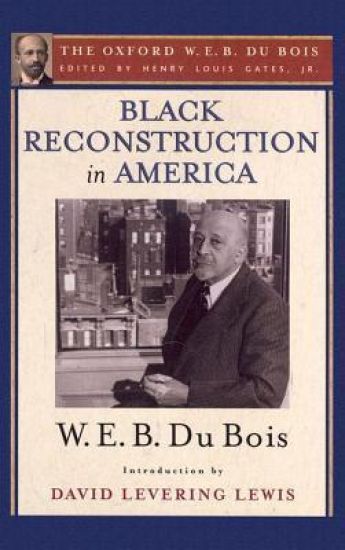
W. E. B. Du Bois was a public intellectual, sociologist, and activist on behalf of the African American community. He profoundly shaped black political culture in the United States through his founding role in the NAACP, as well as internationally through the Pan-African movement. Du Bois's sociological and historical research on African-American communities and culture broke ground in many areas, including the history of the post-Civil War Reconstruction period. Du Bois was also a prolific author of novels, autobiographical accounts, innumerable editorials and journalistic pieces, and several works of history. Black Reconstruction in America tells and interprets the story of the twenty years of Reconstruction from the point of view of newly liberated African Americans. Though lambasted by critics at the time of its publication in 1935, Black Reconstruction has only grown in historical and literary importance. In the 1960s it joined the canon of the most influential revisionist historical works. Its greatest achievement is weaving a credible, lyrical historical narrative of the hostile and politically fraught years of 1860-1880 with a powerful critical analysis of the harmful effects of democracy, including Jim Crow laws and other injustices. With a series introduction by editor Henry Louis Gates, Jr., and an introduction by David Levering Lewis, this edition is essential for anyone interested in African American history.
W. E. B. Du Bois was a public intellectual, sociologist, and activist on behalf of the African American community. He profoundly shaped black political culture in the United States through his founding role in the NAACP, as well as internationally through the Pan-African movement. Du Bois's sociological and historical research on African-American communities and culture broke ground in many areas, including the history of the post-Civil War Reconstruction period. Du Bois was also a prolific author of novels, autobiographical accounts, innumerable editorials and journalistic pieces, and several works of history. Dusk of Dawn, published in 1940, is an explosive autobiography of the foremost African American scholar of his time. Du Bois writes movingly of his own life, using personal experience to elucidate the systemic problem of race. He reflects on his childhood, his education, and his intellectual life, including the formation of the NAACP. Though his views eventually got him expelled from the association, Du Bois continues to develop his thoughts on separate black economic and social institutions in Dusk of Dawn. Readers will find energetic essays within these pages, including insight into his developing Pan-African consciousness. With a series introduction by editor Henry Louis Gates, Jr., and an introduction by Kwame Anthony Appiah, this edition is essential for anyone interested in African American history.
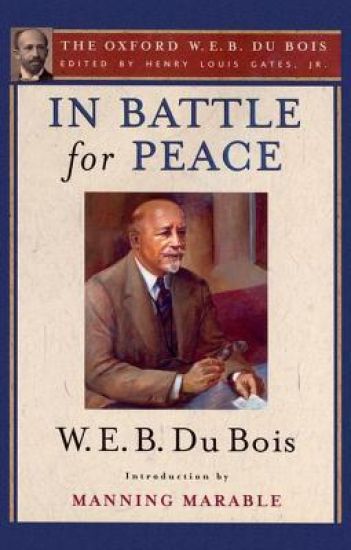
W. E. B. Du Bois was a public intellectual, sociologist, and activist on behalf of the African American community. He profoundly shaped black political culture in the United States through his founding role in the NAACP, as well as internationally through the Pan-African movement. Du Bois's sociological and historical research on African-American communities and culture broke ground in many areas, including the history of the post-Civil War Reconstruction period. Du Bois was also a prolific author of novels, autobiographical accounts, innumerable editorials and journalistic pieces, and several works of history. One of the most neglected and obscure books by W. E. B. Du Bois, In Battle for Peace frankly documents Du Bois's experiences following his attempts to mobilize Americans against the emerging conflict between the United States and the Soviet Union. A victim of McCarthyism, Du Bois endured a humiliating trial-he was later acquitted-and faced political persecution for over a decade. Part autobiography and part political statement, In Battle for Peace remains today a powerful analysis of race in America. With a series introduction by editor Henry Louis Gates, Jr., and an introduction by Manning Marable, this edition is essential for anyone interested in African American history.
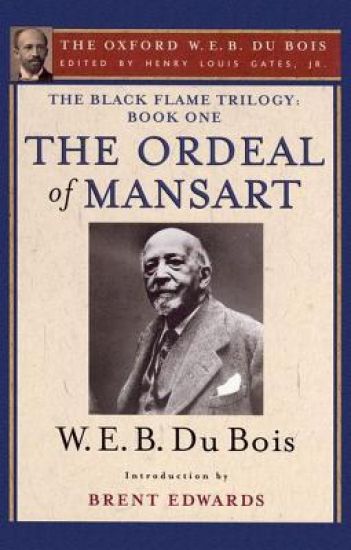
W. E. B. Du Bois was a public intellectual, sociologist, and activist on behalf of the African American community. He profoundly shaped black political culture in the United States through his founding role in the NAACP, as well as internationally through the Pan-African movement. Du Bois's sociological and historical research on African-American communities and culture broke ground in many areas, including the history of the post-Civil War Reconstruction period. Du Bois was also a prolific author of novels, autobiographical accounts, innumerable editorials and journalistic pieces, and several works of history. Du Bois called his epic Black Flame trilogy a fiction of interpretation. It acts as a representative biography of African American history by following one man, Manuel Mansart, from his birth in 1876 until his death. The Black Flame attempts to use this historical fiction of interpretation to recast and revisit the African American experience. Readers will appreciate The Black Flame trilogy as a clear articulation of Du Bois's perspective at the end of his life. The first book in this profound trilogy, The Ordeal of Mansart, chronicles Mansart's early life during the time of Reconstruction through his involvement in black education in Atlanta. Written with lyrical, vivid prose and with accurate historical context, The Ordeal of Mansart offers readers a peek into African American life and struggle through the lens of Mansart's humble life. With a series introduction by editor Henry Louis Gates, Jr., and an introduction by Brent Hayes Edwards, this edition is essential for anyone interested in African American literature.
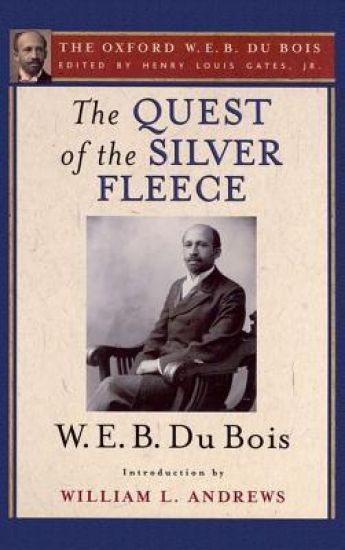
W. E. B. Du Bois was a public intellectual, sociologist, and activist on behalf of the African American community. He profoundly shaped black political culture in the United States through his founding role in the NAACP, as well as internationally through the Pan-African movement. Du Bois's sociological and historical research on African-American communities and culture broke ground in many areas, including the history of the post-Civil War Reconstruction period. Du Bois was also a prolific author of novels, autobiographical accounts, innumerable editorials and journalistic pieces, and several works of history. Arguably a contender for the Great American Novel, The Quest of the Silver Fleece is W. E. B. Du Bois's powerful first novel about Zora, a determined, strong Southern black woman who seeks to transcend race and social class in the late nineteenth century. Following the same path of the Greek myth after which it was named, Du Bois's novel confronts not only economic and political circumstances, but also racial and social issues of the time. Over a century after its original publication, we return to The Quest again and again for its political boldness about sexual, gender, and economic institutions. Zora, a breakthrough in the portrayal of black women, stands as a model of courage in a volatile moment in history. The novel portrays not only a story of economics but also of love, gender, and race. With a series introduction by editor Henry Louis Gates, Jr., and an introduction by William L. Andrews, this edition is essential for anyone interested in African American history.
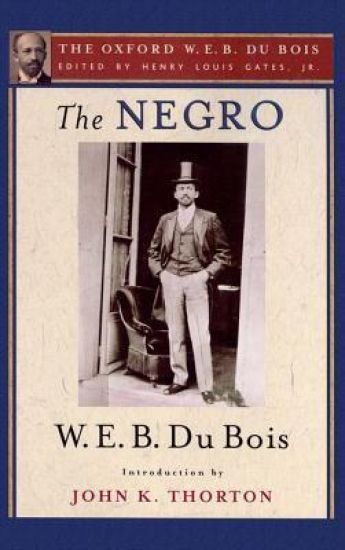
W. E. B. Du Bois was a public intellectual, sociologist, and activist on behalf of the African American community. He profoundly shaped black political culture in the United States through his founding role in the NAACP, as well as internationally through the Pan-African movement. Du Bois's sociological and historical research on African-American communities and culture broke ground in many areas, including the history of the post-Civil War Reconstruction period. Du Bois was also a prolific author of novels, autobiographical accounts, innumerable editorials and journalistic pieces, and several works of history. Intended as an accessible, up-to-date introduction to African American history by its 1915 publisher, The Negro was much more to W. E. B. Du Bois. The chance to write on African American History for a wide audience became his chance to write a manifesto on African history worldwide. Du Bois focuses on the continent of Africa, giving justice to its oft-neglected positive history. Drawing on anthropological and linguistic literature of the time, Du Bois captures a succinct portrait of African and African American history ready for any reader no matter their prior knowledge. His argument enters the narrative fully, revealing his quest for the vindication of black history. With a series introduction by editor Henry Louis Gates, Jr., and an introduction by John K. Thornton, this edition is essential for anyone interested in African American history.
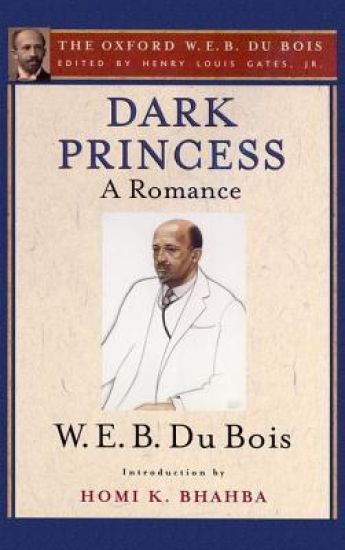
W. E. B. Du Bois was a public intellectual, sociologist, and activist on behalf of the African American community. He profoundly shaped black political culture in the United States through his founding role in the NAACP, as well as internationally through the Pan-African movement. Du Bois's sociological and historical research on African-American communities and culture broke ground in many areas, including the history of the post-Civil War Reconstruction period. Du Bois was also a prolific author of novels, autobiographical accounts, innumerable editorials and journalistic pieces, and several works of history. The Dark Princess is a story of magical love and radical politics, a romance facing obstacles in a white-dominated world. Du Bois's allegorical tale follows Mathew Townes from his political disillusionment to his association with a powerful and seductive revolutionary leader, Kautilya, the princess of the Tibetan Kingdom of Bwodpur. With Dark Princess, Du Bois explores the color line from a fantastical angle while inserting his signature sociological style. With a series introduction by editor Henry Louis Gates, Jr., and an introduction by Homi Bhahba, this edition is essential for anyone interested in African American history.
Interpreting Du Bois' thoughts on race and culture in a broadly philosophical sense, this volume assembles original essays by some of today's leading scholars in a critical dialogue on different important theoretical and practical issues that concerned him throughout his long career: the conundrum of race, the issue of gender equality, and the perplexities of pan-Africanism.