The poison Tree - A Tale of Hindu Life in Bengal is an unchanged, high-quality reprint of the original edition of 1884. Hansebooks is editor of the literature on different topic areas such as research and science, travel and expeditions, cooking and nutrition, medicine, and other genres.As a publisher we focus on the preservation of historical literature.Many works of historical writers and scientists are available today as antiques only. Hansebooks newly publishes these books and contributes to the preservation of literature which has become rare and historical knowledge for the future.
A pioneer of Bengali Literature from India, Bankim Chandra Chatterjee presents life in Bengali in The Poison Tree. Nagendra Natha Datta is about to travel by boat. It is the month Joisto (May - June), the time of storms. His wife, Surja Mukhi, had adjured him, saying, "Be careful; if a storm arises be sure you fasten the boat to the shore. Do not remain in the boat." Nagendra had consented to this, otherwise Surja Mukhi would not have permitted him to leave home; and unless he went to Calcutta his suits in the Courts would not prosper. Nagendra Natha was a young man, about thirty years of age, a wealthy zemindar (landholder) in Zillah Govindpur. He dwelt in a small village which we shall call Haripur. He was travelling in his own boat. The first day or two passed without obstacle. The river flowed smoothly on - leaped, danced, cried out, restless, unending, playful. On shore, herdsmen were grazing their oxen - one sitting under a tree singing, another smoking, some fighting, others eating. Inland, husbandmen were driving the plough, beating the oxen, lavishing abuse upon them, in which the owner shared.
आनन्द मठ बांग्ला भाषा का एक उपन्यास है जिसकी रचना बंकिम चन्द्र चट्टोपाध्याय ने १८८२ में की थी। इस कृति का भारतीय स्वतन्त्रता संग्राम और स्वतन्त्रता के क्रान्तिकारियों पर बहुत गहरा प्रभाव पड़ा। भारत का राष्ट्रीय गीत वन्दे मातरम् इसी उपन्यास से लिया गया है। छपते ही यह पुस्तक अपने कथानक के चलते पहले बंगाल और कालान्तर में समूचे भारतीय साहित्य व समाज पर छा गई। आनन्दमठ राजनीतिक उपन्यास है। इस उपन्यास में उत्तर बंगाल में 1773 के सन्यासी विद्रोह का वर्णन किया गया है। इस पुस्तक में देशभक्ति की भावना है। अंग्रेजों ने इस ग्रन्थ पर प्रतिबन्ध लगा दिया था। भारत के स्वतन्त्र होने के बाद १९४७ में इससे प्रतिबन्ध हटाया गया। 'आनंदमठ' के तब से अब तक न जाने कितनी भाषाओं में कितने संस्करण छप चुके हैं। उपन्यास की कथा सन् १७७० के बंगाल के भीषण अकाल तथा सन्यासी विद्रोह पर आधारित है। इसमें वर्ष 1770 से 1774 तक के बंगाल का चित्र खींचा गया है। कथानक की दृष्टि से यह उपन्यास या ऐतिहासिक उपन्यास से बढ़कर है। महर्षि बंकिम ने अप्रशिक्षित किन्तु अनुशासित संन्यासी सैनिकों की कल्पना की है जो अनुभवी ब्रिटिश सैनिकों से संघर्ष करते हैं और उन्हें पराजित करते हैं।
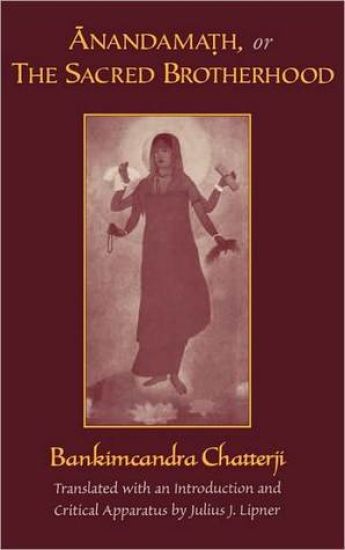
This is a translation of a historically important Bengali novel. Published in 1882, Chatterji's Anandamath helped create the atmosphere and the symbolism for the nationalist movement leading to Indian independence in 1947. It contains the famous hymn Vande Mataram ("I revere the Mother"), which has become India's official National Song. Set in Bengal at the time of the famine of 1770, the novel reflects tensions and oppositions within Indian culture between Hindus and Muslims, ruler and ruled, indigenous people and foreign overlords, jungle and town, Aryan and non-Aryan, celibacy and sexuality. It is both a political and a religious work. By recreating the past of Bengal, Chatterji hoped to create a new present that involved a new interpretation of the past. Julius Lipner not only provides the first complete and satisfactory English translation of this important work, but supplies an extensive Introduction contextualizing the novel and its cultural and political history. Also included are notes offering the Bengali or Sanskrit terms for certain words, as well as explanatory notes for the specialized lay reader or scholar.
This is a translation of a historically important Bengali novel. Published in 1882, Chatterji's Anandamath helped create the atmosphere and the symbolism for the nationalist movement leading to Indian independence in 1947. It contain the famous hymn Vande Mataram ("I revere the Mother"), which has become India's official National Song. Set in Bengal at the time of the famine of 1770, the novel reflect tensions and oppositions within Indian culture between Hindus and Muslims, ruler and ruled, indigenous people and foreign overlords, jungle and town, Aryan and non-Aryan, celibacy and sexuality. It is both a political and a religious work. By recreating the past of Bengal, Chatterji hoped to create a new present that involved a new interpretation of the past. Julius Lipner not only provides the first complete and satisfactory English translation of this important work, but supplies an extensive Introduction contextualizing the novel and its cultural and political history. Also included are notes offering the Bengali orSanskrit terms for certain words, as well as explanatory notes for the specialized lay reader or scholar.
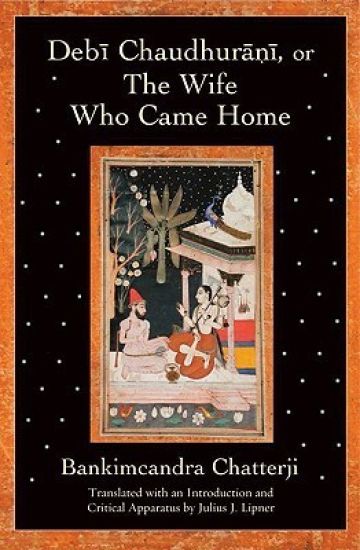
This is the second in a trilogy of works by the famed Bengali novelist Bankimcandra Chatterji (1838-1894), and the second to be translated by Julius Lipner. The first, Anandamath, or The Sacred Brotherhood was published by OUP in 2005. Bankim Chatterji was perhaps the foremost novelist and intellectual mediating western ideas to India in the latter half of the 19th century. Debi Chaudhurani is a didactic work that champions a particular interpretation of Hindu dharma and wifely duties reflective of the late 19th-century Calcutta context in which it was written. But the story is also compelling. Written in a conversational style, it features surprising plot twists and ideas that are, even today, revolutionary in their daring. Most notably, Bankim makes a woman the embodiment of Lord Krishna's salvific message, as originally enunciated in the Bhagavad Gita. The protagonist, Debi, is a complex figure who is a rejected wife, becomes a bandit queen, represents a goddess figure, and symbolizes the land of India. There is a creative tension between her strength as a leader and her correct role, from the perspective of the author, as a domestic wife. Bankim also focuses on caste and what it means to be a genuine Brahmin, who is transformed by the author into a man who executes responsibilities instead of demanding privileges. Within the context of the teachings of the Gita, the author shares his vision of social activism to improve India. Lipner's idiomatic translation is enhanced by his detailed commentary on the original Bengali text and by a readable introduction that sets the novel and its ideas in context.