Kirjahaku
Etsi kirjoja tekijän nimen, kirjan nimen tai ISBN:n perusteella.
1000 tulosta hakusanalla Barbara Pym
Three lonely people come together in this poignant and witty novel of thwarted dreams, scandalous secrets, and star-crossed romance After being jilted by her fiance, Dulcie Mainwaring despairs of ever finding true love. For a distraction, she goes to a publishing conference, where she meets Viola Dace, a dramatic woman who refuses to live without romance, as well as Aylwin Forbes, an editor whom Viola adores. The fact that Aylwin is married doesn't stop Viola. When her amorous pursuit prompts Aylwin's wife to leave him, the academic heartthrob is wide open to Viola's romantic attentions. That is, until Dulcie's eighteen-year-old niece moves in with Viola, and the young girl soon catches Aylwin's roving eye. Set in London in the early 1960s, No Fond Return of Love is a delightful comedy of manners that comes full circle as Dulcie discovers a love as unexpected as it is liberating. "With sheer joy I read Barbara Pym's . . . No Fond Return of Love." -Mary Gordon ". . . comic, heartrending, brave; in short, like life itself." -Shirley Hazzard "No novelist brings more telling observation or more gentle pleasure." -Jilly Cooper "A splendid, humorous writer." -John Betjeman Barbara Pym (1913-1980) was a bestselling and award-winning English novelist. Her first book, Some Tame Gazelle (1950), launched her career as a writer beloved for her social comedies of class and manners. Pym is the only author to be named twice in a Times Literary Supplement list of "the most underrated novelists of the century." She produced thirteen novels, the last three published posthumously. Her 1977 novel Quartet in Autumn was shortlisted for the Booker Prize.
Två moderna klassiker av en efterkrigstidens Jane Austen»Det är lätt att fastna för Pyms karaktäristiska sätt att se på tillvaron, för den pymska ironiska blicken, med sina skarpsynta iakttagelser. Även om mörkret lurar i bakgrunden, utgör romanerna en mycket roande och förunderligt trösterik läsning.« Ingrid Löfgren, Dagens bokMildred Lathbury är en av många »förträffliga kvinnor«. Hon är i trettioårsåldern, ogift, intelligent och självständig, »i stånd att klara upp de flesta situationer här i livet - födelse, giftermål, död, framgångsrika loppmarknader, trädgårdsfester som regnade bort...« Hennes nya glamourösa grannar, herr och fru Napier, genomlever en äktenskapskris, och Mildred blir till sin förvåning indragen i intriger som är betydligt svårare att hantera. I 1970-talets London förenas fyra ogifta kontorsarbetare - två kvinnor och två män - av sin isolering. De närmar sig pensionsåldern och är framför allt kollegor, inte vänner. Men när deras olika framtidsplaner går i stöpet kommer de närmare varandra - och dolda romantiska intressen kommer till ytan. Barbara Pym brukar kallas en modern Jane Austen. Hennes vassa sociala observationer och skildringar av bottenlös ensamhet har gett henne rykte som en av de stora sedeskildrarna i efterkrigstidens England. Här presenteras romanerna Förträffliga kvinnor [1952] och Höstkvartett [1977] i översättning av Jane Lundblad och med ett nyskrivet förord av litteraturkritikern Annina Rabe.BARBARA PYM [1913-1980] var en engelsk författare. Under 1950-talet skrev hon en rad romaner, varav Förträffliga kvinnor förblivit den mest lästa och älskade. Efter ett längre uppehåll blev romanen Höstkvartett en stor återkomst. Den nominerades till Booker-priset, och när Times Literary Supplement samma år frågade en rad framstående författare vem de ansåg vara 1900-talets mest underskattade kollega var Barbara Pym den som fick flest röster.»Så välskrivet och så fint. Jag förstår definitivt att de kallas moderna klassiker.« Millans bokhylla

In 1557 a prematurely aged, ill, and very irritable Charles V (H.R.E.) retires to a small isolated monastery in western Spain. He is burdened by his failures and unresolved political, military and religious problems. His only comfort and solace are his memories and reveries of his much loved mistress Barbara.Blomberg who bore him a son who became Europe's celebrated and idolized, Don Juan of Austria. And his revelations of his lifelong relationship with Barbara are revealing and make a wonderful touching; and emotional love story.


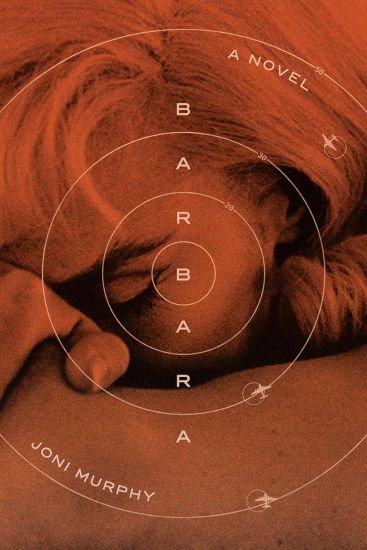
Barbara is born shortly before World War II and lives through the conflict as a desert child trailing her father, an engineer in the famed and infamous Manhattan Project. When Barbara is thirteen, her beautiful, sensitive mother commits suicide. From that point on, these twin poles—the historic and the personal, the political and the violently intimate—vie for control of Barbara’s consciousness. As Barbara grows up and becomes a successful actress, traveling the world between film sets and love affairs, she takes on and sheds various roles—vampire’s victim and frontier prostitute; a saint and a bored housewife. She marries and divorces and marries again, the second time to a visionary director who proves to be the love of her life. Though they are not faithful to each other, their relationship provides the most enduring anchor in a remarkable life turbulent with fiction. Joni Murphy’s Barbara is a deep character study of a woman losing hold and recapturing her identity through the art and technology of moviemaking. Through an intimate first-person perspective, the novel follows Barbara as she navigates decades and genres—from austere 1950s family dramas to countercultural 1970s gothics—glimpsing herself in the reflective and deadly shards of the long 20th Century.
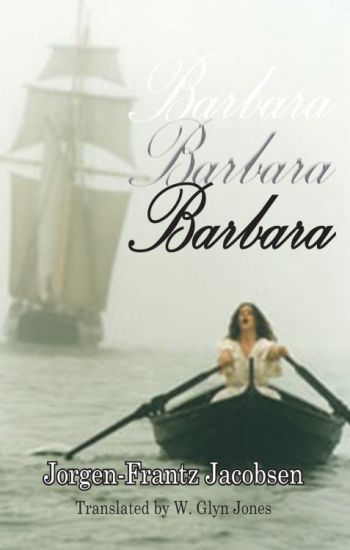
Barbara is a Faroese Moll Flanders, a woman of insatiable sexual desire which leads her from one man to another in search of sexual gratification. There is a highly successful Danish feature film of the novel. Jorgen-Frantz Jacobsen's novel combines the action of an old Faroese ballad about a woman who led three clergymen husbands to their destruction and the author's own experience of a woman with whom he was in love, but who proved elusive in the manner of the fictitious Barbara. The novel was unfinished when Jacobsen died, and it was left to, his friend and fellow author, William Heinesen to tie up a small number of loose ends.
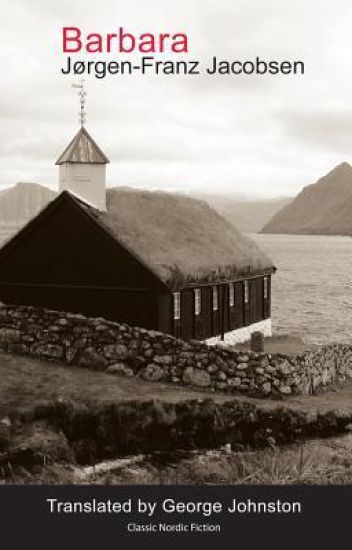
Barbara, originally written in Danish, was the only novel by the Faroese author Jørgen-Frantz Jacobsen (1900–1938), and yet it quickly achieved international best-seller status and is still one of the best-loved twentieth century classics in Danish and Faroese literature. On the face of it, Barbara is a straightforward historical novel in the mode of many a so-called 'romance'. It contains a story of passion in an exotic setting with overtones of semi-piracy; there is a powerful erotic element, an outsider who breaks up a marriage, and a built-in inevitability resulting from Barbara's own psychological make-up. She stands as one of the most complex female characters in modern Scandinavian literature: beautiful, passionate, innocent, devoted, amoral and uncomprehending of her own tragedy. Jørgen-Frantz Jacobsen portrays her with a fascinated devotion.

BARBARA is a riches-to-rags tale about an extraordinarily talented, troubled young woman. After Barbara's death in 20 I 0, the author, Wendell Affield, discovered thousands of documents locked in a rodent-infested chickenhouse. Having spent his childhood living with his mother's mental illness, Affield studies the contents in an effort to understand his mother's life and search for clues to his biological father. BARBARA, PARTS I and II, explore Barbara's two-decade downward spiral as she struggles with borderline personality disorder (BPD). Taught by the famous pianist, Emile Bosquet at Institut Droissard, Brussels, Belgium, Barbara's natural talent blossoms. Mouse-gnawed 1939 documents reveal Barbara's impulsive engagement (and possible marriage) in Poland, and her narrow escape from the Nazi invasion. Upon her return to New York, after dropping out of juilliard School, Barbara begins a decade of running from her problems, leaving a wake of failed marriages and rendezvous resulting in four children. Feeling abandoned by her family and searching for a new start, she posts an advertisement in Cupid's Columns that is answered by a bachelor farmer in northern Minnesota. BARBARA, Part III, chronicles the author's search for his biological father and the labyrinth leading to a breakthrough. Acceptance by his new-found family is an incredible testament to the power of love.

Barbara / M. E. Braddon; roman traduit de l'anglais... par HephellDate de l'edition originale: 1881Ce livre est la reproduction fidele d'une oeuvre publiee avant 1920 et fait partie d'une collection de livres reimprimes a la demande editee par Hachette Livre, dans le cadre d'un partenariat avec la Bibliotheque nationale de France, offrant l'opportunite d'acceder a des ouvrages anciens et souvent rares issus des fonds patrimoniaux de la BnF.Les oeuvres faisant partie de cette collection ont ete numerisees par la BnF et sont presentes sur Gallica, sa bibliotheque numerique.En entreprenant de redonner vie a ces ouvrages au travers d'une collection de livres reimprimes a la demande, nous leur donnons la possibilite de rencontrer un public elargi et participons a la transmission de connaissances et de savoirs parfois difficilement accessibles.Nous avons cherche a concilier la reproduction fidele d'un livre ancien a partir de sa version numerisee avec le souci d'un confort de lecture optimal. Nous esperons que les ouvrages de cette nouvelle collection vous apporteront entiere satisfaction.Pour plus d'informations, rendez-vous sur www.hachettebnf.fr