Kirjojen hintavertailu. Mukana 11 241 299 kirjaa ja 12 kauppaa.

Kirjahaku

Etsi kirjoja tekijän nimen, kirjan nimen tai ISBN:n perusteella.

62 tulosta hakusanalla Barnali Dixon; Venkatesh Uddameri

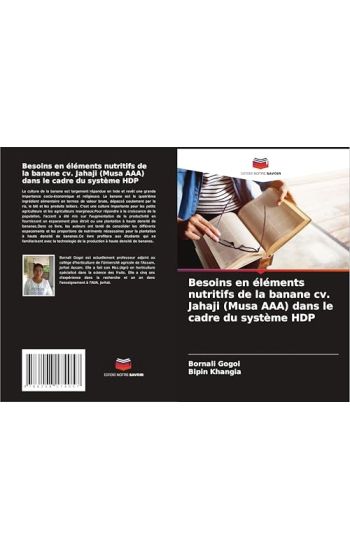
Besoins en éléments nutritifs de la banane cv. Jahaji (Musa AAA) dans le cadre du système HDP
La culture de la banane est largement r pandue en Inde et rev t une grande importance socio- conomique et religieuse. La banane est le quatri me ingr dient alimentaire en termes de valeur brute, d pass seulement par le riz, le bl et les produits laitiers. C'est une culture importante pour les petits agriculteurs et les agriculteurs marginaux.Pour r pondre la croissance de la population, l'accent a t mis sur l'augmentation de la productivit en fournissant un espacement plus troit ou une plantation haute densit de bananes.Dans ce livre, les auteurs ont tent de consolider les diff rents espacements et les proportions de nutriments n cessaires pour la plantation haute densit de bananes.Ce livre profitera aux tudiants qui se familiarisent avec la technologie de la production haute densit de bananes.
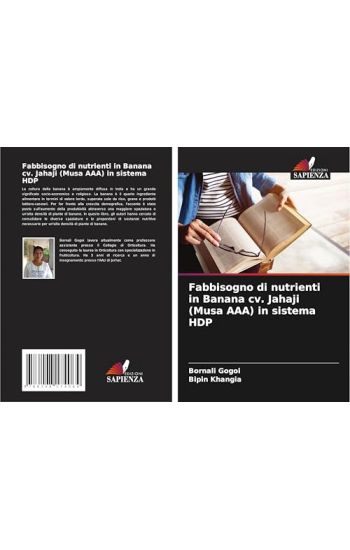
Fabbisogno di nutrienti in Banana cv. Jahaji (Musa AAA) in sistema HDP
La coltura della banana ampiamente diffusa in India e ha un grande significato socio-economico e religioso. La banana il quarto ingrediente alimentare in termini di valore lordo, superata solo da riso, grano e prodotti lattiero-caseari. Per far fronte alla crescita demografica, l'accento stato posto sull'aumento della produttivit attraverso una maggiore spaziatura o un'alta densit di piante di banane. In questo libro, gli autori hanno cercato di consolidare le diverse spaziature e le proporzioni di sostanze nutritive necessarie per un'alta densit di piante di banane.
Necessidade de nutrientes na bananeira cv. Jahaji (Musa AAA) em sistema HDP

Necessidade de nutrientes na bananeira cv. Jahaji (Musa AAA) em sistema HDP

Bornali Gogoi; Bipin Khangia

Edicoes Nosso Conhecimento
2024
pokkari
A cultura da banana amplamente cultivada na ndia e tem grande significado socioecon mico e religioso. A banana o quarto ingrediente alimentar mais importante em termos de valor bruto, sendo apenas ultrapassada pelo arroz, trigo e produtos l cteos. uma cultura importante para os pequenos agricultores e para os agricultores marginais. Para responder ao crescimento da popula o, a nfase tem sido dada ao aumento da produtividade atrav s de um espa amento mais pr ximo ou da planta o de banana em alta densidade. Neste livro, os autores tentaram consolidar diferentes espa amentos e propor es de nutrientes necess rios para a planta o de banana em alta densidade.
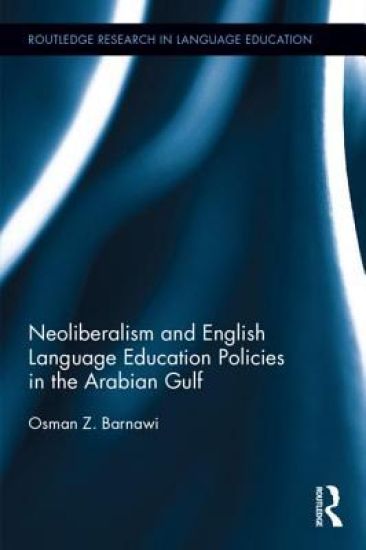
Neoliberalism and English Language Education Policies in the Arabian Gulf
Over the past two decades, the Arabian oil-rich Gulf countries have faced enormous social, political, economic, cultural, religious, ideological and epistemological upheaval. Through detailed, critical comparative investigation, Neoliberalism and English Language Education Policies in the Arabian Gulf examines the impact of such disruption on education policies in a political and economic union, consisting of six countries: Saudi Arabia, the United Arab Emirates, Oman, Qatar, Bahrain and Kuwait. Using data collected from a wide range of sources, this thought-provoking book documents the inner workings of neoliberalism across a strategic geographical area of the Islamic world. The book teases apart the complex issues surrounding the ways in which access to English has been envisioned, contested, and protected from being challenged among different players within and between the Gulf countries. Osman Z. Barnawi explores the intensifying ideological debates between Islamic culture and Western neoliberal values, and questions whether Islamic values and traditions have been successfully harmonised with neoliberal capitalist development strategies for nation building in the Arabian Gulf region. Neoliberalism and English Language Education Policies in the Arabian Gulf will be of interest to academics, researchers and postgraduates working in the fields of language education and, more specifically, TESOL, applied linguistics, education policy, and teacher education.
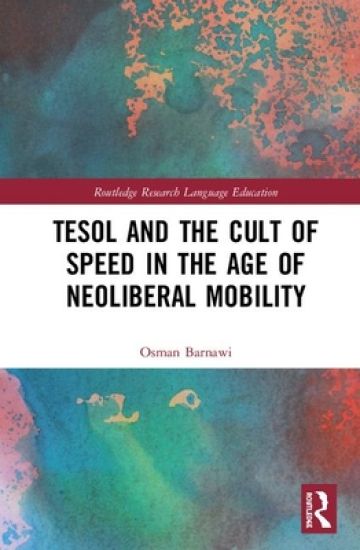
TESOL and the Cult of Speed in the Age of Neoliberal Mobility
TESOL and the Cult of Speed in the Age of Neoliberal Mobility argues that because the nexus between TESOL and the cult of speed in an age of increased neoliberal mobility has not yet been explicitly unpacked, discussed, identified and theorized, the implications of this socio-economic phenomenon for TESOL policies, curricula, pedagogies and practices have been overlooked. Through the presentation of several qualitative case studies, the book illustrates the social dynamics of speed and its key aspects (i.e., the materiality and the politics of time) in different TESOL contexts, including Saudi Arabia, the USA and Canada. The aim in presenting these diverse case studies was to craft a collection of responses, which, when put together, could offer new insights into the TESOL academic community. The book examines the ways in which the cult of speed has been envisioned, celebrated, negotiated with, enacted and justified by the various actors within the contemporary field of TESOL. It also investigates the new language teaching practices and forms the cult of speed in TESOL has generated and is generating. TESOL and the Cult of Speed in the Age of Neoliberal Mobility will be of interest to TESOL/applied linguistics educators, students, policy makers, administrators, employers and the wider community, and it is hoped will give them ideas about how to deal with today’s culture of fast movement in the globalized higher education landscape.
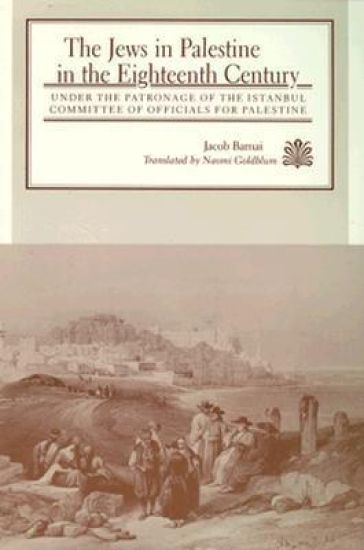
The Jews in Palestine in the Eighteenth Century

The Jews in Palestine in the Eighteenth Century

Jacob Barnai

The University of Alabama Press
1992
nidottu
Research reveals a clear connection between the legal and social status of the Jews in Palestine in the 18th century and their ties with the Diaspora. The Jews who had immigrated to Palestine in that period were mostly poor and elderly. The country was economically backward and politically unstable, which made it impossible for the immigrants to support themselves through productive work. Therefore they lived off the contributions of their brethren overseas. Taxes and fees imposed by the Ottoman rulers increased the financial desperation of the Jews in Palestine. Prohibitions against young unmarried immigrant men and women made for an unstable population largely of old men, many of whom died shortly after immigrating. Families succumbed to disease, earthquakes, and famine, but in the face of these problems, the Jewish communities in Palestine persevered. When financial support ceased at the beginning of the 18th century, it caused a severe crisis in the Yishuv (the Jewish settlement in Palestine). The Jews were unable to repay their debts to the Moslems, and many left the country. In 1726, a central organization was established in Istanbul to co-ordinate the Diaspora financial support of the Jews in Palestine. This Istanbul Committee of Officials oversaw the collection of support money for the Yishuv, managed the Palestine community's budget, established regulations for governing the communities, and settled disputes between the Jews and the gentiles. The importance of the Yishuv in the spiritual life of the Diaspora alone could not ensure the continuation of the Jewish settlement in Palestine, and the contribution of the Istanbul Officials was crucial. Fortunately, a registry containing copies of 500 letters written by the Istanbul Committee in the mid-18th century was preserved in the archives of the Jewish Theological Seminary. These letters reveal the extensive activity involving the Istanbul Committee and the Ottoman authorities, the Jews of Palestine, and the Diaspora. In this English translation of the original 1982 volume published in Hebrew, Barnai has updated his research to take into account recent scholarship. He concludes that during the period under review, the number of Jews in the Yishuv was actually very small, but they were completely dependent upon the charitable financial support of their brethren overseas, as well as the goodwill of the country's rulers.
TESOL and the Cult of Speed in the Age of Neoliberal Mobility
TESOL and the Cult of Speed in the Age of Neoliberal Mobility argues that because the nexus between TESOL and the cult of speed in an age of increased neoliberal mobility has not yet been explicitly unpacked, discussed, identified and theorized, the implications of this socio-economic phenomenon for TESOL policies, curricula, pedagogies and practices have been overlooked. Through the presentation of several qualitative case studies, the book illustrates the social dynamics of speed and its key aspects (i.e., the materiality and the politics of time) in different TESOL contexts, including Saudi Arabia, the USA and Canada. The aim in presenting these diverse case studies was to craft a collection of responses, which, when put together, could offer new insights into the TESOL academic community. The book examines the ways in which the cult of speed has been envisioned, celebrated, negotiated with, enacted and justified by the various actors within the contemporary field of TESOL. It also investigates the new language teaching practices and forms the cult of speed in TESOL has generated and is generating. TESOL and the Cult of Speed in the Age of Neoliberal Mobility will be of interest to TESOL/applied linguistics educators, students, policy makers, administrators, employers and the wider community, and it is hoped will give them ideas about how to deal with today’s culture of fast movement in the globalized higher education landscape.
Neoliberalism and English Language Education Policies in the Arabian Gulf
Over the past two decades, the Arabian oil-rich Gulf countries have faced enormous social, political, economic, cultural, religious, ideological and epistemological upheaval. Through detailed, critical comparative investigation, Neoliberalism and English Language Education Policies in the Arabian Gulf examines the impact of such disruption on education policies in a political and economic union, consisting of six countries: Saudi Arabia, the United Arab Emirates, Oman, Qatar, Bahrain and Kuwait. Using data collected from a wide range of sources, this thought-provoking book documents the inner workings of neoliberalism across a strategic geographical area of the Islamic world. The book teases apart the complex issues surrounding the ways in which access to English has been envisioned, contested, and protected from being challenged among different players within and between the Gulf countries. Osman Z. Barnawi explores the intensifying ideological debates between Islamic culture and Western neoliberal values, and questions whether Islamic values and traditions have been successfully harmonised with neoliberal capitalist development strategies for nation building in the Arabian Gulf region. Neoliberalism and English Language Education Policies in the Arabian Gulf will be of interest to academics, researchers and postgraduates working in the fields of language education and, more specifically, TESOL, applied linguistics, education policy, and teacher education.
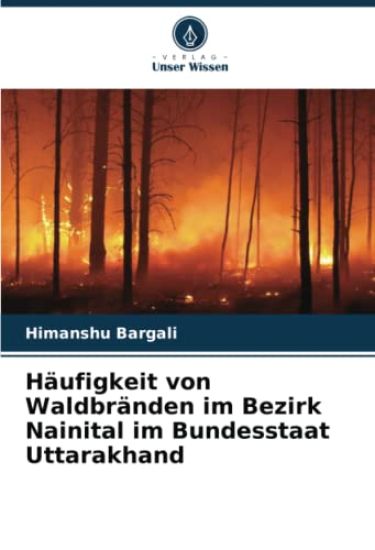
Häufigkeit von Waldbränden im Bezirk Nainital im Bundesstaat Uttarakhand
Ein Wald ist eine gro e Fl che, die mit B umen bedeckt ist, aber ein Wald besteht nicht nur aus B umen, sondern auch aus kleineren Pflanzen, wie Moosen, Str uchern und Wildblumen. W lder sind die Heimat von mehr als zwei Dritteln aller bekannten Landarten. Feuer wird von den Hindus als Gott (Agni) betrachtet und bei der Durchf hrung der meisten Rituale verwendet. Nach dem Glauben der Hindus und wie auch von Lord Krishna in der Bhagwat Gita gepredigt, ist das Feuer einer der f nf heiligsten Bestandteile des Lebens. Feuer ist eines der wichtigsten Objekte, da es vielseitig einsetzbar ist und die Gesellschaft f r ihr Wohlergehen darauf angewiesen ist. Keine Gesellschaft kann sich ihre Existenz ohne die Existenz des Feuers berhaupt vorstellen. Auch wenn das Feuer ein Segen f r die Menschheit ist, so verursacht es doch auch immense Verluste in Form von Leben, Eigentum und anderen wertvollen Ressourcen. Vor allem Waldbr nde haben der Natur und der Gesellschaft geschadet. Br nde verursachen das Problem der Umweltverschmutzung. Etwa 90 % der Waldbr nde in Indien werden von Menschen verursacht.
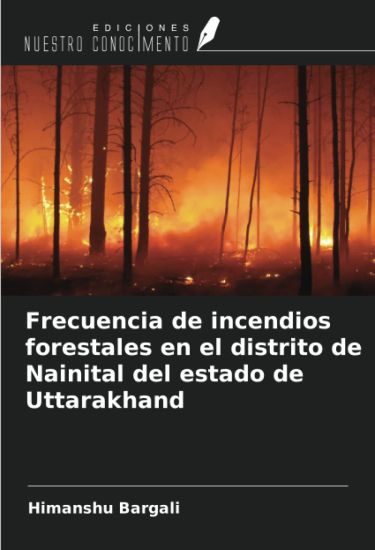
Fréquence des feux de forêt dans le district de Nainital de l'État d'Uttarakhand
Une for t est une grande tendue de terre couverte d'arbres, mais une for t est bien plus que de simples arbres, elle comprend galement des plantes plus petites, comme des mousses, des arbustes et des fleurs sauvages. Les for ts abritent plus des deux tiers de toutes les esp ces terrestres connues. Le feu est consid r comme un dieu (l'Agni) par les hindous et est utilis dans l'ex cution de la plupart des rituels. Comme le croient les hindous et comme le pr che galement le Seigneur Krishna dans la Bhagwat Gita, le feu est l'un des cinq constituants les plus sacr s de la vie. Le feu est l'un des objets les plus importants pour ses multiples usages et dont la soci t d pend pour son bien- tre. Aucune soci t ne peut m me imaginer son existence sans l'existence du feu. Si le feu a t une b n diction pour l'humanit , il provoque galement d'immenses pertes en termes de vies humaines, de biens et d'autres ressources pr cieuses. Les feux de for t, en particulier, ont t n fastes pour la nature comme pour la soci t . Les incendies cr ent le probl me de la pollution. Environ 90 % des feux de for t en Inde sont provoqu s par l'homme.
Frequenza degli incendi boschivi nel distretto di Nainital dello Stato di Uttarakhand
La foresta una vasta area di terreno ricoperta di alberi, ma una foresta molto pi di semplici alberi, comprende anche piante pi piccole, come muschi, arbusti e fiori selvatici. Le foreste ospitano pi di due terzi di tutte le specie terrestri conosciute. Il fuoco considerato un dio (Agni) dagli ind ed utilizzato nella maggior parte dei rituali. Come credono gli ind e come predica anche il Signore Krishna nella Bhagwat Gita, il fuoco uno dei cinque costituenti pi sacri della vita. Il fuoco uno degli oggetti pi importanti per i suoi molteplici usi e da cui la societ dipende per il suo benessere. Nessuna societ pu immaginare la propria esistenza senza l'esistenza del fuoco. Se da un lato il fuoco pu essere una manna per l'umanit , dall'altro causa immense perdite sotto forma di vite umane, propriet e altre risorse preziose. Gli incendi boschivi, in particolare, sono stati dannosi per la natura e per la societ . Gli incendi creano il problema dell'inquinamento. Circa il 90% degli incendi boschivi in India sono causati dall'uomo.
Come bevevano gli antichi

Come bevevano gli antichi

Eristeo Banali; Mario Cattafesta

Gilgamesh Edizioni
2023
pokkari
Le origini del vino sono talmente antiche da affondare nella leggenda. Nella Bibbia No , dopo il Diluvio, a piantare la vite e a ubriacarsi in modo indegno. Comunque la si racconti, la storia del vino millenaria, almeno quanto l'agricoltura. Greci e Romani dedicarono pi di una divinit al vino, usandolo nelle occasioni pi sacre.Nel periodo classico, molto si scritto sulle tecniche di vinificazione e sugli effetti del vino. In et augustea, autori come Columella e Plinio (ma anche grandi poeti, da Virgilio a Orazio, e ancora prima statisti come Catone) dedicano interi libri a questi argomenti.Mario Cattafesta, dopo un'intensa opera di ricerca e documentazione, descrive alcuni dei vini pi famosi della romanit , in particolare quelli dell'Italia centrale e della Grecia. Non per un'opera tecnica: c' spazio per arte, letteratura, poesia, storia, geografia e momenti di vita. In breve, tutto quello che serve per immaginarsi protagonista di un banchetto dell'antica Roma.
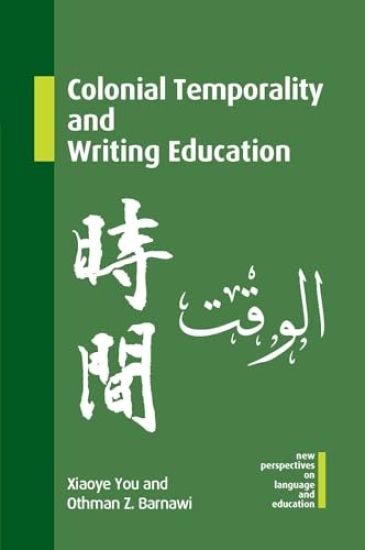
Colonial Temporality and Writing Education

Colonial Temporality and Writing Education

Xiaoye You; Othman Z. Barnawi

MULTILINGUAL MATTERS
2025
sidottu
This book examines how a colonial matrix of power is established through temporality in English writing education. It offers discourse analyses of higher educational policies that operate in China and Saudi Arabia and then triangulates this data with conversations with writing teachers from representative Chinese and Saudi universities. Drawing on all this data to understand both the structured power relations shaping educational policies and the attendant effects on the writing teachers that inhabit these spaces, the book develops a decolonial comparative method and adopts the concept of “temporal regime” as an analytic lens. It not only attends to the complex and multilayered ways that this regime controls, disciplines and shapes the social wellbeing and professional practices of individual writing teachers, but it also details the various ways that teachers understand, experience, resist, negotiate and appropriate the temporal orders.
International TESOL Teachers in a Multi-Englishes Community

International TESOL Teachers in a Multi-Englishes Community

Phan Le Ha; Othman Z. Barnawi

MULTILINGUAL MATTERS
2022
nidottu
This book embarks on an ever-expanding array of language, academic mobility, neoliberalism, and accompanying rich scholarly debates. It examines the ways in which international English language teachers in Saudi Arabia’s higher education system position themselves, negotiate, interact, adjust, make sense of their classroom dynamics, and validate their senses of selves and pedagogies in their day-to-day (dis)engagement with their institutions and encounters at work. Informed by rich empirical data from a multi-year, multi-site project in addition to other qualitative studies, the book reveals on-the-ground complexities involving speaker status, language, ethnicity, nationality, race, religion, sociocultural factors, emotion labour, work dynamic and professionalism. It promotes thinking beyond normative ideologies on marginalisation, the native and non-native speaker dichotomy, linguistic, racial, religious and ethnic (inter)relations, and translanguaging pedagogies, while also offering new material for original theorisation in multi-Englishes multilingualism, local-trusting-local and the limits of negotiability.