

Kirjahaku
Etsi kirjoja tekijän nimen, kirjan nimen tai ISBN:n perusteella.
1000 tulosta hakusanalla Beam Alex

Beam Effects, Surface Topography, and Depth Profiling in Surface Analysis
Springer-Verlag New York Inc.
2010
nidottu
Many books are available that detail the basic principles of the different methods of surface characterization. On the other hand, the scientific literature provides a resource of how individual pieces of research are conducted by particular labo- tories. Between these two extremes the literature is thin but it is here that the present volume comfortably sits. Both the newcomer and the more mature scientist will find in these chapters a wealth of detail as well as advice and general guidance of the principal phenomena relevant to the study of real samples. In the analysis of samples, practical analysts have fairly simple models of how everything works. Superimposed on this ideal world is an understanding of how the parameters of the measurement method, the instrumentation, and the char- teristics of the sample distort this ideal world into something less precise, less controlled, and less understood. The guidance given in these chapters allows the scientist to understand how to obtain the most precise and understood measu- ments that are currently possible and, where there are inevitable problems, to have clear guidance as the extent of the problem and its likely behavior.

The appreciable evolution of the nearly teenaged branch of atomic and molecular physics called beam foil spectroscopy is clearly depicted in the present volumes, which are devoted to publication of presentations at the Fourth International Conference on Beam Foil Spectroscopy and Heavy Ion Atomic Physics Symposium. The transition from childhood to adolescence parallels human experience in that diffusion of interests and interactions beyond the confines of the original family has most certainly occurred. The pre-occupation with techniques and their develop ment has been largely replaced by interest in the physics of the widest possible array of atomic and molecular physics experiments, in which spectroscopic study (visible, UV, XUV, X-ray, electron) of collisional interactions of fast beams is the unifying theme. The description "accelerator-based atomic physics" is perhaps more representative of the subject today than is the original, beam-foil spectroscopy," since so many experiments have nothing to do with foils, and furthermore, employ spectroscopy mainly as an incidental tool. What, then distinguishes beam-foil spectro scopy from overlapping fields of atomic collisions physics? In an era where the boundaries are becoming ever more diffuse, there can be no clear definition. A good functional definition was recently conceived by Peter Erman, under the salubrious stimulus of a large Tennessee bourbon: it is the tribal experience of the community of scientists who have banded together to develop the discipline over the past dozen years, as shared at the triennial conferences devoted to it.
Beam Shaping and Control with Nonlinear Optics
Springer-Verlag New York Inc.
2013
nidottu
The field of nonlinear optics, which has undergone a very rapid development since the discovery of lasers in the early sixties, continues to be an active and rapidly developing - search area. The interest is mainly due to the potential applications of nonlinear optics: - rectly in telecommunications for high rate data transmission, image processing and recognition or indirectly from the possibility of obtaining large wavelength range tuneable lasers for applications in industry, medicine, biology, data storage and retrieval, etc. New phenomena and materials continue to appear regularly, renewing the field. This has proven to be especially true over the last five years. New materials such as organics have been developed with very large second- and third-order nonlinear optical responses. Imp- tant developments in the areas of photorefractivity, all optical phenomena, frequency conv- sion and electro-optics have been observed. In parallel, a number of new phenomena have been reported, some of them challenging the previously held concepts. For example, solitons based on second-order nonlinearities have been observed in photorefractive materials and frequency doubling crystals, destroying the perception that third order nonlinearities are - quired for their generation and propagation. New ways of creating and manipulating nonl- ear optical materials have been developed. An example is the creation of highly nonlinear (second-order active) polymers by static electric field, photo-assisted or all-optical poling. Nonlinear optics involves, by definition, the product of electromagnetic fields. As a con- quence, it leads to the beam control.

Beam's Eye View Imaging in Radiation Oncology
Productivity Press
2017
sidottu
This first dedicated overview for beam’s eye view (BEV) covers instrumentation, methods, and clinical use of this exciting technology, which enables real-time anatomical imaging. It highlights how the information collected (e.g., the shape and size of the beam aperture and intensity of the beam) is used in the clinic for treatment verification, adaptive radiotherapy, and in-treatment interventions. The chapters cover detector construction and components, common imaging procedures, and state of the art applications. The reader will also be presented with emerging innovations, including target modifications, real-time tracking, reconstructing delivered dose, and in vivo portal dosimetry.Ross I. Berbeco, PhD, is a board-certified medical physicist and Associate Professor of Radiation Oncology at the Dana-Farber Cancer Institute, Brigham and Women’s Hospital and Harvard Medical School.

Beam Weapons: Roots of Reagan's 'Star Wars'
Jeff Hecht
Createspace Independent Publishing Platform
2015
nidottu

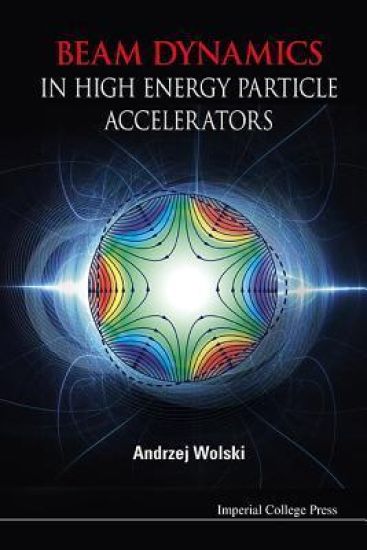
Beam Dynamics In High Energy Particle Accelerators
Andrzej Wolski
Imperial College Press
2014
sidottu
Particle accelerators are essential tools for scientific research in fields as diverse as high energy physics, materials science and structural biology. They are also widely used in industry and medicine. Producing the optimum design and achieving the best performance for an accelerator depends on a detailed understanding of many (often complex and sometimes subtle) effects that determine the properties and behavior of the particle beam. Beam Dynamics in High Energy Particle Accelerators provides an introduction to the concepts underlying accelerator beam line design and analysis, taking an approach that emphasizes the elegance of the subject and leads into the development of a range of powerful techniques for understanding and modeling charged particle beams.


Beam Test Calorimeter Prototypes for the CMS Calorimeter Endcap Upgrade
Thorben Quast
Springer Nature Switzerland AG
2022
sidottu
?In order to cope with the increased radiation level and the challenging pile-up conditions at High Luminosity-LHC, the CMS collaboration will replace its current calorimeter endcaps with the High Granularity Calorimeter (HGCAL) in the mid 2020s. This dissertation addresses two important topics related to the preparation of the HGCAL upgrade: experimental validation of its silicon- based design and fast simulation of its data. Beam tests at the DESY (Hamburg) and the CERN SPS beam test facilities in 2018 have been the basis for the design validation. The associated experimental infrastructure, the algorithms deployed in the reconstruction of the recorded data, as well as the respective analyses are reported in this thesis: First, core components of the silicon-based prototype modules are characterised and it is demonstrated that the assembled modules are functional. In particular, their efficiency to detect minimum ionising particles (MIPs) traversing the silicon sensorsis found to be more than 98% for most of the modules. No indication of charge sharing between the silicon pads is observed. Subsequently, the energy response is calibrated in situ using the beam test data. Equalisation of the different responses among the readout channels is achieved with MIPs hereby deploying the HGCAL prototype as a MIP-tracking device. The relative variation of the inferred calibration constants amounts to 3% for channels on the same readout chip. The calibration of the time-of-arrival information is performed with an external time reference detector. With it, timing resolutions of single cells including the full prototype readout chain around 60ps in the asymptotic high energy limit are obtained. The calorimetric performance of the HGCAL prototype is validated with particle showers induced by incident positrons and charged pions. For electromagnetic showers, the constant term in the relative energy resolution is measured to be (0.52± 0.08) %, whereas the stochastic term amounts to (22.2 ± 0.3)% vGeV. This result is in good agreement with the calorimeter simulation with GEANT4. The prototype’s positioning resolution of the shower axis, after subtracting the contribution from the delay wire chambers in the beam line used as reference, is found to be below 0.4 mm at 300 GeV. At the same energy, the angular resolution in the reconstruction of the electromagnetic shower axis in this prototype is measured to be less than 5mrad. The analysis of the hadronic showers in this thesis makes use state-of-the- art machine-learning methods that exploit the calorimeter’s granularity. It is indicated that the energy resolution may be improved using software compensation and also that the separation of electromagnetic and charged pion-induced showers in the calorimeter may benefit from such methods. The measurements of the hadronic showers are adequately reproduced by GEANT4 simulation. Altogether, the obtained results from the analysis of the beam test data inthis thesis are in agreement with the full functionality of the silicon-based HGCAL design. The final part of this thesis provides a proof of principle that generative modelling based on deep neural networks in conjunction with the Wasserstein distance is a suitable approach for the fast simulation of HGCAL data: Instead of sequential simulation, a deep neural network-based generative model generates all calorimeter energy depositions simultaneously. This genera t or network is optimised throu gh an adversarial training process using a critic network guided by the Wasserstein distance. The developed framework in this thesis is applied to both GEANT4- simulated electromagnetic showers and to positron data from the beam tests. Ultimately, this fast simulation approach is up to four orders of magnitude faster than sequential simulation with GEANT4. It is able to produce realistic calorimeter energy depositions from electromagnetic showers, incorporating their fluctuations andcorrelations when converted into typical calorimeter observables.

Beam Test Calorimeter Prototypes for the CMS Calorimeter Endcap Upgrade
Thorben Quast
Springer Nature Switzerland AG
2023
nidottu
?In order to cope with the increased radiation level and the challenging pile-up conditions at High Luminosity-LHC, the CMS collaboration will replace its current calorimeter endcaps with the High Granularity Calorimeter (HGCAL) in the mid 2020s. This dissertation addresses two important topics related to the preparation of the HGCAL upgrade: experimental validation of its silicon- based design and fast simulation of its data. Beam tests at the DESY (Hamburg) and the CERN SPS beam test facilities in 2018 have been the basis for the design validation. The associated experimental infrastructure, the algorithms deployed in the reconstruction of the recorded data, as well as the respective analyses are reported in this thesis: First, core components of the silicon-based prototype modules are characterised and it is demonstrated that the assembled modules are functional. In particular, their efficiency to detect minimum ionising particles (MIPs) traversing the silicon sensorsis found to be more than 98% for most of the modules. No indication of charge sharing between the silicon pads is observed. Subsequently, the energy response is calibrated in situ using the beam test data. Equalisation of the different responses among the readout channels is achieved with MIPs hereby deploying the HGCAL prototype as a MIP-tracking device. The relative variation of the inferred calibration constants amounts to 3% for channels on the same readout chip. The calibration of the time-of-arrival information is performed with an external time reference detector. With it, timing resolutions of single cells including the full prototype readout chain around 60ps in the asymptotic high energy limit are obtained. The calorimetric performance of the HGCAL prototype is validated with particle showers induced by incident positrons and charged pions. For electromagnetic showers, the constant term in the relative energy resolution is measured to be (0.52± 0.08) %, whereas the stochastic term amounts to (22.2 ± 0.3)% vGeV. This result is in good agreement with the calorimeter simulation with GEANT4. The prototype’s positioning resolution of the shower axis, after subtracting the contribution from the delay wire chambers in the beam line used as reference, is found to be below 0.4 mm at 300 GeV. At the same energy, the angular resolution in the reconstruction of the electromagnetic shower axis in this prototype is measured to be less than 5mrad. The analysis of the hadronic showers in this thesis makes use state-of-the- art machine-learning methods that exploit the calorimeter’s granularity. It is indicated that the energy resolution may be improved using software compensation and also that the separation of electromagnetic and charged pion-induced showers in the calorimeter may benefit from such methods. The measurements of the hadronic showers are adequately reproduced by GEANT4 simulation. Altogether, the obtained results from the analysis of the beam test data inthis thesis are in agreement with the full functionality of the silicon-based HGCAL design. The final part of this thesis provides a proof of principle that generative modelling based on deep neural networks in conjunction with the Wasserstein distance is a suitable approach for the fast simulation of HGCAL data: Instead of sequential simulation, a deep neural network-based generative model generates all calorimeter energy depositions simultaneously. This genera t or network is optimised throu gh an adversarial training process using a critic network guided by the Wasserstein distance. The developed framework in this thesis is applied to both GEANT4- simulated electromagnetic showers and to positron data from the beam tests. Ultimately, this fast simulation approach is up to four orders of magnitude faster than sequential simulation with GEANT4. It is able to produce realistic calorimeter energy depositions from electromagnetic showers, incorporating their fluctuations andcorrelations when converted into typical calorimeter observables.

Beam Diagnostics in Superconducting Accelerating Cavities
Pei Zhang
Springer International Publishing AG
2013
sidottu
An energetic charged particle beam introduced to an rf cavity excites a wakefield therein. This wakefield can be decomposed into a series of higher order modes and multipoles, which for sufficiently small beam offsets are dominated by the dipole component. This work focuses on using these dipole modes to detect the beam position in third harmonic superconducting S-band cavities for light source applications. A rigorous examination of several means of analysing the beam position based on signals radiated to higher order modes ports is presented. Experimental results indicate a position resolution, based on this technique, of 20 microns over a complete module of 4 cavities. Methods are also indicated for improving the resolution and for applying this method to other cavity configurations. This work is distinguished by its clarity and potential for application to several other international facilities. The material is presented in a didactic style and is recommended both for students new to the field, and for scientists well-versed in the field of rf diagnostics.

Beam Diagnostics in Superconducting Accelerating Cavities
Pei Zhang
Springer International Publishing AG
2016
nidottu
An energetic charged particle beam introduced to an rf cavity excites a wakefield therein. This wakefield can be decomposed into a series of higher order modes and multipoles, which for sufficiently small beam offsets are dominated by the dipole component. This work focuses on using these dipole modes to detect the beam position in third harmonic superconducting S-band cavities for light source applications. A rigorous examination of several means of analysing the beam position based on signals radiated to higher order modes ports is presented. Experimental results indicate a position resolution, based on this technique, of 20 microns over a complete module of 4 cavities. Methods are also indicated for improving the resolution and for applying this method to other cavity configurations. This work is distinguished by its clarity and potential for application to several other international facilities. The material is presented in a didactic style and is recommended both for students new to the field, and for scientists well-versed in the field of rf diagnostics.


Beam-Transport in Rotating Gantries with Superconducting Final Magnet
Jozef Bokor; Márius Pavlovi¿
Lap Lambert Academic Publishing
2017
nidottu

Beam Instrumentation and Diagnostics
Peter Strehl
Springer-Verlag Berlin and Heidelberg GmbH Co. K
2006
sidottu
This book summarizes the experience of many years of teamwork with my group, the beam diagnostics group of GSI. For a long time the group was also responsible for operating the machines and application programming. In my opinion, this connection was very e?cient: ?rst, because a beam diagnostic system has to place powerful tools at the operators’ disposal; second, because data evaluation and presentation of results for machine operation demand application programs which can be handled not only by skilled experts. On the other hand, accelerator developments and improvements as well as commissioning of new machines by specialists require more complex measu- ments than those for routine machine operation. A modern beam diagnostic system, including the software tools, has to cover these demands, too. Therefore, this book should motivate physicists, constructors, electronic engineers, and computer experts to work together during the design and daily use of a beam diagnostic system. This book aims to give them ideas and tools for their work. I would not have been able to write this book without a good education in physics and many discussions with competent leaders, mentors, and c- leagues. After working about 40 years in teams on accelerators, there are so many people I have to thank that it is impossible to mention them all by name here.

Beam Instrumentation and Diagnostics
Peter Strehl
Springer-Verlag Berlin and Heidelberg GmbH Co. K
2010
nidottu
This book summarizes the experience of many years of teamwork with my group, the beam diagnostics group of GSI. For a long time the group was also responsible for operating the machines and application programming. In my opinion, this connection was very e?cient: ?rst, because a beam diagnostic system has to place powerful tools at the operators’ disposal; second, because data evaluation and presentation of results for machine operation demand application programs which can be handled not only by skilled experts. On the other hand, accelerator developments and improvements as well as commissioning of new machines by specialists require more complex measu- ments than those for routine machine operation. A modern beam diagnostic system, including the software tools, has to cover these demands, too. Therefore, this book should motivate physicists, constructors, electronic engineers, and computer experts to work together during the design and daily use of a beam diagnostic system. This book aims to give them ideas and tools for their work. I would not have been able to write this book without a good education in physics and many discussions with competent leaders, mentors, and c- leagues. After working about 40 years in teams on accelerators, there are so many people I have to thank that it is impossible to mention them all by name here.

Beam-Wave Interaction in Periodic and Quasi-Periodic Structures
Levi Schächter
Springer-Verlag Berlin and Heidelberg GmbH Co. K
2011
sidottu
The main theme of this book is the interaction of electrons with electromagnetic waves in the presence of periodic and quasi-periodic structures in vacuum, in view of applications in the design and operation of particle accelerators. The first part of the book is concerned with the textbook-like presentation of the basic material, in particular reviewing elementary electromagnetic phenomena and electron dynamics. The second part of the book describes the current models for beam-wave interactions with periodic and quasi-periodic structures. This is the basis for introducing, in the last part of the book, a number of particle and radiation sources that rest on these principles, in particular the free-electron laser, wake-field acceleration schemes and a number of other advanced particle accelerator concepts.This second edition brings this fundamental text up-to-date in view of the enormous advances that have been made over the last decade since the first edition was published. All chapters, as well as the bibliography, have been significantly revised and extended, and the number of end-of-chapter exercises has been further increased to enhance this book’s usefulness for teaching specialized graduate courses.

Beam-Wave Interaction in Periodic and Quasi-Periodic Structures
Levi Schächter
Springer-Verlag Berlin and Heidelberg GmbH Co. K
2013
nidottu
The main theme of this book is the interaction of electrons with electromagnetic waves in the presence of periodic and quasi-periodic structures in vacuum, in view of applications in the design and operation of particle accelerators. The first part of the book is concerned with the textbook-like presentation of the basic material, in particular reviewing elementary electromagnetic phenomena and electron dynamics. The second part of the book describes the current models for beam-wave interactions with periodic and quasi-periodic structures. This is the basis for introducing, in the last part of the book, a number of particle and radiation sources that rest on these principles, in particular the free-electron laser, wake-field acceleration schemes and a number of other advanced particle accelerator concepts.This second edition brings this fundamental text up-to-date in view of the enormous advances that have been made over the last decade since the first edition was published. All chapters, as well as the bibliography, have been significantly revised and extended, and the number of end-of-chapter exercises has been further increased to enhance this book’s usefulness for teaching specialized graduate courses.

Beam-Foil Spectroscopy
Springer-Verlag Berlin and Heidelberg GmbH Co. K
2011
nidottu
Stanley Bashkin Beam-foil spectroscopy has enjoyed a rapid growth since the publication of KAY's first experiment [I.1J and my own first formal discussion of the possibilities inherent in a foil-excited particle beam [1.2J. In addition to fulfilling a number of the impor tant promises, the beam-foil source has been found to hold substantial surprises, the unearthing of which has contributed to our knowledge of basic atomic physics. Since the early days, major extensions have been made in the range of wavelength and par ticle energies which have been used, but only the bare beginnings have been made in exploiting the potential of the beam-foil source. Since there are many people who would like to turn their accelerator facilities to beam-foil problems or apply their theoretical techniques to calculations which bear on the beam-foil field, it seemed appropriate to assemble a discussion of the present status of beam-foil spectroscopy. The present volume attempts to summarize what has been learned and outlines a number of studies which remain to be made.