Kirjojen hintavertailu. Mukana 11 699 587 kirjaa ja 12 kauppaa.

Kirjahaku

Etsi kirjoja tekijän nimen, kirjan nimen tai ISBN:n perusteella.

654 tulosta hakusanalla Bela Davis

DD

DD

Bela Davis

Abdo Kids Junior
2016
sidottu
From donuts to dogs, this title has got D words covered Each instance of "D" or "d" is bolded so that readers begin to recognize it in words and the sounds it makes. Complete with big colorful photographs, a More Dd Words page, bolded glossary terms, and a picture glossary. Aligned to Common Core Standards and correlated to state standards. Abdo Kids Junior is an imprint of Abdo Kids, a division of ABDO.
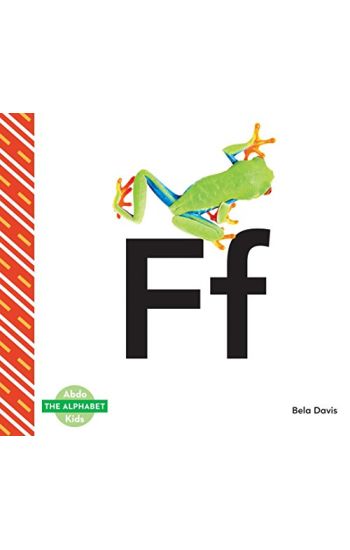
Ff

Ff

Bela Davis

Abdo Kids Junior
2016
sidottu
From flowers to foals, this title has got F words covered Each instance of "F" or "f" is bolded so that readers begin to recognize it in words and the sounds it makes. Complete with big colorful photographs, a More Ff Words page, bolded glossary terms, and a picture glossary. Aligned to Common Core Standards and correlated to state standards. Abdo Kids Junior is an imprint of Abdo Kids, a division of ABDO.
Gg

Gg

Bela Davis

Abdo Kids Junior
2016
sidottu
From grapes to giraffes, this title has got G words covered Each instance of "G" or "g" is bolded so that readers begin to recognize it in words and the sounds it makes. Complete with big colorful photographs, a More Gg Words page, bolded glossary terms, and a picture glossary. Aligned to Common Core Standards and correlated to state standards. Abdo Kids Junior is an imprint of Abdo Kids, a division of ABDO.
Pp

Pp

Bela Davis

Abdo Kids Junior
2016
sidottu
From peaches to pianos, this title has got P words covered Each instance of "P" or "p" is bolded so that readers begin to recognize it in words and the sounds it makes. Complete with big colorful photographs, a More Pp Words page, bolded glossary terms, and a picture glossary. Aligned to Common Core Standards and correlated to state standards. Abdo Kids Junior is an imprint of Abdo Kids, a division of ABDO.
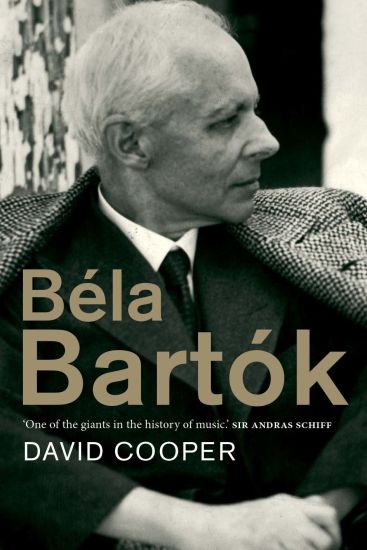
Béla Bartók

Béla Bartók

David Cooper

Yale University Press
2018
pokkari
The definitive account of the life and music of Hungary’s greatest twentieth-century composer This deeply researched biography of Béla Bartók (1881–1945) provides a more comprehensive view of the innovative Hungarian musician than ever before. David Cooper traces Bartók’s international career as an ardent ethno-musicologist and composer, teacher, and pianist, while also providing a detailed discussion of most of his works. Further, the author explores how Europe’s political and cultural tumult affected Bartók’s work, travel, and reluctant emigration to the safety of America in his final years. Cooper illuminates Bartók’s personal life and relationships, while also expanding what is known about the influence of other musicians—Richard Strauss, Zoltán Kodály, and Yehudi Menuhin, among many others. The author also looks closely at some of the composer’s actions and behaviors which may have been manifestations of Asperger syndrome. The book, in short, is a consummate biography of an internationally admired musician.
Béla Bartók

Béla Bartók

Elliott Antokoletz; Paolo Susanni

Routledge
2011
sidottu
This research guide is an annotated bibliography of primary and secondary sources and catalogue of Bartók’s compositions. Since the publication of the second edition, a wealth of information has been proliferating in the field of Bartók research. The third edition of this research guide provides an update in this field and represents the multidisciplinary research areas in the growing Bartók literature.
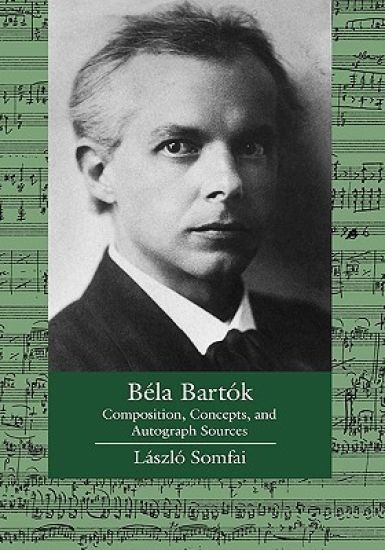
Bela Bartok

Bela Bartok

László Somfai

University of California Press
1996
sidottu
This long-awaited, authoritative account of Bartok's compositional processes stresses the composer's position as one of the masters of Western music history and avoids a purely theoretical approach or one that emphasizes him as an enthusiast for Hungarian folk music. For Bela Bartok, composition often began with improvisation at the piano. Laszlo Somfai maintains that Bartok composed without preconceived musical theories and refused to teach composition precisely for this reason. He was not an analytical composer but a musical creator for whom intuition played a central role. These conclusions are the result of Somfai's three decades of work with Bartok's oeuvre; of careful analysis of some 3,600 pages of sketches, drafts, and autograph manuscripts; and of the study of documents reflecting the development of Bartok's compositions. Included as well are corrections preserved only on recordings of Bartok's performances of his own works. Somfai also provides the first comprehensive catalog of every known work of Bartok, published and unpublished, and of all extant draft, sketch, and preparatory material. His book will be basic to all future scholarly work on Bartok and will assist performers in clarifying the problems of Bartok notation. Moreover, it will be a model for future work on other major composers.
Bela Bartok and Turn-of-the-Century Budapest

Bela Bartok and Turn-of-the-Century Budapest

Judit Frigyesi

University of California Press
2000
pokkari
Bartok's music is greatly prized by concertgoers, yet we know little about the intellectual milieu that gave rise to his artistry. Bartok is often seen as a lonely genius emerging from a gray background of an 'underdeveloped country.' Now Judit Frigyesi offers a broader perspective on Bartok's art by grounding it in the social and cultural life of turn-of-the-century Hungary and the intense creativity of its modernist movement. Bartok spent most of his life in Budapest, an exceptional man living in a remarkable milieu. Frigyesi argues that Hungarian modernism in general and Bartok's aesthetic in particular should be understood in terms of a collective search for wholeness in life and art and for a definition of identity in a rapidly changing world. Is it still possible, Bartok's generation of artists asked, to create coherent art in a world that is no longer whole? Bartok and others were preoccupied with this question and developed their aesthetics in response to it. In a discussion of Bartok and of Endre Ady, the most influential Hungarian poet of the time, Frigyesi demonstrates how different branches of art and different personalities responded to the same set of problems, creating oeuvres that appear as reflections of one another. She also examines Bartok's Bluebeard's Castle, exploring philosophical and poetic ideas of Hungarian modernism and linking Bartok's stylistic innovations to these concepts.
Bela and Lily

Bela and Lily

Natasha Khan Kazi

Penguin Young Readers
2025
sidottu
Lily looks at my eyes, lips, and shoulders as if they are pieces of a puzzle. Bela, who has recently arrived in the United States from Bangladesh, meets Lily on the swings. But how do you make a friend when you don’t speak the same language? Based on Natasha’s own experience as a five-year-old immigrant making her first friend, Bela and Lily is about how two kindred spirits forge a bond through smiles, giggles, and a shared love of adventure, while also learning each other’s words.
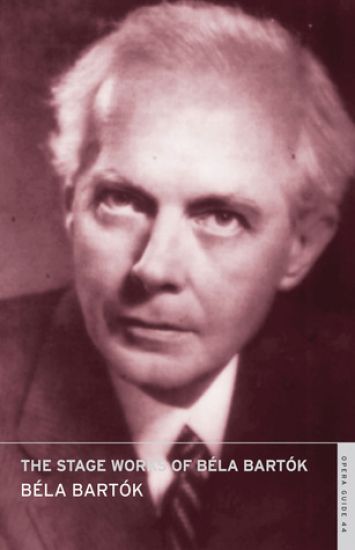
The Stage Works of Béla Bartók

The Stage Works of Béla Bartók

Bela Bartok

Overture Publishing
2011
nidottu
A product of Hungary’s political ferment at the start of the twentieth century, Béla Bartók’s works combine determination to participate in Western art movements coupled with an enthusiasm for the folk traditions of a disappearing world. In this introduction to Bartók’s stage works, Julian Grant describes the score for Duke Bluebeard’s Castle, a symbolist version of the Bluebeard myth. Included in this volume are also his ballet scenarios and discussions of the choreographic potential and musical qualities of the scores. Ferenc Bónis indicates the appeal for Bartók of the natural world, against the cataclysm of the First World War. Together, these works give an insight into issues of sexuality, humanity and creativity.Contents: Works contained in this volume: Duke Bluebeard’s Castle, The Wooden Prince, The Miraculous Mandarin; Images the Self: ‘Duke Bluebeard’s Castle’, Paul Banks; Bartók and ‘World Music’, Simon Broughton; Annie Miller, Keith Bosley and Peter Sherwood; A Foot in Bluebeard’s Door, Julian Grant; Around the Bluebeard Myth, Mike Ashman; A kékszakállú herceg vára: Libretto by Béla Balázs; Duke Bluebeard’s Castle: English translation by John Lloyd Davies; ‘The Wooden Prince’: A Tale for Adults, Ferenc Bónis; A fából faragott királyfi: Scenario by Béla Balázs; The Wooden Prince: English translation by lstván Farkas; ‘The Miraculous Mandarin’: The Birth and Vicissitudes of a Masterpiece, Ferenc Bónis; A csodálatos mandarin: Scenario by Menyhért Lengyel; The Miraculous Mandarin: English Translation by lstván Farkas
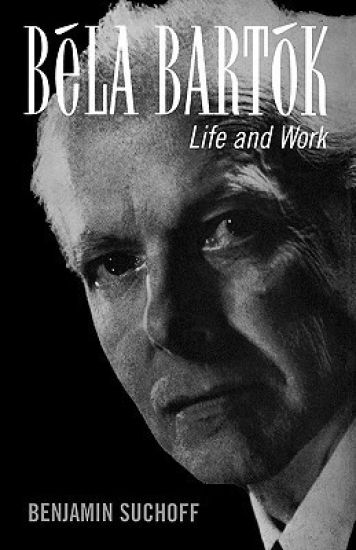
Béla Bartók

Béla Bartók

Benjamin Suchoff

Scarecrow Press
2001
sidottu
This book is the first comprehensive biographical study of Bartok as man, composer, and folklorist, including the background and development of his unique musical language and the impact of his pioneering investigations of multinational musical folklore on his composed works. His career as an outstanding pianist, connections with contemporaries in the world of music, and the socio-economic factors that affected his creative and scholarly activities are also included among other hitherto unexplored aspects of his life and times.
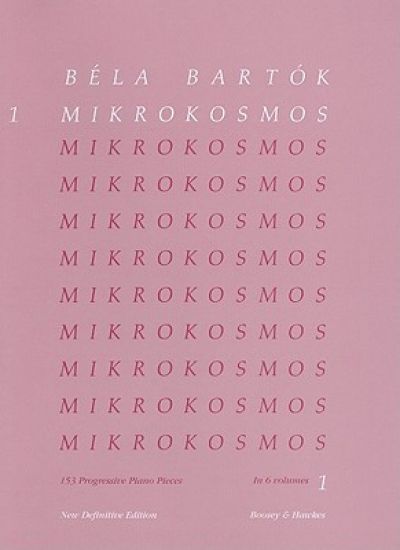
Bela Bartok - Mikrokosmos Volume 1 (Blue): 153 Progressive Piano Pieces
(BH Piano). The definitive edition (1987) of the piano teaching classic. Includes an introduction by the composer's son Peter Bartok. (English/Spanish/Japanese/Portuguese text). In 1945 Bela Bartok described Mikrokosmos as a cycle of 153 pieces for piano written for "didactic" purposes, seeing them as a series of pieces in many different styles, representing a small world, or as the "world of the little ones, the children". Stylistically Mikrokosmos reflects the influence of folk music on Bartok's life and the rhythms and harmonies employed create music that is as modern today as when the cycle was written. The 153 pieces making up Mikrokosmos are divided into six volumes arranged according to technical and musical difficulty. Major teaching points highlighted in Mikrokosmos 2: Staccato, legato; Accompaniment in broken triads; Accents Volume 1 contains Nos. 1-36
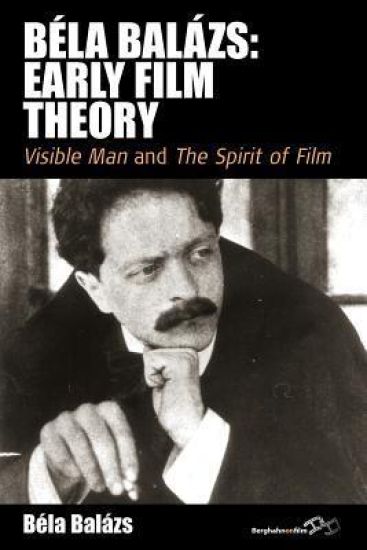
Béla Balázs: Early Film Theory

Béla Balázs: Early Film Theory

Béla Balázs; Erica Carter; Rodney Livingstone

Berghahn Books
2011
pokkari
Béla Balázs’s two works, Visible Man (1924) and The Spirit of Film (1930), are published here for the first time in full English translation. The essays offer the reader an insight into the work of a film theorist whose German-language publications have been hitherto unavailable to the film studies audience in the English-speaking world. Balázs’s detailed analyses of the close-up, the shot and montage are illuminating both as applicable models for film analysis, and as historical documents of his key contribution – alongside such contemporaries as Arnheim, Kracauer and Benjamin – to critical debate on film in the ‘golden age’ of the Weimar silents.
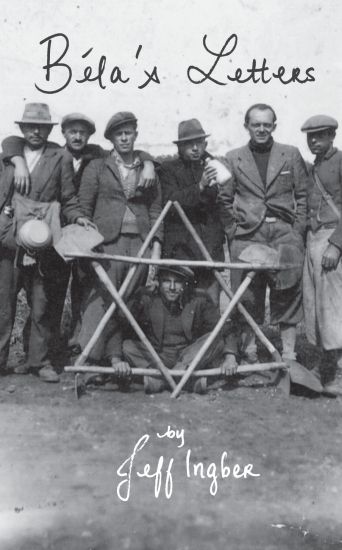
Béla's Letters

Béla's Letters

Jeff Ingber

Jeffrey Ingber
2018
sidottu
"B la's Letters" is an historical fiction novel based on the life of B la Ingber. B la was born before the onset of WWI in Munk cs, a small city nestled in the Carpathian Mountains that belonged to the democratic nation of Czechoslovakia until being occupied by fascist Hungary and then by German forces during WW II. B la and his family were part of an extraordinary Jewish community, known for both its religious fervor and its Zionist movement, that had thrived for centuries until being eradicated less than a year before the end of the war.The book spans the years from 1928, when B la is a teenager, until his death in 2003. Through both B la's own voice and various poignant letters sent to him over the years by family members, it tells of B la's extraordinary experiences during years of harsh imprisonment in the Hungarian labor camp system. The struggles of B la's nuclear and extended family to comprehend and prepare for the Holocaust are portrayed, as are the fates of various members of a family torn apart by the war and Holocaust and the implausible circumstances that the survivors endure before reuniting. One of B la's brothers visited the World's Fair in New York in 1940 and was convinced to enlist in the U.S. Army Intelligence Unit. He later participated in the liberation of Paris and acted as an interviewer of Nazi guards at the Buchenwald concentration camp. Another brother escaped to Palestine in 1939 by jumping ship and swimming a mile to shore, and later fought in the British Army. Other siblings survived Auschwitz, Dachau, and Bergen-Belsen.B la also tells of his first love, a woman who urges him unsuccessfully to emigrate to Palestine with her, and of meeting and falling in love with his wife, Marika Leiner. Marika endures the terror of living on her own as a teenager with false identity papers in a city, Budapest, that is ravaged by some of the fiercest street fighting of the war as well as by the horrors inflicted by Adolph Eichmann and his henchmen together with the murderous Arrow Cross (the Hungarian Nazi Party).The second half of the book describes Bela and Marika's escape from Soviet-ruled Eastern Europe to Italy, their struggle to begin their lives anew in the United States, the crushing impact on them of their wartime experiences, and the feelings of guilt, hatred, fear, and abandonment that haunted them and the other Ingber family members.In "B la's Letters," B la tells of a family whose trust, amid the world's betrayal, lay only with blood. One's brother would remain one's brother. Not even G-d, who appeared to have looked away, was as certain. At the core of the book are the letters and postcards written to B la, which were his lifeline and remained so, even decades after the war ended.
Bela Joe

Bela Joe

Margaret Saunders

Friesenpress
2021
pokkari
La vera Bela 'Joe' ( Ĝo ) estis mezgranda, bruna kaj miksrasa hundo. Li estis origine posedata de viraĉo de la urbo Meaford, en Ontario, Kanado, kiu kruele misuzis lin kaj eĉ fortranĉis liajn orelojn kaj voston. Walter Moore savis la hundon en 1890 de probabla morto, perforta kaj dolora. En 1892, Margaret Marshall Saunders (1861-1947), unue eksciis pri 'Bela JOE' kiam ŝi vizitis sian fraton kaj lian edzinon, Louise Moore. Saunders estis tiel kortuŝata de la parola informo pri Joe, ke ŝi decidis verki longan rakonton en formo de aŭtobiografio. Ŝi volis ke 'Bela Joe' rakontu kortuŝe siajn vivospertojn per sia propra hunda voĉo. Kiam ŝi legis pri literatura konkurso de la 'Usona Humana Eduka Societo', Marshal Saunders alilokigis la lokon de la rakonto al la usona ŝtato Maine ( Mejn ) kaj ŝanĝis la nomon de la familio de Moore al Morris. La romano gajnis la unuan lokon kaj estis eldonita en 1893 kiam alia rakonto el vidpunkto de besto 'Nigra Belulino' ( Black Beauty ) de Anna Sewell jam fariĝis klasika verko kiu simile permesis al la leganto eniri la menson de la besto kaj senti pli da simpatio ol priskribo prezentita laŭ rekta dokumenta maniero.Ĝis 1900, pli ol 800,000 vendiĝis en Usono, 40,000 en Kanado kaj 100,000 en Britio.
Bela Joe

Bela Joe

Margaret Saunders

Friesenpress
2021
sidottu
La vera Bela 'Joe' ( Ĝo ) estis mezgranda, bruna kaj miksrasa hundo. Li estis origine posedata de viraĉo de la urbo Meaford, en Ontario, Kanado, kiu kruele misuzis lin kaj eĉ fortranĉis liajn orelojn kaj voston. Walter Moore savis la hundon en 1890 de probabla morto, perforta kaj dolora. En 1892, Margaret Marshall Saunders (1861-1947), unue eksciis pri 'Bela JOE' kiam ŝi vizitis sian fraton kaj lian edzinon, Louise Moore. Saunders estis tiel kortuŝata de la parola informo pri Joe, ke ŝi decidis verki longan rakonton en formo de aŭtobiografio. Ŝi volis ke 'Bela Joe' rakontu kortuŝe siajn vivospertojn per sia propra hunda voĉo. Kiam ŝi legis pri literatura konkurso de la 'Usona Humana Eduka Societo', Marshal Saunders alilokigis la lokon de la rakonto al la usona ŝtato Maine ( Mejn ) kaj ŝanĝis la nomon de la familio de Moore al Morris. La romano gajnis la unuan lokon kaj estis eldonita en 1893 kiam alia rakonto el vidpunkto de besto 'Nigra Belulino' ( Black Beauty ) de Anna Sewell jam fariĝis klasika verko kiu simile permesis al la leganto eniri la menson de la besto kaj senti pli da simpatio ol priskribo prezentita laŭ rekta dokumenta maniero.Ĝis 1900, pli ol 800,000 vendiĝis en Usono, 40,000 en Kanado kaj 100,000 en Britio.
Bela Bartok: Mikrokosmos, Nos. 1-36: 153 Progressive Piano Pieces
(BH Piano). The definitive edition (1987) of the piano teaching classic. Includes an introduction by the composer's son Peter Bartok. In 1945 Bela Bartok described Mikrokosmos as a cycle of 153 pieces for piano written for "didactic" purposes, seeing them as a series of pieces in many different styles, representing a small world, or as the "world of the little ones, the children". Stylistically Mikrokosmos reflects the influence of folk music on Bartok's life and the rhythms and harmonies employed create music that is as modern today as when the cycle was written. The 153 pieces making up Mikrokosmos are divided into six volumes arranged according to technical and musical difficulty. Major teaching points highlighted in Mikrokosmos 1: Unison melodies, Question and answer, Imitation and Inversion. Volume with pink covers have text in English, French, German, and Hungarian. Volume 1 Contains Nos. 1-36
Bela Lugosi

Bela Lugosi

Chris Wade

Lulu.com
2023
pokkari
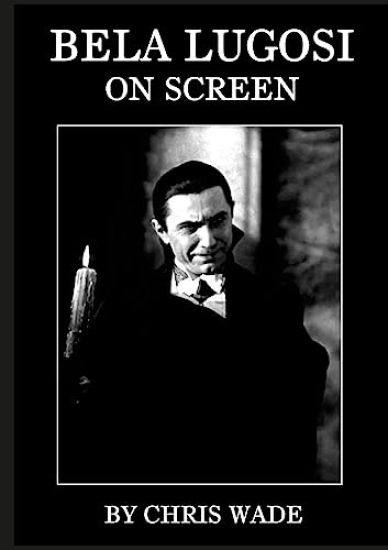
Chris Wade explores the film career of movie icon Bela Lugosi. From his silent films in Europe, his early American movies, the iconic roles in the likes of Dracula, The Black Cat, and White Zombie, through the low budget B movies of the 1940s, up to his final screen work for Ed Wood, Wade celebrates the great man's performances in a series of essays, examining the career of a man who never escaped the Dracula persona but whose films are now highly regarded by his legions of fans. The book also features Q and As with those who knew and worked with him. Other films explored include: The Raven, Murders in the Rue Morgue, The Devil Bat, Son of Frankenstein, The Corpse Vanishes, Abbott and Costello Meet Frankenstein, and many more...