Kirjojen hintavertailu. Mukana 12 053 745 kirjaa ja 12 kauppaa.

Kirjahaku

Etsi kirjoja tekijän nimen, kirjan nimen tai ISBN:n perusteella.

1000 tulosta hakusanalla Benjamin J. Harbert

Calvinists and Libertines

Calvinists and Libertines

Benjamin J. Kaplan

Clarendon Press
1995
sidottu
After the Reformation, the Dutch Republic emerged as the most religiously tolerant country in seventeenth-century Europe. Benjamin Kaplan examines the reasons behind this phenomenon, focusing on the struggle of Calvinist reformers to realize their theocratic aspirations in the Netherlands, and the fierce opposition offered to them by a large, amorphous group of people known as `Libertines'. Nowhere was this struggle more intense than in Utrecht, a city at the heart of the Dutch Reformation. The author illuminates the nature of this conflict through a study of the city and people of Utrecht, examing social relations, popular piety, civic culture, and state formation. This urban case-study shows how Dutch religious developments fitted into the wider European framework. Offering a fascinating microcosm of religious tensions in Europe around 1600, Kaplan shows how the Calvinist-Libertine conflict in the Netherlands was in fact a local manifestation of a broader European phenomenon: the struggle between champions and opponents of `confessionalism'. He thus combines a new interpretation of the Dutch Reformation with a presentation that makes this largely unknown phenomenon accessible to students of other countries. As the first case-study in English of the Dutch Reformation, Calvinists and Libertines fills an important gap in our knowledge of Dutch history and in our understanding of the European Reformation as a whole.
The Oxford Movement and the People of God

The Oxford Movement and the People of God

Benjamin J. King

Oxford University Press
2025
sidottu
Seeing the Church in danger from the government in 1833, the clergyman John Henry Newman wanted to 'look to the people' for help. The people of God were vital to the Tractarian (or Oxford) Movement which Newman, John Keble, and Edward Pusey led, and which hundreds of thousands of Anglican laypeople followed during the nineteenth century. The faithful were central to the movement's theological vision. Spiritually disciplined, the faithful would ensure that the Church's work in the world was ongoing. Properly educated, in schools for the middle classes and for the poor, at home and across the British Empire, the faithful would preserve the Church's teaching. Yet to opponents in the nineteenth century, and most scholars since, the movement seemed to magnify the role of the clergy of the Church of England at the expense of the people. This is to neglect not only Tractarian theology, but also lay Tractarians themselves, whether the few who were important figures in the British nation and Empire, or the many who took part in shaping society. The Oxford Movement and the People of God covers topics which are not usually encountered in studies of the Tractarians-enslavement, Empire, and English engagement in the American Civil War-as well as showing how their theology of the laity sheds new light on old topics-the Church of England's privileged place in the State, the Ritualist movement, and opposition to democracy. In none of these topics was the movement on what is called, with hindsight, 'the right side of history'. But the theological reasons, such as they were, why Tractarians took the positions they did are explored in chapters concerning providence, ecclesiology, consensus fidelium, episcopacy, and lay spirituality.
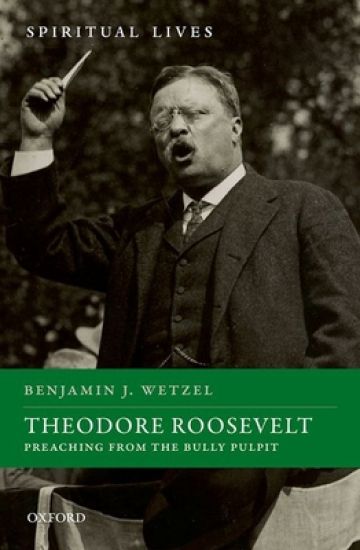
Theodore Roosevelt

Theodore Roosevelt

Benjamin J. Wetzel

Oxford University Press
2021
sidottu
Theodore Roosevelt is well-known as a rancher, hunter, naturalist, soldier, historian, explorer, and statesman. His visage is etched on Mount Rushmore--alongside George Washington, Thomas Jefferson, and Abraham Lincoln--as a symbol of his vast and consequential legacy. While Roosevelt's life has been written about from many angles, no modern book probes deeply into his engagement with religious beliefs, practices, and controversies despite his lifelong church attendance and commentary on religious issues. Theodore Roosevelt: Preaching from the Bully Pulpit traces Roosevelt's personal religious odyssey from youthful faith and pious devotion to a sincere but more detached adult faith. Benjamin J. Wetzel presents the president as a champion of the separation of church and state, a defender of religious ecumenism, and a "preacher" who used his "bully pulpit" to preach morality using the language of the King James Bible. Contextualizing Roosevelt in the American religious world of the late nineteenth and early twentieth centuries, Wetzel shows how religious groups interpreted the famous Rough Rider and how he catered to, rebuked, and interacted with various religious constituencies. Based in large part on personal correspondence and unpublished archival materials, this book offers a new interpretation of an extremely significant historical figure.
CCTV and Policing

CCTV and Policing

Benjamin J. Goold

Oxford University Press
2004
sidottu
CCTV and Policing is the first major published work to present a comprehensive assessment of the impact of CCTV on the police in Britain. Drawing extensively upon empirical research, the volume examines how the police in Britain first became involved in public area surveillance, and how they have since attempted to use CCTV technology to prevent, respond to, and investigate crime. In addition, the volume also provides a detailed analysis of the legality of CCTV surveillance in light of recent changes to the Data Protection Act and the incorporation of the European Convention on Human Rights. Challenging many existing accounts of the relationship between the police and new surveillance technologies, CCTV and Policing breaks new ground in policing and surveillance theory, and argues that it is time for a major reassessment of both our understanding of how the police respond to technological change, and of the role played by such technologies in our society.
Newman and the Alexandrian Fathers

Newman and the Alexandrian Fathers

Benjamin J. King

Oxford University Press
2009
sidottu
John Henry (later Cardinal) Newman is generally known to have been devoted to reading the Church Fathers. In this volume, Benjamin King draws on archive as well as published material to explore how Newman interpreted specific Fathers at different periods of his life. King draws connections between the Alexandrian Fathers Newman was reading and the development of his thought. This analysis shows that it was events in Newman's life that changed his interpretation of the Fathers, not the interpretation of the Fathers that caused Newman to change his life. King argues that Newman tailored his reading, 'trying on' the ideas of different Fathers to fit his own needs. An innovative comparison of Newman's two translations of Athanasius of Alexandria, from 1842-44 and 1881, demonstrates that by 1881 the Cardinal was swayed by the theology favored by Pope Leo XIII. King reveals that although Newman was a controversial figure in his own day, eventually his view of the Fathers and their doctrines came to be accepted by many scholars. This new exploration of his work, however, shows that the Cardinal's interpretation of the Fathers should still be controversial today.
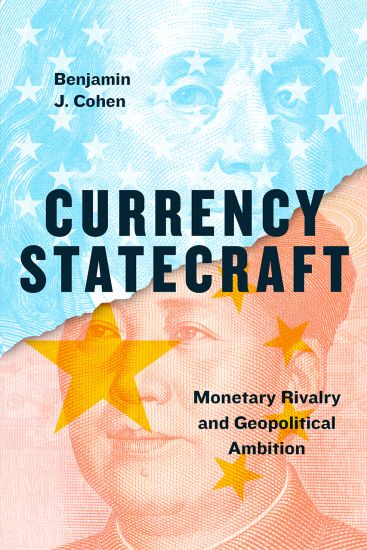
Currency Statecraft

Currency Statecraft

Benjamin J. Cohen

University of Chicago Press
2018
sidottu
At any given time, a limited number of national currencies are used as instruments of international commerce, to settle foreign trade transactions or store value for investors and central banks. How countries whose currencies gain international appeal choose to use this status forms their strategy of currency statecraft. In different circumstances, issuing governments may welcome and promote the internationalization of their currency, tolerate it, or actively oppose it. Benjamin J. Cohen offers a provocative explanation of the strategic policy choices at play. In a comprehensive review that ranges from World War II to the present, Cohen convincingly argues that one goal stands out as the primary motivation for currency statecraft: the extent of a country’s geopolitical ambition, or how driven it is to build or sustain a prominent place in the international community. When a currency becomes internationalized, it generally increases the power of the nation that produces it. In the persistent contestation that characterizes global politics, that extra edge can matter greatly, making monetary rivalry an integral component of geopolitics. Today, the major example of monetary rivalry is the emerging confrontation between the US dollar and the Chinese renminbi. Cohen describes how China has vigorously promoted the international standing of its currency in recent years, even at the risk of exacerbating relations with the United States, and explains how the outcome could play a major role in shaping the broader geopolitical engagement between the two superpowers.
Currency Statecraft

Currency Statecraft

Benjamin J. Cohen

University of Chicago Press
2018
nidottu
At any given time, a limited number of national currencies are used as instruments of international commerce, to settle foreign trade transactions or store value for investors and central banks. How countries whose currencies gain international appeal choose to use this status forms their strategy of currency statecraft. In different circumstances, issuing governments may welcome and promote the internationalization of their currency, tolerate it, or actively oppose it. Benjamin J. Cohen offers a provocative explanation of the strategic policy choices at play. In a comprehensive review that ranges from World War II to the present, Cohen convincingly argues that one goal stands out as the primary motivation for currency statecraft: the extent of a country’s geopolitical ambition, or how driven it is to build or sustain a prominent place in the international community. When a currency becomes internationalized, it generally increases the power of the nation that produces it. In the persistent contestation that characterizes global politics, that extra edge can matter greatly, making monetary rivalry an integral component of geopolitics. Today, the major example of monetary rivalry is the emerging confrontation between the US dollar and the Chinese renminbi. Cohen describes how China has vigorously promoted the international standing of its currency in recent years, even at the risk of exacerbating relations with the United States, and explains how the outcome could play a major role in shaping the broader geopolitical engagement between the two superpowers.
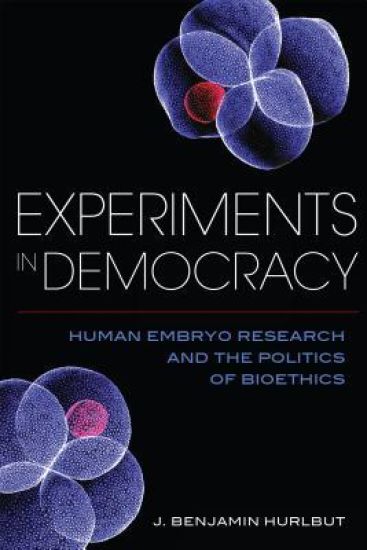
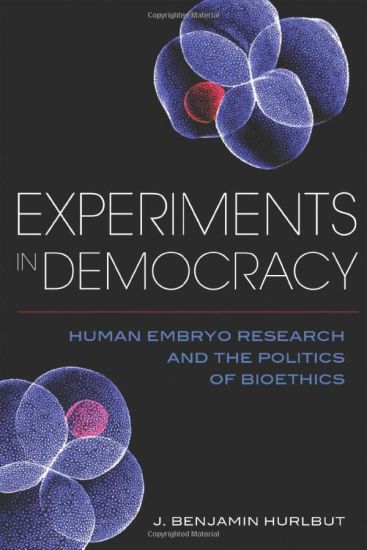
Experiments in Democracy

Experiments in Democracy

Benjamin J. Hurlbut

Columbia University Press
2017
sidottu
Human embryo research touches upon strongly felt moral convictions, and it raises such deep questions about the promise and perils of scientific progress that debate over its development has become a moral and political imperative. From in vitro fertilization to embryonic stem cell research, cloning, and gene editing, Americans have repeatedly struggled with how to define the moral status of the human embryo, whether to limit its experimental uses, and how to contend with sharply divided public moral perspectives on governing science. Experiments in Democracy presents a history of American debates over human embryo research from the late 1960s to the present, exploring their crucial role in shaping norms, practices, and institutions of deliberation governing the ethical challenges of modern bioscience. J. Benjamin Hurlbut details how scientists, bioethicists, policymakers, and other public figures have attempted to answer a question of great consequence: how should the public reason about aspects of science and technology that effect fundamental dimensions of human life? Through a study of one of the most significant science policy controversies in the history of the United States, Experiments in Democracy paints a portrait of the complex relationship between science and democracy, and of U.S. society's evolving approaches to evaluating and governing science's most challenging breakthroughs.
Experiments in Democracy

Experiments in Democracy

Benjamin J. Hurlbut

Columbia University Press
2022
pokkari
Human embryo research touches upon strongly felt moral convictions, and it raises such deep questions about the promise and perils of scientific progress that debate over its development has become a moral and political imperative. From in vitro fertilization to embryonic stem cell research, cloning, and gene editing, Americans have repeatedly struggled with how to define the moral status of the human embryo, whether to limit its experimental uses, and how to contend with sharply divided public moral perspectives on governing science.Experiments in Democracy presents a history of American debates over human embryo research from the late 1960s to the present, exploring their crucial role in shaping norms, practices, and institutions of deliberation governing the ethical challenges of modern bioscience. J. Benjamin Hurlbut details how scientists, bioethicists, policymakers, and other public figures have attempted to answer a question of great consequence: how should the public reason about aspects of science and technology that effect fundamental dimensions of human life? Through a study of one of the most significant science policy controversies in the history of the United States, Experiments in Democracy paints a portrait of the complex relationship between science and democracy, and of U.S. society's evolving approaches to evaluating and governing science's most challenging breakthroughs.
Flint Fights Back

Flint Fights Back

Benjamin J. Pauli

MIT Press
2019
pokkari
An account of the Flint water crisis shows that Flint's struggle for safe and affordable water is part of a broader struggle for democracy.When Flint, Michigan, changed its source of municipal water from Lake Huron to the Flint River, Flint residents were repeatedly assured that the water was of the highest quality. At the switchover ceremony, the mayor and other officials performed a celebratory toast, declaring "Here's to Flint!" and downing glasses of freshly treated water. But as we now know, the water coming out of residents' taps harbored a variety of contaminants, including high levels of lead. In Flint Fights Back, Benjamin Pauli examines the water crisis and the political activism that it inspired, arguing that Flint's struggle for safe and affordable water was part of a broader struggle for democracy. Pauli connects Flint's water activism with the ongoing movement protesting the state of Michigan's policy of replacing elected officials in financially troubled cities like Flint and Detroit with appointed "emergency managers."Pauli distinguishes the political narrative of the water crisis from the historical and technical narratives, showing that Flint activists' emphasis on democracy helped them to overcome some of the limitations of standard environmental justice frameworks. He discusses the pro-democracy (anti-emergency manager) movement and traces the rise of the "water warriors"; describes the uncompromising activist culture that developed out of the experience of being dismissed and disparaged by officials; and examines the interplay of activism and scientific expertise. Finally, he explores efforts by activists to expand the struggle for water justice and to organize newly mobilized residents into a movement for a radically democratic Flint.
Cunegonde's Kidnapping

Cunegonde's Kidnapping

Benjamin J. Kaplan

Yale University Press
2015
sidottu
How a popular religious war erupted on the Dutch-German border, despite the ideals of religious tolerance proclaimed by the Enlightenment In a remote village on the Dutch-German border, a young Catholic woman named Cunegonde tries to kidnap a baby to prevent it from being baptized in a Protestant church. When she is arrested, fellow Catholics stage an armed raid to free her from detention. These dramatic events of 1762 triggered a cycle of violence, starting a kind of religious war in the village and its surrounding region. Contradicting our current understanding, this war erupted at the height of the Age of Enlightenment, famous for its religious toleration. Cunegonde’s Kidnapping tells in vivid detail the story of this hitherto unknown conflict. Drawing characters, scenes, and dialogue straight from a body of exceptional primary sources, it is the first microhistorical study of religious conflict and toleration in early modern Europe. In it, award-winning historian Benjamin J. Kaplan explores the dilemmas of interfaith marriage and the special character of religious life in a borderland, where religious dissenters enjoy unique freedoms. He also challenges assumptions about the impact of Enlightenment thought and suggests that, on a popular level, some parts of eighteenth-century Europe may not have witnessed a “rise of toleration.”
Advances in the Study of Biblical Hebrew and Aramaic

Advances in the Study of Biblical Hebrew and Aramaic

Benjamin J. Noonan; Hélène Dallaire

Zondervan
2020
nidottu
Advances in the Study of Biblical Hebrew and Aramaic by Benjamin J. Noonan is an introduction to issues of interest in the current world of Biblical Hebrew and Aramaic scholarship. A growing knowledge of the Semitic languages and the field of linguistics continues to enhance understanding of biblical Hebrew and Aramaic. Comprehension of these items directly affects the way we read the Hebrew Bible and is therefore invaluable for those interested in the Old Testament. This book fills a gap in the field of Biblical Hebrew and Aramaic linguistics and provides an accessible, comprehensive, up-to-date, and linguistically-informed investigation of the language.Topics addressed include:Linguistic theoriesLexical semantics and lexicographyVerbal stemsTense, mood, and aspect in the verbal systemRegister, dialect, and code-switchingDating of Biblical Hebrew and Aramaic textsDiscourse analysisTeaching and learning Biblical Hebrew and AramaicAdvances in the Study of Biblical Hebrew and Aramaic provides an accessible introduction for students, pastors, professors, and commentators to understand these important issues.
Meditations From the Pastor's Study

Meditations From the Pastor's Study

Benjamin J. Mott

Lulu.com
2019
sidottu
Meditations from the Pastor's Study is a series of meditations on a wide range of topics that were composed by Pastor Benjamin J. Mott over a number of years and posted on his blog. Written from a Biblical perspective, these meditations provide practical instruction for a number of issues that confront Christians in their daily life, and particularly life in our age of advanced technology. There are also meditations addressing the issue of the Biblical text itself, fulfilled prophecy, and one's personal relationship with God. A cursory glance at the table of contents will direct you to the meditation most suited to your circumstances or interest.
Fiduciary Law and Responsible Investing

Fiduciary Law and Responsible Investing

Benjamin J. Richardson

Routledge
2013
sidottu
This book is about fiduciary law’s influence on the financial economy’s environmental performance, focusing on how the law affects responsible investing and considering possible legal reforms to shift financial markets closer towards sustainability. Fiduciary law governs how trustees, fund managers or other custodians administer the investment portfolios owned by beneficiaries. Written for a diverse audience, not just legal scholars, the book examines in a multi-jurisdictional context an array of philosophical, institutional and economic issues that have shaped the movement for responsible investing and its legal framework. Fiduciary law has acquired greater influence in the financial economy in tandem with the extraordinary recent growth of institutional funds such as pension plans and insurance company portfolios. While the fiduciary prejudice against responsible investing has somewhat waned in recent years, owing mainly to reinterpretations of fiduciary and trust law, significant barriers remain. This book advances the notion of ‘nature’s trust’ to metaphorically signal how fiduciary responsibility should accommodate society’s dependence on long-term environmental well-being. Financial institutions, managing vast investment portfolios on behalf of millions of beneficiaries, should manage those investments with regard to the broader social interest in sustaining ecological health. Even for their own financial self-interest, investors over the long-term should benefit from maintaining nature’s capital. We should expect everyone to act in nature’s trust, from individual funds to market regulators. The ancient public trust doctrine could be refashioned for stimulating this change, and sovereign wealth funds should take the lead in pioneering best practices for environmentally responsible investing.
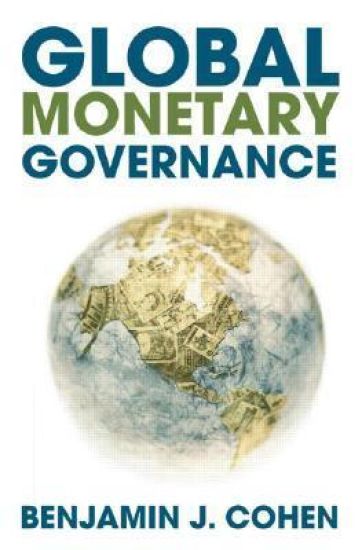
Global Monetary Governance

Global Monetary Governance

Benjamin J. Cohen

Routledge
2007
sidottu
Benjamin J. Cohen has been one of the most original and influential writers on international political economy. This book provides an overview of his contribution to the field, grouped around the central theme of global monetary governance. The book is divided into three sections: challenges to systemic governance - examines the challenge of governance of the international monetary system looking at such crucial issues as monetary reform, the growth of capital markets and financial globalization dealing with financial crisis – looks at efforts to deal effectively with financial crises, analyzing the relationships between governments and banks in the management of international debt problems and the case for capital controls. There are case studies of the Asian financial crisis and several other key instances of instability in world markets the new geography of money – analyzes the crisis of legitimacy created by a global system where governing authority is exercised now more by market forces than by sovereign states. It explores the geopolitical implications of the competition between the two most widely used currencies in the world today, the US dollar and the Euro and spells out the main implications for policy makers. The concluding chapters evaluate the merits and prospects for the two most widely discussed policy alternatives available to governments responsible for the world’s many less competitive currencies – dollarization or monetary union.
Global Monetary Governance

Global Monetary Governance

Benjamin J. Cohen

Routledge
2007
nidottu
Benjamin J. Cohen has been one of the most original and influential writers on international political economy. This book provides an overview of his contribution to the field, grouped around the central theme of global monetary governance. The book is divided into three sections: challenges to systemic governance - examines the challenge of governance of the international monetary system looking at such crucial issues as monetary reform, the growth of capital markets and financial globalization dealing with financial crisis – looks at efforts to deal effectively with financial crises, analyzing the relationships between governments and banks in the management of international debt problems and the case for capital controls. There are case studies of the Asian financial crisis and several other key instances of instability in world markets the new geography of money – analyzes the crisis of legitimacy created by a global system where governing authority is exercised now more by market forces than by sovereign states. It explores the geopolitical implications of the competition between the two most widely used currencies in the world today, the US dollar and the Euro and spells out the main implications for policy makers. The concluding chapters evaluate the merits and prospects for the two most widely discussed policy alternatives available to governments responsible for the world’s many less competitive currencies – dollarization or monetary union.
The Future of Global Currency

The Future of Global Currency

Benjamin J. Cohen

Routledge
2010
sidottu
Can the euro challenge the supremacy of the U.S. dollar as a global currency? From the time Europe’s joint money was born, many have predicted that it would soon achieve parity with the dollar or possibly even surpass it. In reality, however, the euro has remained firmly planted in the dollar’s shadow. The essays collected in this volume explain why. Because of America’s external deficits and looming foreign debt, the dollar can never be as dominant as it once was. But Europe’s money is unable to mount an effective challenge. The euro suffers from a number of critical structural deficiencies, including an anti-growth bias that is built into the institutions of the monetary union and an ambiguous governance structure that sows doubts among prospective users. As recent events have demonstrated, members of the euro zone remain vulnerable to financial crisis. Moreover, lacking a single voice, the bloc continues to punch below its weight in monetary diplomacy. The world seems headed toward a leaderless monetary order, with several currencies in contention but none clearly dominant.This collection distils the views of one of the world’s leading scholars in global currency, and will be of considerable interest to students and scholars of international finance and international political economy.
The Future of Global Currency

The Future of Global Currency

Benjamin J. Cohen

Routledge
2010
nidottu
Can the euro challenge the supremacy of the U.S. dollar as a global currency? From the time Europe’s joint money was born, many have predicted that it would soon achieve parity with the dollar or possibly even surpass it. In reality, however, the euro has remained firmly planted in the dollar’s shadow. The essays collected in this volume explain why. Because of America’s external deficits and looming foreign debt, the dollar can never be as dominant as it once was. But Europe’s money is unable to mount an effective challenge. The euro suffers from a number of critical structural deficiencies, including an anti-growth bias that is built into the institutions of the monetary union and an ambiguous governance structure that sows doubts among prospective users. As recent events have demonstrated, members of the euro zone remain vulnerable to financial crisis. Moreover, lacking a single voice, the bloc continues to punch below its weight in monetary diplomacy. The world seems headed toward a leaderless monetary order, with several currencies in contention but none clearly dominant.This collection distils the views of one of the world’s leading scholars in global currency, and will be of considerable interest to students and scholars of international finance and international political economy.
The Pauline Book and the Dilemma of Ephesians

The Pauline Book and the Dilemma of Ephesians

Benjamin J. Petroelje

BLOOMSBURY PUBLISHING PLC
2022
sidottu
Benjamin J. Petroelje argues that how one reads Ephesians is a function of deeper questions about how to read the Pauline book. Petroelje suggests the contemporary consensus—that Ephesians depicts development of/away from the “real Paul”—is largely a construct of modern criticism, rooted in shifting strategies about how to read a letter collection that developed in the 19th-century.Using Ephesians 3:1-13 as a point of analysis, Petroelje theorizes that the text’s “image of Paul” not only anticipates recent revisionist interpretations of Paul’s Jewish identity and gentile gospel, but also holds together tensions in the collection itself surrounding these questions. By analysing ancient letter collections beside their own hermeneutical priorities, and applying this method to the late-antique and modern reception of the corpus Paulinum, Petroelje is able to historicize the origins of the split of Paul's corpus, revealing the constructed nature of the critical consensus on Ephesians and the effect that such modern reading strategies have on interpreting the letter. Urging a return to reading Ephesians alongside Pauline co-texts, Petroelje advocates for Ephesians as a crucial source for the study of Paul, whether Paul wrote it or not.