Kirjojen hintavertailu. Mukana 11 244 527 kirjaa ja 12 kauppaa.

Kirjahaku

Etsi kirjoja tekijän nimen, kirjan nimen tai ISBN:n perusteella.

1000 tulosta hakusanalla Benjamin Torres

Benjamin Franklin's Last Bet: The Favorite Founder's Divisive Death, Enduring Afterlife, and Blueprint for American Prosperity
The incredible story of Benjamin Franklin's parting gift to the working-class people of Boston and Philadelphia--a deathbed wager that captures the Founder's American Dream and his lessons for our current, conflicted age.Benjamin Franklin was not a gambling man. But at the end of his illustrious life, the Founder allowed himself a final wager on the survival of the United States: a gift of two thousand pounds to Boston and Philadelphia, to be lent out to tradesmen over the next two centuries to jump-start their careers. Each loan would be repaid with interest over ten years. If all went according to Franklin's inventive scheme, the accrued final payout in 1991 would be a windfall. In Benjamin Franklin's Last Bet, Michael Meyer traces the evolution of these twin funds as they age alongside America itself, bankrolling woodworkers and silversmiths, trade schools and space races. Over time, Franklin's wager was misused, neglected, and contested--but never wholly extinguished. With charm and inquisitive flair, Meyer shows how Franklin's stake in the "leather-apron" class remains in play to this day, and offers an inspiring blueprint for prosperity in our modern era of growing wealth disparity and social divisions.
Benjamin Graham on Investing: Enduring Lessons from the Father of Value Investing
“They laid out a road map forinvesting that I have now beenfollowing for 57 years. There’s beenno reason to look for another.”—Warren Buffett, on thewritings of Benjamin GrahamLegendary investing author and philosopherBenjamin Graham lived throughinteresting times. Soon after his graduationfrom Columbia College, the nation enteredthe First World War. As the stock market fluctuatedin wild dips and peaks, the governmentseized control of the railroad industry, inflationand interest rates rose dramatically, andeconomic depression loomed on the horizon.During these events—and perhaps inspiredby them—Graham began writing articles forThe Magazine of Wall Street, putting to paperhis earliest ideas on value investing and securityanalysis.For the first time, these important workshave been anthologized into a single volume.Benjamin Graham on Investing is a treasure troveof rare and out-of-print articles that documentthe early flashes of genius from a manwhose ideas and theories would revolutionizeinvestment philosophy and inspire the careersof such luminaries as Warren Buffett, SethKlarman, Charlie Munger, and countless othertop-tier investors.The early works of Benjamin Graham havenever been as relevant as they are today.The world’s markets are undergoing changeon a scale not unlike that of Graham’s era.David Darst, one of the world’s most respectedexperts on asset allocation, provides insightfulanalyses connecting Graham’s articles toevents today.,i>Benjamin Graham on Investing is a timelessclassic that continues to have relevance morethan 30 years after the author’s death.
Benjamin Graham, Building a Profession: The Early Writings of the Father of Security Analysis
How One Man Created a Profession—and Entirely Transformed the World of Investing“The small list of investment books that must grace the library of any serious investor—not to gather dust, but to be opened over and over again—just grew by one. This wonderful compilation of the wit and wisdom of Benjamin Graham is the new addition. Savor it. Learn from it. Treasure it.” John C. Bogle, founder and former Chief Executive, The Vanguard Group“If youth is measured by creativity and excitement about new ideas and a thirst for learning, then Ben Graham-in his early 80s-was the youngest guy in the room when two-dozen stellar investment managers met for three days to explain the inner workings of investment management.” Charles D. Ellis, CFA, Bestselling Author of Winning the Loser's Game“These writings, spanning over 30 years, help us understand even better the remarkable achievement of this visionary man and his lasting influence on the finance profession.” Burton Malkiel, Princeton University, Bestselling Author of A Random Walk Down Wall Street “Investing involves the intelligent triangulation between fundamentals, psychology, and prices. Benjamin Graham, Building a Profession . . . illustrates how this investment legend never stopped thinking about this multi-dimensional challenge.” Seth Klarman, The Baupost Group“Serious professionals in the investment business will delight in pouring over this and checking their own thoughts against those of the master.” Jeffrey J. Diermeier, CFA, Diermeier Family Foundation, and former CFA Institute president and CEO“This is a must-read for anyone interested in the history and development of our profession and the importance of critical investment thinking.” Gary P. Brinson, CFA, GP Brinson Investments“Some investors ('the happy few') know that Ben Graham's writings on financial analysis give them a leg up. So they will want to read this book, and other investors should.” Jean-Marie Eveillard, First Eagle Funds “The CFA Institute and Jason Zweig have performed an invaluable service to our profession in collecting these [writings] in one volume.” William H. Miller, CFA, Legg Mason Funds Management About the Book:When Benjamin Graham began workingon Wall Street in 1914, the centerof American finance resembled a lawless frontier.The concept of regulatory laws was in itsinfancy, the SEC wouldn’t see the light of dayfor 20 years, and many firms hid assets andearnings from nosy outsiders.And security analysts didn’t exist as weknow them. They were called “diagnosticians,”and they didn’t do much analyzing. These investorsprided themselves on going with the“feel” of the market, and most of them rarelylooked at a financial statement.Appalled by the lack of research and quantification,Benjamin Graham set out to changeall this—and ended up creating the disciplineof modern security analysis.A collection of rare writings by and interviewswith one of financial history’s most brilliantvisionaries, Benjamin Graham, Building aProfession presents Graham’s evolution of ideason security analysis spanning five decades.Articles include:“Should Security Analysts Have aProfessional Rating? The Affirmative Case”Financial Analysts Journal (1945)“Toward a Science of Security Analysis”Financial Analysts Journal (1952)“Inflated Treasuries and DeflatedStockholders: Are CorporationsMilking Their Owners?” Forbes (1932)“The Future of Financial Analysis”Financial Analysts Journal (1963)“Controlling versus OutsideStockholders” Virginia Law Weekly (1953)These pages reveal the revolutionary ideas of aman who didn’t so much find his calling as hecreated it from scratch—and opened the doorfor entire generations of investors.
Benjamin Graham and the Power of Growth Stocks:  Lost Growth Stock Strategies from the Father of Value Investing

Benjamin Graham and the Power of Growth Stocks: Lost Growth Stock Strategies from the Father of Value Investing

Frederick Martin; Nick Hansen; Scott Link; Rob Nicoski

McGraw-Hill Professional
2011
sidottu
Use a master’s lost secret to pick growth companies bound for successIn 1948, legendary Columbia University professor Benjamin Graham bought a major stake in the Government Employees Insurance Corporation. In a time when no one trusted the stock market, he championed value investing and helped introduce the world to intrinsic value. He had a powerful valuation formula.Now, in this groundbreaking book, long-term investing expert Fred Martin shows you how to use value-investing principles to analyze and pick winning growth-stock companies—just like Graham did when he acquired GEICO.Benjamin Graham and the Power of Growth Stocks is an advanced, hands-on guide for investors and executives who want to find the best growth stocks, develop a solid portfolio strategy, and execute trades for maximum profitability and limited risk. Through conversational explanations, real-world case studies, and pragmatic formulas, it shows you step-by-step how this enlightened trading philosophy is successful. The secret lies in Graham’s valuation formula, which has been out of print since 1962—until now. By calculating the proper data, you can gain clarity of focus on an investment by putting on blinders to variables that are alluring but irrelevant.This one-stop guide to growing wealth shows you how to:Liberate your money from the needs of mutual funds and brokersBuild a reasonable seven-year forecast for every company considered for your portfolioEstimate a company’s future value in four easy stepsEnsure long-term profits with an unblinking buy-and-hold strategyThis complete guide shows you why Graham’s game-changing formula works and how to use it to build a profitable portfolio. Additionally, you learn tips and proven techniques for unlocking the formula’s full potential with disciplined research and emotional control to stick by your decisions through long periods of inactive trading. But even if your trading approach includes profiting from short-term volatility, you can still benefit from the valuation formula and process inside by using them to gain an advantageous perspective on stock prices.Find the companies that will grow you a fortune with Benjamin Graham and the Power of Growth Stocks.
Benjamin Britten

Benjamin Britten

Neil Powell

Cornerstone
2014
pokkari
Benjamin Britten was the greatest English composer of the twentieth century and one of the outstanding musicians of his age. Born in Lowestoft, Suffolk, in 1913, Britten was the youngest child of a dentist father and amateur musician mother.
Benjamin Graham on Value Investing: Lessons from the Dean of Wall Street
"No intelligent investor should fail to read and understand the works of Benjamin Graham. This fine book provides a bird's-eye view of his investment perspectives; it is also a compelling biography of his remarkable life."--John Bogle, chairman and founder, Vanguard Group An accesssible guide to the philosphy and ideas of "the father of value investing", Benjamin Grahm. The late Benjamin Graham built a fortune following his own advice: Invest in low-priced, solidly run companies with good dividends. Diversify with a wide variety of stocks and bonds. Defend your shareholders' rights. Be patient and think for yourself. In an era when manipulators controlled the market, Graham taught himself and others the value of reliable information about a company's past and present performance. Times and the market have changed but his advice still holds true for today's investors. In Benjamin Graham on Value Investing, Janet Lowe provides an incisive introduction to Graham's investment ideas, as well as captivating portrait of the man himself. All types of investors will learn the insights of a financial genius, almost as though Graham himself were alive and preaching his gospel.
Benjamin Franklinstein Lives!

Benjamin Franklinstein Lives!

McElligott Matthew; Larry David Tuxbury

Puffin
2011
pokkari
Victor Godwin, a serious-minded boy genius living in Philadelphia, discovers that Ben Franklin never died - he was put into suspended animation, and was hidden away for more than 200 years in Victor's basement An accident re-awakens Ben centuries before he was supposed to be, and there's a problem - when Ben runs low on energy, he turns into a rampaging monster desperately hungry for electricity All this while Victor is trying to take first place in the school science fair. But with one of history's preeminent scientists helping out, what could go wrong? Victor is one of the funniest nerds in children's literature. - School Library Journal A welcome diversion to pass the hours between scoring science-fair ribbons and exploding . . . home chemistry sets. - Booklist
The Portable Benjamin Franklin

The Portable Benjamin Franklin

Benjamin Franklin

Penguin Classics
2006
pokkari
It takes a very inclusive anthology to encompass the protean personality and range of interests of Benjamin Franklin, but The Portable Benjamin Franklin succeeds as no collection has. In addition to the complete Autobiography, the volume contains about 100 of Franklin's major writings--essays, journalism, letters, political tracts, scientific observations, proposals for the improvement of civic and personal life, literary bagatelles, and private musings. The selections are reprinted in their entirety and organized chronologically within six sections that represent the full range of Franklin's temperament. The result is a zestful read for Franklin scholars and anyone wanting to know and enjoy this American icon. For more than seventy years, Penguin has been the leading publisher of classic literature in the English-speaking world. With more than 1,700 titles, Penguin Classics represents a global bookshelf of the best works throughout history and across genres and disciplines. Readers trust the series to provide authoritative texts enhanced by introductions and notes by distinguished scholars and contemporary authors, as well as up-to-date translations by award-winning translators.
Benjamin Franklin

Benjamin Franklin

Krull Kathleen

Penguin USA
2014
pokkari
The electrifying biography of innovative scientist Benjamin Franklin is the perfect addition to this outstanding series Benjamin Franklin is a famous colonial inventor and multitasker who may be best remembered as one of America's Founding Fathers. But he was also a "natural philosopher" (the term for scientists back in the 1700s), whose experiments led to important discoveries about the nature of electricity--including his famous demonstration that electricity and lightning were one and the same. In a fantastic addition to the much-lauded Giants of Science series, this biography sheds new light on the man who considered science his true calling in life. Praise for the Giants of Science series: "With an inviting, conversational narrative, this series launches with an impressive start." --Publishers Weekly, starred review of Leonardo da Vinci "The second title in Krull's Giants of Science series meets, and perhaps even exceeds, expectations set by the debut, Leonardo da Vinci. Krull and Newton are a match made in heaven...." --Bulletin of the Center for Children's Books, starred review of Isaac Newton " Another standout in a uniformly stellar series." --Kirkus Reviews, starred review of Albert Einstein "An illuminating, humanizing portrait"--Booklist, starred review of Charles Darwin "Krull presents another top-notch scientific biography in the outstanding Giants of Science series." --Kirkus Reviews, starred review of Marie Curie "Krull lives up to the promise of the first two entries in her Giants of Science series with this lucid and thoughtful examination of Freud's life, work, and legacy." --Kirkus Reviews, starred review of Sigmund Freud
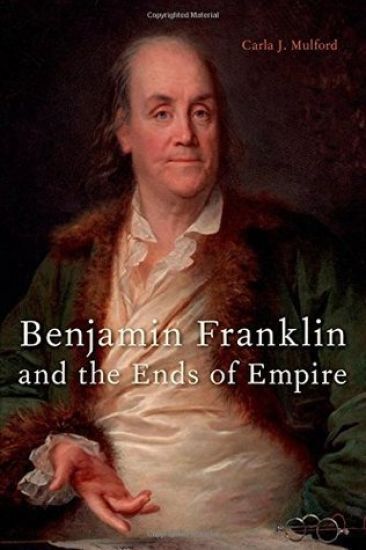
Benjamin Franklin and the Ends of Empire

Benjamin Franklin and the Ends of Empire

Carla J. Mulford

Oxford University Press Inc
2020
nidottu
Drawing from Benjamin Franklin's published and unpublished papers, including letters, notes, and marginalia, Benjamin Franklin and the Ends of Empire examines how the early modern liberalism of Franklin's youthful intellectual life helped foster his vision of independence from Britain that became his hallmark achievement. In the early chapters, Carla Mulford explores the impact of Franklin's family history--especially their difficult times during the English Civil War--on Franklin's intellectual life and his personal and political goals. The book's middle chapters show how Franklin's fascination with British imperial strategy grew from his own analyses of the financial, environmental, and commercial potential of North America. Franklin's involvement in Pennsylvania's politics led him to devise strategies for monetary stability, intercolonial trade, Indian affairs, and imperial defense that would have assisted the British Empire in its effort to take over the world. When Franklin realized that the goals of British ministers were to subordinate colonists in a system that assisted the lives of Britons in England but undermined the wellbeing of North Americans, he began to criticize the goals of British imperialism. Mulford argues that Franklin's turn away from the British Empire began in the 1750s--not the 1770s, as most historians have suggested--and occurred as a result of Franklin's perceptive analyses of what the British Empire was doing not just in the American colonies but in Ireland and India. In the last chapters, Mulford reveals how Franklin ultimately grew restive, formed alliances with French intellectuals and the court of France, and condemned the actions of the British Empire and imperial politicians. As a whole, Mulford's book provides a fresh reading of a much-admired founding father, suggesting how Franklin's conception of the freedoms espoused in England's ages old Magna Carta could be realized in the political life of the new American nation.
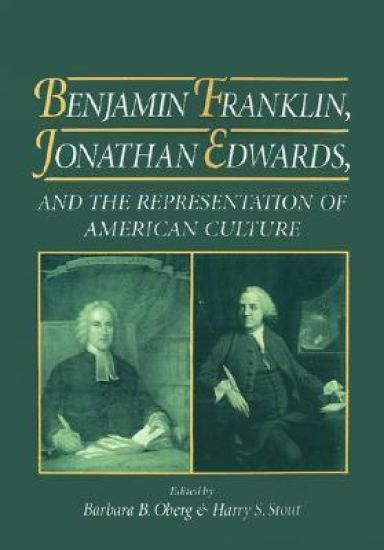
Benjamin Franklin, Jonathan Edwards, and the Representation of American Culture
This is an interdisciplinary collection of comparative essays which look at aspects of the thought of Jonathan Edwards and Benjamin Franklin and consider the place of these two men in American culture. The essays have their origin in a conference held at Yale University, the home of the modern editions of the papers of both these 18th century American thinkers. Franklin and Edwards are probably the two most studied colonial figures and have often been the subject of comparative exercises. In such studies, they have often been treated as having the characteristics of mutually exclusive ideal types and set into categories as different and opposed as `traditional' and `modern.' In the present volume, however, polemical contrasts disappear and Edwards and Franklin emerge as contrapuntal themes in a larger unity.
Benjamin Franklin

Benjamin Franklin

Edwin S. Gaustad

Oxford University Press Inc
2006
sidottu
The tenth and youngest son of a poor Boston soapmaker, Benjamin Franklin would rise to become, in Thomas Jefferson's words, "the greatest man and ornament of his age." In this short, engaging biography, historian Edwin S. Gaustad offers a marvelous portrait of this towering colonial figure, illuminating Franklin's character and personality. Here is truly one of the most extraordinary lives imaginable, a man who, with only two years of formal education, became a printer, publisher, postmaster, philosopher, world-class scientist and inventor, statesman, musician, and abolitionist. Gaustad presents a chronological account of all these accomplishments, delightfully spiced with quotations from Franklin's own extensive writings. The book describes how the hardworking Franklin became at age 24 the most successful printer in Pennsylvania and how by 42, with the help of Poor Richard's Almanack, he had amassed enough wealth to retire from business. We then follow Franklin's next brilliant career, as an inventor and scientist, examining his pioneering work on electricity and his inventions of the Franklin Stove, the lightning rod, and bifocals, as well as his mapping of the Gulf Stream, a major contribution to navigation. Lastly, the book covers Franklin's role as America's leading statesman, ranging from his years in England before the Revolutionary War to his time in France thereafter, highlighting his many contributions to the cause of liberty. Along the way, Gaustad sheds light on Franklin's personal life, including his troubled relationship with his illegitimate son William, who remained a Loyalist during the Revolution, and Franklin's thoughts on such topics as religion and morality. Written by a leading authority on colonial America, this compact biography captures in a remarkably small space one of the most protean lives in our nation's history.
Benjamin Franklin

Benjamin Franklin

Edwin S. Gaustad

Oxford University Press Inc
2008
nidottu
The tenth and youngest son of a poor Boston soapmaker, Benjamin Franklin would rise to become, in Thomas Jefferson's words, "the greatest man and ornament of his age." In this short, engaging biography, historian Edwin S. Gaustad offers a marvelous portrait of this towering colonial figure, illuminating Franklin's character and personality. Here is truly one of the most extraordinary lives imaginable, a man who, with only two years of formal education, became a printer, publisher, postmaster, philosopher, world-class scientist and inventor, statesman, musician, and abolitionist. Gaustad presents a chronological account of all these accomplishments, delightfully spiced with quotations from Franklin's own extensive writings. The book describes how the hardworking Franklin became at age 24 the most successful printer in Pennsylvania and how by 42, with the help of Poor Richard's Almanack, he had amassed enough wealth to retire from business. We then follow Franklin's next brilliant career, as an inventor and scientist, examining his pioneering work on electricity and his inventions of the Franklin Stove, the lightning rod, and bifocals, as well as his mapping of the Gulf Stream, a major contribution to navigation. Lastly, the book covers Franklin's role as America's leading statesman, ranging from his years in England before the Revolutionary War to his time in France thereafter, highlighting his many contributions to the cause of liberty. Along the way, Gaustad sheds light on Franklin's personal life, including his troubled relationship with his illegitimate son William, who remained a Loyalist during the Revolution, and Franklin's thoughts on such topics as religion and morality. Written by a leading authority on colonial America, this compact biography captures in a remarkably small space one of the most protean lives in American history. "Gaustad's admirable brief life of Benjamin Franklin is written with grace and informed by a lifetime of close and thoughtful study of the American past." --R. B. Bernstein, author of Thomas Jefferson
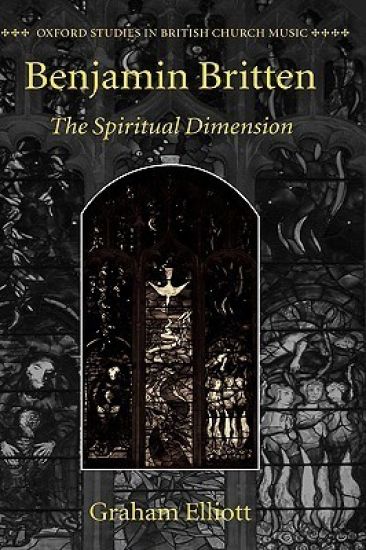
Benjamin Britten

Benjamin Britten

Elliott Graham

Oxford University Press
2005
sidottu
Since Britten's death in 1976, numerous articles and books have been written about his life and work. Much has been made of the strong influences of his pacifism and his homosexuality. It is often suggested that Britten felt himself to be an outsider from 'normal' society, and that this accounts for the his concern to portray the 'outsider' in his operas. There is no doubt that this is an important aspect of Britten's art, but the present work attempts to show that his music embraces much wider and more universal concerns, and in addressing those concerns there is a clearly defined pattern of spiritual influence. Part One of the book examines Britten's early life, and the strong presence which the Church had in his childhood and adolescence. It explores the way in which certain spiritual influences were first manifested, and how, like the more specifically musical 'themes' which Donald Mitchell has noted, they can be traced throughout Britten's life and work. The author was privileged to have conversations with two clergymen who were influential in Britten's life, as well as gathering valuable insights through a long series of conversations with Sir Peter Pears. Part Two examines a wide range of the composer's music in which a spiritual dimension can be traced. The specifically liturgical music has received rather less critical notice than Britten's larger works. The music is discussed here, and shown to possess musical characteristics in common with the larger works. Britten could not be described as a conventional Christian; still less is it true to describe him, as Eric Walter White has done, as 'keen, wherever possible, to work within the framework of the Church of England'. Nevertheless, his spirituality was rooted in the religious experience of his childhood. This book seeks to demonstrate that Britten retained a sense of the Christian values absorbed in childhood and adolescence, and that these - along with the specifically Christian heritage of plainsong - were strongly influential in his choice and treatment of themes.
Benjamin Collins and the Provincial Newspaper Trade in the Eighteenth Century
This is a pioneering study of the English provincial newspaper and book trades in the eighteenth century. Christine Ferdinand uses the first thoroughgoing study of the Salisbury Journal and its competitors to reveal how country newspapers worked within and influenced the developing information systems of a region. The detailed revelations of a community's social, economic, literary and cultural interests extend well beyond Salisbury to the surrounding counties and to London. A hitherto hidden commercial infrastructure shows the interdependent relationship between the writers and makers of newspapers, the principal members of the London book trade, and the new market for the printed word. Behind these news networks was the entrepreneurial spirit of Benjamin Collins, a figure of national importance, who set up Salisbury's first bank, established newspapers in London and the provinces, wrote children's books with John Newbery, and whose publishing interests brought him into contact with the literary and commercial life of London. This fascinating study of the information networks of eighteenth-century provincial life will be of interest to literary students and biographers as well as historians.
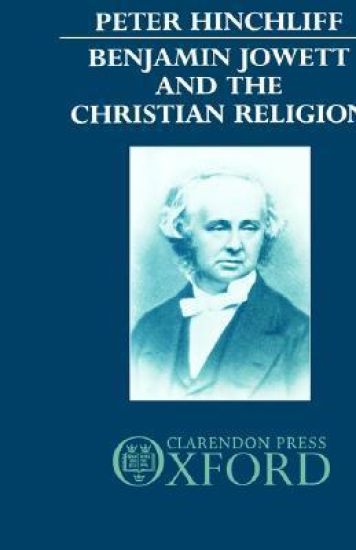
Benjamin Jowett and the Christian Religion

Benjamin Jowett and the Christian Religion

Peter Hinchliff

Clarendon Press
1987
sidottu
The conventional picture of Benjamin Jowett (1817-93) is of the outstanding educator, the famous master of Balliol College, Oxford, whose pupils were extremely influential in the public life of Britain in the second half of the nineteenth century. However, he is also recognized as a theologian since he contributed an essay 'On the Interpretation of Scripture' to Essays and Reviews, a collection published in 1860; the book's liberalism aroused great controversy, and it was eventually synodically condemned in 1864. It has been thought that having got into trouble over his essay, Jowett abandoned theology and became a purely secular figure. This book attempts to identify the ideas which caused Jowett to develop his theology, the thinkers who influenced him and how his own religious ideas evolved. It argues that, after the Essays and Reviews controversy, he deliberately chose to disseminate those ideas through the college of which he became master. It also shows how he influenced other religious thinkers and theologians of the late nineteenth and early twentieth centuries, arguing that he was more important in the history of English theology than is usually recognized.
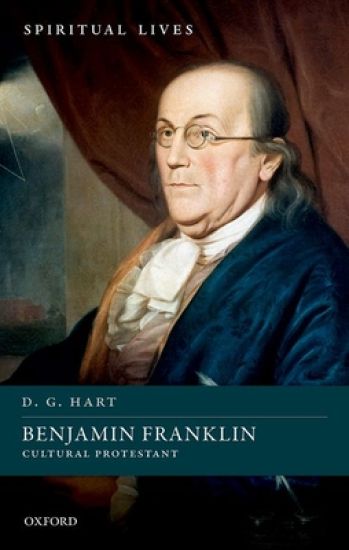
Benjamin Franklin

Benjamin Franklin

D. G. Hart

Oxford University Press
2021
sidottu
Benjamin Franklin grew up in a devout Protestant family with limited prospects for wealth and fame. By hard work, limitless curiosity, native intelligence, and luck (what he called "providence"), Franklin became one of Philadelphia's most prominent leaders, a world recognized scientist, and the United States' leading diplomat during the War for Independence. Along the way, Franklin embodied the Protestant ethics and cultural habits he learned and observed as a youth in Puritan Boston. Benjamin Franklin: Cultural Protestant follows Franklin's remarkable career through the lens of the trends and innovations that the Protestant Reformation started (both directly and indirectly) almost two centuries earlier. His work as a printer, civic reformer, institution builder, scientist, inventer, writer, self-help dispenser, politician, and statesmen was deeply rooted in the culture and outlook that Protestantism nurtured. Through its alternatives to medieval church and society, Protestants built societies and instilled habits of character and mind that allowed figures such as Franklin to build the life that he did. Through it all, Franklin could not assent to all of Protestantism's doctrines or observe its worship, but for most of his life he acknowledged his debt to his creator, revelled in the natural world guided by providence, and conducted himself in a way (imperfectly) to merit divine approval. In this biography, D. G. Hart recognizes Franklin as a cultural or non-observant Protestant, someone who thought of himself as a Presbyterian, ordered his life as other Protestants did, sometimes went to worship services, read his Bible, and prayed, but could not go all the way and join a church.
Benjamin Franklin and the Ends of Empire

Benjamin Franklin and the Ends of Empire

Carla J. Mulford

Oxford University Press Inc
2015
sidottu
Benjamin Franklin and the Ends of Empire provides a painstaking study of the Founding Father's stances on government, imperialism, and fiscal policy, ultimately emphasizing how his opinions on these matters evolved over the course of his lifetime. Carla Mulford uses Franklin's prodigious literary output-which includes letters, pamphlets, newspaper articles, journal entries, and drafted speeches-to demonstrate how his views shifted, with special attention to the role played by Great Britain in his decision-making process before, during, and after the Revolution. The book begins with Franklin's progressive early writings on mercantilism, freedom of conscience, and freedom of the press, considering how they were shaped by his English-born parents and their decision to leave their tumultuous homeland in the seventeenth century. Franklin's young adult and middle years, when he became heavily involved with Pennsylvania politics, see a sharply conservative shift in his attitudes toward empire and monetary policy. Mulford draws on letters and issues of Poor Richard's Almanack from these years to reveal the beginnings of a conservative turn in his thought, highlighting his surprising support for the politics of imperialism. Franklin's mature years as the colonies' chief representative and cultural ambassador in Britain and Europe form the content of the next two chapters, which elucidate Franklin's disenchantment with the British colonial administrations overseeing the Thirteen Colonies. Mining Franklin's autobiography, the book's last chapters cover Franklin's ultimate rejection of Great Britain and his condemnation of imperialism, especially with regard to Ireland and India. Overall, Mulford's monograph offers fresh, nuanced interpretations of the central issues that preoccupied Franklin throughout his life.
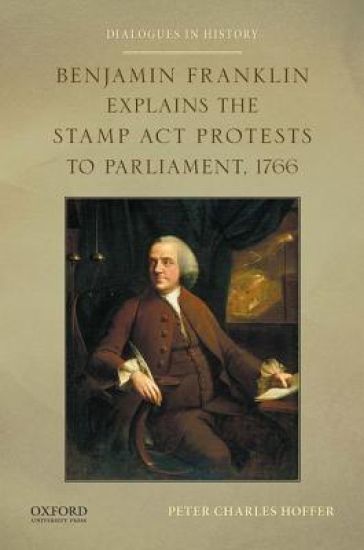
Benjamin Franklin Explains the Stamp ACT Protests to Parliament, 1766
Benjamin Franklin Explains the Stamp Act Protests to Parliament, 1766 brings together a unique collection of primary source documents, organized and arranged as a dialogue, to examine the issues surrounding the Stamp Act. The selections--at the center of which is Benjamin Franklin's examination in Parliament on February 13, 1766--are meant to be read as a continuous dialogue among leading colonists in America and politicians in England. While the individual documents were separated in time and space, here they are reconstituted as part of a consistent whole--a trans-Atlantic conversation about the nature of the empire, the rights of the colonists, and the powers of Parliament at a critical moment in American and British history. Some liberty has been taken in their editing in order to emphasize this conversational quality. A chronology preceding the documents indicates the sequence of their production, and a bibliographical essay at the end of the documents directs students to useful secondary sources.
Benjamin's Branch

Benjamin's Branch

Lynn Docherty

Tellwell Talent
2023
pokkari
Benjamin's Branch follows a little boy named Benjamin, and takes us along on his adventurous narrative.Benjamin loves the outdoors and all things nature.Benjamin describes the sights and sounds he discovers, and shows us how easy it is to enjoy your surroundings by being calm and observant. Many lessons can be learned when you sit and absorb the little things in life. Benjamin has a way of feeling all the senses in the moment.Join Benjamin as he describes his day with curiosity, excitement, and imagination Look for more adventures with Benjamin in this series of three books Benjamin's BranchBenjamin's BedtimeBenjamin's Barnyard