Kirjojen hintavertailu. Mukana 11 342 296 kirjaa ja 12 kauppaa.

Kirjahaku

Etsi kirjoja tekijän nimen, kirjan nimen tai ISBN:n perusteella.

1000 tulosta hakusanalla Benjamin Walters

Walter Benjamin: Selected Writings

Walter Benjamin: Selected Writings

Walter Benjamin

The Belknap Press
2006
nidottu
Radical critic of a European civilization plunging into darkness, yet commemorator of the humane traditions of the old bourgeoisie--such was Walter Benjamin in the later 1930s. This volume, the third in a four-volume set, offers twenty-seven brilliant pieces, nineteen of which have never before been translated.The centerpiece, A Berlin Childhood around 1900, marks the first appearance in English of one of the greatest German works of the twentieth century: a profound and beautiful account of the vanished world of Benjamin's privileged boyhood, recollected in exile. No less remarkable are the previously untranslated second version of Benjamin's most famous essay, "The Work of Art in the Age of Its Technological Reproducibility," with its striking insights into the relations between technology and aesthetics, and German Men and Women, a book in which Benjamin collects twenty-six letters by distinguished Germans from 1783 to 1883 in an effort to preserve what he called the true humanity of German tradition from the debasement of fascism.Volume 3 also offers extensively annotated translations of essays that are key to Benjamin's rewriting of the story of modernism and modernity--such as "The Storyteller" and "Paris, the Capital of the Nineteenth Century"--as well as a fascinating diary from 1938 and penetrating studies of Bertolt Brecht, Franz Kafka, and Eduard Fuchs. A narrative chronology details Benjamin's life during these four harrowing years of his exile in France and Denmark. This is an essential collection for anyone interested in his work.
Walter Benjamin: Selected Writings

Walter Benjamin: Selected Writings

Walter Benjamin

The Belknap Press
2006
nidottu
"Every line we succeed in publishing today...is a victory wrested from the powers of darkness." So wrote Walter Benjamin in January 1940. Not long afterward, he himself would fall prey to those powers, a victim of suicide following a failed attempt to flee the Nazis. However insistently the idea of catastrophe hangs over Benjamin's writings in the final years of his life, the "victories wrested" in this period nonetheless constitute some of the most remarkable twentieth-century analyses of the emergence of modern society. The essays on Charles Baudelaire are the distillation of a lifetime of thinking about the nature of modernity. They record the crisis of meaning experienced by a civilization sliding into the abyss, even as they testify to Benjamin's own faith in the written word.This volume ranges from studies of Baudelaire, Brecht, and the historian Carl Jochmann to appraisals of photography, film, and poetry. At their core is the question of how art can survive and thrive in a tumultuous time. Here we see Benjamin laying out an ethic for the critic and artist--a subdued but resilient heroism. At the same time, he was setting forth a sociohistorical account of how art adapts in an age of violence and repression. Working at the height of his powers to the very end, Benjamin refined his theory of the mass media that culminated in the final version of his essay "The Work of Art in the Age of Its Technological Reproducibility." Also included in this volume is his influential piece "On the Concept of History," completed just before his death. The book is remarkable for its inquiry into the nature of "the modern" (especially as revealed in Baudelaire), for its ideas about the transmogrification of art and the radical discontinuities of history, and for its examples of humane life and thought in the midst of barbarism. The entire collection is eloquent testimony to the indomitable spirit of humanity under siege.
Walter Benjamin

Walter Benjamin

Eli Friedlander

Harvard University Press
2012
sidottu
Walter Benjamin is often viewed as a cultural critic who produced a vast array of brilliant and idiosyncratic pieces of writing with little more to unify them than the feeling that they all bear the stamp of his "unclassifiable" genius. Eli Friedlander argues that Walter Benjamin's corpus of writings must be recognized as a unique configuration of philosophy with an overarching coherence and a deep-seated commitment to engage the philosophical tradition.Friedlander finds in Benjamin's early works initial formulations of the different dimensions of his philosophical thinking. He leads through them to Benjamin's views on the dialectical image, the nature of language, the relation of beauty and truth, embodiment, dream and historical awakening, myth and history, as well as the afterlife and realization of meaning. Those notions are articulated both in themselves and in relation to central figures of the philosophical tradition. They are further viewed as leading to and coming together in The Arcades Project. Friedlander takes that incomplete work to be the central theater where these earlier philosophical preoccupations were to be played out. Benjamin envisaged in it the possibility of the highest order of thought taking the form of writing whose contents are the concrete time-bound particularities of human experience. Addressing the question of the possibility of such a presentation of philosophical truth provides the guiding thread for constellating the disparate moments of Benjamin's writings.
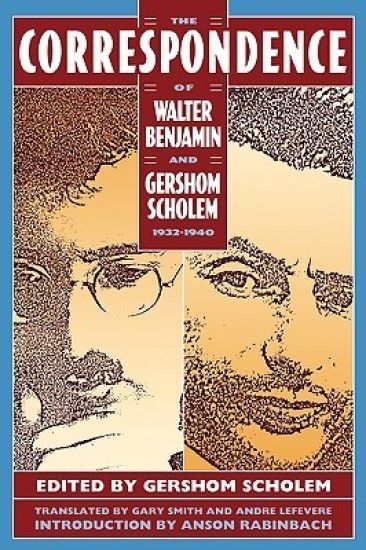
The Correspondence of Walter Benjamin and Gershom Scholem 1932-1940

The Correspondence of Walter Benjamin and Gershom Scholem 1932-1940

Walter Benjamin; Gershom Scholem; Gary (TRN) Smith

Harvard University Press
1992
pokkari
The legendary correspondence between the critic Walter Benjamin and the historian Gershom Scholem bears witness to the inner lives of two remarkable and enigmatic personalities. Benjamin, acknowledged as one of the leading literary and social critics of his day, was known during his lifetime by only a small circle of friends and intellectual confreres. Scholem recognized the genius of his friend and mentor during their student days in Berlin, and the two began to correspond after Scholem's emigration to Palestine. Their impassioned exchange draws the reader into the very heart of their complex relationship during the anguished years from 1932 until Benjamin's death in 1940.
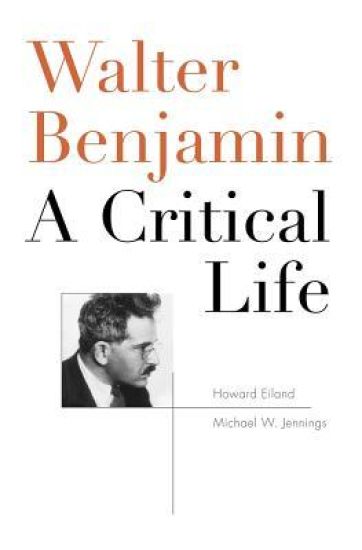
Walter Benjamin

Walter Benjamin

Howard Eiland; Michael W. Jennings

The Belknap Press
2016
nidottu
Walter Benjamin is one of the twentieth century's most important intellectuals, and also one of its most elusive. His writings—mosaics incorporating philosophy, literary criticism, Marxist analysis, and a syncretistic theology—defy simple categorization. And his mobile, often improvised existence has proven irresistible to mythologizers. His writing career moved from the brilliant esotericism of his early writings through his emergence as a central voice in Weimar culture and on to the exile years, with its pioneering studies of modern media and the rise of urban commodity capitalism in Paris. That career was played out amid some of the most catastrophic decades of modern European history: the horror of the First World War, the turbulence of the Weimar Republic, and the lengthening shadow of fascism. Now, a major new biography from two of the world's foremost Benjamin scholars reaches beyond the mosaic and the mythical to present this intriguing figure in full.Howard Eiland and Michael Jennings make available for the first time a rich store of information which augments and corrects the record of an extraordinary life. They offer a comprehensive portrait of Benjamin and his times as well as extensive commentaries on his major works, including "The Work of Art in the Age of Its Technological Reproducibility," the essays on Baudelaire, and the great study of the German Trauerspiel. Sure to become the standard reference biography of this seminal thinker, Walter Benjamin: A Critical Life will prove a source of inexhaustible interest for Benjamin scholars and novices alike.
Walter Benjamin at the Dairy Queen

Walter Benjamin at the Dairy Queen

Larry McMurtry

Simon Schuster
2001
pokkari
In a lucid, brilliant work of nonfiction -- as close to an autobiography as his readers are likely to get -- Larry McMurtry has written a family portrait that also serves as a larger portrait of Texas itself, as it was and as it has become. Using as a springboard an essay by the German literary critic Walter Benjamin that he first read in Archer City's Dairy Queen, McMurtry examines the small-town way of life that big oil and big ranching have nearly destroyed. He praises the virtues of everything from a lime Dr. Pepper to the lost art of oral storytelling, and describes the brutal effect of the sheer vastness and emptiness of the Texas landscape on Texans, the decline of the cowboy, and the reality and the myth of the frontier. McMurtry writes frankly and with deep feeling about his own experiences as a writer, a parent, and a heart patient, and he deftly lays bare the raw material that helped shape his life's work: the creation of a vast, ambitious, fictional panorama of Texas in the past and the present. Throughout, McMurtry leaves his readers with constant reminders of his all-encompassing, boundless love of literature and books.
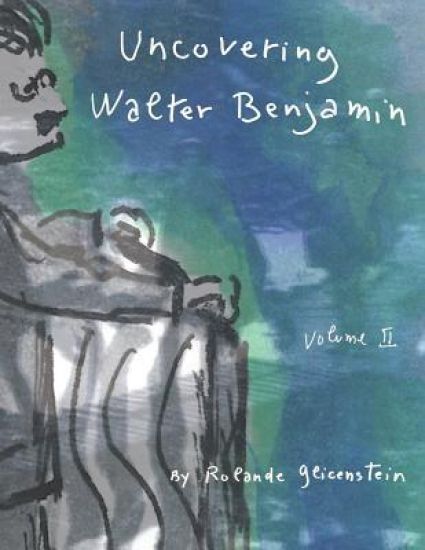
Uncovering Walter Benjamin: Volume 2

Uncovering Walter Benjamin: Volume 2

Rolande Glicenstein

Passe-Partout Books
2018
nidottu
Characters of days. In slow time the unspoken passions of the two young men transform into signals of their purity for each other, even as they disappoint. Millions of men their age from all walks of Europe and the Middle East are casually wiped out in days. Characters of days. Big stick figures make pronouncements and plans. Big weapons turn their aim as liberally as the sun. No one seems to believe they are not alone until they can pour their heart into a written letter.
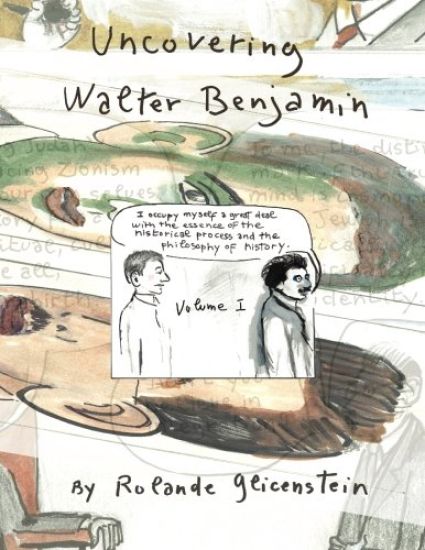
Uncovering Walter Benjamin: Volume 1

Uncovering Walter Benjamin: Volume 1

Rolande Glicenstein

Passe-Partout Books
2018
nidottu
A graphic biography, first installment. It opens in Berlin at the start of World War I. 23-year-old Walter Benjamin meets Gerhard Scholem, 17. They become fast friends. Benjamin is already a strikingly original thinker with a voracious curiosity. Scholem is forming the commitments that sent him to Palestine in 1923 and led him eventually to write the definitive book on Jewish mysticism. This is the story of a friendship between two extraordinary young men in a world that is falling apart. Author/illustrator Rolande Glicenstein is fascinated by the two men's preoccupations: war, Zionism, language, philosophy. She is charmed by their brilliance, their attachment to each other, their competitiveness. The comic form enables her to touch many notes without pounding any. She is not a cartoonist; every page is original. Volume I introduces a noisy, colorful crowd of German intellectuals in a time when socialist politics, mysticism, gender relations and the idea of a Jewish state were red-hot topics. Glicenstein attends closely to the heedless slaughter of World War I, to the blossoming and abrupt suppression of Socialism in Germany during and after World War I, and to the varieties of Zionism that were in the air, notably Martin Buber's utopian version.
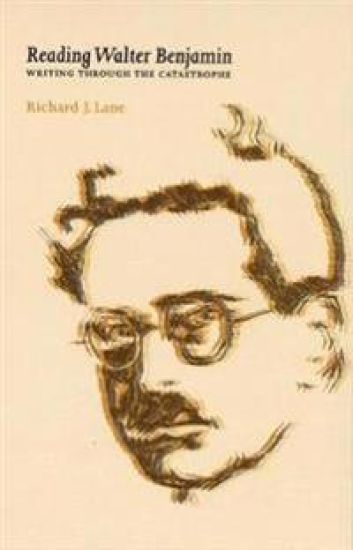
Reading Walter Benjamin

Reading Walter Benjamin

Richard Lane

Manchester University Press
2005
nidottu
'Reading Walter Benjamin' explores the persistence of absolute in Benjamin's work by sketching-out the relationship between philosphy and theology apparent in his diverse writings, from the early youth-movement essays to the later books, essays and fragments.The book examines Benjamin from two main perspectives: a history-of-ideas approach situating Benjamin in relation to the new German-Jewish thinking at the turn of the twentieth-century, as well as the German youth movements, Surrealism and the 'Georgekreis'; and a conceptual approach examining more critical issues in relation to Benjamin and Kant, modern aesthetics and narrative order.Chapters cover: 'Kulturpessimismus' and the new thinking; metaphysics of youth: Wyneken and 'Rausch'; history: surreal Messianism; Goethe and the 'Georgekreis'; Kant's experience; casting the work of art; disrupting textual order; and exile and the time of crisis. The book uses new translations of Benjamin's essays, fragments and his 'Arcades Project', and makes substantial reference to previously untranslated material.Lane’s text allows the non-specialist entry into complex areas of critical theory, simultaneously offering original readings of Benjamin and twentieth-century arts and literature.
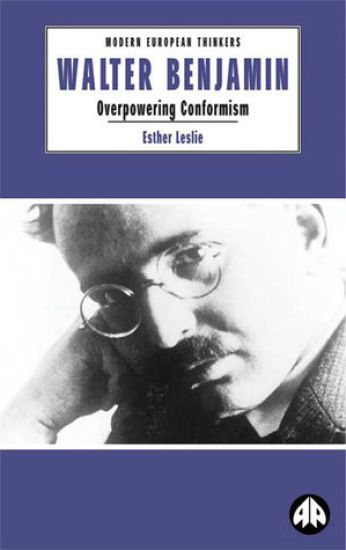
Walter Benjamin

Walter Benjamin

Esther Leslie

Pluto Press
2000
pokkari
Esther Leslie's path-breaking study of Walter Benjamin is unlike any other book presently available in English on Benjamin, in seeking to make a case for a more politicised reading of Benjamin's oeuvre. In looking at the entirety of Benjamin's work - rather than the four or five essays available in English which tend to form the Benjamin 'canon' - Leslie offers powerful new insights into a key twentieth-century political thinker, correcting the post-structuralist bias that has characterised so much Benjamin scholarship, and repositioning Benjamin's work in its historical and political context. In her examination of Benjamin's commentary on the politics and aesthetics of technology - from Benjamin's work on nineteenth-century industrial culture to his analyses of the Nazi deployment of the bomber - Esther Leslie re-contextualises Benjamin's writings in a lucid and cogently argued new study.
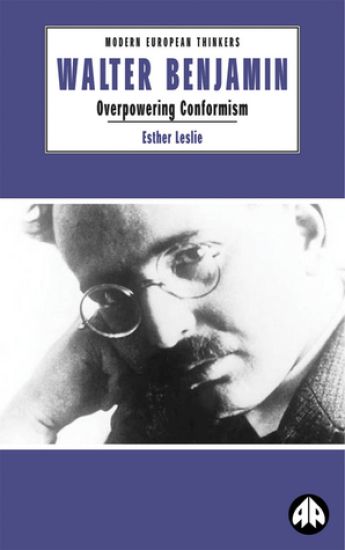
Walter Benjamin: Overpowering Conformism

Walter Benjamin: Overpowering Conformism

Esther Leslie

Pluto Press (UK)
2000
sidottu
Esther Leslie's path-breaking study of Walter Benjamin is unlike any other book presently available in English on Benjamin, in seeking to make a case for a more politicised reading of Benjamin's oeuvre. In looking at the entirety of Benjamin's work - rather than the four or five essays available in English which tend to form the Benjamin 'canon' - Leslie offers powerful new insights into a key twentieth-century political thinker, correcting the post-structuralist bias that has characterised so much Benjamin scholarship, and repositioning Benjamin's work in its historical and political context. In her examination of Benjamin's commentary on the politics and aesthetics of technology - from Benjamin's work on nineteenth-century industrial culture to his analyses of the Nazi deployment of the bomber - Esther Leslie recontextualises Benjamin's writings in a lucid and cogently argued new study.
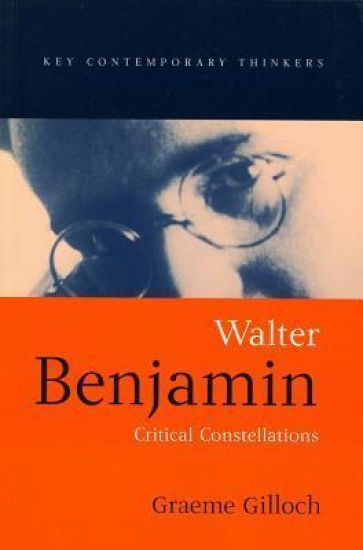
Walter Benjamin

Walter Benjamin

Graeme Gilloch

Polity Press
2001
sidottu
The works of Walter Benjamin (1892-1940) are widely acclaimed as being among the most original and provocative writings of twentieth-century critical thought, and have become required reading for scholars and students in a range of academic disciplines. This book provides a lucid introduction to Benjamin's oeuvre through a close and sensitive reading not only of his major studies, but also of some of his less familiar essays and fragments. Gilloch offers an original interpretation of, and fresh insights into, the continuities between Benjamin's always demanding and seemingly disparate texts. Gilloch's book will be of particular interest to students and scholars in social theory, literary theory, cultural and media studies and urban studies who are seeking a sophisticated yet readable overview of Benjamin's work. It will also prove rewarding reading for those already well-versed in Benjaminian thought.
Walter Benjamin

Walter Benjamin

Graeme Gilloch

JOHN WILEY AND SONS LTD
2001
nidottu
The works of Walter Benjamin (1892-1940) are widely acclaimed as being among the most original and provocative writings of twentieth-century critical thought, and have become required reading for scholars and students in a range of academic disciplines. This book provides a lucid introduction to Benjamin's oeuvre through a close and sensitive reading not only of his major studies, but also of some of his less familiar essays and fragments. Gilloch offers an original interpretation of, and fresh insights into, the continuities between Benjamin's always demanding and seemingly disparate texts. Gilloch's book will be of particular interest to students and scholars in social theory, literary theory, cultural and media studies and urban studies who are seeking a sophisticated yet readable overview of Benjamin's work. It will also prove rewarding reading for those already well-versed in Benjaminian thought.
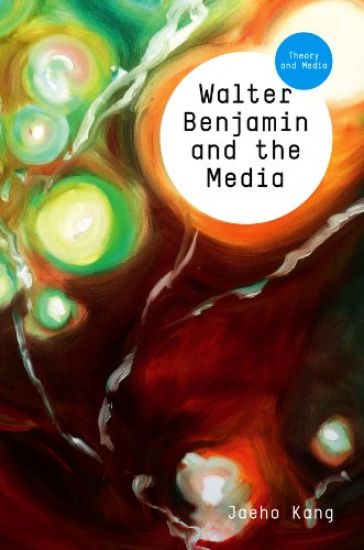
Walter Benjamin and the Media

Walter Benjamin and the Media

Jaeho Kang

Polity Press
2014
sidottu
Walter Benjamin (1892-1940), one of the most original and perceptive thinkers of the twentieth century, offered a unique insight into the profound impact of the media on modern society. Jaeho Kang’s book offers a lucid introduction to Benjamin’s theory of the media and its continuing relevance today. The book provides a systematic and close reading of Benjamin’s critical and provocative writings on the intersection between media - from print to electronic - and modern experience, with reference to the information industry, the urban spectacle, and the aesthetic politics. Bringing Benjamin’s thought into a critical constellation with contemporary media theorists such as Marshall McLuhan and Jean Baudrillard, the book helps students understand the implications of Benjamin’s work for media studies today and how they can apply his distinctive ideas to contemporary media culture. Kang’s book leads to a fresh appreciation of Benjamin’s work and new insight into critical theoretical approaches to media. The book will be of particular interest to students and researchers not only in media and communication studies but also in cultural studies, film studies and social theory, who are seeking a readable overview of Benjamin’s rich yet complex writings.
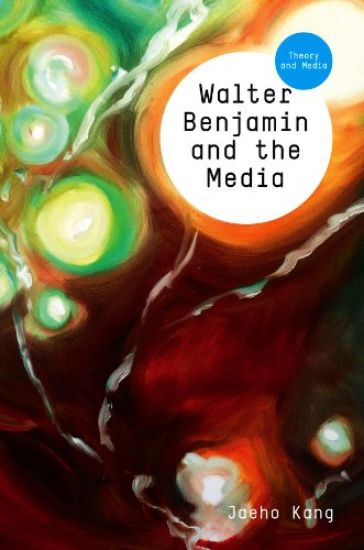
Walter Benjamin and the Media

Walter Benjamin and the Media

Jaeho Kang

Polity Press
2014
nidottu
Walter Benjamin (1892-1940), one of the most original and perceptive thinkers of the twentieth century, offered a unique insight into the profound impact of the media on modern society. Jaeho Kang’s book offers a lucid introduction to Benjamin’s theory of the media and its continuing relevance today. The book provides a systematic and close reading of Benjamin’s critical and provocative writings on the intersection between media - from print to electronic - and modern experience, with reference to the information industry, the urban spectacle, and the aesthetic politics. Bringing Benjamin’s thought into a critical constellation with contemporary media theorists such as Marshall McLuhan and Jean Baudrillard, the book helps students understand the implications of Benjamin’s work for media studies today and how they can apply his distinctive ideas to contemporary media culture. Kang’s book leads to a fresh appreciation of Benjamin’s work and new insight into critical theoretical approaches to media. The book will be of particular interest to students and researchers not only in media and communication studies but also in cultural studies, film studies and social theory, who are seeking a readable overview of Benjamin’s rich yet complex writings.
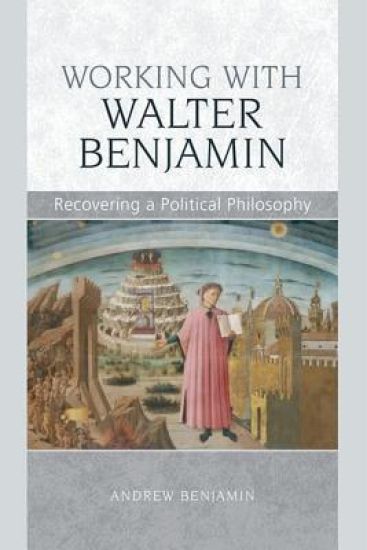
Working with Walter Benjamin

Working with Walter Benjamin

Andrew Benjamin

Edinburgh University Press
2013
sidottu
This book provides a highly original approach to the writings of the twentieth-century German philosopher Walter Benjamin by one of his most distinguished readers. It develops the idea of 'working with' Benjamin, seeking both to read his corpus and to put it to work - to show how a reading of Benjamin can open up issues that may not themselves be immediately at stake in his texts. The defining elements in Benjamin's writings that Andrew Benjamin isolates - history, experience, translation, technical reproducibility and politics - are put to work; that is, their utility is established in engaging the works of others. The question is how utility is understood. As Andrew Benjamin argues, utility involves demonstrating the different ways in which Benjamin is a central thinker within the project of understanding the nature of modernity. This is best achieved by noting connections and points of differentiation between his work and the writings of Adorno and Heidegger. However, the more demanding project is that 'working with' Benjamin necessitates deploying the implicit assumptions within his writings as well as demanding of his formulations more than is provided by their initial presentation. What is at stake is not the application of Benjamin's thought. Rather what counts is its use. Working with Benjamin engages with the themes central to Benjamin's work with deftness, daring and critical insight while at the same time situating those themes within current academic and cultural debates.
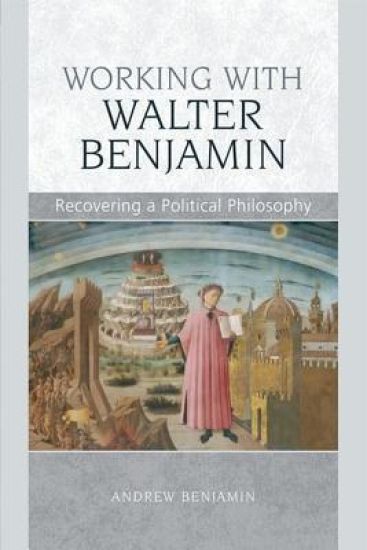
Working with Walter Benjamin

Working with Walter Benjamin

Andrew Benjamin

Edinburgh University Press
2013
nidottu
This book provides a highly original approach to the writings of the twentieth-century German philosopher Walter Benjamin by one of his most distinguished readers. It develops the idea of 'working with' Benjamin, seeking both to read his corpus and to put it to work - to show how a reading of Benjamin can open up issues that may not themselves be immediately at stake in his texts. The defining elements in Benjamin's writings that Andrew Benjamin isolates - history, experience, translation, technical reproducibility and politics - are put to work; that is, their utility is established in engaging the works of others. The question is how utility is understood. As Andrew Benjamin argues, utility involves demonstrating the different ways in which Benjamin is a central thinker within the project of understanding the nature of modernity. This is best achieved by noting connections and points of differentiation between his work and the writings of Adorno and Heidegger. However, the more demanding project is that 'working with' Benjamin necessitates deploying the implicit assumptions within his writings as well as demanding of his formulations more than is provided by their initial presentation. What is at stake is not the application of Benjamin's thought. Rather what counts is its use.Working with Benjamin engages with the themes central to Benjamin's work with deftness, daring and critical insight while at the same time situating those themes within current academic and cultural debates.
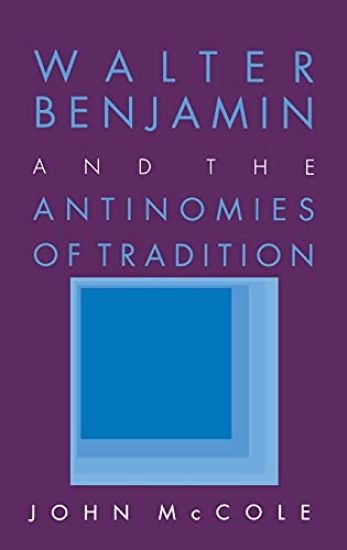
Walter Benjamin and the Antinomies of Tradition
Few modern thinkers have been as convinced of the necessity of recovering the past in order to redeem the present as Walter Benjamin (1892-1940). Benjamin at once mourned and celebrated what he took to be an inevitable liquidation of traditional culture, and his determination to think both of these attitudes through to their conclusions lends his work its peculiar honesty, along with its paradoxical, antinomial coherence. In a landmark interpretation of the whole of Benjamin's career, John McCole demonstrates a way of understanding Benjamin that both contextualizes and addresses the complexities and ambiguities of his texts.Working with Pierre Bourdieu's concept of the "intellectual field," McCole traces Benjamin's deep ambivalence about cultural tradition through the longterm project-an immanent critique of German idealist and romantic aesthetics-which unites his writings. McCole builds a sustained reading of Benjamin's intellectual development which sheds new light on the formative role of early influences—particularly his participation in the pre-World War I German youth movement and the orthodox discourse of German intellectual culture—and shows how Benjamin later extended the strategies he learned within these contexts during key encounters with Weimar modernism, surrealism, and the fiction of Proust.The fullest account of Benjamin available in English, this lucid and penetrating book will be welcomed by intellectual historians, literary theorists and critics, historians of German literature, and Continental philosophers.
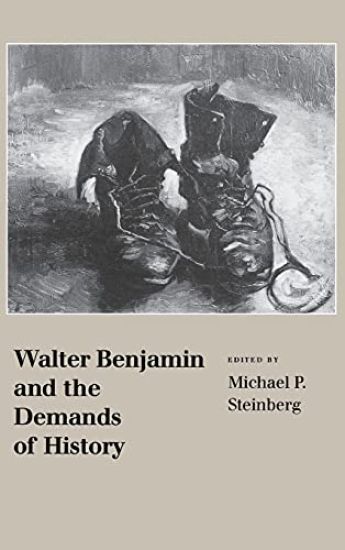
Walter Benjamin and the Demands of History
This book is the first to consider the presence of history and the question of historical practice in Walter Benjamin's work. Benjamin, the critic and philosopher of history, was also the practitioner, the authors contend, and it is in the practice of historical writing that the materialist aspect of his thought is most evident.Some of the essays analyze Benjamin's writings in cultural history and the philosophy of history. Others connect his historical and theoretical practices to issues in contemporary feminism and post-colonial studies, and to cultural contexts including the United States, Japan, and Hong Kong. In different ways, the authors all find in Benjamin's specific notion of historical materialism a dialectic between textual and cultural analysis which can reinvigorate the relation between literary and historical studies.
Walter Benjamin and the Demands of History
This book is the first to consider the presence of history and the question of historical practice in Walter Benjamin's work. Benjamin, the critic and philosopher of history, was also the practitioner, the authors contend, and it is in the practice of historical writing that the materialist aspect of his thought is most evident. Some of the essays analyze Benjamin's writings in cultural history and the philosophy of history. Others connect his historical and theoretical practices to issues in contemporary feminism and post-colonial studies, and to cultural contexts including the United States, Japan, and Hong Kong. In different ways, the authors all find in Benjamin's specific notion of historical materialism a dialectic between textual and cultural analysis which can reinvigorate the relation between literary and historical studies.