Kirjojen hintavertailu. Mukana 11 627 373 kirjaa ja 12 kauppaa.

Kirjahaku

Etsi kirjoja tekijän nimen, kirjan nimen tai ISBN:n perusteella.

1000 tulosta hakusanalla Bernard Duclos

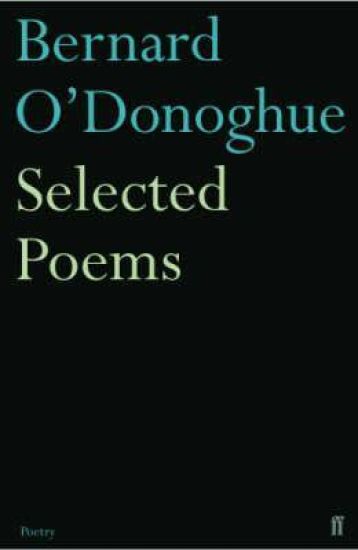
Selected Poems Bernard O'Donoghue

Selected Poems Bernard O'Donoghue

Bernard O'Donoghue

Faber Faber
2008
nidottu
Winner of the Whitbread Prize for Poetry, Bernard O'Donoghue's poems have long captivated readers with their lyricism, their grace and with what John Burnside has called their 'scrupulous honesty'. This judicious selection, made by the author himself, draws on twenty years of work and presents O'Donoghue at his most mesmeric: often recalling the rural Cork of his upbringing as seen against the exile of his adulthood, ever alive to the desire but impossibility of return.
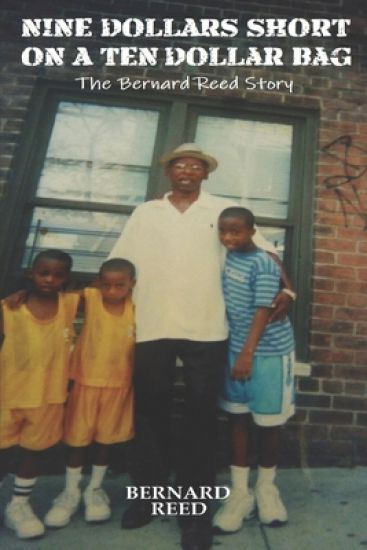
Nine Dollars Short On A Ten Dollar Bag: The Bernard Reed Story
In an era where heroin flooded the streets of New York and a fatherless young boy's role models were the epitome of a hustler's life... Growing up in the streets of Yonkers and being raised by the streets of Bronx New York makes you age before your time. Relive the life of a boy that was robbed at 7 years old, whose brother was a heroin addict by the age of 12 and how The United States Army saved him from his gang affiliation and the FBI. This inspiring story will take you on a rollercoaster of juvenile antics and a man's triumph journey over losing the first woman he loved, fighting his personal demons of drug addiction and a life of perjury, grand larceny and burglary.
Bernard Berenson

Bernard Berenson

Ernest Samuels

The Belknap Press
1979
nidottu
Critic, arbiter of taste, renowned authority on Renaissance painting, and oracle to millionaire art collectors, Bernard Berenson was the most formidable presence in the Anglo-American art world for more than thirty years. His Villa I Tatti near Florence was a magnet for European and American intellectuals; he was able to say, late in life, that most of the Italian paintings that had come to the United States had “my visa on their passport.” Twenty years after his death he remains a paradoxical figure—fit challenge for a Pulitzer Prize–winning biographer.The story of the making of the connoisseur spans four decades, from Berenson’s childhood in Lithuania and in an immigrant enclave in Boston to the triumphant tour of the United States that confirmed his international reputation. Ernest Samuels interweaves with great skill the many threads of the narrative. No less fascinating than Berenson’s own development, and the accidents that shaped his career, are his relations with an extraordinary cast of characters whose lives impinged on his—among them George Santayana, William James, Bertrand Russell, Logan Pearsall Smith, Norman and Hutchins Hapgood, Oscar Wilde, Vernon Lee, the Michael Fields, Gertrude Stein, Edith Wharton, Roger Fry, and, most notably, the fabled Mrs. Jack Gardner. His relationship with Mary Smith Costelloe, who left her husband and children for him and eventually became his wife, was so close that the book is almost as much her story as his.Drawing on the thousands of letters B.B. and Mary wrote and the diaries she kept, Samuels is able to convey Berenson’s thoughts and impressions as well as the outward events of these crucial years of his life. He blends sympathy and irony in his many-faceted portrayal of a complex man and a remarkable career. It is a compelling book.
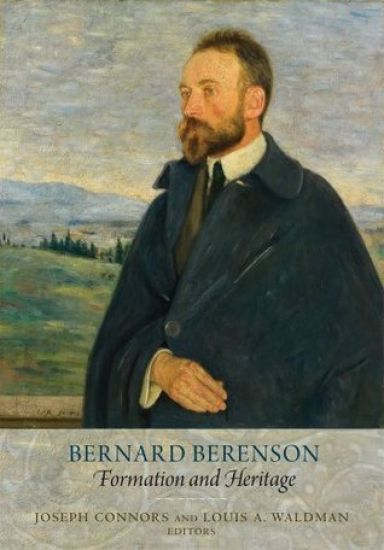
Bernard Berenson
Bernard Berenson (1865–1959) put the connoisseurship of Renaissance art on a firm footing in the late nineteenth and early twentieth centuries. His monument is the library and collection of Italian painting, Islamic miniatures, and Asian art at Villa I Tatti in Florence. The authors in this collection of essays explore the intellectual world in which Berenson was formed and to which he contributed. Some essays consider his friendship with William James and the background of perceptual psychology that underlay his concept of “tactile values.” Others examine Berenson’s relationships with a variety of cultural figures, ranging from the German-born connoisseur Jean Paul Richter, the German art historian Aby Warburg, the Boston collector Isabella Stewart Gardner, and the American medievalist Arthur Kingsley Porter to the African-American dance icon Katherine Dunham, as well as with Kenneth Clark, Otto Gutekunst, Archer Huntington, Paul Sachs, and Umberto Morra.Bernard Berenson: Formation and Heritage makes an important contribution to the rising interest in the historiography of the discipline of art history in the United States and Europe during its formative years.
Bernard Berenson

Bernard Berenson

Ernest Samuels

Harvard University Press
1987
sidottu
Controversy swirls around Bernard Berenson today as it did in his middle years, before and between two world wars. Who was this man, this supreme connoisseur of Italian Renaissance painting? How did he support his elegant estate near Florence, his Villa I Tatti? What exactly were his relations with the art dealer Joseph Duveen? What part did his wife, Mary, play in his scholarly work and professional career? The answers are to be found in the day-to-day record of his life as he lived it--as reported at first hand in his and Mary's letters and diaries and reflected in the countless personal and business letters they received. His is one of the most fully documented lives of this century. Ernest Samuels, having spent twenty years studying the thousands of letters and other manuscripts, presents his story in absorbing detail. Berenson helped Isabella Stewart Gardner build her great collection and performed similar though lesser services for other wealthy Americans. It was merely an avocation and a useful source of income; his vocation was scholarship. But after 1904, when the book opens, his expertise was in ever-greater demand: a purchaser's only assurance of the authorship of an Italian painting was the opinion of an expert, and in this field Berenson was pre-eminent. Increasingly he was drawn into the lucrative world of the art dealers; inevitably Joseph Duveen found it essential to enlist his services, at first ad hoc, then by contractual agreement. Samuels charts the course of Berenson's long association with Duveen Brothers, detailing the financial arrangements, the humdrum chores and major contested attributions, the periodic clashes between the stubborn scholar and the arrogant entrepreneur. The portrayal of Berenson's relationship with Mary is especially intriguing: a union of opposites in all but brains and wit, bonded--despite love affairs, jealousies, recriminations--no longer by passion but by shared concerns. Impinging on their lives are those of a huge circle of friends and acquaintances in America and the beau monde of Europe. Both as biography and as a chapter of social and cultural history, it is a compelling book.
Bernard Brodie and the Foundations of American Nuclear Strategy

Bernard Brodie and the Foundations of American Nuclear Strategy

Barry H. Steiner

University Press of Kansas
1991
sidottu
Despite recent improvements in East-West relations, security interests of states continue to be shaped by concepts and assumptions about nuclear strategy articulted in the writings of Bernard Brodie. The author provides on examination of Brodie's work, the intellectual climate in which it was expressed, its influence on other strategic thinkers, and its continuing relevance for our changing times. Bernard Brodie (1910-1978) is best known as the leading conceptulizer and proponent of using nuclear weapons to deter aggression, and as an articulate voice in the debate over the role of nuclear weapons. He was an incisive critic and a grand strategist, integrating military and political instruments and goals. He focused especially on the impact of nuclear weapons on Soviet-American relations and on preventing thermonuclear war. In this volume the author analyzes how and why Brodie's understanding of weapons of unparalleled explosive force led him to posit the need for revolutionary strategic thinking in broad-minded analytic method and in the focus upon cities as nuclear targets. He shows the effect Brodie's work had on the intellectual climate in which policy is determined, particulary in his frequent combatting of conventional wisdom. The author moves beyond Brodie's well-known interest in nuclear war prevention to highlight his focus upon coerciveness in war and his important but virtually unknown early work on target selection. He also documents how the revolution in strategic thought did not come full-blown: Brodie frequently shifted his views to take account of intervening changes in weaponry and means of delivery, his interpretation of Soviet motives, the war in Korea, and the Cuban missile crisis. Examining Brodie's writings in connection with opposing points of view, the author evaluates both the substance and the methodology of Brodie's thinking. He disaggregates arguments wherever possible, demonstrating how his method can contribute more widely to progress in national security studies. His evaluation of Brodie's strengths and weaknesses is a contribution to the current debate about the role of nuclear weapons in political and military affairs.
Bernard Lonergan's Insight

Bernard Lonergan's Insight

Terry J. Tekippe

University Press of America
2003
sidottu
Bernard Lonergan's Insight: A Study of Human Understanding is one of the most profound and challenging books of the 20th century. In it he tries to answer the philosophical questions raised by Kant, with the resources provided by Thomas Aquinas, updated with questions of the 20th century. This book is a comprehensive explanation, commentary and criticism of Lonergan's work, which no one, according to the author, has previously attempted. As such it would be of assistance to anyone trying to penetrate Lonergan's profound but difficult work.
Bernard Lonergan's Insight

Bernard Lonergan's Insight

Terry J. Tekippe

University Press of America
2003
nidottu
Bernard Lonergan's Insight: A Study of Human Understanding is one of the most profound and challenging books of the 20th century. In it he tries to answer the philosophical questions raised by Kant, with the resources provided by Thomas Aquinas, updated with questions of the 20th century. This book is a comprehensive explanation, commentary and criticism of Lonergan's work, which no one, according to the author, has previously attempted. As such it would be of assistance to anyone trying to penetrate Lonergan's profound but difficult work.
Bernard Lonergan’s Third Way of the Heart and Mind
Today the world is confronted with many religious wars and the migrations of millions of persons due to these conflicts. There is a need for informed dialog as to the roots of the conflicts and ways of addressing these in ways that speak to peoples’ minds and hearts. This is what this book attempts to do from the viewpoint of major religious and ethical thinkers. The book relies on Bernard Lonergan’s foundational method to address problems systematically with a view to achieve breakthroughs in our openness to one another. The book appeals to the teachings of the Buddha, Jesus, and Mohammad, relying on the mystical and insights of these religious founders as well as those of dozens of their followers so as to find commonalities that can build bridges of mercy. A global secularity ethics plays a leading role in this book’s bridging efforts.
Bernard Lonergan’s Third Way of the Heart and Mind
Today the world is confronted with many religious wars and the migrations of millions of persons due to these conflicts. There is a need for informed dialog as to the roots of the conflicts and ways of addressing these in ways that speak to peoples’ minds and hearts. This is what this book attempts to do from the viewpoint of major religious and ethical thinkers. The book relies on Bernard Lonergan’s foundational method to address problems systematically with a view to achieve breakthroughs in our openness to one another. The book appeals to the teachings of the Buddha, Jesus, and Mohammad, relying on the mystical and insights of these religious founders as well as those of dozens of their followers so as to find commonalities that can build bridges of mercy. A global secularity ethics plays a leading role in this book’s bridging efforts.
Bernard Maybeck: Visionary Architect

Bernard Maybeck: Visionary Architect

Woodbridge Sally Byrne

ABBEVILLE PRESS INC.,U.S.
2006
nidottu
Now available in paperback, this bestselling volume chronicles one of the most innovative, influential, and beloved architects of the early 20th century. Gracefully written and brilliantly illustrated, this handsome new volume captures the vision, the wit, and the down-to-earth inventiveness of one of the most influential and beloved architects of the early twentieth century. Raised in Greenwich Village and trained in Paris, Maybeck spent most of his long career in northern California. An irrepressible bohemian with no desire to run a large office, he spent much of his time designing houses for friends and family, as well as for other patrons so loyal that they often hired him to design more than one house. Maybeck also created two of the most beautiful buildings in all of California: the exhilarating Church of Christ, Scientist, in Berkeley, and the gloriously romantic Palace of Fine Arts, in San Francisco. This incisive overview--the first to feature color reproductions of Maybeck's exquisite interiors and exteriors--analyzes every aspect of his life and work. Not only his architecture but also his furniture, his lighting designs, and his innovations in fire-resistant construction are thoroughly discussed and illustrated. The book is also enlivened by documentary photographs, by clearly drawn plans, and by several of Maybeck's dazzling, previously unpublished visionary drawings. Bernard Maybeck is a major study of an internationally significant architect whose environmentally responsive work has much to offer today's designers and whose houses have given enormous pleasure to those fortunate enough to visit or dwell in them.
Bernard Lonergan's Philosophy of Religion

Bernard Lonergan's Philosophy of Religion

Jim Kanaris

State University of New York Press
2002
pokkari
Explicates the philosophy of religion emerging from the work of Bernard Lonergan, the esteemed theologian who reinvigorated Catholic thought in the twentieth century.Jim Kanaris provides a comprehensive understanding of esteemed theologian Bernard Lonergan's philosophy of religion and a crucial means of identifying precisely the points of contact between Lonergan's thoughts on God and religion and the issues presently discussed by philosophers of religion. Defining Lonergan's philosophy of religion presents a challenge because he does not use the term as it is generally understood. Rather, Lonergan addresses these issues under the guise of philosophy of God or natural theology, understands the role of religious experience idiosyncratically, and allows this concept to play various roles in his thought. The dynamics of these various components, their interrelationships, and their function from early to late development are fleshed out in this work.Kanaris finds Lonergan's philosophy of religion developing at that period when he attributes a new importance to the influence of religious experience. What this means for Lonergan's controversial proof of God's existence, the role of Lonergan's concept of consciousness, and the specifically religious dimension of the notion of experience are explored, along with the emergence of what is technically philosophy of religion.
Bernard Shaw on Literature

Bernard Shaw on Literature

George Bernard Shaw

Rosetta Books
2016
nidottu
A collection of literary criticism from the Nobel Prize-winning playwright behind such classics as Saint Joan and Pygmalion.The Critical Shaw: On Literature is a comprehensive selection of renowned Irish playwright and Nobel Laureate Bernard Shaw's ideas and opinions on a wide range of literary forms of expression, from Shakespearean drama to ghost stories, from naturalist novels to philosophical essays. Shaw meticulously applied his comprehensive knowledge of the intricacies of writing and publishing (composition, typesetting, style, themes, censorship) and in the process produced an extensive array of critical works spanning more than fifty years. Always with an axe to grind--whether aesthetic, ethical, or otherwise--Shaw tested the boundaries of satire in his critical essays, occasionally locking horns as a result with some of the most prominent authors of his lifetime. Displaying wit and wisdom in equal proportions, some of his reviews remain fresh even though the authors and books they appraised have long since fallen into oblivion. Shaw's views about literature challenged established conventions of the canon and helped to shape a renewed collective concept of literature.The Critical Shaw series brings together, in five volumes and from a wide range of sources, selections from Bernard Shaw's voluminous writings on topics that exercised him for the whole of his professional career: Literature, Music, Politics, Religion, and Theater. The volumes are edited by leading Shaw scholars, and all include an introduction, a chronology of Shaw's life and works, annotated texts, and a bibliography. The series editor is L.W. Conolly, literary adviser to the Shaw Estate and former president of the International Shaw Society.
Bernard Shaw on Music
A collection of critical writings on music from the Nobel Prize-winning playwright behind Saint Joan and Man and Superman.The Critical Shaw: On Music is a comprehensive selection of renowned Irish playwright and Nobel Laureate Bernard Shaw's extensive writings on a wide range of musical topics. Still recognized as one of Great Britain's most important music critics, Shaw enriched London's musical scene for some twenty years with his provocative, original, and penetrating reviews, before giving up music criticism to concentrate his talents on playwriting. His vast critical output encompassed opera, operetta, vocal and orchestral performance, musical theater, and oratorios, and took in major composers and performers as well as many long since forgotten names. Frequently embellished by his controversial political and social opinions, and delving as well into the nature of music criticism itself, Shaw's reviews continue to stimulate and surprise, their depth and range setting standards that are rarely, if ever, matched today. Included in this edition is a previously unpublished draft on voice training prepared by Shaw for Vandeleur Lee, his mother's singing teacher.The Critical Shaw series brings together, in five volumes and from a wide range of sources, selections from Bernard Shaw's voluminous writings on topics that exercised him for the whole of his professional career: Literature, Music, Politics, Religion, and Theater. The volumes are edited by leading Shaw scholars, and all include an introduction, a chronology of Shaw's life and works, annotated texts, and a bibliography. The series editor is L.W. Conolly, literary adviser to the Shaw Estate and former president of the International Shaw Society.
Bernard Shaw on Religion

Bernard Shaw on Religion

George Bernard Shaw

Rosetta Books
2016
nidottu
From the Nobel Prize-winning playwright behind Pygmalion and Saint Joan, a collection of his critical writings on religion.The Critical Shaw: On Religion is a comprehensive selection of renowned Irish playwright and Nobel Laureate Bernard Shaw's pronouncements--many of them deliberately inflammatory--on all facets of religion and belief: on Christianity and the Church; on various religions, among them Protestantism, Catholicism, Quakerism, Christian Science, Fundamentalism, Calvinism, Hinduism, Judaism, and Islam; on atheism and agnosticism, atonement and salvation; the crucifixion, the resurrection, transubstantiation, and the Immaculate Conception; on the Bible, the Ten Commandments, the Book of Common Prayer, and the Thirty-nine Articles of the Anglican Church. And much more. In speeches, essays, and prefaces, Shaw relentlessly scrutinized and critiqued scores of religions--only to find most of their doctrines in need of exhaustive reform. And yet, in keeping with his many other paradoxes, though Shaw was fond of calling himself an atheist, he nonetheless recognized the importance, indeed the necessity, of religion.The Critical Shaw series brings together, in five volumes and from a wide range of sources, selections from Bernard Shaw's voluminous writings on topics that exercised him for the whole of his professional career: Literature, Music, Politics, Religion, and Theater. The volumes are edited by leading Shaw scholars, and all include an introduction, a chronology of Shaw's life and works, annotated texts, and a bibliography. The series editor is L.W. Conolly, literary adviser to the Shaw Estate and former president of the International Shaw Society.
Bernard Shaw on Theater

Bernard Shaw on Theater

George Bernard Shaw

Rosetta Books
2016
nidottu
A collection of critical writings on theater from the Nobel Prize-winning playwright behind Man and Superman and Pygmalion.The Critical Shaw: On Theater is a comprehensive selection of essays and addresses about drama and theater by renowned Irish playwright and Nobel Laureate Bernard Shaw. An outspoken critic of the melodramas and formulaic farces that comprised most of the popular theater in the late nineteenth century, Shaw relentlessly campaigned for audiences, actors, theater managers, and even government officials to take theater more seriously, to use the stage as a forum for representing complex real issues such as poverty, marriage and divorce laws, sexual attraction, gender equality, and political power, so that through seeing them acted out, audiences could better understand and address them when they left the theater. Shaw's commitment to social reform through theater was matched by his expertise in the artistic and practical aspects of drama: whether he was reviewing productions, lecturing about acting, or schooling agents on royalties and copyright law, Shaw set a standard for intelligent professionalism that our own theaters might still aspire to and be measured against.The Critical Shaw series brings together, in five volumes and from a wide range of sources, selections from Bernard Shaw's voluminous writings on topics that exercised him for the whole of his professional career: Literature, Music, Politics, Religion, and Theater. The volumes are edited by leading Shaw scholars, and all include an introduction, a chronology of Shaw's life and works, annotated texts, and a bibliography. The series editor is L.W. Conolly, literary adviser to the Shaw Estate and former president of the International Shaw Society.

Bernard Shaw: Theatrics

Bernard Shaw: Theatrics

Bernard Shaw

University of Toronto Press
1995
sidottu
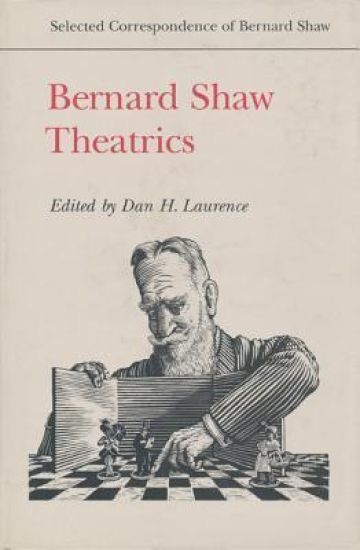
In his introduction Dan H. Laurence notes that 'theatrics' connotes not only activities of a theatrical character but behaviour that manifests itself as theatricality. All the correspondence selected for this volume - most of it hitherto unpublished - relates to Bernard Shaw's theatre dealings and theatrical interest, at the same time attesting to the 'histrionic instinct' and 'theatrified imagination' (his own phrases) of the man who penned them. More than one hundred letters are represented, starting from mid-1889, when Shaw had not yet completed his first play and was known instead as a music critic, journalist, socialist organizer, and street orator. The letters reveal a consummate man of the theatre: a dramatist, director, actor, designer, publicist, financial backer, translator, and critic concerned with such varied issues as censorship, theatre politics, prying journalists, and wireless and television performance. The letters are shaded with histrionic tones of assumed anger, irritation, and anguish. The style invariably is colloquial, free-flowing, ebullient - and personal.
Bernard Shaw and H.G. Wells

Bernard Shaw and H.G. Wells

Bernard Shaw; H.G. Wells

University of Toronto Press
1995
sidottu
Bernard Shaw and H.G. Wells are among the best-known and most controversial literary figures of the twentieth century. Both were rebelliously critical of the social and political, familial and sexual conventions and structures of their time. They shared broadly similar interests, but their lifestyles differed sharply - as did their views on many subjects, including those discussed in their correspondence: religion, socialism, science, war and world history, the theatre, the profession of authorship, and more. The letters are always forthright, often abusive and quarrelsome, sometimes suggesting that the relationship cannot last. They are also often warm, good-natured, playful, and generous - reflecting a fundamental mutual respect and similarity of outlook, however contrasting the temperament and style. The great majority of the two writers' correspondence is published here for the first time. This volumes comprises the personal correspondence of Shaw and Wells through the course of their friendship of more than forty years, and includes and introductory essay by J. Percy Smith. The letters are fully annotated, and are accompanied by information about the circumstances under which each was written, to enable the reader to follow the course of the frequently tempestuous relationship.