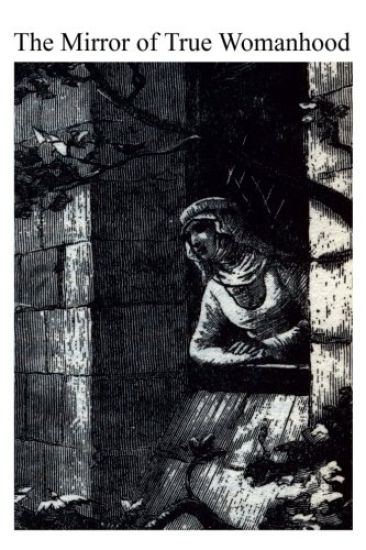
This book was written primarily to help modern women withstand the spread of the prevailing and oftentimes hostile secularism among us, which is daily invading our homes more and more - the minds and lives of parents as well as children. If we can preserve the Home from this destructive influence by making of every mother a supernatural woman, living a life of faith, embracing above all things self-denial and self-sacrifice for the sake of her husband and children first of all, fondly attached to the heroic ways and virtues of our ancestors, then the Home will bring forth supernatural men and women - unselfish, pure, truth-loving, trustworthy, and devoted to the best interests of community, country, and religion. The editor has modernized much of the language in this highly praised work for the benefit of the contemporary reader. If you like this book or any other of the books I've written or edited, please leave a positive review. For other edited Christian classics and my own books, search "Darrell Wright". God bless you
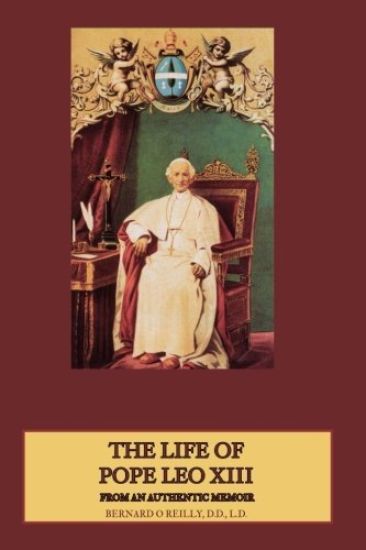
Mediatrix Press is pleased to put back into print: The Life of Pope Leo XIII written by the learned American Fr. Bernard O'Reilly, while that Pope was alive, and based on a memoir furnished to him by the Holy See. Thus, this work is nearly autobiographical, being based on the Pope's life as he wished it to be written.Fr. O'Reilly, making copious use of the Pope's Italian memoir, presents to us Gioacchomo Pecci, the future Leo XIII, in the midst of the dramatic and revolutionary changes affecting the Church in both Italy and all Europe in the 19th century. In all events, Pecci as priest, Bishop, Cardinal and later Pope, fought courageously for the Universal Church with prudence, humility and care, and above all defending his priests and the sacrament of Marriage against the innovations of the revolutionaries holding the seat of government throughout Europe.If you are amiss over the radical changes coming over society today, and want to see where they came from, this is the book for you. More than just learning about Leo XIII, you learn about his time, the troubled days after the French Revolution where, being exported to Italy, it reeked havoc through the regime of "liberty" and freemasonry, assaulting Catholic education, introducing civil marriage, undermining faith and morals from every angle. In this book you see the future Leo XIII as Archbishop Pecci, fight the revolution head on in unwavering support for Pope Pius IX. You will see how wrong the liberal view is that holds Mazzini and Garibaldi as heroes, and, moreover, how tyrannical the new Italian regime became in its persecution of the Church. This book is a tour de force, filled with many writings from Pope Leo XIII from his time as an Archbishop and Cardinal that have not been seen by English language audiences since this book was first published.Written in 1887, the book covers in great detail the life of the holy Pope from his youth and family life and concludes with another 16 years left to Pope Leo's papacy, yet it covers in remarkable detail the lesser known life of the "Light from the Heavens".The Mediatrix Press edition has been completely reprinted and re-typeset it form the original, adding our famous font effects from the renaissance.
Winner of the Whitbread Prize for Poetry, Bernard O'Donoghue's poems have long captivated readers with their lyricism, their grace and with what John Burnside has called their 'scrupulous honesty'. This judicious selection, made by the author himself, draws on twenty years of work and presents O'Donoghue at his most mesmeric: often recalling the rural Cork of his upbringing as seen against the exile of his adulthood, ever alive to the desire but impossibility of return.
This work has been selected by scholars as being culturally important and is part of the knowledge base of civilization as we know it.This work is in the public domain in the United States of America, and possibly other nations. Within the United States, you may freely copy and distribute this work, as no entity (individual or corporate) has a copyright on the body of the work.Scholars believe, and we concur, that this work is important enough to be preserved, reproduced, and made generally available to the public. To ensure a quality reading experience, this work has been proofread and republished using a format that seamlessly blends the original graphical elements with text in an easy-to-read typeface.We appreciate your support of the preservation process, and thank you for being an important part of keeping this knowledge alive and relevant.
This work has been selected by scholars as being culturally important and is part of the knowledge base of civilization as we know it.This work is in the public domain in the United States of America, and possibly other nations. Within the United States, you may freely copy and distribute this work, as no entity (individual or corporate) has a copyright on the body of the work.Scholars believe, and we concur, that this work is important enough to be preserved, reproduced, and made generally available to the public. To ensure a quality reading experience, this work has been proofread and republished using a format that seamlessly blends the original graphical elements with text in an easy-to-read typeface.We appreciate your support of the preservation process, and thank you for being an important part of keeping this knowledge alive and relevant.
This book details the inquisition held before the coroner of the county of Sonoma, California upon the remains of Charles Bernard O'Neal. The inquisition aims to determine the identity of the deceased, cause of death and other pertinent information. It is a fascinating look into the legal proceedings of the time and the methods used to determine cause of death.This work has been selected by scholars as being culturally important, and is part of the knowledge base of civilization as we know it.This work is in the "public domain in the United States of America, and possibly other nations. Within the United States, you may freely copy and distribute this work, as no entity (individual or corporate) has a copyright on the body of the work.Scholars believe, and we concur, that this work is important enough to be preserved, reproduced, and made generally available to the public. We appreciate your support of the preservation process, and thank you for being an important part of keeping this knowledge alive and relevant.
Poetry, arguably, has a greater range of conceptual meaning than perhaps any other term in English. At the most basic level everyone can recognise it--it is a kind of literature that uses special linguistic devices of organization and expression for aesthetic effect. However, far grander claims have been made for poetry than this--such as Shelley's that the poets 'are the unacknowledged legislators of the world', and that poetry is 'a higher truth'. In this Very Short Introduction, Bernard O'Donoghue provides a fascinating look at the many different forms of writing which have been called 'poetry'--from the Greeks to the present day. As well as questioning what poetry is, he asks what poetry is for, and considers contemporary debates on its value. Is there a universality to poetry? And does it have a duty of public utility and responsibility? ABOUT THE SERIES: The Very Short Introductions series from Oxford University Press contains hundreds of titles in almost every subject area. These pocket-sized books are the perfect way to get ahead in a new subject quickly. Our expert authors combine facts, analysis, perspective, new ideas, and enthusiasm to make interesting and challenging topics highly readable.
During the Second World War, the British Royal Air Force's Special Duties Squadrons parachuted thousands of pigeons into Belgium. Bletchley Park, the nerve centre of the British Intelligence Service, had its own pigeon loft from where birds were sent on intelligence gathering missions. A secret organisation, MI14(d), was created to organise a pigeon service to occupied Europe. Those who found the pigeons were expected to supply military, economic and political intelligence for the Allies. This book includes the messages sent back from Belgium. In particular, it investigates the roles played by Josef Raskin and Jean Ceysens, the British Intelligence Services, the RAF and the brave individuals who, despite the possibility of imprisonment, sent messages to Britain in the hope it would help liberate their country.
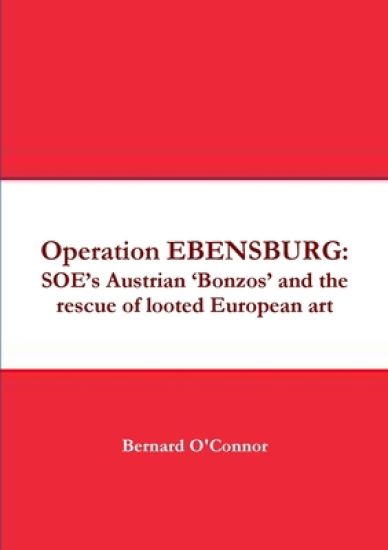
Some captured German and Austrian personnel were brought to Britain as prisoners of war. Those who were identified as anti-Nazi were 'turned' and, codenamed 'Bonzos', were trained in paramilitary and clandestine warfare to be sent back into occupied Europe on top secret missions. The British Special Operations Executive arranged the infiltration of four Austrians, Albrecht Gaiswinkler, Joseph Grafl, Karl Standhartinger and Karl Lzicar, into the Salzkammergut area of northwestern Austria. This book tells the story of Operation EBENSBURG, their mission to kidnap or assassinate Joseph Goebbels, the Reich's Minister of Propaganda, to organise resistance groups before the arrival of American forces and to protect the looted works of art hidden in the Altaussee salt mine.
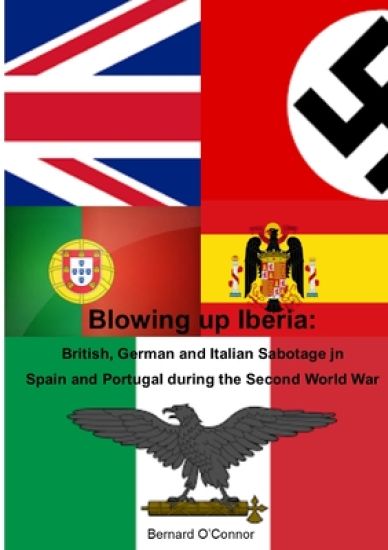
During the Second World War, the British military and intelligence agencies had plans in case Germany invaded Spain and Portugal. This involved training British and Spanish agents to be secretly infiltrated to undertake sabotage operations on important lines of communication and liaising with pro-British locals. At the same time the Abwehr, Germany's military intelligence agency, paid young Spanish and Portuguese collaborators to undertake sabotage missions against Allied military and economic targets in Iberia but they had limited success. Italian saboteurs from the Decima Flotigglia MAS were more successful using underwater divers to attack Allied shipping. Using declassified files from Britain's National Archives, autobiographies, biographies and newspaper articles, this documentary history sheds new light on an unusual aspect of Iberian history telling a human story of international diplomacy, political intrigue, secret agents, clandestine warfare, military strategy, nationalism, and deception.
Over 15,000 pigeons were dropped into occupied Europe during WW2. Some were used by secret agents to send messages back to headquarters. Others were dropped by parachute into France, Belgium, Holland and Denmark in the hope that people would complete the attached questionnaire and provided military, political, economic or other intelligence of value for the Allies. Photographic negatives could be sent. Bletchley Park had its own loft for its pigeon spies. This book investigates the work of MI14, known as the Colomba Service, and for the first time sheds light on conditions in Occupied Europe described by extremely brave men and women who risked execution if found in possession of a pigeon. MI14 staff, decoded or translated messages and forwarded copies to SOE, SIS, MI19, RAF, RN, Ministry of Economic Warfare, BBC, Churchill, de Gaulle and President Benes of Czechoslovakia.