
Kirjahaku
Etsi kirjoja tekijän nimen, kirjan nimen tai ISBN:n perusteella.
1000 tulosta hakusanalla Bertrand Russell
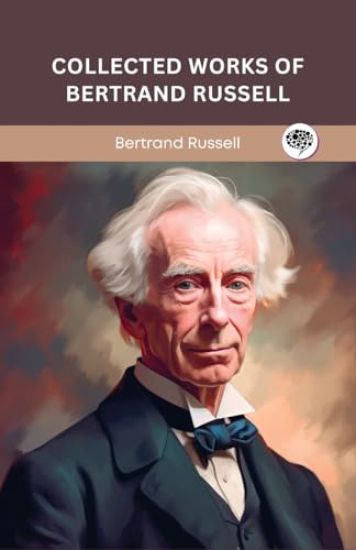
Discover the intellectual wealth of Bertrand Russell in the 'Collected Works of Bertrand Russell, ' an expansive compilation that encapsulates the prolific and influential contributions of this eminent philosopher, mathematician, and social critic. This monumental collection spans the full spectrum of Russell's diverse output, including his groundbreaking philosophical treatises, thought-provoking social and political commentaries, illuminating essays, and insightful works on mathematics. Within these pages, you'll find enduring classics such as 'The Problems of Philosophy, ' which explores fundamental questions of knowledge and existence. Betrand offers a sweeping overview of philosophical thought through the ages, and also delves into the dynamics of authority and influence in society. 'Collected Works of Bertrand Russell' is an indispensable resource for anyone eager to engage with the enduring wisdom of this remarkable thinker.
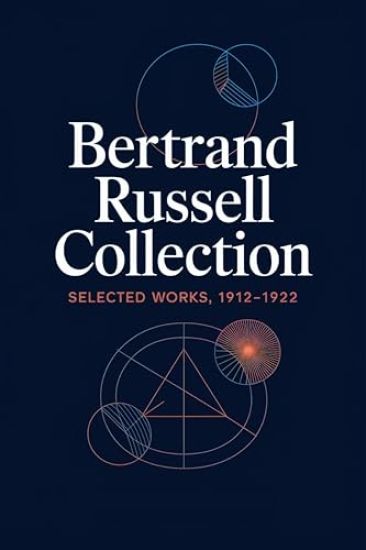
Bertrand Russell Collection, Selected Works, 1912-1922
Bertrand Russell
Grapevine India Publishers Pvt Ltd
2025
nidottu

The author demonstrates the significant role that some of the Edwardian philosophers played in the formation of Russell's work on the problem of the external world done at the tail-end of a controversy which raged between about 1900-1915.
Bertrand Russell on Nuclear War, Peace, and Language
Alan Schwerin
Praeger Publishers Inc
2002
sidottu
One of the most prominent philosophers and activists of the 20th century, Bertrand Russell is known not only for his fundamental contributions on the scope of human knowledge and on mathematical logic, but also for his often-controversial views on ethical and linguistic topics. This edited collection of original essays by prominent Russell scholars focuses on the philosopher's positions on the key issues of nuclear war, peace, and language. The contributors critically assess Russell's arguments within their historical and philosophical context and show the significance and topicality that his ideas have retained to the present day, some 80 years since their first articulation. Among the issues examined are Russell's advocacy of preventive war against the Soviets, his activism for peace, his critical assessment of Wittgenstein's analysis of ordinary language, and his account of mathematical statements.

Bertrand Russell and the Nature of Propositions offers the first book-length defence of the Multiple Relation Theory of Judgement (MRTJ). Although the theory was much maligned by Wittgenstein and ultimately rejected by Russell himself, Lebens shows that it provides a rich and insightful way to understand the nature of propositional content.In Part I, Lebens charts the trajectory of Russell’s thought before he adopted the MRTJ. Part II reviews the historical story of the theory: What led Russell to deny the existence of propositions altogether? Why did the theory keep evolving throughout its short life? What role did G. F. Stout play in the evolution of the theory? What was Wittgenstein’s concern with the theory, and, if we can’t know what his concern was exactly, then what are the best contending hypotheses? And why did Russell give the theory up? In Part III, Lebens makes the case that Russell’s concerns with the theory weren’t worth its rejection. Moreover, he argues that the MRTJ does most of what we could want from an account of propositions at little philosophical cost.This book bridges the history of early analytic philosophy with work in contemporary philosophy of language. It advances a bold reading of the theory of descriptions and offers a new understanding of the role of Stout and the representation concern in the evolution of the MRTJ. It also makes a decisive contribution to philosophy of language by demonstrating the viability of a no-proposition theory of propositions.
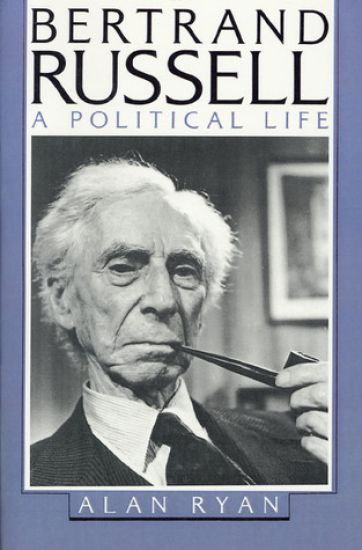
Bertrand Russell was one of the greatest logicians since Aristotle, and one of the most important philosophers of the past two hundred years. In this thorough examination, Alan Ryan tells the story of Russell's "other life" as social critic, polemical journalist, antiwar activist, sage and gadfly, dissenting from Russell's insistence that there was no connection between his philosophical interests and his political allegiances. Taking readers on an entertaining journey through a career that included two spells in jail, Ryan discusses Russell's most visible campaigns-against traditional religion, against the First World War, against nuclear weapons, and against the Vietnam War, as well as his lifelong defence of liberalism in education, politics, and relations between the sexes. Throughout he emphasizes the high spirits, the aristocratic fearlessness, and the wonderful combination of wit and intelligence that Russell brought to his political writing and actions. The result is a stimulating reconsideration of one of the great intellectual radicals of our time, a remarkable man who refused to grow old, calm down, and become respectable.
First published in 2000. This is Volume III of six in the International Library of Philosophy looking at the area of Nineteenth and Twentieth Century Anglo-American Philosophy. Written in 1952, it focuses on Bertrand Russell’s Construction of the External World, which covers a wide variety of topics, attempts to answer many of the problems traditionally associated with philosophy.

This is Volume XXII of twenty-two in a collection on 20th Century Philosophy. Originally published in 1979, this volume attempts to assess some of the achievements of Bertrand Russell in philosophy, logic and mathematics, ethics and politics.
This is Volume XXII of twenty-two in a collection on 20th Century Philosophy. Originally published in 1979, this volume attempts to assess some of the achievements of Bertrand Russell in philosophy, logic and mathematics, ethics and politics.

First published in 2000. This is Volume III of six in the International Library of Philosophy looking at the area of Nineteenth and Twentieth Century Anglo-American Philosophy. Written in 1952, it focuses on Bertrand Russell’s Construction of the External World, which covers a wide variety of topics, attempts to answer many of the problems traditionally associated with philosophy.

Bertrand Russell’s eminence of intellect and person has long been unassailable. Besides his distinction as mathematician and philosopher, and a vast output of books, articles, lectures and talks on most aspects of the human condition, there is his continuing concern for day-to-day political issues, his championing of individual freedom and his readiness to stand for a cause to the point of imprisonment. To have distilled the essence of his ninety-odd years into this little book is itself quite an achievement. Originally published in 1962, it has been called a ‘pocket guide to greatness’ and forms a useful complement to the longer and slightly earlier study by Alan Wood’s The Passionate Sceptic.
When future generations come to analyze and survey twentieth-century philosophy as a whole, Bertrand Russell’s logic and theory of knowledge is assured a place of prime importance. Yet until this book was first published in 1969 no comprehensive treatment of his epistemology had appeared. Commentators on twentieth-century philosophy at the time assumed that Russell’s important contributions to the theory of knowledge were made before 1921. This book challenges that assumption and draws attention to features of Russell’s later work which were overlooked.The analysis starts with Russell’s earliest views and moves from book to book and article to article through his enormous span of writing on the problems and theory of knowledge. The changes in ideas as he developed the theory are traced, and the study culminates in a statement of his latest views. His work is seen in a continuity in which the changes were part of the development of his mature thought, and the total evaluation and interpretation clarify many of the common misunderstandings of his philosophy.This is naturally of interest to all philosophers, and for students this is the answer to inevitable questions on the nature of Russell’s ideas and their evolution.
Although scholars from many disciplines have turned their attention to Russell’s work and appraised its significance for a number of fields, and an extensive literature on him emerged, until this book, first published in 1963, no thorough study on Russell’s contribution to education – an area to which he devoted no small part of his energies – had yet appeared. The book is based on interviews with Russell as well as diligent research in his writings and the sources of his thought and will enlighten all who think seriously about education. It addresses specifically the usefulness of Russell’s thought for American educators, which was challenging as Russell dared to question traditional ends and means of education at the time.
‘Fascinating’, ‘brilliant’, ‘oddly moving’, ‘a warm human picture’ – this biography was enthusiastically received when it came out in 1957. And no wonder. It is not only the lively story of a distinguished man but a lucid account of his work and its significance. The author, who was himself a philosopher and journalist, has followed the bright thread of Russell’s personality with affectionate insight, from the three-day-old baby who looked about him ‘in a very energetic way’, and the boy who jibbed at taking Euclid on trust, through the many turns of his life, to the undimmed octogenarian, still questioning and still deeply concerned. The subject is a great one and the biographer has matched it.

Originally published in 1973, this volume documents Bertrand Russell’s travels in America covering the period 1896-1945. It is presented in two halves with the first a biographical account of Russell’s involvement with the United States, with special reference to the seven visits he made there during this time period. Throughout this section the most representative of Russell’s journalistic writings are highlighted and these are presented as full texts in the second half of the book.This collection is assembled to provide an understanding of Russell’s deep and many-sided involvement with the United States during his life. A documented account, it is supplemented with important letters, photographs and newspaper articles.

Originally published in 1984, this volume documents Bertrand Russell’s travels in America covering the period 1945-1970. It is presented in two halves with the first a biographical account of Russell’s involvement with the United States, with special reference to the seven visits he made there during this time period. Throughout this section the most representative of Russell’s journalistic writings are highlighted and these are presented as full texts in the second half of the book.This collection is assembled to provide an understanding of Russell’s deep and many-sided involvement with the United States during his life. A documented account, it is supplemented with important letters, photographs and newspaper articles.
Originally published in 1973, this volume documents Bertrand Russell’s travels in America covering the period 1896-1945. It is presented in two halves with the first a biographical account of Russell’s involvement with the United States, with special reference to the seven visits he made there during this time period. Throughout this section the most representative of Russell’s journalistic writings are highlighted and these are presented as full texts in the second half of the book.This collection is assembled to provide an understanding of Russell’s deep and many-sided involvement with the United States during his life. A documented account, it is supplemented with important letters, photographs and newspaper articles.
Originally published in 1984, this volume documents Bertrand Russell’s travels in America covering the period 1945-1970. It is presented in two halves with the first a biographical account of Russell’s involvement with the United States, with special reference to the seven visits he made there during this time period. Throughout this section the most representative of Russell’s journalistic writings are highlighted and these are presented as full texts in the second half of the book.This collection is assembled to provide an understanding of Russell’s deep and many-sided involvement with the United States during his life. A documented account, it is supplemented with important letters, photographs and newspaper articles.