This book outlines a methodology based on actor-network theory (ANT) and praxiography and applies this to the field of medical education. Drawn from a detailed account of practice in a medical setting, this book shows how researchers in education and medical education can learn to work with ANT approaches and attune to different insights in practice.The book gives a detailed account of what actor-network theory can bring to research, through the investigation of social and material networks. The philosophical underpinnings of actor-network theory are presented as the basis of this emerging methodology, through an exploration of learning as disruption, practice as human and material assemblages, and power as regulated difference in worlds of practice. This is a qualitative approach for exploring complexity that does not attempt to represent or reduce but allows for unique insights into practice that might otherwise be overlooked.With a robust grounding in practice and professional learning and actor-network theory, this book will be of great interest for academics, scholars, and postgraduate students in the field of research methods and medical education.
This book outlines a methodology based on actor-network theory (ANT) and praxiography and applies this to the field of medical education. Drawn from a detailed account of practice in a medical setting, this book shows how researchers in education and medical education can learn to work with ANT approaches and attune to different insights in practice.The book gives a detailed account of what actor-network theory can bring to research, through the investigation of social and material networks. The philosophical underpinnings of actor-network theory are presented as the basis of this emerging methodology, through an exploration of learning as disruption, practice as human and material assemblages, and power as regulated difference in worlds of practice. This is a qualitative approach for exploring complexity that does not attempt to represent or reduce but allows for unique insights into practice that might otherwise be overlooked.With a robust grounding in practice and professional learning and actor-network theory, this book will be of great interest for academics, scholars, and postgraduate students in the field of research methods and medical education.
At a time in which race lies at the heart of so much public debate, Talking Race in Young Adulthood comes at an important moment.Drawing on ethnographic research with young adults in Manchester, Harries engages with ideas of the post-racial to explore how young adults make sense of their identities, relationships and new forms of racism, consequently revealing how and in what ways race remains a salient dimension of social experience. Indeed, this book presents news ways of thinking about how we live with difference, as Harries analyses the relationship between racism, generational identities and the spatial configurations of a city. Offering a distinct contribution to the sociology of race, this book will appeal to undergraduate and postgraduate students interested in fields such as Race and Ethnicity, Urban Sociology, Human Geography, Youth Studies, Cultural Studies and Social Anthropology.
Bethan Marshall traces the competing traditions of English teaching and considers their relevance to the current debate through an analysis of English teachers' views about themselves and their subject. The findings are based on a highly original research method in which teachers were asked to respond to and comment upon five different descriptions of their approaches to English teaching.English Teachers - The Unofficial Guide:*contextualises current debates about English teaching within the subject's contested history*provides a vehicle for teachers to reflect on their own practice and locate themselves within the debate*opens up the debate on assessment practices within English teaching.
Bethan Marshall traces the competing traditions of English teaching and considers their relevance to the current debate through an analysis of English teachers' views about themselves and their subject. The findings are based on a highly original research method in which teachers were asked to respond to and comment upon five different descriptions of their approaches to English teaching.English Teachers - The Unofficial Guide:*contextualises current debates about English teaching within the subject's contested history*provides a vehicle for teachers to reflect on their own practice and locate themselves within the debate*opens up the debate on assessment practices within English teaching.
This Candidate Handbook covers all mandatory units and a range of optional units with case-studies, engaging features and portfolio tasks so candidates are fully supported in becoming the leaders of the future!
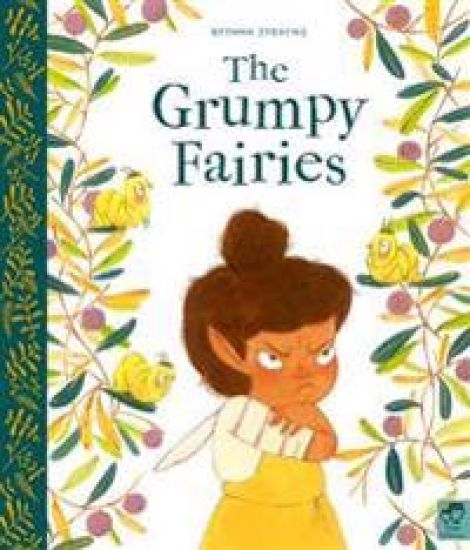
Winner of the Waterstones Children's Book Prize, Best Illustrated Book Category in 2021.Deep in the darkest forests, under rustling leaves, live the fairies. You probably think that fairies are good, kind and sweet. Well, a lot of them are. These helpful fairies take care of the forest and they're happy to do it. But I'm sorry to tell you that some of the fairies, particularly the littlest ones, are GRUMPY. I meanproper grumpy. I mean foot-stompy, frowny, bottom-lip-sticking-outy kind of grumpy. I mean ‘it’s just one of those days’ grumpy. But these grumpy fairies better watch out. There's a goblin about, and grumpy fairies happen to be a goblin's favourite food…Characterful illustrations transport readers to the animal-filled world of the fairy's forest, and easy to read text is perfect for young readers. This wonderful, funny debut will bring a smile to the smallest (and grumpiest) of children.
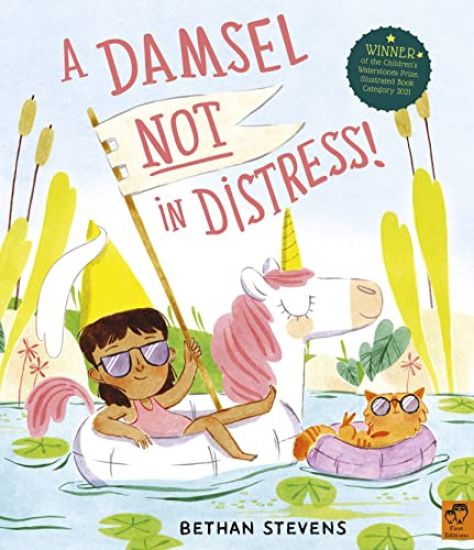
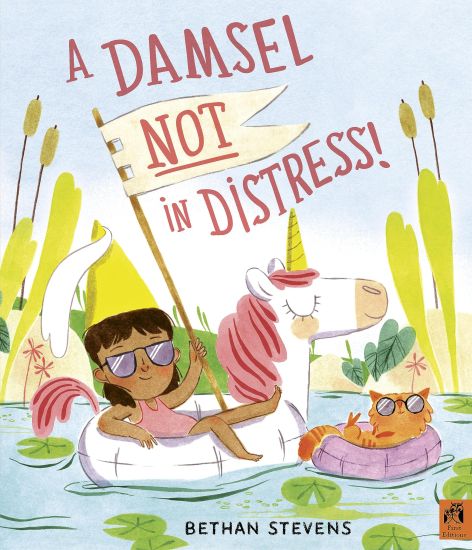
This clever and funny inversion on a classic fairytale from award-winning author Bethan Stevens tells the laugh-out-loud story of a damsel who does not need saving!Once upon a time, hidden deep in a valley in a magical land far away, there was a very tall tower. And trapped at the very top of that very tall tower there was a damsel . . . In distress! The only problem is, the damsel is not in distress. She keeps telling the narrator that she's perfectly fine. The "terrifying beasts" in the moat are a family of ducklings. The "prickly brambles" are her rose garden. And the "wicked old witch" is actually her grandma! But the narrator just won't listen. When a scary, fire-breathing dragon comes to visit, it's up to the damsel to take charge of her story and save the day for everyone. Characterful illustrations transport readers to the magical world of the damsel's kingdom, and easy to read text is perfect for young readers. This funny follow-up to the prize-winning Grumpy Fairies is perfect for any young damsel—or prince charming—who wants to be the hero of their own story.
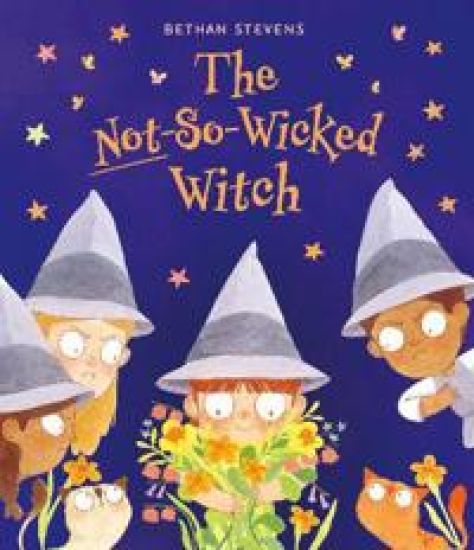
*Winner of the Waterstones Children's Book Prize, Best Illustrated Book Category 2021*On the sleepiest of nights, when the air is still and the moon is full, the conditions are just right… for WITCHES TO TAKE FLIGHT!And among all these terribly wicked, cackling witches, is one… who is actually, surprisingly quite nice!This little witch doesn’t enjoy being wicked like the others. Not one little bit. She doesn’t like creating mischief, she doesn’t like making a mess and she definitely doesn’t like any naughtiness!The other witches decide that the littlest witch needs rescuing from all this icky, gooey goodness! It’s time for some lessons in wickedness, and the best way to do that is by making a completely terrible and utterly awful potion…!Will our little witch leave her kind and gentle ways behind her and join in the wickedness? Or will she persuade her fellow witches that actually, being wicked isn’t all it’s cracked up to be?This playful take on spooky witches from the award-winning Bethan Stevens takes readers to a magical world of wickedness and kindness. This is the wonderfully funny follow-up to the prize-winning Grumpy Fairies and the fairytale twist A Damsel Not in Distress.
On the sleepiest of nights, when the air is still and the moon is full, the conditions are just right... for WITCHES TO TAKE FLIGHT And among all these terribly wicked, cackling witches, is one... who is actually, surprisingly quite nice This little witch doesn't enjoy being wicked like the others. Not one little bit. She doesn't like creating mischief, she doesn't like making a mess and she definitely doesn't like any naughtiness The other witches decide that the littlest witch needs rescuing from all this icky, gooey goodness It's time for some lessons in wickedness, and the best way to do that is by making a completely terrible and utterly awful potion... Will our little witch leave her kind and gentle ways behind her and join in the wickedness? Or will she persuade her fellow witches that actually, being wicked isn't all it's cracked up to be? This playful take on spooky witches from the award-winning Bethan Stevens takes readers to a magical world of wickedness and kindness. This is the wonderfully funny follow-up to the prize-winning Grumpy Fairies and the fairytale twist A Damsel Not in Distress.
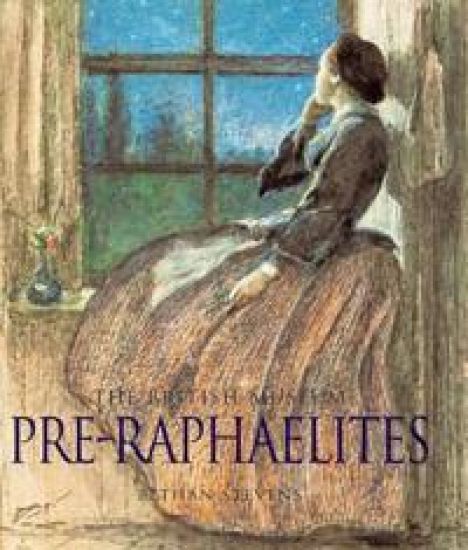
The Pre-Raphaelite Brotherhood was founded in 1848. Their artistic beliefs were set out by John Ruskin, the art historian who ardently supported them. Their chief principle was ‘truth to nature’: that a painter should draw precisely what he or she sees, and not follow painterly conventions. They saw this as a virtue of painters working before the age of Raphael but subsequently corrupted in more sophisticated art – hence the name ‘Pre-Raphaelite’ and their admiration of Medievalism. The British Museum has an important collection of Pre-Raphaelite art which is in constant demand for international exhibitions. In particular, the collection comprises a wonderful collection of drawings by Pre-Raphaelite artists, including three notable albums by Rossetti and Burne- Jones; the Robin de Beaumont collection which includes all the most important Pre-Raphaelite illustrated books plus rare proof impressions; and 49 volumes comprising 54,000 proofs of prints published by the Dalziel brothers, the chief publishers of Pre-Raphaelite prints. Victorian poetry (notably by Tennyson as well as Rossetti’s sister Christina), novels and even children’s literature, with its tense mixture of hyper-realism and vivid fantasy, provided ideal subjects for Pre- Raphaelite illustration. John Tenniel, who was contemporary with the Pre-Raphaelites, borrows heavily from their work for his famous Alice in Wonderland illustrations, and the author offers a wide range of poetic and literary extracts to accompany these fascinating images.
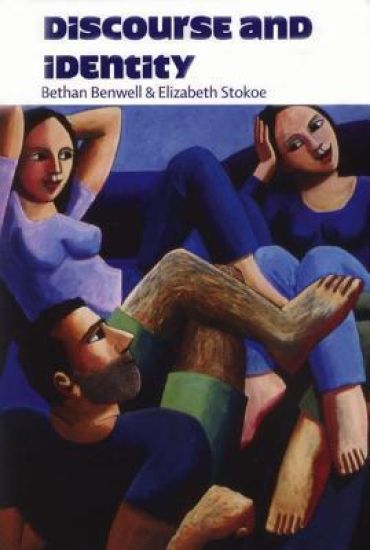
'Identity' is a central organizing feature of our social world. Across the social sciences and humanities, it is increasingly treated as something that is actively and publicly accomplished in discourse. This book defines identity in its broadest sense, in terms of how people display who they are to each other. Each chapter examines a different discursive environment in which people do 'identity work': everyday conversation, institutional settings, narrative and stories, commodified contexts, spatial locations, and virtual environments. The authors describe and demonstrate a range of discourse and interaction analytic methods as they are put to use in the study of identity, including 'performative' analyses, conversation analysis, membership categorization analysis, critical discourse analysis, narrative analysis, positioning theory, discursive psychology and politeness theory. The book aims to give readers a clear sense of the coherence (or otherwise) of these different approaches, the practical steps taken in analysis, and their situation within broader critical debates. Through the use of detailed and original 'identity' case studies in a variety of spoken and written texts in order, the book offers a practical and accessible insight into what the discursive accomplishment of identity actually looks like, and how to go about analyzing it. Features: *Accessible introduction to the study of discourse and identity across a variety of contexts. *Interdisciplinary in scope, the book is relevant to a wide range of courses such as English language and linguistics, psychology, media, cultural studies, gender studies and sociology. *Each chapter includes a critical overview of work in the area, original case studies, practical instruction for analyses, points for further discussion and suggested reading.
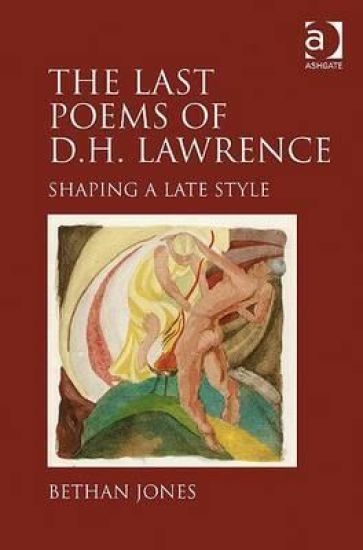
In the first book to take D. H. Lawrence's Last Poems as its starting point, Bethan Jones adopts a broadly intertextual approach to explore key aspects of Lawrence's late style. The evolution and meaning of the poems are considered in relation to Lawrence's prose works of this period, including Sketches of Etruscan Places, Lady Chatterley's Lover, and Apocalypse. More broadly, Jones shows that Lawrence's late works are products of a complex process of textual assimilation, as she uncovers the importance of Lawrence's reading in mythology, cosmology, primitivism, mysticism, astronomy, and astrology. The result is a book that highlights the richness and diversity of his poetic output, also prioritizing the masterpieces of Lawrence's mature style which are as accomplished as anything produced by his Modernist contemporaries.
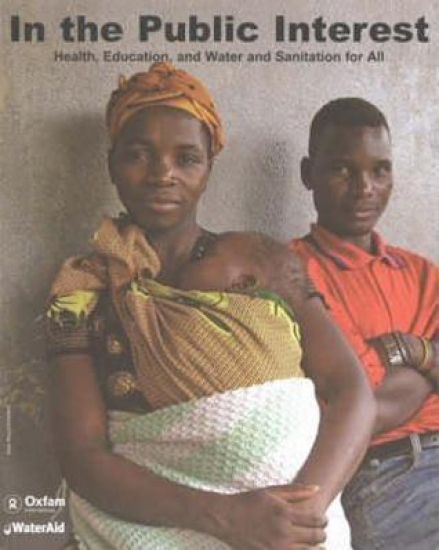
This report shows that building public services in developing countries is at the heart of making poverty history. Doing this could transform the lives of millions of people - and, with political leadership, is well within the grasp of our generation.Governments must take responsibility for providing essential services that are well staffed, affordable for even the poorest people, and accessible to all. Civil society organisations and private companies can make important contributions, but they must be integrated into public systems. International donors are crucial partners, but too often they block progress by failing to deliver debt relief and predictable aid that supports public systems, or push private sector solutions that do not benefit poor people.
The pedagogy of acting out Shakespeare has been extensive. Less work has been done on how students learn through spectatorship. This element will consider all within the current context of Shakespeare teaching in schools. Using grounded research, it will include work undertaken on a schools National Theatre production of Macbeth, as well as classroom-based, action research, using a variety of digital performances of Shakespeare plays. Both find means of extending student knowledge in unexpected ways through encountering interpretations of Shakespeare that the students had not considered. In reflecting on the practice of watching Shakespeare in an educational context- both at the theatre and in the classroom- this Element hopes to offer suggestions for how teachers might re-think the ways in which they present Shakespeare performed to their students particularly as a powerful way of building personal and critical responses to the plays.
Centring the lived experiences of enslaved and free people of colour, Black Catholic Worlds illustrates how geographies and mobilities – between continents, oceans, and region – were at the heart of the formation and circulation of religious cultures by people of African descent in the face of racialisation and slavery. This book examines black Catholicism in different sites – towns, mines, haciendas, rochelas, and maroon communities – across New Granada, and frames African-descended religions in the region as “interstitial religions.” People of African descent engaged in religious practice and knowledge production in the interstices, in liminal places and spaces that were physical sites but also figurative openings, in a society shaped by slavery. Bringing together fleeting moments from colonial archives, Fisk traces black religious knowledge production and sacramental practice just as gold, mined by enslaved people, again began to flow from the Pacific coast to the Atlantic world.