

Kirjahaku
Etsi kirjoja tekijän nimen, kirjan nimen tai ISBN:n perusteella.
1000 tulosta hakusanalla Birgit Patzelt

Blott Sverige svenska kvinnor har? : Birgit Th. Sparre, Margit Söderholm och det nationella projektet
Maria Nilson
Makadam förlag
2019
nidottu
Birgit Th. Sparre och Margit Söderholm är två av Sveriges allra mest lästa författare. Sparres och Söderholms romaner var oerhört populära under 1930-, 40- och 50-talen och har under de senaste åren blivit tillgängliga igen som e-böcker. Deras verk, som gärna utspelade sig i historiska miljöer, har ofta setts som romantiska och melodramatiska, men dessa etiketter säger inte hela sanningen. I Blott Sverige svenska kvinnor har? undersöker litteraturvetaren Maria Nilson de föreställningar om det svenska och de idealbilder av maskulinitet och femininitet som lyfts fram i romanerna. Nilson ser verken som på en gång traditionella och visionära. Hos dessa två författare samsas tidstypiskt rasistiska föreställningar med drömmar om ett framtida jämställt samhälle; här finns ett konservativt tillbakablickande samtidigt som romanerna på många sätt är kritiska till den dåtid de skildrar. Studien diskuterar genus och etnicitetskonstruktioner, men också olika former av nostalgi. Sparres och Söderholms författarskap, som hittills varit relativt outforskade, berättar en egen, intressant historia om svenska föreställningsvärldar under 1900-talet. Maria Nilson är lektor i litteraturvetenskap vid Linnéuniversitetet. Hon disputerade 2003 med avhandlingen Att förhålla sig till moderniteten. En studie i Gertrud Liljas författarskap och har sedan dess främst forskat om populärlitteratur och ungdomsromaner.

Prekares Wissen: Praktische Theologie Im Horizont Postkolonialer Theorien. Festschrift Fur Birgit Weyel
Evangelische Verlagsanstalt
2024
sidottu
Welche kritischen Analysen christlich-religioser Symbole und kirchlicher Praxis sind notig, um kulturelle Stereotype und hegemoniale Vorstellungen freizulegen? Inwiefern lassen sich postkoloniale und dekolonialisierende, aber auch rekolonialisierende Praktiken im Kontext des Religiosen und der Kirchen identifizieren? Mit diesen Fragen befassen sich die in diesem Band vorliegenden Beitrage. Versammelt sind theoretische Uberlegungen wie empirische und historische Fallstudien im Zusammenhang von Problemstellungen und Konzepten postkolonialer Theorien. Es zeigt sich: Wissen ist prekar. In den vielschichtigen Zusammenhangen seines Erwerbs wie seiner Organisation geht es immer um Praktiken der Legitimierung, Sanktionierung und Priorisierung und damit um die Gestaltung von Machtverhaltnissen.

Katalog Der Festlandischen Handschriften Des Neunten Jahrhunderts (Mit Ausnahme Der Wisigotischen). Gesamtregister: Bearbeitet Von Birgit Ebersperger
Bernhard Bischoff
Harrassowitz
2017
sidottu

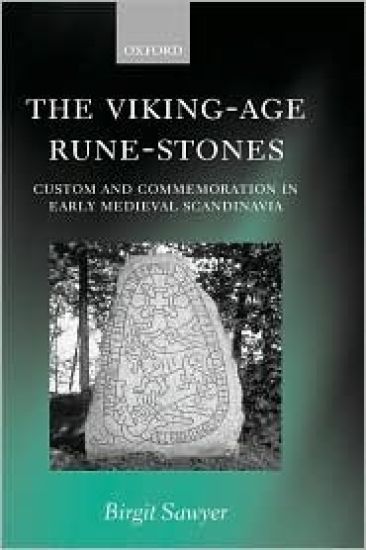
There are over 3000 runic inscriptions on stone made in Scandinavia in the late Viking Age. This book is the first attempt by a historian to study the material as a whole. The analysis reveals significant regional variations that reflect different stages in the process of conversion, and the growth of royal power. Many monuments were declarations of faith or manifestations of status; but virtually all reflect inheritance claims, and cast unexpected light on the prehistory of the inheritance customs found in later Scandinavian law codes. The results of this analysis make a significant contribution to understanding developments in other parts of the Germanic world, as well as Scandinavia. The inclusion of a digest of the data-base on which this book is based will facilitate further study of this rich vein of evidence.

There are over 3,000 runic inscriptions on stone made in Scandinavia in the late Viking Age. This book is the first attempt by a historian to study the material as a whole. The analysis reveals significant regional variations that reflect the different stages in the process of conversion to Christianity and the growth of royal power. Many monuments were declarations of faith or manifestations of status; but virtually all reflect inheritance customs found in later Scandinavian law codes. The results of this analysis make a significant contribution to understanding developments in other parts of the Germanic world, as well as Scandinavia. The inclusion of a digest of the data-base on which this book is based will facilitate further study of this rich vein of evidence.
This book examines the incorporation of newly accessible mass media into practices of religious mediation in a variety of settings including the Pentecostal Church and Islamic movements, as well as the use of religious forms and image in the sphere of radio and cinema.
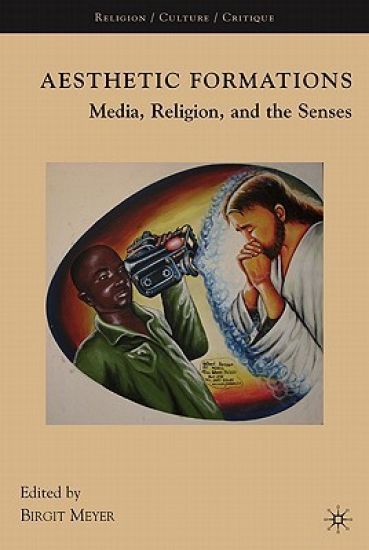
This book examines the incorporation of newly accessible mass media into practices of religious mediation in a variety of settings including the Pentecostal Church and Islamic movements, as well as the use of religious forms and image in the sphere of radio and cinema.

In Translating the World, Birgit Tautz provides a new narrative of German literary history in the late eighteenth and early nineteenth centuries. Departing from dominant modes of thought regarding the nexus of literary and national imagination, she examines this intersection through the lens of Germany’s emerging global networks and how they were rendered in two very different German cities: Hamburg and Weimar.German literary history has tended to employ a conceptual framework that emphasizes the nation or idealized citizenry, yet the experiences of readers in eighteenth-century German cities existed within the context of their local environments, in which daily life occurred and writers such as Lessing, Schiller, and Goethe worked. Hamburg, a flourishing literary city in the late eighteenth century, was eventually relegated to the margins of German historiography, while Weimar, then a small town with an insular worldview, would become mythologized for not only its literary history but its centrality in national German culture. By interrogating the histories of and texts associated with these cities, Tautz shows how literary styles and genres are born of local, rather than national, interaction with the world. Her examination of how texts intersect and interact reveals how they shape and transform the urban cultural landscape as they are translated and move throughout the world.A fresh, elegant exploration of literary translation, discursive shifts, and global cultural changes, Translating the World is an exciting new story of eighteenth-century German culture and its relationship to expanding global networks that will especially interest scholars of comparative literature, German studies, and literary history.

In Translating the World, Birgit Tautz provides a new narrative of German literary history in the late eighteenth and early nineteenth centuries. Departing from dominant modes of thought regarding the nexus of literary and national imagination, she examines this intersection through the lens of Germany’s emerging global networks and how they were rendered in two very different German cities: Hamburg and Weimar.German literary history has tended to employ a conceptual framework that emphasizes the nation or idealized citizenry, yet the experiences of readers in eighteenth-century German cities existed within the context of their local environments, in which daily life occurred and writers such as Lessing, Schiller, and Goethe worked. Hamburg, a flourishing literary city in the late eighteenth century, was eventually relegated to the margins of German historiography, while Weimar, then a small town with an insular worldview, would become mythologized for not only its literary history but its centrality in national German culture. By interrogating the histories of and texts associated with these cities, Tautz shows how literary styles and genres are born of local, rather than national, interaction with the world. Her examination of how texts intersect and interact reveals how they shape and transform the urban cultural landscape as they are translated and move throughout the world.A fresh, elegant exploration of literary translation, discursive shifts, and global cultural changes, Translating the World is an exciting new story of eighteenth-century German culture and its relationship to expanding global networks that will especially interest scholars of comparative literature, German studies, and literary history.

China's economy, despite recently weathered challenges, continues to prove attractive to foreign investors, expanding businesses, and entrepreneurs seeking global opportunities. This handbook has been written for anyone with an interest in doing business in China, including the consultants and specialists who work with global companies, but it is far more than an introduction to the Chinese market. Combining a deep knowledge of Chinese culture with her recent experience and continuing work with managers who do business in this sleeping economic superpower, the author brings out the nuances in everything she writes about, e.g., the distinctions among Chinese in income, target market, and geographic region. She demonstrates how Western notions of market segmentation, for example, may be fatally flawed when applied indiscriminately to the same demographically selected categories of Chinese consumers. Investing in China is not some get rich quick scheme. Only those who take the time to fully and thoroughly understand the Chinese market, and how that market is likely to interact with their products or services, will demonstrate the patience necessary to achieve success.

Written by practitioners for practitioners, this empirically-grounded book offers clinicians of all backgrounds a guide to incorporating feedback and self-development strategies that will dramatically enhance their therapeutic abilities. Building on the foundation of Feedback-Informed Treatment (FIT), Beyond Best Practice explores the benefits of practicing therapy using in-the-moment client feedback, with an emphasis on ongoing, typically solitary, deliberate practice. Chapters describe the real-world journey of an established master therapist and her agency, examining each element of FIT in detail through her eyes. Her journey is illustrated through discussions with prominent researchers, authors, former clients, as well as informative experiences outside of psychotherapy. Rich case examples of success, failure and "failing successfully" are also woven throughout, with a focus on the practical applications and skills needed to become an excellent and effective therapist and agency.What becomes clear through the many narratives is that we can improve our services by studying the obvious and subtle forms of feedback that are available to us at all times. Beyond Best Practice emphasizes what each practitioner can do to become more effective, one client at a time. It will be essential reading for all mental health practitioners and agencies working at the front lines of medical care.

Written by practitioners for practitioners, this empirically-grounded book offers clinicians of all backgrounds a guide to incorporating feedback and self-development strategies that will dramatically enhance their therapeutic abilities. Building on the foundation of Feedback-Informed Treatment (FIT), Beyond Best Practice explores the benefits of practicing therapy using in-the-moment client feedback, with an emphasis on ongoing, typically solitary, deliberate practice. Chapters describe the real-world journey of an established master therapist and her agency, examining each element of FIT in detail through her eyes. Her journey is illustrated through discussions with prominent researchers, authors, former clients, as well as informative experiences outside of psychotherapy. Rich case examples of success, failure and "failing successfully" are also woven throughout, with a focus on the practical applications and skills needed to become an excellent and effective therapist and agency.What becomes clear through the many narratives is that we can improve our services by studying the obvious and subtle forms of feedback that are available to us at all times. Beyond Best Practice emphasizes what each practitioner can do to become more effective, one client at a time. It will be essential reading for all mental health practitioners and agencies working at the front lines of medical care.
This study explores the concept of Stimmung in literary and philosophical texts of the modern age. Signifying both 'mood' and 'attunement', Stimmung speaks to the categories of affective experience and aesthetic design alike. The study locates itself in the nexus between discourses on modernity, existentialism and aesthetics and uncovers the pivotal role of Stimmung in 19th- and 20th-century European narrative fiction and continental philosophy. The study first explores the philosophical and aesthetic origins and implications of Stimmung to, then, discuss its role in the narrative fiction of three key authors of modern literature: Fyodor Dostoevsky, Samuel Beckett and Thomas Bernhard. These readings demonstrate a significant shift towards an aesthetic of affective intensity and immediacy, in which the experience of the reading process takes centre stage as each author develops an aesthetic philosophy of Stimmung in their own right. Through its focus on the concept of Stimmung, the study thus unearths a fundamental link between existentialist concerns and narrative practice in modern literature.

Verbal-Visual Configurations in Postcolonial Literature
Birgit Neumann; Gabriele Rippl
Routledge
2020
sidottu
Examining a range of contemporary Anglophone texts, this book opens up postcolonial and transcultural studies for discussions of visuality and vision. It argues that the preoccupation with visual practices in Anglophone literatures addresses the power of images, vision and visual aesthetics to regulate cultural visibility and modes of identification in an unevenly structured world. The representation of visual practices in the imaginative realm of fiction opens up a zone in which established orders of the sayable and visible may be revised and transformed. In 12 chapters, the book examines narrative fiction by writers such as Michael Ondaatje, Derek Walcott, Salman Rushdie, David Dabydeen and NoViolet Bulawayo, who employ word-image relations to explore the historically fraught links between visual practices and the experience of modernity in a transcultural context. Against this conceptual background, the examination of verbal-visual relations will illustrate how Anglophone fiction models alternative modes of re-presentation that reflect critically on hegemonic visual regimes and reach out for new, more pluralized forms of exchange.

This important book describes the biopsychosocial nature of persisting and complex headache presentations following a mild brain trauma and offers a predominantly cognitive behavioural therapy programme to guide patients toward better health and less pain.The book provides both a robust theoretical underpinning and practical therapeutic guidance for helping those who suffer from posttraumatic headaches. Placing physical symptoms of trauma in context with personal and social issues, it discusses the broader psychological implications at work after brain injury, including the idea that headaches play a functional role for the patient. Updated with the latest research findings, the book features clinical guidelines, practitioner worksheets and relaxation scripts, offering an all-inclusive manual for therapists setting up their own programmes.Written with the busy clinician in mind, it is essential reading for anyone working with brain trauma survivors.

The Routledge Handbook to Rethinking Ethics in International Relations
Birgit Schippers
Routledge
2022
nidottu
Discussing cutting-edge debates in the field of international ethics, this key volume builds on existing work in the normative study of international relations. It responds to a substantial appetite for scholarship that challenges established approaches and examines new perspectives on international ethics, and that appraises the ethical implications of problems occupying students and scholars of international relations in the twenty-first century. The contributions, written by a team of international scholars, provide authoritative surveys and interventions into the field of international ethics. Focusing on new and emerging ethical challenges to international relations, and approaching existing challenges through the lens of new theoretical and methodological frameworks, the book is structured around five themes: • New directions in international ethics• Ethical actors and practices in international relations• The ethics of climate change, globalization, and health• Technology and ethics in international relations• The ethics of global securityInterdisciplinary in its scope, this book will be an important resource for scholars and students in the fields of politics and international relations, philosophy, law and sociology, and a useful reference for anyone who wishes to acquire ‘ethical competence’ in the area of international relations.
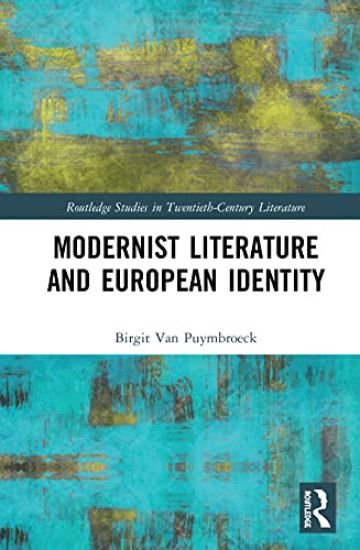
Modernist Literature and European Identity examines how European and non-European authors debated the idea of Europe in the first half of the twentieth century. It shifts the focus from European modernism to modernist Europe, and shows how the notion of Europe was constructed in a variety of modernist texts. Authors such as Ford Madox Ford, T. S. Eliot, Gertrude Stein, Aimé Césaire, and Nancy Cunard each developed their own notion of Europe. They engaged in transnational networks and experimented with new forms of writing, supporting or challenging a European ideal. Building on insights gained from global modernism and network theory, this book suggests that rather than defining Europe through a set of core principles, we may also regard it as an open or weak construct, a crossroads where different authors and views converged and collided.
Modernist Literature and European Identity examines how European and non-European authors debated the idea of Europe in the first half of the twentieth century. It shifts the focus from European modernism to modernist Europe, and shows how the notion of Europe was constructed in a variety of modernist texts. Authors such as Ford Madox Ford, T. S. Eliot, Gertrude Stein, Aimé Césaire, and Nancy Cunard each developed their own notion of Europe. They engaged in transnational networks and experimented with new forms of writing, supporting or challenging a European ideal. Building on insights gained from global modernism and network theory, this book suggests that rather than defining Europe through a set of core principles, we may also regard it as an open or weak construct, a crossroads where different authors and views converged and collided.