Kirjojen hintavertailu. Mukana 11 627 670 kirjaa ja 12 kauppaa.

Kirjahaku

Etsi kirjoja tekijän nimen, kirjan nimen tai ISBN:n perusteella.

1000 tulosta hakusanalla Blaise Pascal

Blaise Pascal

Blaise Pascal

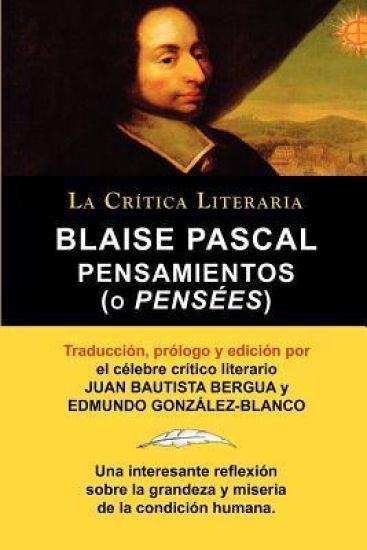
Blaise Pascal; Juan Bautista Bergua

La Critica Literaria - Lacrticaliteraria.com
2011
pokkari
Una interesante reflexi n sobre la grandeza y miseria de la condici n humana. Traducci n, pr logo y edici n por el c lebre cr tico literario Juan Bautista Bergua y Edmundo Gonz lez-Blanco.Blaise Pascal (1623-1662), desde muy joven, demostr ser un verdadero genio y a los 18 a os invent la primera calculadora. Fue un pensador profundamente cristiano. De todas sus obras podemos destacar los siguientes rasgos; su inter's cient fico, literario y apolog tico.Los "Pensamientos" (o Pens es) fueron publicados por primera vez despu's de su muerte, hacia 1670. Esta obra, originariamente, fue pensada como una apolog a del cristianismo y, por tanto, es una obra inconclusa, compuesta por reflexiones en los que aborda diversos temas.El tema principal es su preocupaci n por el hombre. A Pascal le importa su relaci n con lo absoluto -Dios-, y lo relativo -las cosas pasajeras de la vida humana-. Por este motivo el autor se interesa por la grandeza y la miseria humana, el orden religioso, tico, est tico y pol tico de su vida. Su profundo realismo tr gico le permiti analizar, de forma maravillosa y original, c mo la raz n y el coraz n son v as distintas de acceso a nuestra realidad y a Dios: "El coraz n tiene sus razones que la raz n no conoce."Presentado por Manuel Fdez. de la Cueva Villalba, Profesor de Filosof a.
Blaise Pascal

Blaise Pascal

Alpha Edition
2020
pokkari
This book has been considered by academicians and scholars of great significance and value to literature. This forms a part of the knowledge base for future generations. So that the book is never forgotten we have represented this book in a print format as the same form as it was originally first published. Hence any marks or annotations seen are left intentionally to preserve its true nature.
Complete Works of Blaise Pascal.
The "Complete Works of Blaise Pascal" is a literary and philosophical treasure trove, encompassing Pascal's most renowned writings, including the "Pens es," "Provincial Letters," and a collection of his essays. Blaise Pascal, the genius of 17th-century France, stands as a luminary of both literature and philosophy, and his works continue to captivate readers, scholars, and thinkers across the world.The "Pens es" is a collection of Pascal's fragmented thoughts, reflections, and aphorisms that delve into the depths of human nature, the existence of God, and the enigma of faith. It is a work of profound spirituality and intellectual exploration. The "Provincial Letters" are a brilliant series of essays that critically examine moral and religious issues, written with wit and sharpness.The collection of essays encompasses a wide array of subjects, from rhetoric and eloquence to religion, making it a testament to Pascal's multifaceted genius. Together, these works provide a comprehensive view of Pascal's contributions to literature, philosophy, and religious thought."Complete Works of Blaise Pascal" offers readers an immersive journey into the mind of a polymath who continues to inspire and challenge individuals to explore the profound mysteries of faith, reason, and human existence. It is an essential resource for those seeking to delve into the world of one of history's most celebrated intellectuals.
Blaise Pascal on Duplicity, Sin, and the Fall

Blaise Pascal on Duplicity, Sin, and the Fall

William Wood

Oxford University Press
2013
sidottu
Blaise Pascal's account of the cognitive consequences of the Fall is clearly set out by William Wood in the first book on Pascal's theology to appear in English in more than forty years. Wood's central claim is that for Pascal, the Fall is a fall into duplicity. Pascal holds that as fallen selves in a fallen world, human beings have an innate aversion to the truth that is also, at the same time, an aversion to God. According to Pascal, we are born into a duplicitous world that shapes us into duplicitous subjects, and so we find it easy to reject God continually and deceive ourselves about our own sinfulness. Pascal's account of the noetic effects of sin has long been overlooked by theologians, but it is both traditional and innovative. It is robustly Augustinian, with a strong emphasis on the fallen will, the darkened intellect, and the fundamental sin of pride. Yet it also embraces a view of subjectivity that seems strikingly contemporary. For Pascal, the self is a fiction, constructed from without by an already duplicitous world. The human subject is habituated to deception because it is the essential glue that holds his world together. This book offers more than just a novel interpretation of Pascal's Pensées. Wood demonstrates, by exegetical argument and constructive example, that 'Pascalian' theology is both possible and fruitful.
Blaise Pascal: The Life and Legacy of the Legendary French Mathematician and Theologian
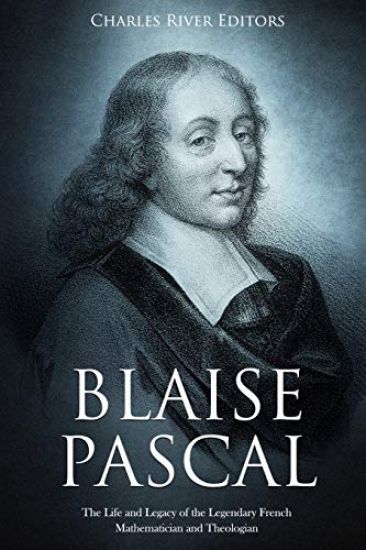
*Includes pictures *Includes contemporary accounts *Includes online resources and a bibliography for further reading "People almost invariably arrive at their beliefs not on the basis of proof but on the basis of what they find attractive." - Blaise Pascal Blaise Pascal's time on earth may have been brief - no more than 39 years - but this unconventionally educated, yet brilliant scientist, mathematician, and man of letters accomplished more than most people could hope to achieve in two lifetimes. The SI unit of pressure, Pascal, is named after this polymath, and he is the namesake of a procedural programming language designed by Niklaus Wirth between the years of 1968 and 1969. On top of the countless busts, statues, and plaques erected in his honor, several institutions bear his name, as does a university in his hometown of Clermont-Ferrand. The Blaise Pascal Chairs, a glittering accolade awarded to exceptional international scientists every year, was also established in his honor. How did Blaise Pascal leave such a legacy in such a short amount of time? Blaise Pascal: The Life and Legacy of the Legendary French Mathematician and Theologian examines the life and work that made him one of modern history's most important figures. Along with pictures of important people, places, and events, you will learn about Pascal like never before.
Blaise Pascal: The Life and Legacy of the Legendary French Mathematician and Theologian
*Includes pictures *Includes contemporary accounts *Includes online resources and a bibliography for further reading "People almost invariably arrive at their beliefs not on the basis of proof but on the basis of what they find attractive." - Blaise Pascal Blaise Pascal's time on earth may have been brief - no more than 39 years - but this unconventionally educated, yet brilliant scientist, mathematician, and man of letters accomplished more than most people could hope to achieve in two lifetimes. The SI unit of pressure, Pascal, is named after this polymath, and he is the namesake of a procedural programming language designed by Niklaus Wirth between the years of 1968 and 1969. On top of the countless busts, statues, and plaques erected in his honor, several institutions bear his name, as does a university in his hometown of Clermont-Ferrand. The Blaise Pascal Chairs, a glittering accolade awarded to exceptional international scientists every year, was also established in his honor. How did Blaise Pascal leave such a legacy in such a short amount of time? Blaise Pascal: The Life and Legacy of the Legendary French Mathematician and Theologian examines the life and work that made him one of modern history's most important figures. Along with pictures of important people, places, and events, you will learn about Pascal like never before.