Kirjojen hintavertailu. Mukana 11 342 296 kirjaa ja 12 kauppaa.

Kirjahaku

Etsi kirjoja tekijän nimen, kirjan nimen tai ISBN:n perusteella.

1000 tulosta hakusanalla Blake Butler

Blake's Lullaby

Blake's Lullaby

Oxford University Press
2023
muu
for SATB and string orchestra Full score and set of parts for Blake's Lullaby, which was written in aid of MacMillan Cancer Support. Although the prevailing mood of the gently flowing music is lyrical, with an atmosphere of loving peacefulness, William Blake's Lullaby is not without its darker undertones, and they too are explored, with one or two bold harmonic touches. This set includes the following string parts: 4 x vln I, 4 x vln II, 3 x vla, 2 x vc, 1 x db.
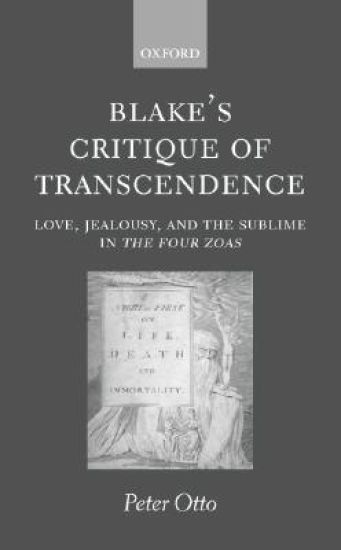
Blake's Critique of Transcendence

Blake's Critique of Transcendence

Peter Otto

Oxford University Press
2000
sidottu
Blake's Critique of Transcendence is the first full-length book to examine in any detail or consistency the relation between Blake's text and the visual designs in The Four Zoas, one of the most important works in Blake's oeuvre. It uncovers a Blake deeply engaged with the cultural discourses of his time, in profound dialogue with Swedenborg, Locke, and Young. In the course of this conversation, Blake anatomizes a remarkable variety of cultural practices (including religion, science, and art) designed to achieve transcendence. He focuses in particular on the fate of the body in cultures of transcendence, developing perhaps the first theory of sexual sublimation. Blake's radical visual and verbal strategies in this poem are part of an attempt to defer the movement of transcendence, long enough for the reader to see the warring elements of the fallen world as the dismembered body of humanity.
Blake's 'Jerusalem' As Visionary Theatre

Blake's 'Jerusalem' As Visionary Theatre

Susanne M. Sklar

Oxford University Press
2011
sidottu
Before etching Jerusalem William Blake wrote about creating 'the grandest poem that this world contains.' Blake's avowed intention in constructing the work was to move readers from a solely rational way of being (called Ulro) to one that is highly imaginative (called Eden/Eternity), with each word chosen to suit 'the mouth of a true Orator.' Rational interpretation is of limited use when reading this multifaceted epic and its non-linear structure presents a perennial challenge for readers. Susanne Sklar engages with the interpretive challenges of Jerusalem by considering it as a piece of visionary theatre --an imaginative performance in which characters, settings, and imagery are not confined by mundane space and time-- allowing readers to find coherence within its complexities. With his characters, Blake's readers can participate imaginatively in what Blake calls 'the Divine Body, the Saviour's Kingdom,' a way of being in which all things interconnect: spiritually, ecologically, socially, and erotically. Imaginatively engaging with Jerusalem involves close textual reading and analysis. The first part of this book discusses the notion of visionary theatre, and the theological, literary, and historical antecedents of Jerusalem's imagery, characters, and settings. Particular attention is paid to the theological context of Blake's Jesus ('the Divine Body'), and Jerusalem, the heroine of his poem. This prepares the ground for a scene-by-scene commentary of the entire illuminated work. Jerusalem tells the story of Albion's fall, many rescue attempts, escalating violence and oppression, and a surprising apocalypse --in which all living things, awakening, are transfigured in ferocious forgiveness.
Good Morning, Blake

Good Morning, Blake

Blake Crash Priddle

Tellwell Talent
2021
pokkari
From non-verbal to radio announcer . . .Good Morning, Blake: Growing Up Autistic and Being Okay lays bare-from cradle to adulthood-the myriad steps Blake has taken to find his voice and rightful place in society.Eighty-five percent of Blake's autistic peers do not have meaningful employment, so what facilitators occurred in his life to help him break from this dismal statistic? While the struggles cannot be ignored, the real fight is in shifting society to walk the talk and make schools, workplaces and communities more inclusive.Echolalia, dysfluency, sensory disintegration, anxiety, depression, obsessive-compulsive disorder and self-stimulatory behaviours are all touched upon in Blake's memoir. While it is one story by one autistic person, Blake's story offers strategies and tips for making our world kinder, more inclusive and a safer place for those who march to the beat of a different drum.What makes this book unique? Raw, uninhibited perspectives from fifty of Blake's peers, family members, friends, teachers and work colleagues who demonstrate it takes a village to raise a child. Blake's positive attitude will make you feel good, even though he doesn't sugar coat his struggles. As a reader you will laugh, cry and cheer him on as he strives in his career and succeeds to live as an independent adult.
Good Morning, Blake

Good Morning, Blake

Blake Crash Priddle

Tellwell Talent
2021
sidottu
From non-verbal to radio announcer . . .Good Morning, Blake: Growing Up Autistic and Being Okay lays bare-from cradle to adulthood-the myriad steps Blake has taken to find his voice and rightful place in society.Eighty-five percent of Blake's autistic peers do not have meaningful employment, so what facilitators occurred in his life to help him break from this dismal statistic? While the struggles cannot be ignored, the real fight is in shifting society to walk the talk and make schools, workplaces and communities more inclusive.Echolalia, dysfluency, sensory disintegration, anxiety, depression, obsessive-compulsive disorder and self-stimulatory behaviours are all touched upon in Blake's memoir. While it is one story by one autistic person, Blake's story offers strategies and tips for making our world kinder, more inclusive and a safer place for those who march to the beat of a different drum.What makes this book unique? Raw, uninhibited perspectives from fifty of Blake's peers, family members, friends, teachers and work colleagues who demonstrate it takes a village to raise a child. Blake's positive attitude will make you feel good, even though he doesn't sugar coat his struggles. As a reader you will laugh, cry and cheer him on as he strives in his career and succeeds to live as an independent adult.
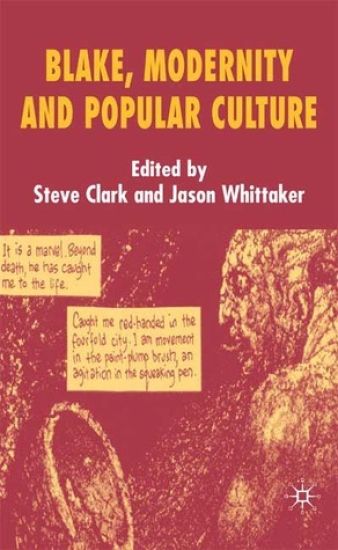
Blake, Modernity and Popular Culture
This book explores the ways in which Blake reacted to the subcultures of his day, as well as how he has inspired popular, modernist and postmodernist figures until the present day. Blake's influence on later generations of writers and artists is more important than ever, extending into film, psychology, children's literature and graphic novels.
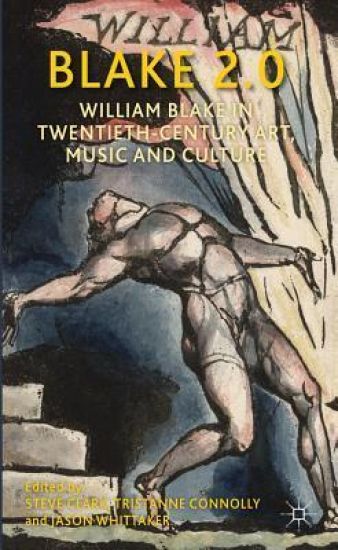
Blake 2.0

Blake 2.0

Palgrave Macmillan
2012
sidottu
Blake said of his works, 'Tho' I call them Mine I know they are not Mine'. So who owns Blake? Blake has always been more than words on a page. This volume takes Blake 2.0 as an interactive concept, examining digital dissemination of his works and reinvention by artists, writers, musicians, and filmmakers across a variety of twentieth-century media.
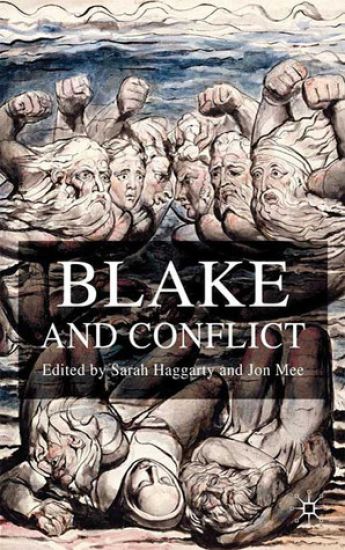
Blake and Conflict

Blake and Conflict

Palgrave Macmillan
2008
sidottu
Famously, Blake believed that 'without contraries' there could be no 'progression'. Conflict was integral to his artistic vision, and his style, but it had more to do with critical engagement than any urge to victory. The essays in this volume look at conflict as it marked Blake's thinking on politics, religion and the visual arts.
Blake on Language, Power, and Self-Annihilation
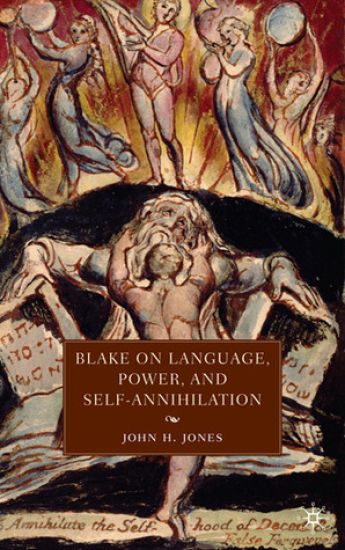
Against a historical backdrop that includes eighteenth-century language theory, children's literature and education, debates on the French Revolution, Biblical interpretation, and print culture, Blake on Language, Power, and Self-Annihilation breaks new ground in the study of William Blake. This book analyzes the concept of self-annihilation in Blake s work, using the language theories of Mikhail Bakhtin to elucidate the ways in which his discourse was open to the viewpoints of others, undermines institutional authority, and restores dialogue. This book not only uncovers the importance of self-annihilation to Blake's thinking about language and communication, but it also develops its centrality to Blake's poetic practice.
Blake and the Bible

Blake and the Bible

Christopher Rowland

Yale University Press
2011
sidottu
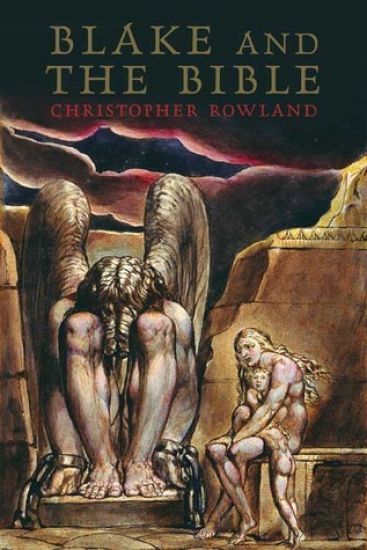
The Bible was crucial for William Blake and for his poetic genius, whether as an object of criticism or as an inspiration. This book—the first substantial study of the topic in sixty years—locates Blake within the broad spectrum of Christian biblical interpretation and explores the ways in which Blake engaged with the Bible. Christopher Rowland argues that Blake's approach to the Bible was broadly consistent, even though he underwent something of a religious change in his later years. The author also shows how Blake saw himself as being in the prophetic tradition and also as somehow continuing the work of John of Patmos, author of the Book of Revelation.
Blake and Homosexuality

Blake and Homosexuality

C. Hobson

Palgrave Macmillan
2001
sidottu
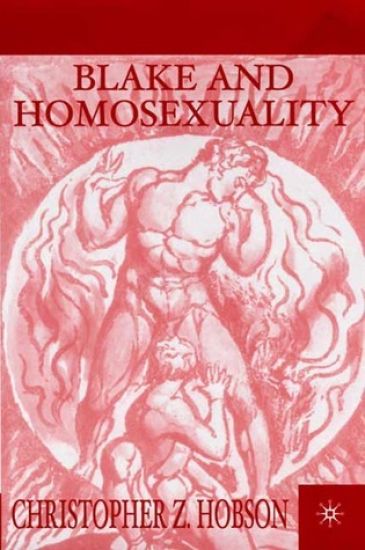
Against the backdrop of Britain's underground 18th and early-19th century homosexual culture, mob persecutions, and executions of homosexuals, Hobson shows how Blake's hatred of sexual and religious hypocrisy and state repression, and his revolutionary social vision, led him gradually to accept homosexuality as an integral part of human sexuality. In the process, Blake rejected the antihomosexual bias of British radical tradition, revised his idealization of aggressive male heterosexuality and his male-centered view of gender, and refined his conception of the cooperative commonwealth.
Blake in the Nineties

Blake in the Nineties

Palgrave Macmillan
1999
sidottu
The 1990s have witnessed a major reassessment of Blake initiated by a new and more rigorous comprehension of his modes of production, which in turn has led to re-evaluation of other literary and cultural contexts for his work. Blake in the Nineties grapples with the implications of the new bibliography for Blake studies, in its editorial, interpretative, and historical dimensions. As well as providing an international overview of recent Blake criticism, the collection contributes to current debates in a variety of disciplines dealing with the Romantic period, including art history, counter-Enlightenment-scholarship, theology and hermeneutic theory.
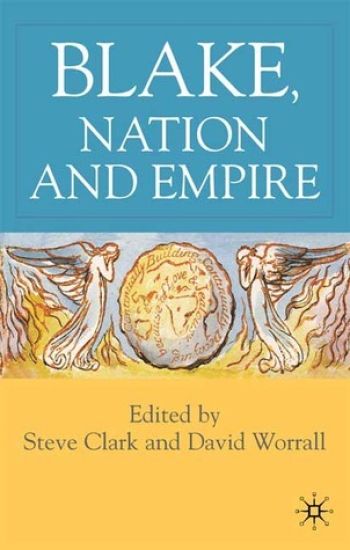
Blake, Nation and Empire

Blake, Nation and Empire

Palgrave Macmillan
2006
sidottu
This book examines Blake's work in the context of discourses of nation and empire, of the construction of a public sphere, and restores the longevity to his artistic career by placing emphasis on his work in the 1820s. Relevant contexts include technology, sentimentalism, Ireland and Catholic Emancipation, missionary prospectuses and body politics.
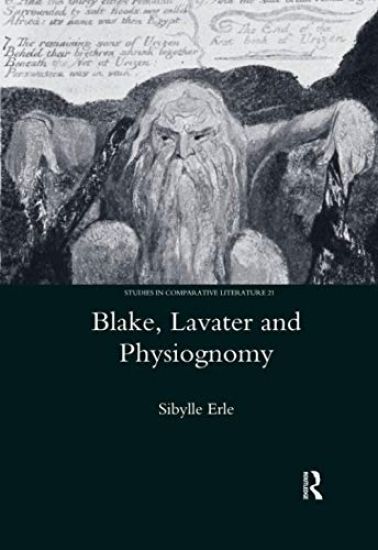
Blake, Lavater, and Physiognomy

Blake, Lavater, and Physiognomy

Sibylle Erle

Routledge
2020
nidottu
This book examines the early reception of Johann Caspar Lavater's Essays on Physiognomy and demonstrates how the challenges occurring during the production of Henry Hunter's translation resonate in William Blake's treatment of the Genesis story.
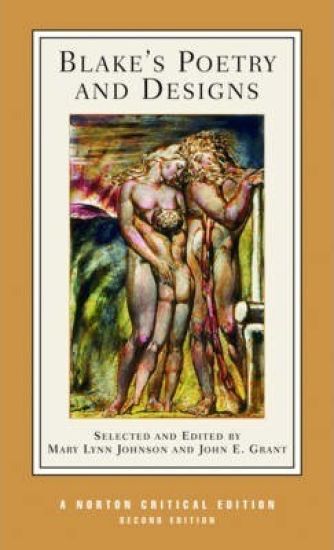
Blake's Poetry and Designs

Blake's Poetry and Designs

William Blake

WW Norton Co
2008
nidottu
In addition to a broad selection of the poems, the volume includes over 100 images (16 in color), emphasizing the centrality of pictorial representations to Blake’s verse. Biographical context is provided through dozens of excerpts from Blake’s notebook, letters, marginalia, and other writings. “Criticism” offers twenty wide-ranging commentaries by writers from Blake’s contemporaries to present-day critics, among them Samuel Taylor Coleridge, Northrop Frye, Allen Ginsberg, Morris Eaves, Harold Bloom, Alicia Ostriker, John Mee, Saree Makdisi, and Julia Wright. A section on Textual Technicalities, a Chronology of Blake’s life and work, a Selected Bibliography, and an Index of Titles and First Lines are also included.
Blake and Antiquity

Blake and Antiquity

Kathleen Raine

Routledge
2002
sidottu
Blake was a visionary like no other. To some, like William Wordsworth, the only explanation for the remarkable spiritual world Blake witnessed and brought to life in his books was 'insane genius'. Although such a view persisted well into the twentieth century, this is the pivotal work which challenged that perspective and changed forever our understanding of William Blake's genius, placing him in the esoteric tradition. For many this book will be a revelation; for lovers of Blake it is indispensable.
Blake and Antiquity

Blake and Antiquity

Kathleen Raine

Routledge
2002
nidottu
Blake was a visionary like no other. To some, like William Wordsworth, the only explanation for the remarkable spiritual world Blake witnessed and brought to life in his books was 'insane genius'. Although such a view persisted well into the twentieth century, this is the pivotal work which challenged that perspective and changed forever our understanding of William Blake's genius, placing him in the esoteric tradition. For many this book will be a revelation; for lovers of Blake it is indispensable.