

Kirjahaku
Etsi kirjoja tekijän nimen, kirjan nimen tai ISBN:n perusteella.
1000 tulosta hakusanalla Brian G Pickerd; Michael Pasquale
Unified Behavior Framework for Reactive Robot Control in Real-Time Systems
Brian G Woolley
Biblioscholar
2012
pokkari


U.S. Policy Recommendation for Responding to Cyber Attacks Against the United States
Brian G Hermann
Biblioscholar
2012
pokkari


Reshaping the Expeditionary Army to Win Decisively: the Case for Greater Stabilization Capacity in the Modular Force
Brian G. Watson; Strategic Studies Institute
Lulu.com
2014
nidottu
The U.S. Army War College provides an excellent environment for selected military officers and government civilians to reflect and use their career experience to explore a wide range of strategic issues. To assure that the research developed by Army War College students is available to Army and Department of Defense leaders, the Strategic Studies Institute publishes selected papers in its Carlisle Papers in Security Strategy Series. The author of this paper argues that the major capability gap in today's force-and vital for future campaigns-is the ability to conduct stabilization. He suggests three areas where Army leaders must make near-term adjustments in the Modular Force to ensure the nation has a truly expeditionary force with the campaign capacity for both rapid decisive operations and stabilization.

This follow up collection covers my journey after depression. Jaded Eyes and Jaded Windows (Reflections from a Restored Mind) chronicles the recovery process and joy I have discovered after the windowless prison that held my mind captive. While not everyone will suffer though the valley of complete hopelessness, everyone knows someone that has been or is currently there. These lyrics show the reader that the key to the chains can be found. Share in my journey and maybe help a friend.
UNPLANNED EVENTS is both a character driven and thematically driven psychological drama. The story opens with a car crash. After the crash, Joe, the central character, is adrift. He searches for understanding and companionship, and for a grip on reality. In his friendship with two lost girls, they are as much his lifeline as he becomes theirs. Susan, his wife, is a very intriguing and complex character. Her relationship with Joe is filled with conflict and personal tension. The two girls, Jenny and Pony, represent psychologically a second chance and redemption for Joe. He's driven by inner guilt that he neglected his family. His external goal is to help the girls, but the story is about Joe's emotional goal and struggle. The premise pulls at the heartstrings of the reader as it reminds us how lonely life can be without a family to love. Joe's journey of forgiveness coupled with Jenny's determined spirit to find her son fill the story with a pleasant undertone of inspiration.


Veterinary Oral and Maxillofacial Pathology
Brian G. Murphy; Cynthia M. Bell; Jason W. Soukup
JOHN WILEY SONS INC
2025
sidottu
Comprehensive reference on diagnostic oral pathology in animals with clinical correlates Veterinary Oral and Maxillofacial Pathology, Second Edition is a comprehensive reference to diagnostic pathology in the oral and maxillofacial region in animals, focusing on information most useful for diagnosis and patient management in clinical practice. The book features high-quality images, including clinical photographs, radiographs and other imaging modalities, gross pathology, histopathology, special stains, immunohistology, ultrastructure, molecular diagnostics, and numerous diagrams. The work focuses on dogs, cats and horses but also offers comparative information for rodent, ruminant, reptile, and exotic patients. The Second Edition adds new chapters focused on oral medicine of small animals and oral and maxillofacial disease of horses, with expanded and improved images and updates throughout. A companion website presents video clips of narrated scanned slides. This edition features multiple authors who are subject matter specialists in oral medicine, viral disease, dermatopathology, and equine dentistry. Veterinary Oral and Maxillofacial Pathology covers all aspects of oral pathology, including: ? Odontogenesis and histological features of normal oral tissues, including oral mucosa, tonsils, lips, teeth, incisive papilla and ducts, salivary glands and jaw bones ? Diagnostic utility of differential diagnoses, the considerable ambiguity and morphologic overlap of some oral lesions, and the ever-evolving state of lesion classification ? Taxonomic controversies, with pros and cons of different viewpoints to allow readers to make their own decisions Veterinary Oral and Maxillofacial Pathology is a one-of-a-kind reference for veterinary pathologists, veterinary dentists, resident trainees, interns, students, and veterinary practitioners.
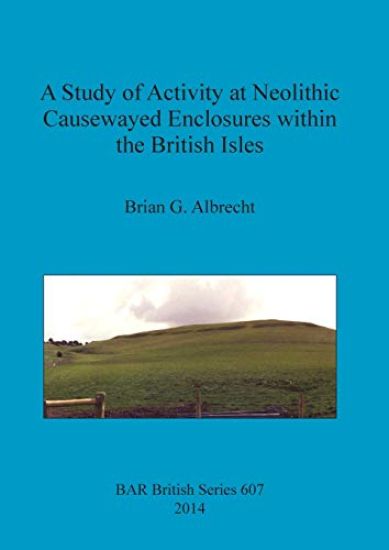
A Study of Activity at Neolithic Causewayed Enclosures Within the British Isles
Brian G Albrecht
BAR Publishing
2014
nidottu
Since the first explorations of causewayed enclosures, archaeologists have attempted to define these early Neolithic monuments in relation to territorial patterns, pottery typologies, and ultimately though the concept of structured deposition. While these concepts have been important in advancing our knowledge of causewayed enclosures, the interpretations of the material from the enclosures ditch segments and other areas of these sites have failed to take into account the importance of how objects and materials came to be at the sites, were produced and used there, preceding deposition. This book argues that activities at enclosures should not be categorically separated from the everyday activities of those who visited the enclosures; that by looking in detail at the spatial and temporal distribution of objects in association with chronology that the practical activities people engaged in at enclosures have been overshadowed by interpretations stressing the ritual nature of structured deposits. These activities had a direct relationship with enclosures and local landscapes. This argues that perhaps more deposits within causewayed enclosures were the result of everyday activities which occurred while people gathered at these sites and not necessarily the result of a 'ritual' act. A reinterpretation of the detail from nine causewayed enclosures within three 'regions' of the British Isles (East Anglia, Sussex and Wessex) are examined. This theoretical approach to activity goes beyond the deposition of objects and also includes enclosure construction, object modification such as flint knapping, animal butchery, and the use of pottery and wood. On a micro scale this indicates that each community who constructed an enclosure deposited objects in a unique and 'personal' manner which was acceptable within their defined social system. On a macro scale, this indicates that although all British causewayed enclosures seem to 'function' in the same way, the individual sites were constructed, modified and used in distinctive ways. Some enclosures seem to have existed quite independently from their neighbors while other enclosures within close proximity to each other had a specialized role to play. These specialized roles indicate that some enclosures may have been constructed and used by groups who primarily came to them in order to carry out a specific set of activities which were then defined through deposition.

Social Networks and Popular Understanding of Science and Health
Brian G. Southwell
Johns Hopkins University Press
2013
pokkari
Using social media and peer-to-peer networks to teach people about science and health may seem like an obvious strategy. Yet recent research suggests that systematic reliance on social networks may be a recipe for inequity. People are not consistently inclined to share information with others around them, and many people are constrained by factors outside of their immediate control. Ironically, the highly social nature of humankind complicates the extent to which we can live in a society united solely by electronic media. Stretching well beyond social media, this book documents disparate tendencies in the ways people learn and share information about health and science. By reviewing a wide array of existing research - ranging from a survey of New Orleans residents in the weeks after Hurricane Katrina to analysis of Twitter posts related to H1N1 to a physician-led communication campaign explaining the benefits of vaginal birth - Brian G. Southwell explains why some types of information are more likely to be shared than others and how some people never get exposed to seemingly widely available information. This book will appeal to social science students and citizens interested in the role of social networks in information diffusion and yet it also serves as a cautionary tale for communication practitioners and policymakers interested in leveraging social ties as an inexpensive method to spread information.

The Most Important Story Ever Told This is the story of God’s gracious rescue of the world through the gift of his Son and the sending of his Spirit. It’s a story of creation and judgment, crime and punishment, grace and glory. It’s a story filled with drama, tension, power, beauty, and hope. And at the heart of this story is the revelation of God’s glory in the death and resurrection of his Son, Jesus Christ. This is the most important story in all of history. And in it you will find the reason you were created, the way you are meant to live, and the path to eternal life.
Argues that, to make progress within environmental ethics, philosophers must explicitly engage in environmental metaphysics.Much of early environmental ethics was born out of the belief that the ecological crisis can only truly be solved by overcoming a pernicious worldview that limits all intrinsic value to human beings. Returning to this originating impulse, Value, Beauty, and Nature contends that, to make progress within environmental ethics, philosophers must explicitly engage in environmental metaphysics. Grounded in an organicist process worldview, Brian G. Henning shows that it is possible to make progress in key debates within environmental philosophy, including those concerning the nature of intrinsic value; anthropocentrism; hierarchy; the moral significance of beauty; the nature of individuality; teleology and the naturalistic fallacy; and worldview reconstruction. A Whiteheadian fallibilistic, naturalistic, event ontology allows for the recovery of systematic, speculative metaphysical thought without a revanchist movement toward a necessitarian philosophia perennis. Thus, in contrast to the claims of environmental pragmatists, Value, Beauty, and Nature demonstrates that environmental ethics would greatly benefit from an adequate metaphysical foundation and, of the candidate metaphysical systems, Alfred North Whitehead's philosophy of organism is the most adequate.

Argues that, to make progress within environmental ethics, philosophers must explicitly engage in environmental metaphysics.Much of early environmental ethics was born out of the belief that the ecological crisis can only truly be solved by overcoming a pernicious worldview that limits all intrinsic value to human beings. Returning to this originating impulse, Value, Beauty, and Nature contends that, to make progress within environmental ethics, philosophers must explicitly engage in environmental metaphysics. Grounded in an organicist process worldview, Brian G. Henning shows that it is possible to make progress in key debates within environmental philosophy, including those concerning the nature of intrinsic value; anthropocentrism; hierarchy; the moral significance of beauty; the nature of individuality; teleology and the naturalistic fallacy; and worldview reconstruction. A Whiteheadian fallibilistic, naturalistic, event ontology allows for the recovery of systematic, speculative metaphysical thought without a revanchist movement toward a necessitarian philosophia perennis. Thus, in contrast to the claims of environmental pragmatists, Value, Beauty, and Nature demonstrates that environmental ethics would greatly benefit from an adequate metaphysical foundation and, of the candidate metaphysical systems, Alfred North Whitehead's philosophy of organism is the most adequate.

Santa Claus and Little Sister
Brian G. Snow
Createspace Independent Publishing Platform
2011
nidottu
Santa Claus and Little Sister is autobiographical in nature, selfishly therapeutic in design, and hard proof that we cannot control our future regardless how hard we try. This is a journey of one young optimistic East Coast teacher who taught at New Beginnings, a Los Angeles placement home for at-risk, mentally and physically abused, abandoned, gang, and socially-emotionally disturbed girls. He discovers that truth often becomes lies, moral transforms into immoral, and fear builds knowledge. The Journey: Lupe, a petit beautiful Mexican 12-year-old girl, identified only by the alias assigned to her by the FBI, is suddenly missing from the Los Angeles placement center, leaving only her most cherished possession behind, a self-made book of poems, photography and artwork entitled "To Santa Claus and Little Sisters". Lupe's confidential file reveals that has she been struggling with suicidal thoughts and attempts for years. Little Lupe also has a contract on her life placed by her own incarcerated parents. Her brother is an active gang member with the notorious Mexican Espinoza cartel from Tijuana that specializes in child trafficking and ransom kidnappings. Refusing to accept the hypothesis that Lupe ran away on her own free will, risks would have to be taken by a young naive Boston-born teacher - including the recruitment of his most dangerous student, Chata. Seventeen-year-old Chata, a bold and controlling overweight active member of the Baby Locas Division of the 18th Street Gang in South LA, struggles between two opposing worlds and purposely brings both together in the back alleys of Los Angeles one moonless night. Both would have to question their belief system many times in order to survive when circumstances were not in their favor. To these young catalysts, Chata and Lupe, I am forever grateful for the spark that you ignited in me, for any real survivor characteristics that I possess are due to you. And lastly, to all the young girls that I have had the honor to work with, who like Anonymous, unfortunately committed suicide - I want you to know that you are dearly loved and missed. You changed my life. Thank you girls. In your honor, I have shared our story in "Santa Claus and Little Sister"

Politics & Evangelical Theology: A Guide For Concerned Christians and Political Progressives
Brian G. Mattson
Createspace Independent Publishing Platform
2012
nidottu

The Flight of the Earl: Book One: An Irish Earl in the Court of King George
Brian G. O'Neill
Createspace Independent Publishing Platform
2012
nidottu
Thomas O'Neill was known to all in the Pound Looney area of the city as "Big Tom", both for the size of his stature and the importance he held as head of the O'Neill Clan in West Belfast. An Englishman might say he "ruled" West Belfast but this would miss the Irish tradition in which Big Tom, in his way of life and integrity, was given this title without asking or taking - he was "Big Tom" and that's who he was, and Gerry was proud he was his father, his "Da". He told Gerry and his brothers they could hold their heads high, knowing they were descended from Irish kings and princes, even though they now lived under the yoke of the British 'occupation' of the North of Ireland. When Gerry discovers his true identity he must unravel a mystery which links two families back to the16th century - the family of Red Hugh O'Neill the last Earl of Ulster and the other his mortal enemy and founder of Belfast, Sir Arthur Chichester himself.