Kirjojen hintavertailu. Mukana 11 244 527 kirjaa ja 12 kauppaa.

Kirjahaku

Etsi kirjoja tekijän nimen, kirjan nimen tai ISBN:n perusteella.

1000 tulosta hakusanalla Brian P. Bennett

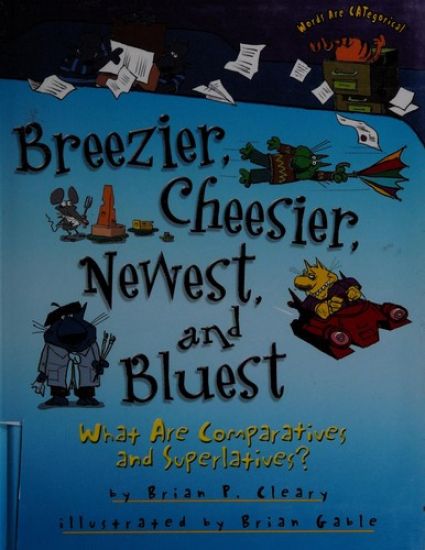
Breezier, Cheesier, Newest, and Bluest: What Are Comparatives and Superlatives?
What are comparatives and superlatives? After reading this book, you'll have a much clearer idea and will be the best at forming these descriptive words Brian P. Cleary and Brian Gable explain how these forms of adjectives compare nouns, through the cleverest rhymes and illustrations that are sillier than ever. Each comparative or superlative word is printed in color for easier identification.Breezier, Cheesier, Newest, and Bluest: What Are Comparatives and Superlatives? turns traditional grammar lessons on end. Read it aloud and share in the delight of the sense--and nonsense--of words.
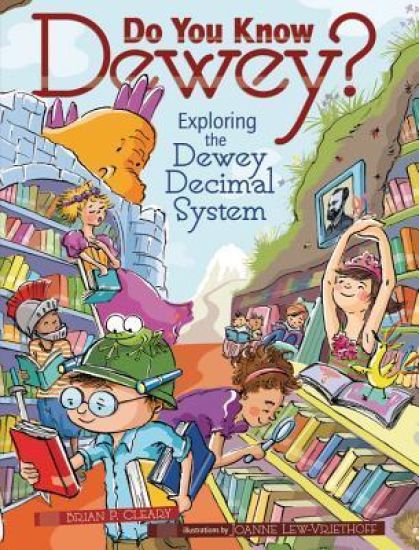
Do You Know Dewey?: Exploring the Dewey Decimal System
Are you ready for a library adventure? Join a group of children as they explore the Dewey decimal system Search for ghosts in the 100s section, track down everything from costumes to cars in the 300s, and be on the lookout for sports and music in the 700s. By the end of the book, you'll be more than ready to dive into Dewey on your own
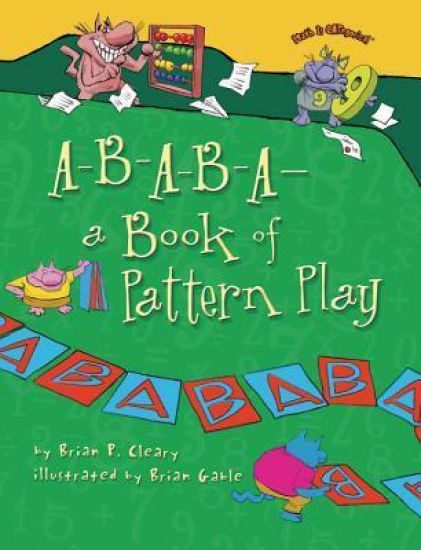
A-B-A-B-A--A Book of Pattern Play

A-B-A-B-A--A Book of Pattern Play

Brian P. Cleary

Millbrook Press (Tm)
2012
nidottu
In this playful look at patterns, Brian P. Cleary and Brian Gable provide many examples of repeating sequences of shapes, colors, objects, and more. The comical cats of the wildly popular Words Are CATegorical(R) series show how patterns can be found all around us. Peppy rhymes, goofy illustrations, and kid-friendly examples make pattern practice fun
Applied Statistics for Public Policy

Applied Statistics for Public Policy

Brian P. Macfie; Philip M. Nufrio

Routledge
2005
sidottu
This practical text provides students with the statistical tools needed to analyze data, and shows how statistics can be used as a tool in making informed, intelligent policy decisions. The authors' approach helps students learn what statistical measures mean and focus on interpreting results, as opposed to memorizing and applying dozens of statistical formulae. The book includes more than 500 end-of-chapter problems, solvable with the easy-to-use Excel spreadsheet application developed by the authors. This template allows students to enter numbers into the appropriate sheet, sit back, and analyze the data. This comprehensive, hands-on textbook requires only a background in high school algebra and has been thoroughly classroom-tested in both undergraduate and graduate level courses. No prior expertise with Excel is required. A disk with the Excel template and the data sets is included with the book, and solutions to the end-of-chapter problems will be provided on the M.E. Sharpe website.
Piety and Nationalism

Piety and Nationalism

Brian P. Clarke

McGill-Queen's University Press
1993
sidottu
While the role of the laity in the nationalist awakening is commonly recognized, their part in the movement for religious renewal is usually minimized. Initiative on the part of the laity has been thought to have existed only outside the church, where it remained a troubling and at times insurgent force. Clarke revises this picture of the role of the laity in church and community. He examines the rich associational life of the laity, which ranged from nationalist and fraternal associations independent of the church to devotional and philanthropic associations affiliated with the church. Associations both inside and outside the church fostered ethnic consciousness in different but complementary ways that resulted in a cultural consensus based on denominational loyalty. Through these associations, lay men and women developed an institutional base for the activism and initiative that shaped both their church and their community. Clarke demonstrates that lay activists played a pivotal role in transforming the religious life of the community.
Intimate Ironies

Intimate Ironies

Brian P. Owensby

Stanford University Press
1999
sidottu
The middle-class condition, seen during the twentieth century as both the symbol of progress and order and the means to achieve it, has largely evaded historical analysis. Blending historical methods and anthropological sensibilities, Intimate Ironies relates the everyday lives of an emergent white-collar middle class to Brazilian national politics in the twentieth century. Focusing on the period between 1920 and 1950, the author looks beyond ideologies to reveal how, amidst the turmoil of modernization, middle-class men and women strained to wrest order from the ordeal of change. Drawing on legacies of hierarchy and patronage and orienting themselves in very concrete ways to the middle-class ideal of Western modernity, these Brazilian men and women recast the meaning of work and home to set themselves apart from those below them and to project a sense of moral superiority over those above. The author shows how anxieties growing out of this ambivalent position deeply conditioned their role in national politics, from experiments groping toward middle-class populism during the 1930's to the moralistic distrust of institutional politics that characterized the middle-class political outlook after World War II. Intimate Ironies represents a novel approach to the history of urban middle classes in the twentieth century. Most studies of the middle class have concentrated on culture or political behavior; rarely have the two been brought together. By linking everyday life and politics, the book reinvigorates the study of political history and class in modern Latin American societies, in the process complementing recent studies of organized labor and the industrial elites in Latin America. And by telling an unorthodox story of the middle class, the author challenges the very possibility of a linear, progressive narrative of social development.
Empire of Law and Indian Justice in Colonial Mexico

Empire of Law and Indian Justice in Colonial Mexico

Brian P. Owensby

Stanford University Press
2008
sidottu
Empire of Law and Indian Justice in Colonial Mexico shows how Indian litigants and petitioners made sense of Spanish legal principles and processes when the dust of conquest had begun to settle after 1600. By juxtaposing hundreds of case records with written laws and treatises, Owensby reveals how Indians saw the law as a practical and moral resource that allowed them to gain a measure of control over their lives and to forge a relationship to a distant king. Several chapters elucidate central concepts of Indian claimants in their encounter with the law over the seventeenth century—royal protection, possession of property, liberty, notions of guilt, village autonomy and self-rule, and subjecthood. Owensby concludes that Indian engagement with Spanish law was the first early modern experiment in cosmopolitan legality, one that faced the problem of difference head on and sought to bridge the local and the international. In so doing, it enabled indigenous claimants to forge a colonial politics of justice that opened up space for a conversation between colonial rulers and ruled.
Empire of Law and Indian Justice in Colonial Mexico

Empire of Law and Indian Justice in Colonial Mexico

Brian P. Owensby

Stanford University Press
2011
pokkari
Empire of Law and Indian Justice in Colonial Mexico shows how Indian litigants and petitioners made sense of Spanish legal principles and processes when the dust of conquest had begun to settle after 1600. By juxtaposing hundreds of case records with written laws and treatises, Owensby reveals how Indians saw the law as a practical and moral resource that allowed them to gain a measure of control over their lives and to forge a relationship to a distant king. Several chapters elucidate central concepts of Indian claimants in their encounter with the law over the seventeenth century—royal protection, possession of property, liberty, notions of guilt, village autonomy and self-rule, and subjecthood. Owensby concludes that Indian engagement with Spanish law was the first early modern experiment in cosmopolitan legality, one that faced the problem of difference head on and sought to bridge the local and the international. In so doing, it enabled indigenous claimants to forge a colonial politics of justice that opened up space for a conversation between colonial rulers and ruled.
Stumbling in Holiness

Stumbling in Holiness

Brian P. Flanagan

Liturgical Press
2018
pokkari
In Stumbling in Holiness, professor and theologian Brian P. Flanagan addresses the ways in which both holiness and sinfulness condition the life of the pilgrim church. The book is rooted in a liturgical-theological explanation of how the church prays through its continuing need for repentance and purification, as well as its belief in its present and future participation in the life of the Holy One. After reviewing some of the ways in which past theologians have tried to explain the coexistence of ecclesial holiness and sinfulness, Flanagan suggests that, even if we can have confidence that God will fully sanctify the church in the reign of God, our ecclesiology must always attend to both the sanctity we already experience in the church and the sinfulness that is part of our continuing journey toward that reign.
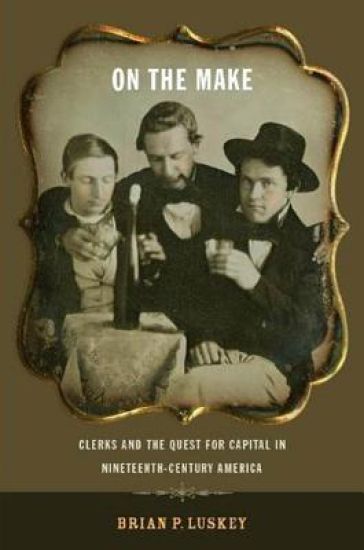
On the Make

On the Make

Brian P. Luskey

New York University Press
2010
sidottu
In the bustling cities of the mid-nineteenth-century Northeast, young male clerks working in commercial offices and stores were on the make, persistently seeking wealth, respect, and self-gratification. Yet these strivers and "counter jumpers" discovered that claiming the identities of independent men—while making sense of a volatile capitalist economy and fluid urban society—was fraught with uncertainty. In On the Make, Brian P. Luskey illuminates at once the power of the ideology of self-making and the important contests over the meanings of respectability, manhood, and citizenship that helped to determine who clerks were and who they would become. Drawing from a rich array of archival materials, including clerks' diaries, newspapers, credit reports, census data, advice literature, and fiction, Luskey argues that a better understanding of clerks and clerking helps make sense of the culture of capitalism and the society it shaped in this pivotal era.
On the Make

On the Make

Brian P. Luskey

New York University Press
2011
pokkari
In the bustling cities of the mid-nineteenth-century Northeast, young male clerks working in commercial offices and stores were on the make, persistently seeking wealth, respect, and self-gratification. Yet these strivers and "counter jumpers" discovered that claiming the identities of independent men—while making sense of a volatile capitalist economy and fluid urban society—was fraught with uncertainty. In On the Make, Brian P. Luskey illuminates at once the power of the ideology of self-making and the important contests over the meanings of respectability, manhood, and citizenship that helped to determine who clerks were and who they would become. Drawing from a rich array of archival materials, including clerks' diaries, newspapers, credit reports, census data, advice literature, and fiction, Luskey argues that a better understanding of clerks and clerking helps make sense of the culture of capitalism and the society it shaped in this pivotal era.
I and You and Don't Forget Who: What Is a Pronoun?

I and You and Don't Forget Who: What Is a Pronoun?

Brian P. Cleary

Millbrook Press (Tm)
2006
nidottu
Have fun with language The latest addition to the best-selling Words Are CATegorical(R) series, this fun-filled guide uses playful puns and humorous illustrations to creatively clarify the concept of pronouns. Key pronouns appear in color for easy identification to show, not tell, readers what pronouns are all about.
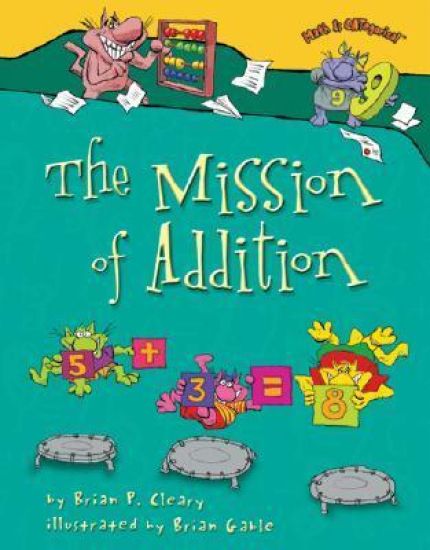
The Mission of Addition

The Mission of Addition

Brian P. Cleary

Millbrook Press (Tm)
2007
nidottu
In the first book of the Math Is Categorical(R) series, readers will become familiar with the concept of addition and its key terms. From the author and illustrator duo of the best-selling Words Are CATegorical(R) series, Math Is CATegorical(R) introduces basic math cFrom the author and illustrator duo of the best-selling Words Are CATegorical(R) series, Math Is CATegorical(R) introduces basic math concepts for young readers and reveals that sometimes math is easier to show than explain Pairing clever rhyming verse with comical cartoon cats, Brian P. Cleary and Brian Gable help children add up just how fun math can be
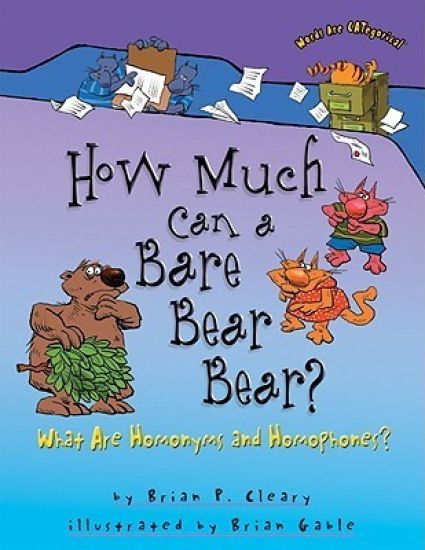
How Much Can a Bare Bear Bear?: What Are Homonyms and Homophones?
Have fun with language This accessible, lighthearted look at language introduces homonyms and homophones. Playful rhymes and comical cartoons make both concepts memorable. Each corresponding pair of homonyms and homophones is printed in color for easy identification. At the end, readers are challenged to apply what they've learned--and they'll have fun doing so.
A Noble Bet in Early Care and Education

A Noble Bet in Early Care and Education

Brian P. Gill; Jacob W. Dembosky; Jonathan P. Caulkins

RAND
2002
pokkari
Lessons learned from Pittsburgh's bold but troubled Early Childhood Initiative The Early Childhood Initiative (ECI), an ambitious effort launched in Pittsburgh in 1996 to provide high-quality early care and education services to at-risk children, failed to achieve its goals, although participating children may have derived substantial benefits from it. This report summarizes ECI's organizational history, analyzes and explains its critical weaknesses, and articulates lessons to inform the design and implementation of future large-scale reform initiatives. The Early Childhood Initiative (ECI) was an ambitious effort launched in Pittsburgh in 1996 to provide high-quality early care and education services to at-risk children, on a countywide scale and under the direction of local neighborhood agencies. Its goal was to improve the preparation of these children for kindergarten, promote their long-term educational attainment, and give them the early tools to help them become productive, successful members of society.Initially funded by foundations and private donors, ECI planned to become financially sustainable over the long term by persuading the state of Pennsylvania to commit to funding the program at the end of a startup period. Four years after its launch, ECI was far short of its enrollment targets, the cost per child was significantly higher than expected, and the effort to secure a commitment of state funding had failed. ECI was therefore converted to a small-scale demonstration program, leaving a residue of disappointment in many communities around the county. Although findings from a parallel study suggest that participating children may have derived substantial benefits from ECI, it failed to achieve its goals in terms of scale and sustainability. In the aftermath of ECI's scale-down, RAND was commissioned by the Heinz Endowments (ECI's largest funder) to study why ECI fell short of its objectives and to learn from its mistakes.The findings of the study are presented in this report, which summarizes ECI's organizational history, analyzes and explains critical weaknesses that hindered ECI's ability to succeed, and articulates lessons to inform the design and implementation of future large-scale reform initiatives, whether in early care and education or in other areas of social services. (JDL)
A Noble Bet in Early Care and Education

A Noble Bet in Early Care and Education

Brian P. Gill; Jacob W. Dembosky; Jonathan P. Caulkins

RAND
2002
pokkari
Lessons learned from Pittsburgh's bold but troubled Early Childhood Initiative; The Early Childhood Initiative (ECI), an ambitious effort to provide high-quality early care and education services to at-risk children, failed to achieve its goals, although participating children may have derived substantial benefits from it. This report summarizes ECI's organizational history, analyzes and explains its critical weaknesses, and articulates lessons to inform the design and implementation of future large-scale reform initiatives.