Kirjahaku
Etsi kirjoja tekijän nimen, kirjan nimen tai ISBN:n perusteella.
1000 tulosta hakusanalla Brian Willson


This volume provides a concise introduction to the issues and debates regarding modern piracy, including naval operations, law, and diplomacy, and focuses on the recent surge of attacks off the coasts of Africa and Asia.In the past decade, the incidence of maritime piracy has exploded. The first three months of 2011 were the worst ever, with 18 ships hijacked, 344 crew taken hostage, and 7 crew members murdered. The four Americans on board the sailing vessel Quest were shot at point-blank range. The economic costs are also staggering, reaching $7 to $12 billion per year, as insurance costs skyrocket, ransoms double and then quadruple, and ships are forced to hire armed security for protection. Pirates operating off the Horn of Africa disrupt shipping traffic through the strategic Suez Canal, siphoning transit fees from an unstable Egypt, while the seizure of supertankers in the Indian Ocean underscores the vulnerability of the world's oil supply. Governments, private industry, and international organizations have mobilized to address the threat. This is the first volume to examine their work in developing naval strategy, international law and diplomacy, and industry guidelines to suppress contemporary maritime piracy.Contemporary Maritime Piracy: International Law, Strategy, and Diplomacy at Sea comprises three sections, the first of which contains chapters on historical and contemporary piracy, international law and diplomacy, and coalition strategies for combating future piracy. The second and third parts provide collections of historic profiles and relevant documents.

Golf is a major global industry. The sport is played by more than 60 million people worldwide and there are more than 32,000 courses in 140 countries across the globe. This book looks at the power relationships in and around golf, examining whether the industry has demonstrated sufficient leadership on environmental matters to be trusted to make weighty decisions with implications for public and environmental health. The first comprehensive study of the varying responses to golf-related environmental issues, it is based on extensive empirical work, including research into historical materials and interviews with stakeholders in golf such as course superintendents, protesters and health professionals. The authors examine golf as a sport and as a global industry, drawing on and contributing to literatures pertaining to environmental sociology, global social movements, institutional change, corporate environmentalism and the sociology of sport.An electronic edition of this book is freely available under a Creative Commons (CC BY-NC-ND) licence.


Golf is a major global industry. The sport is played by more than 60 million people worldwide and there are more than 32,000 courses in 140 countries across the globe. This book looks at the power relationships in and around golf, examining whether the industry has demonstrated sufficient leadership on environmental matters to be trusted to make weighty decisions with implications for public and environmental health. The first comprehensive study of the varying responses to golf-related environmental issues, it is based on extensive empirical work, including research into historical materials and interviews with stakeholders in golf such as course superintendents, protesters and health professionals. The authors examine golf as a sport and as a global industry, drawing on and contributing to literatures pertaining to environmental sociology, global social movements, institutional change, corporate environmentalism and the sociology of sport.An electronic edition of this book is freely available under a Creative Commons (CC BY-NC-ND) licence.

iPhone User Interface Design Projects
Joachim Bondo; David Barnard; Dan Burcaw; Tim Novikoff; Craig Kemper; Chris Parrish; Keith Peters; Jurgen Siebert; Eddie Wilson; Brian Wilson; Ingo Peters; Michael Kemper
APress
2009
nidottu
With over 100,000 iPhone applications and 125,000 registered iPhone developers, is it still possible to create a top-selling app that stands apart from the six-figure crowd? Of course, but you'll need more than a great idea and flawless code—an eye-catching and functional user interface design is essential. With this book, you'll get practical advice on user interface design from 10 innovative developers who, like you, have sat wondering how to best utilize the iPhone's minimal screen real estate. Their stories illustrate precisely why, with more apps and more experienced, creative developers, no iPhone app can succeed without a great user interface. Whatever type of iPhone project you have in mind—social networking app, game, or reference tool—you'll benefit from the information presented in this book. More than just tips and pointers, you'll learn from the authors' hands-on experiences, including: Dave Barnard of App Cubby on how to use Apple's user interface conventions and test for usability to assure better results Joachim Bondo, creator of Deep Green Chess, beats a classic design problem of navigating large dataset results in the realm of the iPhone Former Apple employee Dan Burcaw tailors user interfaces and adds the power of CoreLocation, Address Book, and Camera to the social networking app, Brightkite David Kaneda takes his Basecamp project management client, Outpost, from a blank page (literally) to a model of dashboard clarity Craig Kemper focuses on the smallest details to create his award-winning puzzle games TanZen and Zentomino Tim Novikoff, a graduate student in applied math with no programming experience, reduces a complex problem to simplicity in Flash of Genius: SAT Vocab Long-time Mac developer Chris Parrish goes into detail on thecreation of the digital postcard app, Postage, which won the 2009 Apple Design Award Flash developer Keith Peters provides solutions for bringing games that were designed for a desktop screen to the small, touch-sensitive world of the iPhone Jürgen Siebert, creator of FontShuffle, outlines the anatomy of letters and how to select the right fonts for maximum readability on the iPhone screen Eddie Wilson, an interactive designer, reveals the fine balance of excellent design and trial-by-fire programming used to create his successful app Snow Report Combined with Apress' best-selling Beginning iPhone 3 Development: Exploring the iPhone SDK, you'll be prepared to match great code with striking design and create the app that everyone is talking about.

This is a humorous parody of the poem, "Twas the night before Christmas", published anonymously in 1823 and later claimed by Clement Clarke Moore. Once the excited children are sent to bed, on Christmas eve, and all have gone to bed a visitor comes down the chimney. Could it be St Nicholas? My humorous poem has six verses with colourful illustrations to keep the attention of small children. My eight grandchildren love the book.

A humourous children's book; a parody of AA Milnes "The Changing of the Guard". The book is entertaining for both the adult reader and their child and it is well illustrated. The book is also of educational value.

"Aero, Don't Do That " is about a lovable, loyal dog that sometimes does what he wants. Aero can be found patiently waiting to be fed, napping the day away or waiting for his family to come home. Other times, Aero helps himself to whatever he wants. He is a part of the family and all dog lovers will be able to relate to his silly antics


Adam Brown is now a CIA boss and on a new mission that will take him to end times where he will confront his worst fears and his nemesis. What started out for him as a mission offering protection in the Presidential race turns out to be far more dangerous and of global significance. Is this the end? This is a gripping story wrapped in conspiracy theories with an action-packed plot. For the discerning mind there is even more; a novel with more questions than answers. "The First Trumpet" is a sequel to the earlier novel "Operation Iran", as well as being a stand alone novel.
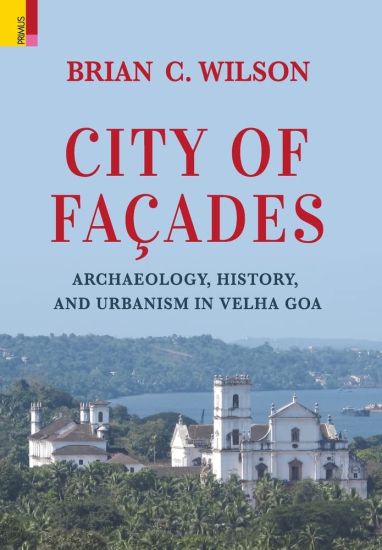
City of Fa ades: Archaeology, History, and Urbanism in Velha Goa revisits early modern colonial urbanisms through an archaeological project conducted in 2012 at the Portuguese colonial site of Velha Goa, India. Histories written about the city's growth and decline from 1510 to the current day are unavoidably structured by elite, top-down understandings of social processes, owing principally to the limits of the colonial archives themselves. As a result, quotidian material transformations, essential to urban processes, remain largely unconsidered. The archaeological data explored in this volume allows us to reflect on these transformations and how they shaped colonial life, both during and after Portuguese rule.

Brian Clough: Nobody Ever Says Thank You
Jonathan Wilson
Orion (an Imprint of The Orion Publishing Group Ltd )
2012
pokkari
The final word on Brian CloughIn this first full, critical biography, Jonathan Wilson draws an intimate and powerful portrait of one of England's greatest football managers, Brian Clough, and his right-hand man, Peter Taylor. It was in the unforgiving world of post-war football where their identities and reputations were made - a world where, as Clough and Taylor's mentor Harry Storer once said, 'Nobody ever says thank you.'Nonetheless, Clough brought the gleam of silverware to the depressed East Midlands of the 1970s. Initial triumph at Derby was followed by a sudden departure and a traumatic 44 days at Leeds. By the end of a frazzled 1974, Clough was set up for life financially, but also hardened to the realities of football. By the time he was at Forest, Clough's mask was almost permanently donned: a persona based on brashness and conflict. Drink fuelled the controversies and the colourful character; it heightened the razor-sharp wit and was a salve for the highs of football that never lasted long enough, and for the lows that inevitably followed. Wilson's account is the definitive portrait of this complex and enduring man.


'COMPREHENSIVE' The Sunday Times'BEAUTIFULLY DETAILED' The Guardian'UTTERLY COMPELLING' Nottingham Forest News'WONDERFUL' Forbes'INTIMATE' FourFourTwo20th Anniversary Edition - Fully revised and updated.In this authoritative, critical biography, Jonathan Wilson draws an intimate and powerful portrait of one of England's greatest football managers, Brian Clough. It was in the unforgiving world of post-war football where his identity and reputation was made - a world where, as Clough's mentor Harry Storer once said, 'Nobody ever says thank you.'Nonetheless, Clough brought the gleam of silverware to the depressed East Midlands of the 1970s. Initial triumph at Derby was followed by a sudden departure and a traumatic 44 days at Leeds. By the end of a frazzled 1974, Clough was set up for life financially, but also hardened to the realities of football. By the time he was at Forest, Clough's mask was almost permanently donned: a persona based on brashness and conflict. Drink fuelled the controversies and the colourful character; it heightened the razor-sharp wit and was a salve for the highs of football that never lasted long enough, and for the lows that inevitably followed. Wilson's account is the definitive portrait of this complex and enduring man, whose legacy in football remains untouched to the present day.
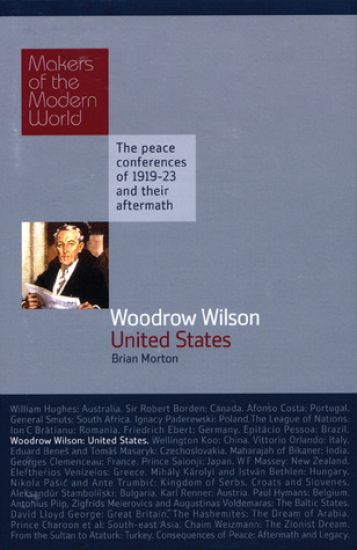
This title is about Woodrow Wilson (1856-1924). It is September 1919 - a meeting hall in a small mid-Western city. A thin man is speaking to a sceptical audience about peace. He has already met the city fathers and has been warned that 'out here' what happens in Europe means very little. Even the late war scarcely impinged on the place, though it had been recognised that it hadn't been altogether good for trade and one or two local boys had died on the fields of France in the very last days of the conflict. The speaker was obviously impassioned, with a preacher's cadence to his voice, and particularly so when he promoted the idea of an international League of Nations to guarantee future peace and ensure that the war into which America had been lured in 1917 really was 'a war to end all wars'.It is noticed that the man is sweating and pale and that he pauses frequently to dab his lips. The price of his campaign for peace - and peace conducted with principle - seems to be a terrible struggle between strong belief on the one hand and failing reserves on the other. Woodrow Wilson will live for another five years, but his battle to convince America to join the League is lost and much of the vigour that marked his time as President of his country, as president of Princeton University, even as an enthusiastic college football coach, was left behind in the Hall of Mirrors at Versailles. This book will look at the life of Wilson, from his early years during the American Civil War, through his academic and political career and America's involvement in the First World War, to Wilson's role at Versailles, including the construction of his Fourteen Points, his principles for the reformation of Europe, and the consequences of Versailles for America and on later conflicts.

Life of Brian Houghton Hodgson: British Resident at the Court of Nepal, Member of the Institute of France; Fellow of the Royal Society; a Vice-Preside
William Wilson Hunter
Westphalia Press
2018
nidottu
Brian Houghton Hodgson was born on February 1, 1800. His family had troubles financially, but through Hodgson's aptitude and some family connections, he was able to continue his studies. He was especially gifted in learning languages, namely Bengali, but also Sanskrit and Persian. In 1818, with the British East India Company, Hodgson traveled to India. He held various political posts, but arguable his passion was for research and writing, particularly on Buddhist manuscripts. He was also interested in natural history. Hodgson catalogued numerous species of animals native to the area, including ollectng over 10,000 skins and specimens for the British Museum. Hodgson was in a long-term relationship with Mehrunnisha, a local Muslim woman, and had two children. They were sent to live in Holland with Hodgson's sister, Ellen, also known as Fanny, but neither child made it into adulthood. Mehrunnisha died in 1843. Hodgson would marry twice more before dying in London on May 23, 1894.