Kirjojen hintavertailu. Mukana 11 699 587 kirjaa ja 12 kauppaa.

Kirjahaku

Etsi kirjoja tekijän nimen, kirjan nimen tai ISBN:n perusteella.

1000 tulosta hakusanalla Bruce L. Felknor

To Serve and Protect

To Serve and Protect

Bruce L. Benson

New York University Press
1998
sidottu
Traces the accelerating trend towards privatization in the criminal justice system In contrast to government's predominant role in criminal justice today, for many centuries crime control was almost entirely private and community-based. Government police forces, prosecutors, courts, and prisons are all recent historical developments–results of a political and bureaucratic social experiment which, Bruce Benson argues, neither protects the innocent nor dispenses justice. In this comprehensive and timely book, Benson analyzes the accelerating trend toward privatization in the criminal justice system. In so doing, To Serve and Protect challenges and transcends both liberal and conservative policies that have supported government's pervasive role. With lucidity and rigor, he examines the gamut of private-sector input to criminal justice–from private-sector outsourcing of prisons and corrections, security, arbitration to full "private justice" such as business and community-imposed sanctions and citizen crime prevention. Searching for the most cost-effective methods of reducing crime and protecting civil liberties, Benson weighs the benefits and liabilities of various levels of privatization, offering correctives for the current gridlock that will make criminal justice truly accountable to the citizenry and will simultaneously result in reductions in the unchecked power of government.

Closed Minds?

Closed Minds?

Bruce L.R. Smith; Jeremy D. Mayer; A. Lee Fritschler

Brookings Institution
2008
nidottu
Contrary to popular belief, the problem with U.S. higher education is not too much politics but too little. Far from being bastions of liberal bias, American universities have largely withdrawn from the world of politics. So conclude Bruce L. R. Smith, Jeremy Mayer, and Lee Fritschler in this illuminating book. Closed Minds?draws on data from interviews, focus groups, and a new national survey by the authors, as well as their decades of experience in higher education to paint the most comprehensive picture to date of campus political attitudes. It finds that while liberals outnumber conservatives within faculty ranks, even most conservatives believe that ideology has little impact on hiring and promotion. Today's students are somewhat more conservative than their professors, but few complain of political bias in the classroom. Similarly, a Pennsylvania legislative inquiry, which the authors explore as a case study of conservative activism in higher education, found that political bias was ""rare"" in the state's public colleges and universities. Yet this ideological peace on campus has been purchased at a high price. American universities are rarely hospitable to lively discussions of issues of public importance. They largely shun serious political debate, all but ignore what used to be called civics, and take little interest in educating students to be effective citizens. Smith, Mayer, and Fritschler contrast the current climate of disengagement with the original civic mission of American colleges and universities. In concluding, they suggest how universities can reclaim and strengthen their place in the nation's political and civic life.
Computer Modeling for Business and Industry

Computer Modeling for Business and Industry

Bruce L. Bowerman

CRC Press Inc
1984
sidottu
This book is intended to be primarily a supplemental text that can be used to integrate the use of computer packages into introductory business statistics and quantitative methods courses, demonstrating how computer packages can be used to solve statistical and operational research problems.
Gateway to Japan

Gateway to Japan

Bruce L. Batten

University of Hawai'i Press
2005
nidottu
A thousand years ago, most visitors to Japan would have arrived by ship at Hakata Bay, the one and only authorized gateway to Japan. Over the ages, Hakata was a staging ground for Japanese troops on their way to Korea and ground zero for foreign invasions of Japan. Through the port passed a rich variety of diplomats, immigrants, raiders, and traders, both Japanese and foreign. ""Gateway to Japan"" spotlights four categories of cross-cultural interaction - war, diplomacy, piracy, and trade - over a period of eight hundred years to gain insight into several larger questions about Japan and its place in the world: How and why did Hakata come to serve as the country's ""front door""? How did geography influence the development of state and society in the Japanese archipelago? Has Japan been historically open or closed to outside influence? Why are Japanese so profoundly ambivalent about other places and people? Individual chapters focus on Chinese expansionism and its consequences for Japan and East Asia as a whole; the subtle (and not-so-subtle) contradictions and obfuscations of the diplomatic process as seen in Japanese treatment of Korean envoys visiting Kyushu; random but sometimes devastating attacks on Kyushu by Korean (and sometimes Japanese) pirates; and foreign commerce in and around Hakata, which turns out to be neither fully ""foreign"" nor fully ""commerce"" in the modern sense of the word. The conclusion briefly traces the story forward into medieval and early modern times.
Wildlife on the Wind

Wildlife on the Wind

Bruce L. Smith

Utah State University Press
2010
sidottu
In the heart of Wyoming sprawls the ancient homeland of the Eastern Shoshone Indians, who were forced by the U.S. government to share a reservation in the Wind River basin and flanking mountain ranges with their historical enemy, the Northern Arapahos. Both tribes lost their sovereign, wide-ranging ways of life and economic dependence on decimated buffalo. Tribal members subsisted on increasingly depleted numbers of other big gamedeer, elk, moose, pronghorn, and bighorn sheep. In 1978, the tribal councils petitioned the U.S. Fish and Wildlife Service to help them recover their wildlife heritage. Bruce Smith became the first wildlife biologist to work on the reservation. Wildlife on the Wind recounts how he helped Native Americans change the course of conservation for some of America's most charismatic wildlife.
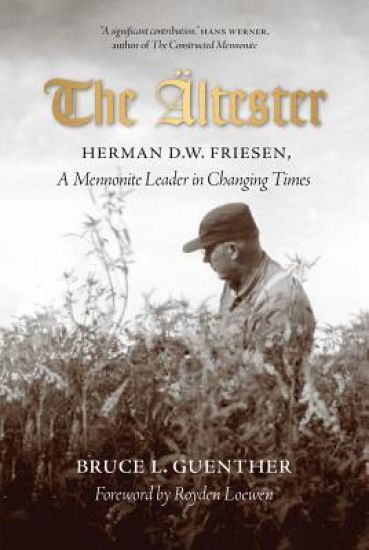
The ältester

The ältester

Bruce L. Guenther

University of Regina Press
2018
nidottu
Offering a unique window into the Old Colony Mennonite community in Saskatchewan, this biography of Herman D.W. Friesen reveals the life of a man who attempted to modernize his community, often in opposition to traditional religious beliefs. The story begins on the Hague-Osler Mennonite reserve in the 1910s and 20s. At this time the government was pressuring Mennonite communities to send their children to province-run schools. This set off a series of migrations, in which Mennonites left for Mexico, Central America, and other parts of Canada. During the watershed decade of the 1960s, Friesen was elected as a minister, and later as the äeltester (Bishop). Despite growing up in an environment filled with intense governmental conflict and considerable suspicion towards "the English outsiders," he did not try to organize another migration out of Saskatchewan. Instead, taking a unique approach to leadership, Friesen tried to navigate a gradual process of accommodation to the changes taking place in the province. Included in the book are Friesen's sermons, translated from German, providing a unique glimpse into the Old Colony Mennonite theology that aided him in guiding the church in a strategy of gradual cultural accommodation.
Genetic Enslavement: A Call to Arms for Individual Liberation
Every living thing is assembled by its genes. This is a crucial starting point for exploring a fundamental human dilemma. As stated so starkly by Richard Dawkins, a human is "a lumbering machine, created for the task of safeguarding and propagating the all-important genes within." I would add that since the machine's behavior is driven by brain circuits pre-wired by those genes, sometimes we are prone to doing things which work against our individual best interest in order to advance the cause of the genes. In other words, some of our genes are our enemies ("outlaw genes") because they jeopardize individual well¬being as they work to assure themselves genetic immortality.Every thinking person must face the following dilemma: "How can I achieve liberation from genetic pitfalls when my values and thinking are so profoundly influenced by the very same genes that have created those pitfalls?" The more one tries to answer this question the harder it is to imagine that an answer is possible. Nevertheless, this is a challenge that can become irresistibly fascinating. This book is an attempt to bravely explore one of Humanity's most profound existential dilemmas. The fate of a civilization is also affected by the "outlaw genes," especially those responsible for a feeling of discontent with civilization and a vague preference for a simpler society, which I would describe as resembling those found in the human ancestral environment. This book explores how a flawed human nature undermines every civilization, starting a decline and eventual fall. Those of us born during the 20th Century are lucky for having seen the best of times for our civilization, and as a questionable bonus we may now witness from close-up the forces that have condemned every past civilization to ruin.
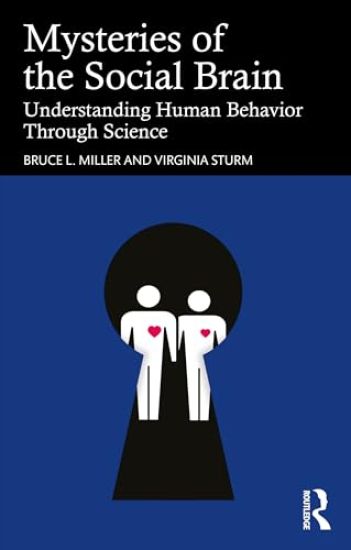
Mysteries of the Social Brain

Mysteries of the Social Brain

Bruce L. Miller; Virginia Sturm

TAYLOR FRANCIS LTD
2025
nidottu
Mysteries of the Social Brain describes the scientific underpinnings of human behavior and values. Through the retelling of fascinating clinical stories of people with neurological conditions, this book explores the parts of the brain that allow humans to thrive as social and creative beings. The authors reveal the relevance of our brain circuits to our well-being—and the well-being of our societies—and show what happens when changes in our brain circuitry drive changes in empathy, altruism, moral beliefs, and creativity.By integrating perspectives from neurology, psychology, psychiatry, and neuroscience, the stories in this book offer novel insights into the inner workings of the social brain and reveal groundbreaking findings from work in frontotemporal dementia, emotion, and the science of human values. This book showcases the novel discovery that creativity can emerge when there is decline in the brain’s language systems, a finding that highlights the robust, yet underappreciated connections between science and art. Readers will learn about the biological basis of social behavior as well as simple steps that they can take to improve the functioning of their own social brains.Miller and Sturm take us on an engaging dive into the field of behavioral neurology and neuroscience, exploring what we can learn from people with neurological conditions, and revealing the ways that neuroscience can change societies for the better. It will captivate general readers as well as clinicians and scientists who are interested in human social behavior, cognition, and emotion.
Mysteries of the Social Brain

Mysteries of the Social Brain

Bruce L. Miller; Virginia Sturm

TAYLOR FRANCIS LTD
2025
sidottu
Mysteries of the Social Brain describes the scientific underpinnings of human behavior and values. Through the retelling of fascinating clinical stories of people with neurological conditions, this book explores the parts of the brain that allow humans to thrive as social and creative beings. The authors reveal the relevance of our brain circuits to our well-being—and the well-being of our societies—and show what happens when changes in our brain circuitry drive changes in empathy, altruism, moral beliefs, and creativity.By integrating perspectives from neurology, psychology, psychiatry, and neuroscience, the stories in this book offer novel insights into the inner workings of the social brain and reveal groundbreaking findings from work in frontotemporal dementia, emotion, and the science of human values. This book showcases the novel discovery that creativity can emerge when there is decline in the brain’s language systems, a finding that highlights the robust, yet underappreciated connections between science and art. Readers will learn about the biological basis of social behavior as well as simple steps that they can take to improve the functioning of their own social brains.Miller and Sturm take us on an engaging dive into the field of behavioral neurology and neuroscience, exploring what we can learn from people with neurological conditions, and revealing the ways that neuroscience can change societies for the better. It will captivate general readers as well as clinicians and scientists who are interested in human social behavior, cognition, and emotion.
River Dynamics

River Dynamics

Bruce L. Rhoads

Cambridge University Press
2020
sidottu
Rivers are important agents of change that shape the Earth's surface and evolve through time in response to fluctuations in climate and other environmental conditions. They are fundamental in landscape development, and essential for water supply, irrigation, and transportation. This book provides a comprehensive overview of the geomorphological processes that shape rivers and that produce change in the form of rivers. It explores how the dynamics of rivers are being affected by anthropogenic change, including climate change, dam construction, and modification of rivers for flood control and land drainage. It discusses how concern about environmental degradation of rivers has led to the emergence of management strategies to restore and naturalize these systems, and how river management techniques work best when coordinated with the natural dynamics of rivers. This textbook provides an excellent resource for students, researchers, and professionals in fluvial geomorphology, hydrology, river science, and environmental policy.