
Kirjahaku
Etsi kirjoja tekijän nimen, kirjan nimen tai ISBN:n perusteella.
1000 tulosta hakusanalla Byron Como
Reproduction of the original: Byron: The Last Phase by Richard Edgcumbe
Byron (1988) blev Sigrid Combüchens stora genombrottsroman. I romanen skildrar och gestaltar författaren sin och några romanpersoners oerhörda nyfikenhet på den romantiske lorden och poeten som kallades "mad, bad and dangerous to know".
The book "" Byron "" has been considered important throughout the human history, and so that this work is never forgotten we have made efforts in its preservation by republishing this book in a modern format for present and future generations. This whole book has been reformatted, retyped and designed. These books are not made of scanned copies and hence the text is clear and readable.
The book "" Byron: The Last Phase "" has been considered important throughout the human history, and so that this work is never forgotten we have made efforts in its preservation by republishing this book in a modern format for present and future generations. This whole book has been reformatted, retyped and designed. These books are not made of scanned copies and hence the text is clear and readable.
It's 24 December, 1999. Byron Easy, a poverty-stricken poet - half-cut and suicidal - sits on a stationary train at King's Cross waiting to depart. In his lap is a bag containing his remaining worldly goods: an empty bottle of red wine, a few books, a handful of crumpled banknotes. He is on the run.

`Alas! the love of women! it is known/ To be a lovely and fearful thing!' Don Juan, II. 199 Traditionally seen as an archetypal masculine poet, better known for his relationships with women than for the sympathetic study of them, Lord Byron has not lent himself easily to a feminist critique hitherto. In this, the first such example, Caroline Franklin takes an original and polemical standpoint, reading Byron within the setting of the contemporary debate on the nature, role, and rights of women in society. The heroines of Byron's narrative and dramatic verse are considered, not from a biographical perspective, but by relating these representations to ideologies of sexual difference which obtained in the poet's day. Viewed in their literary-historical context, these Byronic heroines are compared with other female protagonists of the age, thereby revealing the poet to be unusually honest and bold in his portrayal of female sexuality and its relation to political issues. Drawing upon original research materials, yron's Heroines presents the poet in a fresh and original context as well as making an important contribution to the debate regarding the representation of women in early nineteenth-century society.

Byron's poetic reputation has been established in his comic epic Don Juan and its cognates Beppo and The Vision of Judgment. Poems lying outside this group are still regarded with some uncertainty. This study demonstrates that some of Byron's most deeply held critical and political convictions - but also certain aspects of his experience over which he had comparatively little conscious control - found expression in his historical dramas of 1820-21: Marino Faliero, Sardanapalus, and The Two Foscari. In these plays we find Byron responding with the fullest degree of imaginative intelligence to his work on the management subcommittee at the Theatre Royal, Drury Lane, the background to which is given its most extensive treatment yet; to his involvement with the Italian nationalist movement; to his advocacy of neo-classical dramatic form and above all to his understanding of Shakespeare and of Shakespeare's reputation among Romantic critics. In this pioneering study Richard Lansdown sheds fresh critical and biographical light on Byron's contribution to the theatre, which will be of great interest to many studying the Romantics.
This study is a contextual reading of Byron's epic poem Don Juan which argues that the importance of the Don Juan legend has been considerably underestimated. Contemporary histories--critical, political, theatrical, and personal--reveal that innocent or neutral readings of the poem were precluded by the figure's notoriety. It demonstrates the invitation which the poem was seen to offer to specific categories of readership--especially those of women and of the working classes--and how their reading not only contributes to the meaning of the text but makes that reading inherently political. The scope of the book includes other versions of the Don Juan legend. It also engages throughout with a critique of traditional myth-criticism, using instead Lévi-Strauss's more inclusive definition of what constitutes a myth. It considers those discourses which have spoken of the Don Juan legend---philosophical, psychoanalytical, speech-act---and applies postmodernist and feminist theories to a consideration of both Byron's poem and the legend itself.
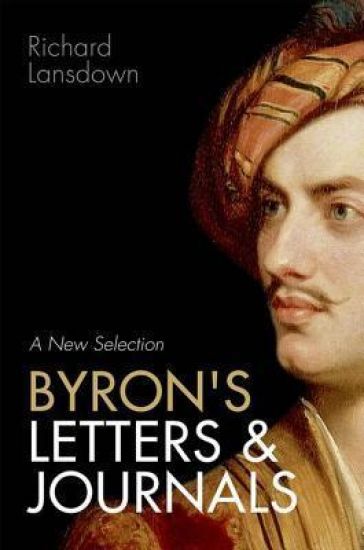
Byron's Letters and Journals
Oxford University Press
2015
sidottu
Alongside Jane Austen, the Brontë sisters, and Oscar Wilde, Lord Byron possesses a star-quality unlike other classic British authors. His life as poet, philanderer, homosexual, and freedom fighter is legendary, and this new selection from his powerful letters and journals tells the story from the inside, in Byron's own racy and passionate style. Though Byron is chiefly known as a poet, his letters and journals are one of the glories of English prose literature, and one of the greatest British acts of autobiography, alongside Pepys' Diary and Boswell's Journal. This new selection, taken from the authoritative and unbowdlerized edition prepared by Leslie Marchand in the 1970s, not only provides the cream of his informal prose; it amounts to a biography in Byron's own words. No other English writer lived so remarkable an existence, from rented rooms in Aberdeen to a Nottinghamshire peerage, from European fame to English infamy, and notorious Italian exile to a glorious death in the Greek War of Independence.The letters and journals are selected, introduced, and annotated to provide a running narrative of the life and career of his remarkable man in his own unmistakable words.
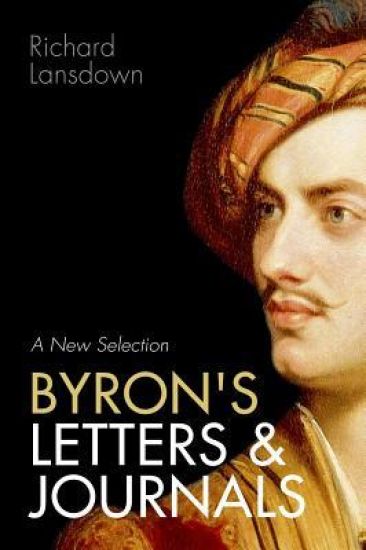
Byron's Letters and Journals
Oxford University Press
2017
nidottu
Alongside Jane Austen, the Brontë sisters, and Oscar Wilde, Lord Byron possesses a star-quality unlike other classic British authors. His life as poet, philanderer, homosexual, and freedom fighter is legendary, and this new selection from his powerful letters and journals tells the story from the inside, in Byron's own racy and passionate style. Though Byron is chiefly known as a poet, his letters and journals are one of the glories of English prose literature, and one of the greatest British acts of autobiography, alongside Pepys' Diary and Boswell's Journal. This new selection, taken from the authoritative and unbowdlerized edition prepared by Leslie Marchand in the 1970s, not only provides the cream of his informal prose; it amounts to a biography in Byron's own words. No other English writer lived so remarkable an existence, from rented rooms in Aberdeen to a Nottinghamshire peerage, from European fame to English infamy, and notorious Italian exile to a glorious death in the Greek War of Independence.The letters and journals are selected, introduced, and annotated to provide a running narrative of the life and career of his remarkable man in his own unmistakable words.
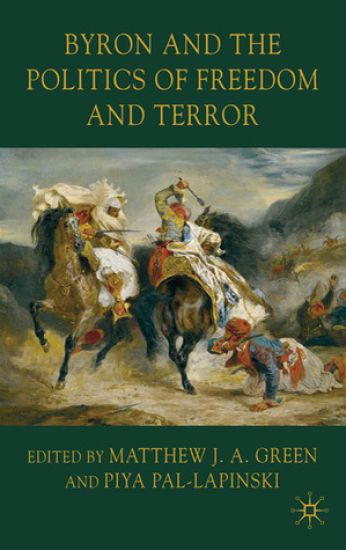
This interdisciplinary collection explores the divergence or convergence of freedom and terror in a range of Byron's works. Challenging the binary opposition of historicism and critical theory, it combines topical debates in a manner that is sensitive both to the circumstances of their emergence and to their relevance for the twenty-first century.

Making extensive use of untranslated texts, Arnold Schmidt discusses the impact of Byron's life and works on the discourse of Italian nationalism between 1818 and 1948, his participation in Grand Tour and salon culture, and his influence on Italian Classicists and Romantics.
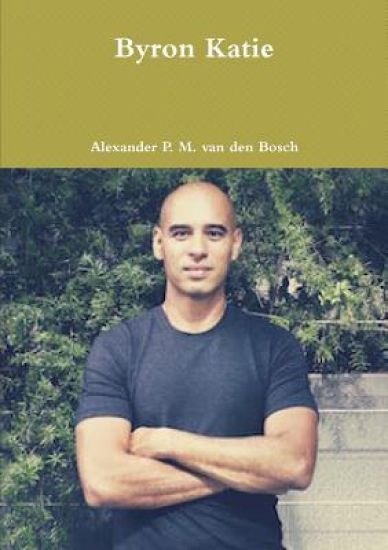
Why do we see Zen Habits man of the year Leo Babauta on a book-let about Byron Katie and Jon Kabat-Zinn? Well for starters..
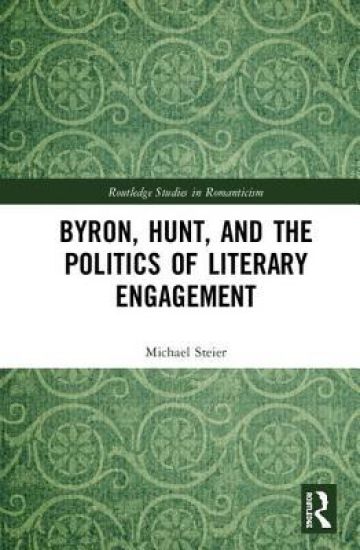
In the second decade of the nineteenth century, the British press began a campaign of critical abuse against Leigh Hunt, caricaturing the radical journalist as an upstart "Cockney" author whose literary talents were as disreputable as his politics. Lord Byron, on the other hand, was revered as a peer and a poetical genius who, the conservative press argued, would never befriend and collaborate with a writer like Hunt. Yet Byron did just that. Byron, Hunt, and the Politics of Literary Engagement is the first full-length study of the friendship and literary relationship of two of the most important second-generation Romantic authors. Challenging long-held critical attitudes, this study shows that Byron and Hunt engaged in a creative and meaningful dialogue at each major stage in their careers, from their earliest published volumes of juvenile poetry and verse satire to their most celebrated contributions to Romantic literature: The Story of Rimini and Don Juan. Drawing upon newly recovered letters and unpublished manuscript material, this book illuminates the surprisingly durable and artistically significant friendship of Lord Byron and Leigh Hunt.
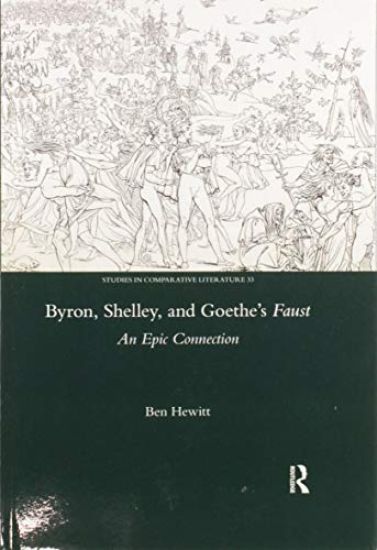
This book focuses on an exciting moment in the history of Anglo-German literary exchange in the Romantic period, the moment of George Gordon Byron's and Percy Bysshe Shelley's interrelated encounters with Johann Wolfgang von Goethe's seminal dramatic poem, Faust.

Byron: The Poetry of Politics and the Politics of Poetry
Routledge
2019
nidottu
'It is no great matter, supposing that Italy could be liberated, who or what is sacrificed. It is a grand object - the very poetry of politics. Only think - a free Italy!!! Why, there has been nothing like it since the days of Augustus.' So wrote Lord Byron in his journal, in February 1821, only days before the outbreak of revolution in Greece, where three years later he would die in the service of the revolutionary cause. For a poet whose life and work are interlaced with action of multiple sorts, surprisingly little attention has been devoted to Byron's engagement with issues of politics. This volume brings together the work of eminent Byronists from seven European countries and the USA to re-assess the evidence. What did Byron mean by the 'poetry of politics'? Was he, in any sense, a 'political animal'? Can his final, fateful involvement in Greece be understood as the culmination of earlier, more deeply rooted quests? The first part of the book examines the implications of reading and writing as themselves political acts; the second interrogates the politics inherent or implied in Byron's poems and plays; the third follows the trajectory of his political engagement (or non-engagement), from his abortive early career in the British House of Lords, via the Peninsular War in Spain to his involvement in revolutionary politics abroad.
In this study, the author examines the evolution of Byron's poetry from Childe Harold I and II through to the composition of Beppo. Beginning with a close reading of the sustained poetic experimentation that constitutes Childe Harold I and II, he charts the progress of that experimentation in the Tales where Byron's poetry gets entrenched in a tragic idiom. The author then describes Byron's prolonged struggle to break clear of the imaginative limitations imposed by that tragic idiom and to break into a sustainable comic mode: a struggle that drives Childe Harold III, The Prisoner of Chillon, and The Dream only to culminate in success in Childe Harold IV. It is here, as Rawes demonstrates, that the path forward into the comic mode of Beppo and Don Juan is discovered. Byron's Poetic Experimentation also offers a substantial reconsideration of Byron's shifting attitude towards Wordsworthian idealism and a detailed analysis of the structured eclecticism of Manfred.