
Kirjahaku
Etsi kirjoja tekijän nimen, kirjan nimen tai ISBN:n perusteella.
1000 tulosta hakusanalla Byron Perry
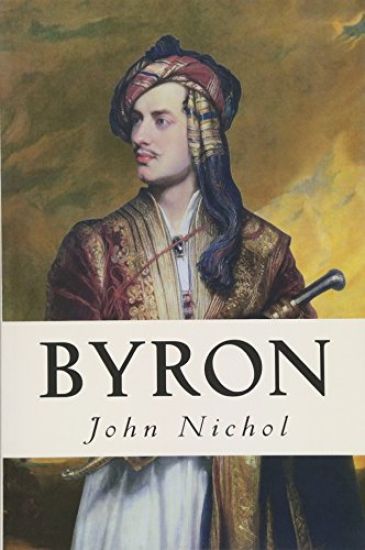
Byron, by John Nichol, is a classic and definitive biography of the great English poet, Lord Byron. Byron's life was passed under the fierce light that beats upon an intellectual throne. He succeeded in making himself--what he wished to be--the most notorious personality in the world of letters of our century. Almost every one who came in contact with him has left on record various impressions of intimacy or interview. Those whom he excluded or patronized, maligned; those to whom he was genial, loved him.
Byron's life was passed under the fierce light that beats upon an intellectual throne. He succeeded in making himself-what he wished to be-the most notorious personality in the world of letters of our century. Almost every one who came in contact with him has left on record various impressions of intimacy or interview. Those whom he excluded or patronized, maligned; those to whom he was genial, loved him. Mr. Southey, in all sincerity, regarded him as the principle of Evil incarnate; an American writer of tracts in the form of stories is of the same opinion: to the Countess Guiccioli he is an archangel. Mr. Carlyle considers him to have been a mere "sulky dandy." Goethe ranks him as the first English poet after Shakespeare, and is followed by the leading critics of France, Italy, and Spain. All concur in the admission that Byron was as proud of his race as of his verse, and that in unexampled measure the good and evil of his nature were inherited and inborn. His genealogy is, therefore, a matter of no idle antiquarianism. There are legends of old Norse Buruns migrating from their home in Scandinavia, and settling, one branch in Normandy, another in Livonia. To the latter belonged a distant Marshal de Burun, famous for the almost absolute power he wielded in the then infant realm of Russia. Two members of the family came over with the Conqueror, and settled in England. Of Erneis de Burun, who had lands in York and Lincoln, we hear little more. Ralph, the poet's ancestor, is mentioned in Doomsday Book-our first authentic record-as having estates in Nottinghamshire and Derby. His son Hugh was lord of Horestan Castle in the latter county, and with his son of the same name, under King Stephen, presented the church of Ossington to the monks of Lenton. Tim latter Hugh joined their order; but the race was continued by his son Sir Roger, who gave lands to the monastery of Swinstead. This brings us to the reign of Henry II. (1155-1189), when Robert de Byron adopted the spelling of his name afterwards retained, and by his marriage with Cecilia, heir of Sir Richard Clayton, added to the family possessions an estate; in Lancashire, where, till the time of Henry VIII., they fixed their seat. The poet, relying on old wood-carvings at Newstead, claims for some of his ancestors a part in the crusades, and mentions a name not apparently belonging to that age- Near Ascalon's towers, John of Horestan slumbers- a romance, like many of his, possibly founded on fact, but incapable of verification.
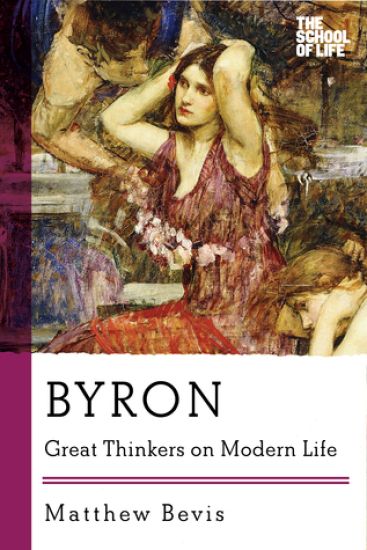
Born in 1788, Lord Byron was an English poet and a leading figure of the Romantic movement. A prodigious poetic gift and a scandalous private life made him famous throughout Europe, and his masterpiece, Don Juan, became the bestselling work of the period. He remains one of the most storied and fascinating figures in world literature, and Matthew Bevis takes this great thinker and highlights the ideas most relevant to us today. The Great Thinkers on Modern Life Series, part of The School of Life, shows how thse wise voices from the past have urgently important and inspiring things to tell us.
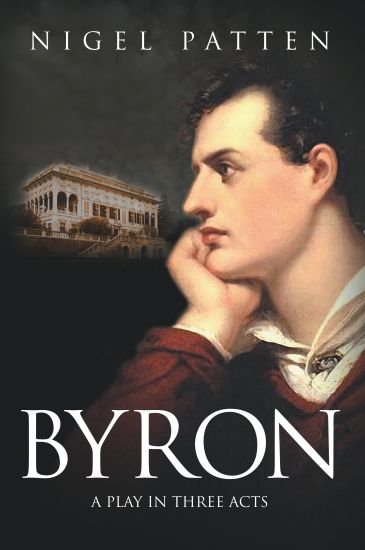
In 1823, Lord Byron rented the Casa Saluzzo at Albaro in the hills east of Genoa, Italy. The poet shared the 16th-century palazzo with his mistress, Teresa Giuccioli, her brother, and their exiled father, Count Gamba.His neighbors were Mary Shelley, the author of Frankenstein, whose poet husband had recently drowned; Leigh Hunt, the critic and editor; and Edward Trelawney, a Cornish adventurer and close friend of both poets.A frequent visitor that summer was Lady Marguerite Blessington, who kept detailed notes of their many conversations. From these conversations, an intimate insight is gained into Byron's personality, philosophy, mental state, opinion of himself, and the impression he made on others and society.The complexity of Byron's character is revealed, as well as his phobias and rejection by English society for the scandals attached to his numerous amorous activities.This three-act play paints the portrait of a tormented man, obsessed with his congenital lameness and a pressing sense of solitude, despite or because of his numerous affairs with married women in his elusive quest for love.(About the Author)Nigel Patten was born near London in 1940, and has lived in Switzerland since 1961, where he taught English at a French high school. He has published 12 books, including historical novels, a biography, an English course for French speakers, and a play on the last weeks of the poet Shelley's life. A two-time Reader's Favorite Award winner, the author travelled in a motorhome to India, and for 15 years sailed his sailboat between the Greek islands. Having reached the summit of Mount Kilimanjaro twice, he still hikes mountains. An actor and director, he was part of an amateur theatre troupe in Vevey for 40 years.
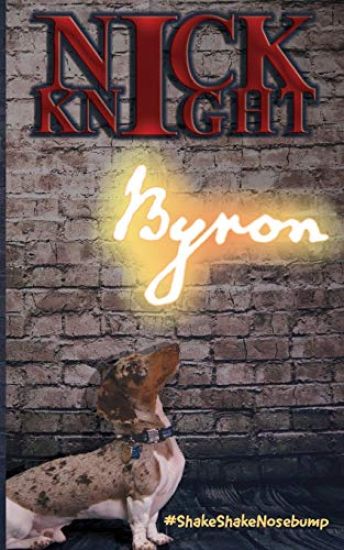
Shake, shake, nosebump. Rick Montgomery can visit the afterlife. But not without the help of his dappled dachshund, Byron. Rick is obsessed with the afterlife and tries to commit suicide several times. He's lost his marriage, his job and gained a new best friend, Julie. Together, Julie and Rick fight his suicidal tendencies as Byron allows Rick to visit the afterlife.Meanwhile, Julie's daughter Amelia is away at college struggling with her childhood disappearance that left her parents divorced and questions unanswered. Can Rick pick up the missing pieces of Amelia's disappearance with his abilities to visit the afterlife? Find out how Byron changed all their lives in this speculative fiction story.

In this new book, David Ellis traces Byron’s life from rented lodgings in Aberdeen to the crumbling splendours of Newstead Abbey and then on to his grand tour of the East. Describing his exile from England after a disastrous marriage, and subsequent travels in Italy and Greece, he shows how completely Byron’s experiences coloured his writings, drawing out the tension between the ‘serious’ works (Childe Harold, The Corsair) and his more comic writings. Although the former brought him early fame and fortune, it is the latter which now seem most worthwhile. Byron is a fresh, concise and clear-eyed account of the flamboyant poet’s life and work.
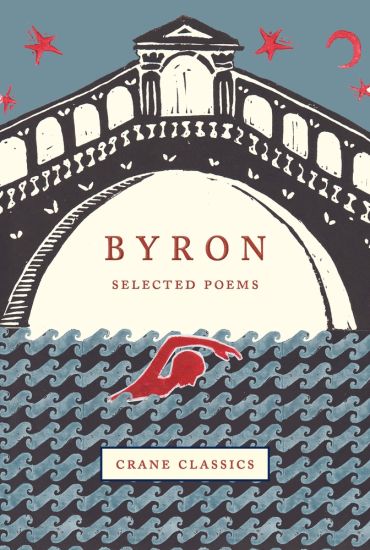
Byron
Mount Orleans Press
2020
sidottu
Poetry selection in the popular Cranes Classics series, well known poets produced in small 64 page hardbacks with attractive covers.
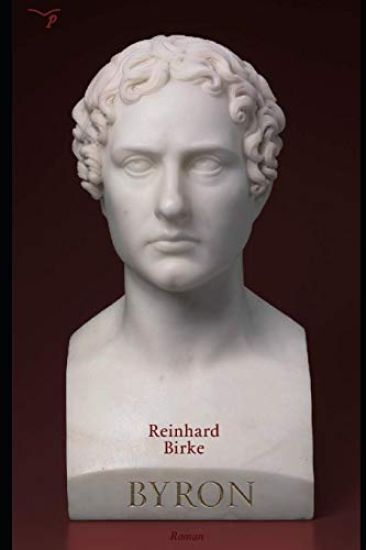
We are demanding security and leadership, because we have lost orientation. While deceiving our traditions, we are voting for authorities that give us law and order. We have lost the subtle sense for the fragility of freedom. This novel brings back the lost and buried memoires of Lord Byron, whose life full of sexual debauchery, selfishness and betrayal, gives as a glance of an idea how the freedom of our will, is making the footprint of our lifes and is the purpose of our souls. In this novel, Byron himself, gets back his voice and tells us a story blowing away the dust of history. The unvarnished truth of his vanished life, for maybe changing our minds and future.
Reproduction of the original: Byron by John Nichol
Reproduction of the original: Byron by John Nichol
Reproduction of the original: Byron: The Last Phase by Richard Edgcumbe
Byron (1988) blev Sigrid Combüchens stora genombrottsroman. I romanen skildrar och gestaltar författaren sin och några romanpersoners oerhörda nyfikenhet på den romantiske lorden och poeten som kallades "mad, bad and dangerous to know".
The book "" Byron "" has been considered important throughout the human history, and so that this work is never forgotten we have made efforts in its preservation by republishing this book in a modern format for present and future generations. This whole book has been reformatted, retyped and designed. These books are not made of scanned copies and hence the text is clear and readable.
The book "" Byron: The Last Phase "" has been considered important throughout the human history, and so that this work is never forgotten we have made efforts in its preservation by republishing this book in a modern format for present and future generations. This whole book has been reformatted, retyped and designed. These books are not made of scanned copies and hence the text is clear and readable.
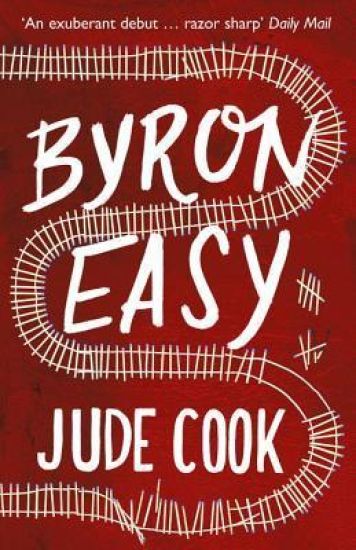
It's 24 December, 1999. Byron Easy, a poverty-stricken poet - half-cut and suicidal - sits on a stationary train at King's Cross waiting to depart. In his lap is a bag containing his remaining worldly goods: an empty bottle of red wine, a few books, a handful of crumpled banknotes. He is on the run.