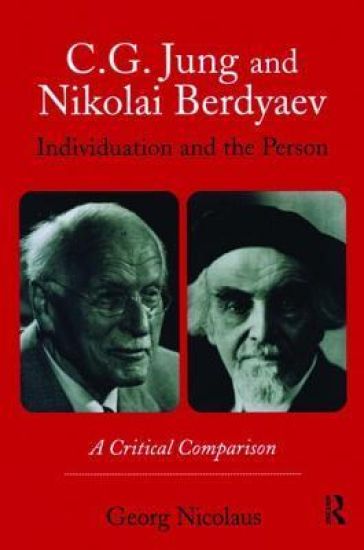
This book explores C. G. Jung's psychology through the perspective of the existential philosopher Nikolai Berdyaev, drawing striking parallels between Jung's theory of individuation and Berdyaev's understanding of the person. Placing Jung and Berdyaev firmly within the context of secular humanism, Nicolaus draws on their personal experiences of individuation to show how both writers seek to enable a renewal of our self-understanding as persons in a post-religious society. Topics of discussion include:the foundations of Berdyaev's personalismJung's psychological interpretation of the Christian God-imageindividuation and the ethics of creativity.C. G. Jung and Nikolai Berdyaev: Individuation and the Person offers a fresh perspective on the ethical implications of Jung’s theory and serves also as an introduction to Berdyaev’s thought. As such this book will appeal to analytical psychologists, scholars engaged with Jungian thought and all those interested in the interface between spirituality and depth psychology.
When the man with the yellow hat tells George that he is planning a surprise, George's curiosity gets the best of him when he finds a hat, noisemakers, decorations, and games. Simultaneous.
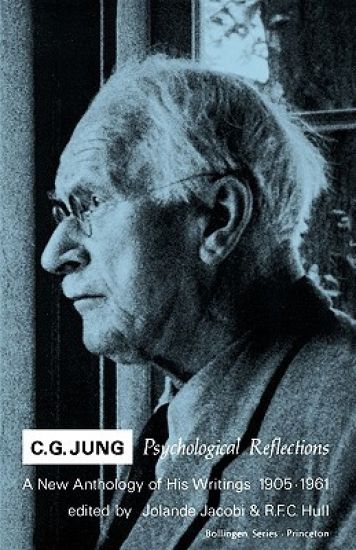
Carl Gustav Jung, the great Swiss psychologist, who died in 1961 in his eighty-sixth year, was a profound thinker of extraordinary creativity. In the course of his medical practice he reflected deeply on human nature and human problems, and his prolific writings bear witness to his great wisdom and insight. For this completely revised edition, selections from publications of the years 1945-1961, the last fruitful years of Jung's life, have been added, and the book has been reset in a new compact format. The selections are arranged thematically under four main headings: The Nature and Activity of the Psyche, Man in His Relation to Others, The World of Values, and On Ultimate Things.Jung's reflections frequently have a penetrating relevance to today's (and tomorrow's) problems. On prejudice: "Our unwillingness to see our own faults and the projection of them is the beginning of most quarrels, and is the strongest guarantee that injustice, animosity, and persecution are not ready to die out." On sex: "We are not yet far enough advanced to distinguish between moral and immoral behavior in the realm of free sexual activity." On religion: "No one can know what the ultimate things are. We must therefore take them as we experience them. And if such experience helps to make life healthier, more beautiful, more complete, and more satisfactory to yourself and to those you love, you may safely say: 'This was the grace of God.'"
A collection of journalistic interviews which span Jung's lifetime. This book captures his personality and spirit in more than 50 accounts of talks and meetings with him. They range from transcripts of interviews for radio, television, and film to memoirs written by notable personalities.
Beginning with Jung's earliest correspondence to associates of the psychoanalytic period and ending shortly before his death, the 935 letters selected for these two volumes offer a running commentary on his creativity. The recipients of the letters include Mircea Eliade, Sigmund Freud, Esther Harding, James Joyce, Karl Kernyi, Erich Neumann, Maud Oakes, Herbert Read, Upton Sinclair, and Father Victor White.
Beginning with Jung's earliest correspondence to associates of the psychoanalytic period and ending shortly before his death, the 935 letters selected for these two volumes offer a running commentary on his creativity. The recipients of the letters include Mircea Eliade, Sigmund Freud, Esther Harding, James Joyce, Karl Kernyi, Erich Neumann, Maud Oakes, Herbert Read, Upton Sinclair, and Father Victor White.
The best of C. G. Jung in one set! These five volumes -- the all-time bestselling editions of Jung's work -- contain popular selections from The Collected Works of C. G. Jung. Each classic volume is newly introduced by Sonu Shamdasani editor of the bestselling The Red Book: Liber Novus and Philemon Professor of Jung History at University College London.
C. G. Jung has been and continues to be a pervasive yet often unacknowledged presence in twentieth-century art and intellectual life. This timely volume is the first comprehensive attempt to assess this presence and to demonstrate Jung's far-reaching cultural impact. The distinguished contributors represent a number of views, from traditional Jungian to the most contemporary post-Jungian stances, including feminist, non-Jungian, and anti-Jungian positions. Jung, as seen in this volume, addresses a wide range of contemporary issues related to creativity, gender, religion, popular culture, and hermeneutics. The essays reveal dimensions of his work that extend far beyond psychoanalytical theory and that show his hermeneutics to be a much more subtle and sophisticated methodology than previously allowed by his critics. This methodology appears, in fact, to have anticipated significant aspects of contemporary critical principles and practice. The contributors to the volume were among the participants in a major international conference sponsored by Hofstra University and the C. G. Jung Foundation of New York, held in 1986 at Hofstra University.They include Thomas Belmonte, Robert Bly, Joseph Campbell, Edward S. Casey, Stanley Diamond, Jean Erdman, Leslie Fiedler, James Hillman, Paul Kugler, Ibram Lassaw, Neil Levine, David L. Miller, Lucio Pozzi, Gilles Quispel, Robert Richenburg, Carol Schreier Rupprecht, Andrew Samuels, Harold Schechter, and June Singer. Originally published in 1990. The Princeton Legacy Library uses the latest print-on-demand technology to again make available previously out-of-print books from the distinguished backlist of Princeton University Press. These editions preserve the original texts of these important books while presenting them in durable paperback and hardcover editions. The goal of the Princeton Legacy Library is to vastly increase access to the rich scholarly heritage found in the thousands of books published by Princeton University Press since its founding in 1905.
The psychological and religious implications of alchemy were Jung's major preoccupation during the last thirty years of his life. The essays composing the present volume complete the publication of his alchemial researches, to which three entire volumes have been devoted ^DDL the monumental Mysterium Coniunctionis, Psychology and Alchemy, and Aion ^DDL besides shorter papers in other volumes.This collection of shorter Alchemial Studies has special value as an introduction to Jung's work on alchemy. The first study, on Chinese alchemy, marked the beginning of his interest in the subject, and was originally published in a volume written jointly with Richard Wilhelm. The other four are now published for the first time completely in English.
The psychological and religious implications of alchemy were Jung's major preoccupation during the last thirty years of his life. The essays composing the present volume complete the publication of his alchemial researches, to which three entire volumes have been devoted ^DDL the monumental Mysterium Coniunctionis, Psychology and Alchemy, and Aion ^DDL besides shorter papers in other volumes.This collection of shorter Alchemial Studies has special value as an introduction to Jung's work on alchemy. The first study, on Chinese alchemy, marked the beginning of his interest in the subject, and was originally published in a volume written jointly with Richard Wilhelm. The other four are now published for the first time completely in English.
This bibliography records the initial publication of each original work by C.G. Jung, each translation, and significant revisions and expansions of both, up to 1975. In nearly every case, the compilers have examined the publications in German, French and English. Translations are recorded in Danish, Dutch, English, Finnish, French, Greek Hebrew, Hungarian, Italian, Japanese, Norwegian, Portuguese, Russian, Serbo-Croatian, Slovenian, Spanish, Swedish and Turkish. It is arranged according to language, with German and English first, publications being listed chronologically in each language.The General Bibliography lists the contents of the respective volumes of the Collected Works (of which this is Volume 19) and the Gesammelte Werke, published in Switzerland, and shows the interrelation of the two editions. It also lists Jung's seminars and provides, where possible, information about the origin of works that were first conceived as lectures. An index is provided of all the titles in English and German, and all original works in the other languages. Three specialist indexes, of personal names, organizations and societies and periodicals, complete the work.The publication of the General Bibliography, together with the General Index (Volume 20 of the Collected Works), complete the publication of the Collected Works of C.G. Jung in English.
Mysterium Coniunctionis was first published in the Collected Works of C.G. Jung in 1963. For this second edition of the work, numerous corrections and revisions have been made in cross-references to other volumes of the Collected Works now available and likewise in the Bibliography.Mysterium Coniunctionis was Jung's last work of book length and gives a final account of his lengthy researches in alchemy. It was Jung's empirical discovery that certain key problems of modern man were prefigures in what t he alchemists called their 'art' or 'process'. Jung maintained that 'the world of alchemical symbols does not belong to the rubbish heap of the past, but stands in a very real and living relationship to our most recent discoveries concerning the psychology of the unconscious'. The volume includes ten plates, a Bibliography, an Index, and an Appendix of original Latin and Greek texts quoted in the work.
In 1911 Jung published a book of which he says: '...it laid down a programme to be followed for the next few decades of my life.' It was vastly erudite and covered innumerable fields of study: psychiatry, psychoanalysis, ethnology and comparitive religion amongst others. In due course it became a standard work and was translated into French, Dutch and Italian as well as English, in which language it was given the well-known but somewhat misleading title of The Psychology of the Unconscious.In the Foreword to the present revised edition which first appeared in 1956, Jung says: '...it was the explosion of all those psychic contents which could find no room, no breathing space, in the constricting atmosphere of Freudian psychology... It was an attempt, only partially successful, to create a wider setting for medical psychology and to bring the whole of the psychic phenomena within its purview.'For this edition, appearing ten years after the first, bibliographical citations and entries have been revised in the light of subsequent publications in the Collected Works and in the standard edition of Freud's works, some translations have been substituted in quotations, and other essential corrections have been made, but there have been no changes of substance in the text.
The Collected Works of C. G. Jung is a multi-volume work containing the writings of psychiatrist Carl Jung. Contains revised versions of works previously published, works not previously translated, and new translations of virtually all of Jung's writings. Prior to his death he supervised the textual revision. Several of the volumes are extensively illustrated; each contains an index and most a bibliography.
C. G. Jung was one of the great thinkers of our time. In the course of his long medical practice he reflected deeply on human nature and human problems, and his profile writings bear witness to his wisdom and insight. This anthology of his writings, containing nearly thirteen hundred quotations is the perfect introduction to jung's works.
This new introduction to Jung’s Collected Works—written in lively and accessible style—provides a comprehensive guide to key concepts in analytical (Jungian) psychology while charting the creative evolution of Jung’s thought through his own words.Invaluable to both beginners and those more experienced with Jungian theory, this book provides tables listing key readings for further study of the Collected Works, clear explication of fundamental principles, chapter summaries, prompts for deepening a critical engagement with Jung’s texts, a glossary of key terms, and suggestions for further reading.This text will be an invaluable introduction for those coming to the Collected Works for the first time as well as a useful reference for readers familiar with the collection.
This new introduction to Jung’s Collected Works—written in lively and accessible style—provides a comprehensive guide to key concepts in analytical (Jungian) psychology while charting the creative evolution of Jung’s thought through his own words.Invaluable to both beginners and those more experienced with Jungian theory, this book provides tables listing key readings for further study of the Collected Works, clear explication of fundamental principles, chapter summaries, prompts for deepening a critical engagement with Jung’s texts, a glossary of key terms, and suggestions for further reading.This text will be an invaluable introduction for those coming to the Collected Works for the first time as well as a useful reference for readers familiar with the collection.