

Kirjahaku
Etsi kirjoja tekijän nimen, kirjan nimen tai ISBN:n perusteella.
1000 tulosta hakusanalla C. Carr


Scotland Delineated in a Series of Views by C. Stanfield ... G. Cattermole ... (Sir W. Allan) ...Drawn in Lithography by J. D. Harding (Carrick, Etc.). with Historical, Antiquarian and Descriptive Letterpress by J. P. L.
John Parker Lawson
British Library, Historical Print Editions
2011
pokkari
Title: Scotland delineated in a series of views by C. Stanfield ... G. Cattermole ... (Sir W. Allan) ...Drawn in lithography by J. D. Harding (Carrick, etc.). With historical, antiquarian and descriptive letterpress by J. P. L.Publisher: British Library, Historical Print EditionsThe British Library is the national library of the United Kingdom. It is one of the world's largest research libraries holding over 150 million items in all known languages and formats: books, journals, newspapers, sound recordings, patents, maps, stamps, prints and much more. Its collections include around 14 million books, along with substantial additional collections of manuscripts and historical items dating back as far as 300 BC.The HISTORY OF EUROPE collection includes books from the British Library digitised by Microsoft. This collection includes works chronicling the development of Western civilisation to the modern age. Highlights include the development of language, political and educational systems, philosophy, science, and the arts. The selection documents periods of civil war, migration, shifts in power, Muslim expansion into Central Europe, complex feudal loyalties, the aristocracy of new nations, and European expansion into the New World. ++++The below data was compiled from various identification fields in the bibliographic record of this title. This data is provided as an additional tool in helping to insure edition identification: ++++ British Library Lawson, John Parker; 1858 4 . 10370.g.11.
Descriptions of Some of the Utensils in Husbandry, Rolling Carriages, Cart Rollers, and Divided Rollers for Land or Gardens, Mills, Weighing Engines, &c. &c. Made and Sold by James Sharp,
James Sharp
Gale Ecco, Print Editions
2018
sidottu
The 18th century was a wealth of knowledge, exploration and rapidly growing technology and expanding record-keeping made possible by advances in the printing press. In its determination to preserve the century of revolution, Gale initiated a revolution of its own: digitization of epic proportions to preserve these invaluable works in the largest archive of its kind. Now for the first time these high-quality digital copies of original 18th century manuscripts are available in print, making them highly accessible to libraries, undergraduate students, and independent scholars.Medical theory and practice of the 1700s developed rapidly, as is evidenced by the extensive collection, which includes descriptions of diseases, their conditions, and treatments. Books on science and technology, agriculture, military technology, natural philosophy, even cookbooks, are all contained here.++++The below data was compiled from various identification fields in the bibliographic record of this title. This data is provided as an additional tool in helping to insure edition identification: ++++Bodleian Library (Oxford)N008577 London]: Sold by Benjamin White; Henry Payne, and James Dodsley; and Charles Dilly, London, 1780?]. 34]p., plates: ill.; obl.4
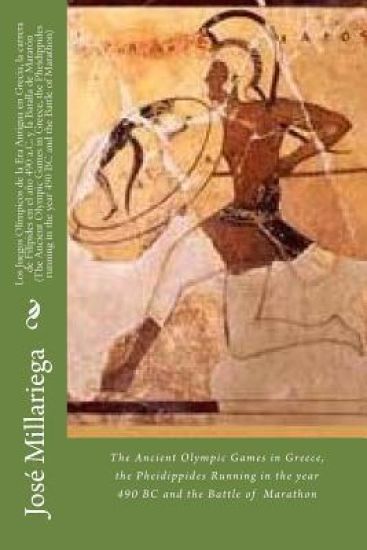
Los Juegos Olímpicos de la Era Antigua en Grecia, la carrera de Filípides en el año 490 a.C. y la Batalla de Maratón (The Ancient Olympic Games in Gre
Jose Millariega
Createspace Independent Publishing Platform
2014
nidottu
Muchos de los que corremos hemos tomado parte en un mayor o menor n mero de maratones. Nos hemos emocionado la primera vez que hemos corrido los cuarenta y dos kil metros y seguimos haci ndolo cada vez que nos ponemos en la l nea de salida. Siempre se habla de que Fil pides fue el precursor de la distancia, all por el 490 a.C., cuando los persas desembarcaron en la tica y se enfrentaron a atenienses y platenses. Pero fue realmente as ?. Por eso Jose Millariega ha tratado en este libro de hacer un an lisis de los distintos puntos de vista que barajan los eruditos sobre la batalla de Marat n, a partir, adem s, de su experiencias por tierras griegas, en concreto en la Spartathlon, prueba que evoca un recorrido de doscientos cuarenta y seis kil metros, entre Atenas y Esparta, que cubri un heraldo corredor por encargo de los generales atenienses para pedir ayuda a los espartanos, cuando en el horizonte de la playa de Marat n apareci una impresionante flota asi tica dispuesta a terminar con el helenismo. Todo ello incardinado con los Juegos de la Grecia Antigua y con la inclusi n de la carrera de marat n, por primera vez en la Historia (intentando emular la gesta de los h roes griegos que vencieron a los medos en el 490 a.C.), en los primigenios Juegos de la Era Moderna, Atenas 1896
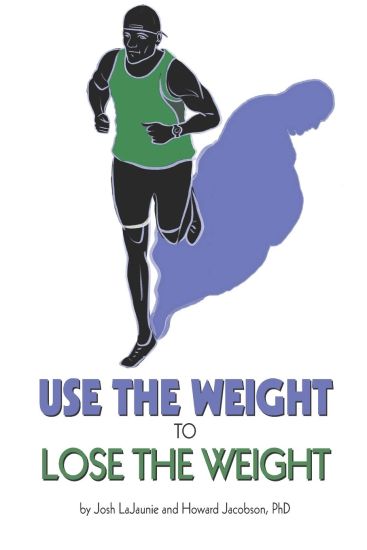
Use the Weight to Lose the Weight: A Revolutionary New Way to Leverage the Strength You've Developed Carrying 50, 100, or Even 150+ Extra Pounds and C
Howard Jacobson; Josh Lajaunie
Howieconnect, Inc.
2020
nidottu
If you're obese, you probably don't see yourself as an athlete. You may think that you're lazy, unmotivated, and undisciplined - and beat yourself up for not having the strength of will to lose the weight. I'm here to tell you that the opposite is true; despite what the naysayers have been telling you for years, you are actually working much harder than any of your skinny friends. You've been carrying a human weight vest, and it's made you strong. But you've also been carrying the unkind and destructive words that people have hurt you with, and they have made you weak. I was a fat guy - 420 pounds or more at my heaviest (that's an estimate - you know fat people don't step on scales ), and I had lost and regained a hundred pounds at least five times before I finally figured out what was missing. Before I embraced both weights - the physical and the psychological - and used them to build the body and mind that I could be proud of.This book is my attempt to give you the uncensored straight talk about how to lose a lot of weight, and what it's actually like. I was shocked to discover that not everything got better or felt better when I grew lean. I discovered that many of the strategies I used to lose the weight didn't work to keep it off. I found that focusing on positivity all the time was a bad idea; that I could embrace the anger at how I'd been treated as a fat person to transform myself. If you're squeamish about frank and vulgar language, put the book down now. It's not for you.But if you're ready to hear the rough, unvarnished, and ultimately liberating truth, I'll hold nothing back.You'll discover how to use the weight to lose the weight - and gain your life.




The Murphy. A, B, C System of Car and Carriage Painting
Antigonos Verlag
2025
sidottu
Mercedes of Castile; or, The Voyage to Cathay, historical novel (Classic Books): by J.(James) Fenimore Cooper and F. O. C. Darley, Felix Octavius Carr
F. O. C. Darley; J. Fenimore Cooper
Createspace Independent Publishing Platform
2016
nidottu
Mercedes of Castile; or, The Voyage to Cathay is a 1840 historical novel by James Fenimore Cooper. The novel is set in 15th century Europe, and follows the preparations and expedition of Christopher Columbus westward to the new world, Archival materials A full manuscript of the novel is held at the The Clifton Waller Barrett Library of American Literature in the Albert and Shirley Small Special Collections Library at the University of Virginia.Contemporary reception The New York Review of Books reviewed the novel in 1840 and was unimpressed, saying the novel was not contributing to "any great increase of fame or fortune to Mr Cooper".The review continued to describe the novel as not including much "romance", instead successfully focusing on the historical elements.In 1978, critic Kennedy Williams, Jr. agreed with the assessment, noting that the novel uses history well and accurately, but is Cooper's best example of the combination of history and fiction when "fail ing] miserably" in Cooper's novels. James Fenimore Cooper (September 15, 1789 - September 15, 1851) was a prolific and popular American writer of the early 19th century.His historical romances of frontier and Indian life in the early American days created a unique form of American literature. He lived most of his life in Cooperstown, New York, which was founded by his father William on property that he owned. Cooper was a lifelong member of the Episcopal Church and, in his later years, contributed generously to it. 1] He attended Yale University for three years, where he was a member of the Linonian Society, but was expelled for misbehavior. Before embarking on his career as a writer, he served in the U.S. Navy as a Midshipman, which greatly influenced many of his novels and other writings. The novel that launched his career was The Spy, a tale about counterespionage set during the Revolutionary War and published in 1821.He also wrote numerous sea stories, and his best-known works are five historical novels of the frontier period known as the Leatherstocking Tales. Among naval historians, Cooper's works on the early U.S. Navy have been well received, but they were sometimes criticized by his contemporaries. Among his most famous works is the Romantic novel The Last of the Mohicans, often regarded as his masterpiece.James Fenimore Cooper was born in Burlington, New Jersey in 1789 to William Cooper and Elizabeth (Fenimore) Cooper, the eleventh of 12 children, most of whom died during infancy or childhood. He was descended from James Cooper of Stratford-upon-Avon, Warwickshire, England, who emigrated to the American colonies in 1679. James and his wife were Quakers who purchased plots of land in New Jersey and Pennsylvania. Seventy-five years after his arrival in America, his great-grandson William was born on December 2, 1754. Shortly after James' first birthday, his family moved to Cooperstown, New York, a community founded by his father on a large piece of land which he had bought for development. Later, his father was elected as a United States Congressman from Otsego County. Their town was in a central area of New York that had previously been occupied by the Iroquois of the Six Nations. The Iroquois were forced to cede their territory after British defeat in the Revolutionary War, as they had been allies.Shortly after the American Revolutionary War, the state opened up these former Iroquois lands for sale and development. Cooper's father purchased several thousand acres of land in upstate New York along the head-waters of the Susquehanna River. By 1788, William Cooper had selected and surveyed the site where Cooperstown would be established. He erected a home on the shore of Otsego lake and moved his family there in the autumn of 1790. He soon began construction of the mansion that would be known as Otsego Hall. It was completed in 1799 when James was ten.
The wing-and-wing, or, Le feu-follet: a tale By J. Fenimore Cooper a sea novel: illustrated By F. O. C. Darley---Felix Octavius Carr "F. O. C." Darley
F. O. C. Darley; J. Fenimore Cooper
Createspace Independent Publishing Platform
2016
nidottu
The Trial, Confession, &C. of John Funston, Who Was Executed at New Philadelphia, (O.) on the 30th of December, 1825, for the Murder of William Cartmill, While Carrying the United States' Mail from Freeport to Coshocton, on the 9th Sept. 1820.
Gale, Making of Modern Law
2012
pokkari

Full Instructions for Country Gentlemen, Farmers, Grasiers, Farriers, Carriers, Sportsmen, &c. ... by a Society of Country Gentlemen, Farmers, Grasiers, Sportsmen, &c. the Second Edition
Gale Ecco, Print Editions
2018
sidottu
The 18th century was a wealth of knowledge, exploration and rapidly growing technology and expanding record-keeping made possible by advances in the printing press. In its determination to preserve the century of revolution, Gale initiated a revolution of its own: digitization of epic proportions to preserve these invaluable works in the largest archive of its kind. Now for the first time these high-quality digital copies of original 18th century manuscripts are available in print, making them highly accessible to libraries, undergraduate students, and independent scholars.Medical theory and practice of the 1700s developed rapidly, as is evidenced by the extensive collection, which includes descriptions of diseases, their conditions, and treatments. Books on science and technology, agriculture, military technology, natural philosophy, even cookbooks, are all contained here.++++The below data was compiled from various identification fields in the bibliographic record of this title. This data is provided as an additional tool in helping to insure edition identification: ++++British LibraryT111997London: printed in the year, 1732. 4],90, 4]p.; 8



Sonic Stagings of U.S. Postwar Audiopoetry: Practices, Configurations, and Contexts of Poetry on Sound Carriers (C. 1950s--1980s)
Ulla Stackmann
BRILL
2025
sidottu
As the first study of its kind, this book explores the publication of poetry on sound carriers in the US postwar era from an aesthetic as well as an historical point of view. Combining approaches from media and literary studies, it explains why labels and individuals like Amiri Baraka, Bernadette Mayer, or John Giorno straddled the lines between music, poetry, and visual arts using audio recording and playing devices. It sheds light on the sonic imaginaries that commercial and avant-gardist recording projects sought to mobilize and sometimes also unwittingly reproduced in this context.