Kirjojen hintavertailu. Mukana 12 390 323 kirjaa ja 12 kauppaa.

Kirjahaku

Etsi kirjoja tekijän nimen, kirjan nimen tai ISBN:n perusteella.

1000 tulosta hakusanalla C. Mark Smith

C.E.S.R: workbook

C.E.S.R: workbook

E. Mark Pelmore

Createspace Independent Publishing Platform
2016
nidottu
A leadership initiative to resuscitate hope back into youth or young adults; in every community, through a process, we coined as "Building Nouns". Within building nouns, we follow four distinctive leadership pillars named "CESR" (cultivate, edify, stimulate, and reiterate). This workbook complements the training focused on developing leaders; starting with introducing ideas, teaching principles and coaching change in the individual decision-making process.
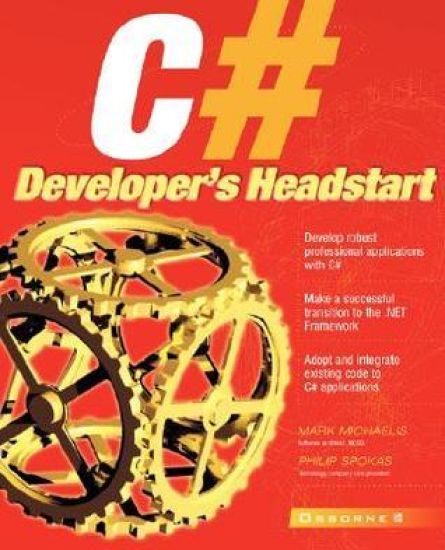
C# Developer's Headstart

C# Developer's Headstart

Philip Spokas; Mark Michaelis

Osborne/McGraw-Hill
2001
pokkari
This text provides programmers with the answers they need in order to make vital decisions about code adoption and migration. It provides programmers with the answers they need in order to make vital decisions about code adoption and migration.
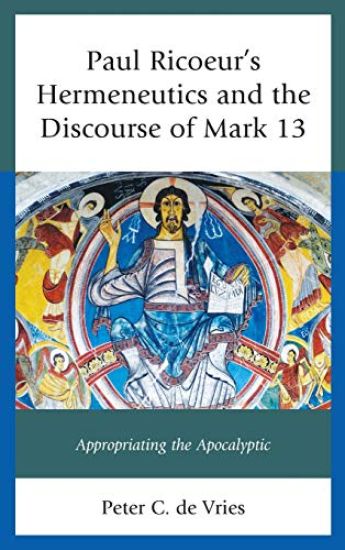
Paul Ricoeur's Hermeneutics and the Discourse of Mark 13
The apocalyptic discourse of Mark 13 predicts that cataclysmic events will occur within the generation of Jesus’ contemporaries, but readers today know these events have not taken place. Paul Ricoeur’s hermeneutics enables a reader to understand this text as a presentation of truth rather than as a failed prediction. Ricoeur argues that the meaning of a text is not defined by the author’s intention nor by the reader’s reception, but by the text itself. Therefore, although Mark 13 was originally understood literally, today’s reader is able to read it as metaphor, and to discern latent meaning that is present in the text. As Ricoeur explains, metaphor associates previously unrelated concepts and creates new, multiple meanings. In doing, metaphor is able to present truth, not as a verifiable presentation of the world, but as a novel manifestation of the world. Mark 13 functions as metaphor because of a double dissonance: first between the configured world of the text and the lived world of the reader, and second between claim that Jesus is able to predict when the events will take place (v. 30) and the assertion that he is not able to do so (v. 32). One option for the metaphorical meaning that Mark 13 offers for today’s reader is the perception of the presence of forces that challenge and subvert powers which appear to be dominant, and which deceive, destroy, and persecute. This book will appeal to two sets of readers. First, scholars who study New Testament apocalyptic texts and the eschatological expectations of the early church will appreciate a new approach to a challenging subject matter. Second, Ricoeur scholars who focus upon the religious aspects of his work will enjoy the employment of his interpretive approach on a Biblical genre that has heretofore receive only cursory attention.
Corrected King James Version Mark: The Gospel of Mark According to the Greek Majority Text English Only Black Print Edition
Mark is the shortest of the gospels, even though in parallel stories, Mark often gives the most details of the Synoptic Gospels. For example, Mark and Luke include the detail that the paralytic was lowered from the roof, and Mark and Matthew include the reasons that John was arrested in more detail than Luke. Mark gets a reputation for being the most hurried and spectacular gospel. I think this honor should go to Matthew. In sharp contrast, I think Mark is actually more grounded. For example, in the Gospel of Matthew, the cursed fig tree withers immediately, whereas in Mark the same curse takes a few days to play out. Matthew brings the paralytic to Jesus's feet, but Mark includes the details that he was lowered through the roof. Only Mark includes the second rooster crow before Peter's denial. Mark spells out all the stories, stretching out every event and detail. Instead of telling the Gospel as an epic like Matthew, Mark is telling it with realism. He is famous for his more abundant use of the word "immediately" to string his stories together, but the actual accounts themselves are very grounded and have a very real-life feel to them. When reading Mark, one is tempted to dust oneself off from the Palestinian dust you feel you've been walking through.I think that the Gospel of Mark connects with modern readers more because our style of writing in the Twenty-First Century has finally caught up with Mark. Now we read books as though we are watching television. If a detail isn't supplied by the text, we fill it in. When we imagine Jesus cursing the fig tree, we either have an image of him sitting or standing. Somewhere deep inside our mind is a little movie director directing the action narrated by the text we read.This may or may not have been true in previous generations. Certainly, when we read books like Jonah and The Gospel of Matthew, the storytelling tactic is different. Instead of giving us details that help us to paint a more accurate view of the story, they build events so that we can have a clearer understanding of the consequences of the story. Matthew is far less concerned to give us the time-table of the fig tree that was cursed, and more concerned that we understand that the fig tree that was cursed withered. Mark is concerned that we have an accurate count of the rooster crows, all three other gospel writers only care that we recognize Peter's failure, with the arithmetic of that failure being left ambiguous.Even though the first few centuries thought Mark was redundant, our most recent generations have started to connect with Mark in a way we haven't connected with Matthew or Luke. The reason we connect with Mark so well is that Mark is a spiritual blogger. Mark tells us all the things we never knew we want to know about the Gospel. Mark tells the story in a more personal way. Mark is the student of Peter, and he's putting down every day's lesson as quickly as he can. Mark is most famous for the "Messianic Secret," where Jesus is insisting that no one identify him as the Messiah but he is recognized by the demons he's confronting.In Mark, the character of Jesus jumps off the page at you. If you want to get to know Jesus as a friend, Mark is the Gospel for you. In Mark, we get quotes from Jesus in his mother tongue, Aramaic. Even though Mark wrote his Gospel in Greek, he was translating for Peter. One can imagine Peter telling his stories in broken Greek while Mark frantically translated into Latin, and then periodically Peter slipping into Aramaic just as the story is getting interesting. Mark, a Jew of the diaspora, struggles to catch up, shouting out the Aramaic and then translating it. The crowd is enthralled, not sure if this is some sort of magic incantation or the name of some foreign dignitary, only to discover that these are the simple and plain words that Christ used in his homeland among his own people.
The Gospel according to Mark

The Gospel according to Mark

C. F. D. Moule

Cambridge University Press
1965
pokkari
This volume on Mark’s Gospel is one of the series of commentaries on the New English Bible designed for use in schools and training colleges, and for the layman. Each volume will comment on one book, or two or three short books, of the Bible, beginning with the New Testament, already published. In each the text will be given in full. Sections of text and commentary alternate, so that the reader does not have to keep two books open, or turn from one part of the book to the other, or refer to a commentary in small type at the foot of the page. Great care is being taken to see that the commentary is suitable to the student and the layman: there is no Greek or Hebrew, and no strings of biblical references, but the commentary does convey the latest and best scholarship. The general editors all have experience of teaching or examining in school and working with adults. There will also be a general introductory volume, Understanding the New Testament, and a volume of maps and plates, The New Testament Illustrated.
The Theological Role of Paradox in the Gospel of Mark
Scholarship on the Gospel of Mark has long been convinced of the paradoxical description of two of its primary themes, christology and discipleship. This book argues that paradoxical language pervades the entire narrative, and that it serves a theological purpose in describing God's activity. Part One focuses on divine action present in Mark 4:10-12. In the first paradox, Mark portrays God's revelatory acts as consistently accompanied by concealment. The second paradox is shown in the various ways in which divine action confirms, yet counters, scripture. Finally, Mark describes God's actions in ways that indicate both wastefulness and goodness; deeds that are further illuminated by the ongoing, yet defeated, presence of evil. Part Two demonstrates that this paradoxical language is widely attested across Mark's passion narrative, as he continues to depict God's activity with the use of the three paradoxes observed in Mark 4. Through paradoxical narrative, Mark emphasizes God's transcendence and presence, showing that even though Jesus has brought revelation, a complete understanding of God remains tantalizingly out of their grasp until the eschaton (4:22).
The Theological Role of Paradox in the Gospel of Mark
Scholarship on the Gospel of Mark has long been convinced of the paradoxical description of two of its primary themes, christology and discipleship. This book argues that paradoxical language pervades the entire narrative, and that it serves a theological purpose in describing God's activity. Part One focuses on divine action present in Mark 4:10-12. In the first paradox, Mark portrays God's revelatory acts as consistently accompanied by concealment. The second paradox is shown in the various ways in which divine action confirms, yet counters, scripture. Finally, Mark describes God's actions in ways that indicate both wastefulness and goodness; deeds that are further illuminated by the ongoing, yet defeated, presence of evil. Part Two demonstrates that this paradoxical language is widely attested across Mark's passion narrative, as he continues to depict God's activity with the use of the three paradoxes observed in Mark 4. Through paradoxical narrative, Mark emphasizes God's transcendence and presence, showing that even though Jesus has brought revelation, a complete understanding of God remains tantalizingly out of their grasp until the eschaton (4:22).
The Gospel According to St. Mark

The Gospel According to St. Mark

C H Turner

Wipf Stock Publishers
2023
pokkari
This is a reproduction of a book published before 1923. This book may have occasional imperfections such as missing or blurred pages, poor pictures, errant marks, etc. that were either part of the original artifact, or were introduced by the scanning process. We believe this work is culturally important, and despite the imperfections, have elected to bring it back into print as part of our continuing commitment to the preservation of printed works worldwide. We appreciate your understanding of the imperfections in the preservation process, and hope you enjoy this valuable book.
Discipleship and Family Ties in Mark and Matthew

Discipleship and Family Ties in Mark and Matthew

Stephen C. Barton

Cambridge University Press
2005
pokkari
During the first two centuries CE there was a common awareness that familial tensions were generated by conversions to the Christian faith. Yet studies of Christian origins have so far paid little attention to the impact of the Christian movement upon attitudes to family ties and natural kinship. Stephen C. Barton remedies this deficiency by means of a detailed study of the relevant passages in the gospels of Mark and Matthew. First, however, he examines the religious traditions of Judaism and the philosophical traditions of the Greco-Roman world, and shows that the tensions apparent within the Christian movement were by no means unique. In all three areas of thought and religious belief there is found the conviction that familial obligations may be transcended by some higher responsibility, to God, to Christ, or to the demands of philosophy. Mark and Matthew saw the Jesus-movement as offering a transcendent allegiance, which relativised family ties.
Discipleship and Family Ties in Mark and Matthew

Discipleship and Family Ties in Mark and Matthew

Stephen C. Barton

Cambridge University Press
1994
sidottu
During the first two centuries CE there was a common awareness that familial tensions were generated by conversions to the Christian faith. Yet studies of Christian origins have so far paid little attention to the impact of the Christian movement upon attitudes to family ties and natural kinship. Stephen C. Barton remedies this deficiency by means of a detailed study of the relevant passages in the gospels of Mark and Matthew. First, however, he examines the religious traditions of Judaism and the philosophical traditions of the Greco-Roman world, and shows that the tensions apparent within the Christian movement were by no means unique. In all three areas of thought and religious belief there is found the conviction that familial obligations may be transcended by some higher responsibility, to God, to Christ, or to the demands of philosophy. Mark and Matthew saw the Jesus-movement as offering a transcendent allegiance, which relativised family ties.
The Temple in the Gospel of Mark: A Study in Its Narrative Role
This work analyzes one of the most striking elements of Mark's story: the vital role the temple plays from Jesus's entry into Jerusalem to the moment of his death. Gray's narrative approach detects implications that redaction criticism missed. Using echoes of Old Testament prophets to present Jesus's "way" as the eschatological return of the Lord to his temple, Mark sees Jesus's cleansing of the temple as a pointer to its imminent destruction. It has failed in its appointed mission to serve as the focus for the restoration of Israel and the ingathering of the Gentiles, and that function will now be assumed by its replacement: the community gathered around Jesus. Originally published by Mohr Siebeck, this book is now available as an affordable North American paperback edition.
Disciples According to Mark

Disciples According to Mark

C. Clifton Black

William B Eerdmans Publishing Co
2012
nidottu
Redaction criticism attempts to identify biblical authors' theological interests by examining their adaptation of sources. Focusing on representative studies of Jesus' disciples in the Gospel of Mark, this pioneering book by C. Clifton Black has become the standard evaluation of that method's exegetical reliability. Comprehensively reviewing recent scholarship, Black identifies three distinctive types of redaction criticism in Markan interpretation. He demonstrates that diverse redaction-critical interpretations of the disciples in Mark have bolstered rather than controlled scholarly presuppositions to a degree that impugns the method's reliability for interpreting Mark. The book concludes by assessing redaction criticism's usefulness and offering a more balanced approach to Mark's interpretation. This second edition includes a substantial, detailed afterword that revisits the book's primary issues, converses with its critics, and provides an update of Markan scholarship over the past twenty-five years.
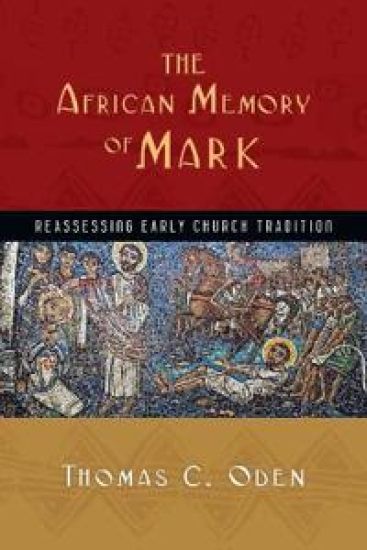
The African Memory of Mark – Reassessing Early Church Tradition
We often regard the author of the Gospel of Mark as an obscure figure about whom we know little. Many would be surprised to learn how much fuller a picture of Mark exists within widespread African tradition, tradition that holds that Mark himself was from North Africa, that he founded the church in Alexandria, that he was an eyewitness to the Last Supper and Pentecost, that he was related not only to Barnabas but to Peter as well and accompanied him on many of his travels. In this provocative reassessment of early church tradition, Thomas C. Oden begins with the palette of New Testament evidence and adds to it the range of colors from traditional African sources, including synaxaries (compilations of short biographies of saints to be read on feast days), archaeological sites, non-Western historical documents and ancient churches. The result is a fresh and illuminating portrait of Mark, one that is deeply rooted in African memory and seldom viewed appreciatively in the West.