

Kirjahaku
Etsi kirjoja tekijän nimen, kirjan nimen tai ISBN:n perusteella.
1000 tulosta hakusanalla Calvin Dirickson
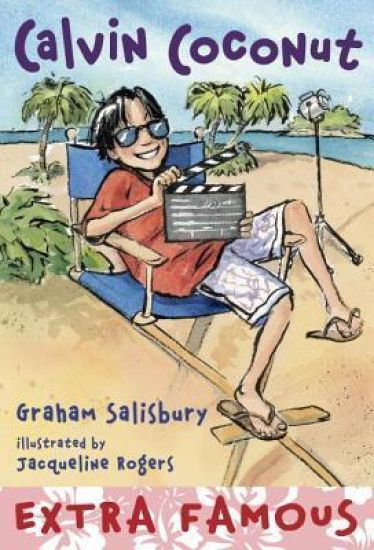
There are zombies at Kailua beach Well, kind of. Fourth-grader Calvin Coconut and his friends have been recruited by Benny Obi (the boy from Kung Fooey who liked to tell crazy stories and ate bugs) to be extras in his uncle's movie: Zombie Zoomba And who ends up with an actual part? Calvin's babysitter, Stella.

What do you want so badly that you can taste it--and can you persuade someone to give it to you? That's the subject of a fourth-grade writing assignment. Calvin wants a dog He reads what he's written to his mom to see just how persuasive he can be. No way, Mom says: Calvin is too irresponsible to care for a pet. Luckily, Mom's boyfriend, Ledward, is on Calvin's side. He takes Calvin to a place he calls dog heaven. There Calvin meets the dog of his dreams--Streak. Now Calvin's got to convince Mom he's dog-responsible, because he and Streak belong together

Calvin's mom says his new dog Streak smells bad. Especially her breath. Calvin's convinced that Streak's stink is a good one, but he's worried. If he doesn't solve Streak's problem soon, mom might make him give his beloved new dog back to the shelter. So when his teacher assigns his students a discovery project, Calvin decides to discover the worst stinks--and find a solution to Streak's bad breath.

Hawaii boy Calvin Coconut has come up with the best idea ever for his sister Darci's birthday party. But a huge tropical storm hits the islands and threatens everything. It rains and rains. And rains. The river next to Calvin's house rises high. When Calvin's friend Willy falls into the raging water, Calvin grabs his skiff to save him. As Willy is swept into the bay, Calvin struggles in the wild waves. What happens next shows Calvin what heroes are made of.

Calvin Coconut's fourth-grade class meets Benni Obi, a weird and likable new kid. Benny brags about knowing kung fu, eats worms, crickets, and chocolate-covered scorpions, and says all the wrong things to bully Tito. Uh-oh. Meanwhile, neighborhood kids and pets clear the road--Calvin's babysitter Stella is learning how to drive. She's got a lead foot. Readers will enjoy the humor in Kung Fooey as Calvin's smarts and courage help him learn something new about standing up for friends, and facing a bully.

Calvin and his mom's boyfriend, Ledward, are good friends. When Ledward wins plane tickets, he invites Calvin to fly to Hawaii, the Big Island, for a day, and go deep-sea fishing. Wow Calvin's never been on a plane, or any boat but his skiff. What a day--Calvin catches his first big fish, an ono. But that's nothing compared to what happens when Ledward hooks a huge and very angry marlin that charges the boat Fishing with Ledward opens Calvin's eyes to adventure and to important ideas about respecting nature.
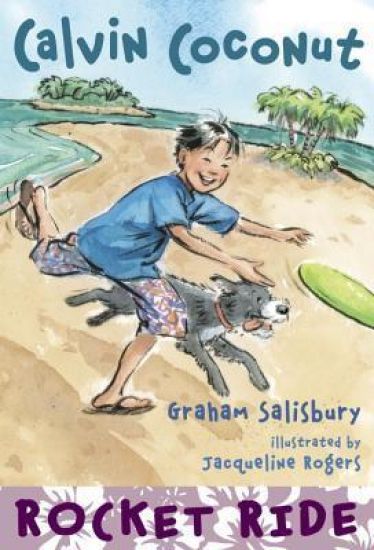
Calvin's dad is a famous pop singer, and he's going to be in a concert on the island Everyone wants to go. Dad gave Calvin's mom 10 tickets, and Calvin has to decide who gets the last ticket: teacher's pet Shayla, who has a crush on him (ick ) or Tito the bully? But much more important: Calvin hasn't seen his dad in four years. And he's never met Dad's new wife. Will Dad still like Calvin now?
Stephen Edmondson articulates a coherent Christology from Calvin's commentaries and his Institutes. He argues that, through the medium of Scripture's history, Calvin, the biblical humanist, renders a Christology that seeks to capture both the breadth of God's multifaceted grace enacted in history, and the hearts of God's people formed by history. What emerges is a picture of Christ as the Mediator of God's covenant through his threefold office of priest, king and prophet. With Christ's work as the pivot on which Calvin's Christology turns, Christ's person becomes the goal to which it drives: for Christ mediates our union with God only through union with himself. This is the first significant volume to explore Calvin's Christology in several decades. It clarifies an important but perplexing subject in Calvin studies through its focus on Christ's work in history and allows Calvin a voice in the current theological conversation about Christology.
Calvin and the Bible
Cambridge University Press
2006
pokkari
During the past several decades a growing number of scholars have come to appreciate the importance of studying John Calvin's interpretive work as a commentator on Scripture in addition to his better-known writings on theology. In this volume ten essays by scholars specializing in Calvin's exegetical methods examine the approaches and themes Calvin emphasized when he interpreted major portions of Scripture. These essays focus on Calvin's work in his biblical commentaries with appropriate cross-referencing to his other writings, including his sermons. A concluding essay synthesizes the main features of what has gone before to present an overall view of John Calvin as an interpreter and commentator on Holy Scripture. An appreciation of Calvin's exegetical labors and his work as a biblical commentator are now recognized as key elements in Calvin scholarship.
Stephen Edmondson articulates a coherent Christology from Calvin’s commentaries and his Institutes. He argues that, through the medium of Scripture's history, Calvin, the biblical humanist, renders a Christology that seeks to capture both the breadth of God’s multifaceted grace enacted in history, and the hearts of God’s people formed by history. What emerges is a picture of Christ as the Mediator of God’s covenant through his threefold office of priest, king and prophet. With Christ’s work as the pivot on which Calvin’s Christology turns, Christ’s person becomes the goal to which it drives: for Christ mediates our union with God only through union with himself. This is the first significant volume to explore Calvin’s Christology in several decades. It clarifies an important but perplexing subject in Calvin studies through its focus on Christ’s work in history and allows Calvin a voice in the current theological conversation about Christology.

Calvin and the Bible
Cambridge University Press
2006
sidottu
During the past several decades a growing number of scholars have come to appreciate the importance of studying John Calvin's interpretive work as a commentator on Scripture in addition to his better-known writings on theology. In this volume ten essays by scholars specializing in Calvin's exegetical methods examine the approaches and themes Calvin emphasized when he interpreted major portions of Scripture. These essays focus on Calvin's work in his biblical commentaries with appropriate cross-referencing to his other writings, including his sermons. A concluding essay synthesizes the main features of what has gone before to present an overall view of John Calvin as an interpreter and commentator on Holy Scripture. An appreciation of Calvin's exegetical labors and his work as a biblical commentator are now recognized as key elements in Calvin scholarship.

Crowded In An Empty Room - A Collection of Original Poetry by Calvin D. McHoward
Calvin McHoward
Lulu.com
2010
nidottu

As a major theologian John Calvin is often the subject of widespread misunderstanding and misinterpretation, and this new "Guide for the Perplexed" will provide an ideal introduction to his thoughts and views.John Calvin is a major theologian of the Christian Church, but one who is also the subject of widespread misunderstanding and misinterpretation. He is also a figure whom other theologians either seek to 'capture' to endorse their own (often very different positions) or whom they seek to vilify. His situation in late medievalism is often overlooked. So there is an important need to re-situate Calvin."Calvin: A Guide for the Perplexed" attempts to do this in the context of providing a 'middle level' introduction to his thought. The need for such re-situating will be stressed in the first Chapter, 'Orientation'. As befits the series, attention will be focussed on Calvin's thought, not on his personal character or career, though reference will be made to these as necessary, and the Introduction will include a brief overview of his life and times. Attention will be made not only to Calvin's theological positions, but also to the philosophy intertwined within them, the significance and interest of which is often overlooked."Continuum's Guides for the Perplexed" are clear, concise and accessible introductions to thinkers, writers and subjects that students and readers can find especially challenging - or indeed downright bewildering. Concentrating specifically on what it is that makes the subject difficult to grasp, these books explain and explore key themes and ideas, guiding the reader towards a thorough understanding of demanding material.
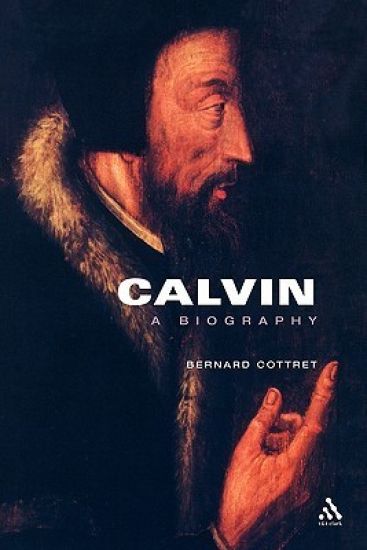
A major new authoritative and comprehensive biography, shedding new light on the life and personality of the great Reformer - and the milieu in which he lived and worked. Cottret's Calvin is not the Gstatic theologian of earlier biographies, but a man of enormous vigour, constantly on the move in his thinking as well as in his life. Professor Cottret introduces the reader to the world into which Calvin was born, and follows him from childhood to humanistic and literary pursuits in Basel, to ministry in Geneva, to the halcyon Strasbourg years and finally back to Geneva. The vital issues of the day are encountered as it were through Calvins eyes, as the author leads the reader through the dramatic upheavals of sixteenth-century Europe. A classic biography which will be an indispensable resource for students and scholars for years to come. Praise for Calvin:

Calvin Today
T. T.Clark Ltd
2011
sidottu
This title presents distinguished scholars on Calvin and his surprising up to date relevance addressing three central current issues: faith - ecumenism - public responsibility. This inspiring collection of essays spells out the relevance of John Calvin's theology for today in three areas: Faith? Calvin's theology asks how God deals with the persistent presence of human sin. For Calvin, the chief end of life is to know God and devote our life to his glory. The still topical point is that we are freed from our fixation with ourselves, thereby recognising and living out our true reality in relation to God. Ecumenism? The unity of the Church in Christ is of central importance to Calvin. We must do our utmost to make it visible. In Calvin's view, if there is agreement in the understanding of God and grace, all other differences have no divisive importance. This still characterises Reformed understanding today. Public responsibility? Calvin posed the question about the church's public responsibility as no other Reformer did. Part 3 reveals the sources of the worldwide impact of Calvin's and Reformed theology on politics, the law, scholarship and the organising of life in society, including civil society.