Kirjojen hintavertailu. Mukana 11 244 527 kirjaa ja 12 kauppaa.

Kirjahaku

Etsi kirjoja tekijän nimen, kirjan nimen tai ISBN:n perusteella.

1000 tulosta hakusanalla Can Mayaoglu

Can Animals Be Moral?

Can Animals Be Moral?

Mark Rowlands

Oxford University Press Inc
2015
nidottu
From eye-witness accounts of elephants apparently mourning the death of family members to an experiment that showed that hungry rhesus monkeys would not take food if doing so gave another monkey an electric shock, there is much evidence of animals displaying what seem to be moral feelings. But despite such suggestive evidence, philosophers steadfastly deny that animals can act morally, and for reasons that virtually everyone has found convincing. In Can Animals be Moral?, philosopher Mark Rowlands examines the reasoning of philosophers and scientists on this question--ranging from Aristotle and Kant to Hume and Darwin--and reveals that their arguments fall far short of compelling. The basic argument against moral behavior in animals is that humans have capabilities that animals lack. We can reflect on our motivations, formulate abstract principles that allow that allow us to judge right from wrong. For an actor to be moral, he or she must be able scrutinize their motivations and actions. No animal can do these things--no animal is moral. Rowland naturally agrees that humans possess a moral consciousness that no animal can rival, but he argues that it is not necessary for an individual to have the ability to reflect on his or her motives to be moral. Animals can't do all that we can do, but they can act on the basis of some moral reasons--basic moral reasons involving concern for others. And when they do this, they are doing just what we do when we act on the basis of these reasons: They are acting morally.
Can Science Explain Religion?

Can Science Explain Religion?

James W. Jones

Oxford University Press Inc
2016
sidottu
The "New Atheist" movement of recent years has put the science-versus-religion controversy back on the popular cultural agenda. Anti-religious polemicists are convinced that the application of the new sciences of the mind to religious belief gives them the final weapons in their battle against irrationality and superstition. What used to be a trickle of research papers scattered in specialized scientific journals has now become a torrent of books, articles, and commentary in the popular media pressing the case that the cognitive science of religion can finally fulfill the enlightenment dream of shrinking religion into insignificance, if not eliminating it altogether. James Jones argues that these claims are demonstrably false. He notes that cognitive science research is religiously neutral; it can be deployed in many different ways in relation to the actual belief in and practice of religion: to undermine it, to simply study it, and to support it. These differences are differences in interpretation of the data and, Jones suggests, a reflection of the background assumptions and viewpoints brought to the data. The goal of this book is not to defend either a general religious outlook or a particular religious tradition but to make the case that while there is much to learn from the cognitive scientific study of religion, attempts to use it to "explain" religion are exaggerated and misguided. Drawing on scientific research and logical argument Can Science Explain Religion? directly confronts the claims of these debunkers of religion, providing an accessibly written, persuasive account of why they are not convincing.
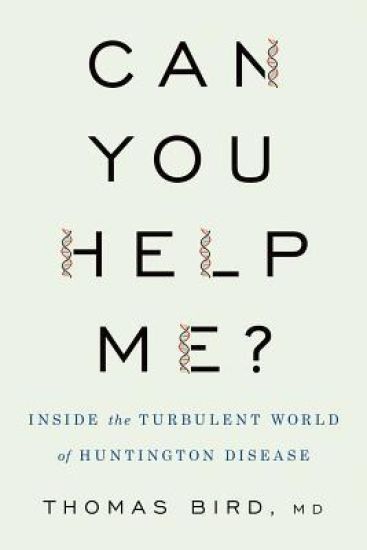
Can You Help Me?

Can You Help Me?

Thomas D. Bird

Oxford University Press Inc
2019
sidottu
Can You Help Me?: Inside the Turbulent World of Huntington Disease shares the surprising, insightful, challenging, and even encouraging stories of patients and their families who live with Huntington Disease. Having seen patients for more than 40 years, Dr Thomas Bird, a pioneer neurogeneticist, adds a human touch to this genetic brain disease that devastates persons during mid-life when they can least afford it. With a brief history of Huntington Disease and the occasional scientific detail, the true heart of the book is the human experience of the disorder: · The man who cannot stay out of prison because he is addicted to being a burglar. · Another man shoots and kills his roommate while watching television and cannot explain why he did it. · The woman with Huntington Disease copes with her depression by using Texas line dancing. · A twelve year old girl with juvenile Huntington Disease who can barely walk and talk, but her classmates rally around with touching and heartfelt support. · And the 72 year old man with late onset Huntington Disease and severe depression is made worse by ECT, but improved (for a while) with Transcranial Magnetic Stimulation. These are just some of the compelling stories of people of all ages and in all walks of life who feel trapped by a progressive degenerative brain disease from which there is no escape.
Can Animals Be Persons?

Can Animals Be Persons?

Mark Rowlands

Oxford University Press Inc
2019
sidottu
Can animals be persons? To this question, scientific and philosophical consensus has taken the form of a resounding, 'No!' In this book, Mark Rowlands disagrees. Not only can animals be persons, many of them probably are. Taking, as his starting point, John Locke's classic definition of a person, as "a thinking intelligent being, that has reason and reflection, and can consider itself the same thinking thing, in different times and places," Rowlands argues that many animals can satisfy all of these conditions. A person is an individual in which four features coalesce: consciousness, rationality, self-awareness and other-awareness, and many animals are such individuals. Consciousness--something that is like to have an experience--is widely distributed through the animal kingdom. Many animals are capable of both causal and logical reasoning. Many animals are also self-aware, since a form of self-awareness is essentially built into the possession of conscious experience. And some animals are capable of a kind of awareness of the minds of others, quite independently of whether they possess a theory of mind. This is not just a book about animals, however. As well as being fascinating in their own right, animals, as Claude Levi-Strauss once put it, are "good to think." In this seamless interweaving of the empirical study of animal minds with philosophy and its history, this book makes a powerful case for the idea that reflection on animals allows us to better understand each of these four pillars of personhood, and so illuminates what means for any individual--animal or human--to be conscious, rational, self- and other-aware.
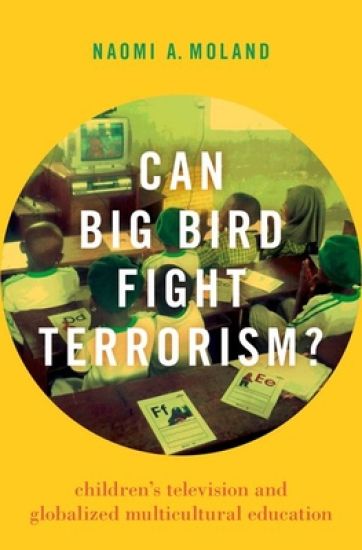
Can Big Bird Fight Terrorism?

Can Big Bird Fight Terrorism?

Naomi A. Moland

Oxford University Press Inc
2019
sidottu
Sesame Street has taught generations of Americans their letters and numbers, and also how to better understand and get along with people of different races, faiths, ethnicities, and temperaments. But the show has a global reach as well, with more than thirty co-productions of Sesame Street that are viewed in over 150 countries. In recent years, the United States Agency for International Development (USAID) has provided funding to the New York-based Sesame Workshop to create international versions of Sesame Street. Many of these programs teach children to respect diversity and tolerate others, which some hope will ultimately help to build peace in conflict-affected societies. In fact, the U.S. government has funded local versions of the show in several countries enmeshed in conflict, including Afghanistan, Kosovo, Pakistan, Jordan, and Nigeria. Can Big Bird Fight Terrorism? takes an in-depth look at the Nigerian version, Sesame Square, which began airing in 2011. In addition to teaching preschool-level academic skills, Sesame Square seeks to promote peaceful coexistence-a daunting task in Nigeria, where escalating ethno-religious tensions and terrorism threaten to fracture the nation. After a year of interviewing Sesame creators, observing their production processes, conducting episode analysis, and talking to local educators who use the program in classrooms, Naomi Moland found that this child-focused use of soft power raised complex questions about how multicultural ideals translate into different settings. In Nigeria, where segregation, state fragility, and escalating conflict raise the stakes of peacebuilding efforts, multicultural education may be ineffective at best, and possibly even divisive. This book offers rare insights into the complexities, challenges, and dilemmas inherent in soft power attempts to teach the ideals of diversity and tolerance in countries suffering from internal conflicts.
Can I Believe?

Can I Believe?

John G. Stackhouse

Oxford University Press Inc
2020
nidottu
Maybe Christianity is actually true. Maybe it is what believers say it is. But at least two problems make the thoughtful person hesitate. First, there are so many other options. How could one possibly make one's way through them to anything like a rational and confident conclusion? Second, why do so many people choose to be Christian in the face of so many reasons not to be Christian? Yes, many people grow up in Christian homes and in societies, but many more do not. Yet Christianity has become the most popular religion in the world. Why? This book begins by taking on the initial challenge as it outlines a process: how to think about religion in a responsible way, rather than settling for such soft vagaries as "faith" and "feeling". It then clears away a number of misunderstandings from the basic story of the Christian religion, misunderstandings that combine to domesticate this startling narrative and thus to repel reasonable people who might otherwise be intrigued. The second half of the book then looks at Christian commitment positively and negatively. Why do two billion find this religion to be persuasive, thus making it the most popular "explanation of everything" in human history? At the same time, how does Christianity respond to the fact that so many people find it utterly implausible, especially because so many Christians insist that theirs is the only way to God and because of the problem of evil that seems to undercut everything Christianity asserts? Grounded in scholarship but never ponderous, Can I Believe? refuses to dodge the hard questions as it welcomes the intelligent inquirer to give Christianity at least one good look.
Can you hear me?

Can you hear me?

Oxford University Press
1998
muu
for SS with piano, or piano and string orchestra A simple and beautiful setting describing the wonder of a world seen through the eyes of a deaf child. In the chorus singers are encouraged to sign the words they are singing, resulting in very moving but unsentimental music. The orchestral material is available on hire.
Can God Be Trusted?

Can God Be Trusted?

John G. Stackhouse

Oxford University Press Inc
1998
sidottu
Why does an all-powerful, all good God allow evil to happen? This book offers a lucid and accessible overview of this intractable problem. It presents the reflections of classical and contemporary thinkers, and gives clues as to how God governs the cosmos, while arguing that a comprehensive explanation is not available. Instead, it asks whether God can be trusted in spite of evil and suggests why the reply can ultimately be "Yes."
Can Gun Control Work?

Can Gun Control Work?

James B. Jacobs

Oxford University Press Inc
2004
nidottu
Few schisms in American life run as deep or as wide as the divide between gun rights and gun control advocates. Awash in sound and symbol, the gun regulation debate has largely been defined by forceful rhetoric rather than substantive action. Politicians shroud themselves in talk of individual rights or public safety while lobbyists on both sides make doom-and-gloom pronouncements on the consequences of potential shifts in the status quo. In America today there are between 250 and 300 million firearms in private hands, amounting to one weapon for every American. Two in five American homes house guns. On the one hand, most gun owners are law-abiding citizens who believe they have a constitutional right to bear arms. On the other, a great many people believe gun control to be our best chance at reducing violent crime. While few--whether gun owner or anti-gun advocate--dispute the need to keep guns out of the wrong hands, the most important question has too often been dodged: What gun control options does the most heavily armed democracy in the world have? Can gun control really work? The last decade has seen several watersheds in the debate, none more important than the 1993 Brady Bill. That bill, James B. Jacobs argues, was the culmination of a strategy in place since the 1930s to permit widespread private ownership of guns while curtailing illegal use. But where do we go from here? While the Brady background check is easily circumvented, any further attempts to extend gun control--for instance, through comprehensive licensing of all gun owners and registration of all guns--would pose monumental administrative burdens. Jacobs moves beyond easy slogans and broad-brush ideology to examine the on-the-ground practicalities of gun control, from mandatory safety locks to outright prohibition and disarmament. Casting aside ideology and abstractions, he cautions against the belief that there exists some gun control solution which, had we the political will to seize it, would substantially reduce violent crime. In Can Gun Control Work?, James B. Jacobs, one of our most fearless commentators on intractable social problems, has given us the most sober and even-handed assessment of whether gun control can really be made to work.
Can Anyone Hear Us?

Can Anyone Hear Us?

OXFORD UNIVERSITY PRESS INC
2000
nidottu
A multi-country research initiative to understand poverty from the eyes of the poor, the Voices of the Poor project was undertaken to inform the World Bank's activities and the upcoming World Development Report 2000/01. The research findings are being published in three books: "Can Anyone Hear Us?" gathers the voices of over 40,000 poor women and men in 50 countries from the World Bank's participatory poverty assessments (Deepa Narayan, Raj Patel, Kai Schafft, Anne Rademacher, and Sarah Koch-Schulte, authors). "Crying Out for Change" pulls together new field work conducted in 1999 in 23 countries (Deepa Narayan, Robert Chambers, Meera Shah, and Patti Petesch, authors). "From Many Lands" offers regional patterns and country case-studies (Deepa Narayan and Patti Petesch, editors). Voices of the Poor marks the first time such an exercise has been undertaken in so many developing countries and transition economies around the world. It provides a unique and detailed picture of the life of the poor and explains the constraints poor people face to escape from poverty in a way that more traditional survey techniques do not capture well. Each of the three volumes demonstrates the importance of voice and power in poor people's definition of poverty. Voices of the Poor concludes that we need to expand our conventional views of poverty which focus on income expenditure, education, and health to include measures of voice and empowerment.
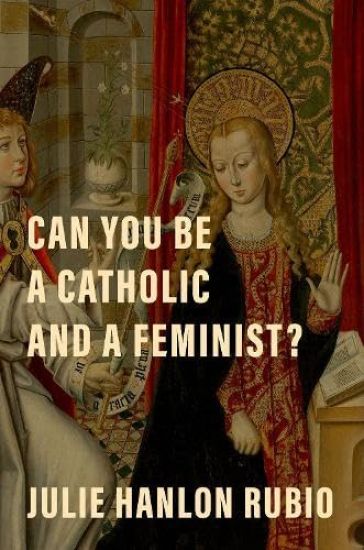
Can You Be a Catholic and a Feminist?

Can You Be a Catholic and a Feminist?

Julie Hanlon Rubio

OXFORD UNIVERSITY PRESS INC
2024
sidottu
An eminent theologian addresses an enduring--but newly urgent--question Is it possible to be both a faithful Catholic and an avowed feminist? Earlier generations of feminists first formulated answers to this question in the 1970s. Their views are still broadly held, but with increasing tentativeness and a growing sense of their inadequacy. Even now, Catholic women and men still say, "It's my Church and I'm not leaving," "Change will only happen if people like me stay and fight," and "The Church's work for social justice is more important than the issues that concern me as a feminist." Yet in a post-#MeToo, #ChurchToo moment, when the Church seems disconnected from struggles for racial justice and LGBTQ inclusion, those answers sound increasingly insufficient. Today, tensions between Catholicism and feminism are more visible and ties to Catholic communities are increasingly weak. Can Catholic feminism survive? Julie Hanlon Rubio argues that it can. But if it is going to do so, it is necessary to rethink how women and men who experience the pull of feminism and Catholicism can credibly claim both identities. In Can You Be a Catholic and a Feminist? Rubio argues that Catholic feminist identity is only tenable if we frankly acknowledge tensions between Catholicism and feminism, bring forward shared concerns, and embrace the future with ambiguity and creativity. Rubio explores the potential for synergy and dialogue between Catholics and feminists through various lenses, including sexual violence, gender theory, pregnancy and pre-natal loss, work-life balance, relationships and family life, spirituality, conscience, and what it means to be human. This book gives those who struggle to balance Catholicism and feminism a credible path to authentic belonging.
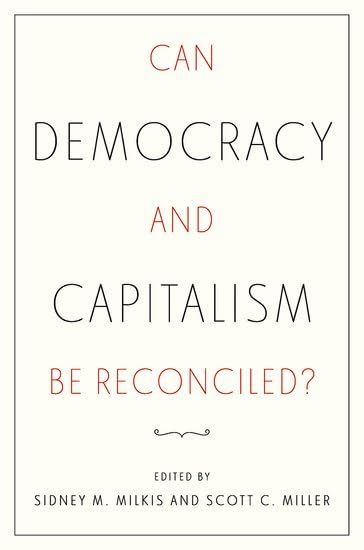
Can Democracy and Capitalism Be Reconciled?
In Can Capitalism and Democracy Be Reconciled?, Sidney M. Milkis and Scott C. Miller have gathered a truly eminent cast of contributors to provide a multidisciplinary examination at the intersection of capitalist economies and democratic political systems across time and space. Featuring twenty-four essays from scholars across nine different academic fields, the volume interrogates the ideas, history, and policy behind these two pillars of liberal society. The volume begins with an introduction that explores the vibrant historical debate over whether democracy and capitalism can and should coexist in America. The contributors, further examining the United States and comparable countries, conclude that democracy and capitalism can be reconciled; at the same time, many recognize that the relationship is fragile and urge systemic changes that might sustain democratic capitalism in the future. The core thematic sections begin with an examination of the foundational yet fluid meaning of democracy and capitalism and consider the inherent tensions in reconciling them. The remaining sections address the underlying causes of, and solutions to, five modern "pathologies" of democratic capitalism: 1) Environmental Degradation; 2) Governance and Consolidation of Private Power; 3) Inequality and Opportunity; 4) Polarization; and 5) Frictions at the Intersection of Popular Will and Sound Policy. By examining these pathologies from many disciplinary and temporal angles, this volume provides a rounded understanding of why these pathologies arose, how they have influenced society, and how free people can reform their political economy to bring it more in line with their values.
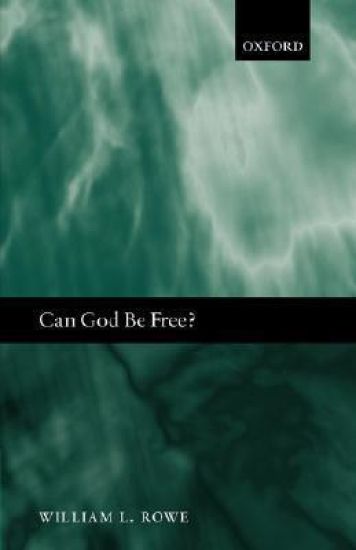
Can God Be Free?

Can God Be Free?

William L. Rowe

Clarendon Press
2004
sidottu
In the three major religions of the West, God is understood to be a being whose goodness, knowledge, and power is such that it is impossible for any being, including God himself, to have a greater degree of goodness, knowledge, and power. This book focuses on God's freedom and praiseworthiness in relation to his perfect goodness. Given his necessary perfections, if there is a best world for God to create he would have no choice other than to create it. For, as Leibniz tells us, 'to do less good than one could is to be lacking in wisdom or in goodness.' But if God could not do otherwise than create the best world, he created the world of necessity, not freely. And, if that is so, it may be argued that we have no reason to be thankful to God for creating us, since, as parts of the best possible world, God was simply unable to do anything other than create us - he created us of necessity, not freely. Moreover, we are confronted with the difficulty of having to believe that this world, with its Holocaust, and innumerable other evils, is the best that an infinitely powerful, infinitely good being could do in creating a world. Neither of these conclusions, taken by itself, seems at all plausible. Yet each conclusion appears to follow from the conception of God now dominant in the great religions of the West. William Rowe presents a detailed study of this important problem, both historically in the writings of Gottfried Leibniz, Samuel Clarke, Thomas Aquinas, and Jonathan Edwards, as well as in the contemporary philosophical literature devoted to the issue. Rowe argues that this problem is more serious than is commonly thought and may require some significant revision in contemporary thinking about the nature of God.
Can precision medicine be personal; Can personalized medicine be precise?
People have always sought medical care that is tailored to every individual patient. Alongside with the historical development of institutions of care, the vision of personal and 'holistic' care persisted. Patient-centred medicine, interpersonal communication and shared decision making have become central to medical practice and services. This evolving vision of 'personalized medicine' is in the forefront of medicine, creating debates among ethicists, philosophers and sociologists of medicine about the nature of disease and the definition of wellness, the impact on the daily life of patients, as well as its implications on low-income countries. Is increased 'precision' also an improvement on the personal aspects of care or erosion of privacy? Do 'precise' and 'personalized' approach marginalize public health, and can this care be personalized without attention to culture, economy and society? The book provides a multidisciplinary and interdisciplinary discussion of the ethos and ethics of precision/personal medicine, involving scientists who have shaped the field, in dialogue with ethicists, social scientists and philosophers of science. The contributing scholars come from all over the world and from different cultural backgrounds providing reflective perspectives of history of ideas, critical theory and technology assessment, together with the actual work done by pioneers in the field. It explores issues such as global justice, gender, public health, pharmaceutical industry, international law and religion, and explores themes discussed in relation to personalized medicine such as new-born screening and disorders of consciousness. This book will be of interest to academicians in bioethics, history of medicine, social sciences of medicine as well as general educated readers.
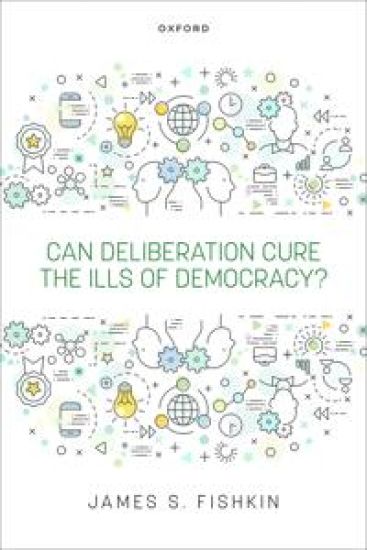
Can Deliberation Cure the Ills of Democracy?

Can Deliberation Cure the Ills of Democracy?

James S. Fishkin

Oxford University Press
2025
sidottu
In our modern world of propaganda, social media enclaves, misinformation, and manipulation, the connection between 'the will of the people' and political action has broken down, political divisions are becoming increasingly intractable, and democracies are growing ever more ungovernable. Democracy is in crisis. In Can Deliberation Cure the Ills of Democracy?, James S. Fishkin argues that deliberative democracy can have surprisingly positive effects on all of these problems and charts a unique path to fixing them with his method of Deliberative Polling. After decades of applying and perfecting the methods of deliberative democracy in countries all over the world, this book synthesizes the results of 150 applications and shows how the method can be applied to resolve many of democracy's seemingly intractable challenges. It can clarify the public will and depolarize our divisions. It can be applied to major national and local decisions, it can spread in schools, it can be used by corporations, it can make for more meaningful ballot propositions, it can help reform the primary system, it can scale with technology, and most importantly, it can help reform electoral democracy, help preserve the guardrails that protect the electoral process, and provide key policy inputs in almost every contested issue area from climate change to the rights of minorities. Fishkin demonstrates that deliberative democracy is a practical solution if applied widely and lays out a vision for how to combine elections with deliberation to build a more deliberative society, one that cures our extreme partisanship and leads to substantive dialogues that foster mutual respect and more engaged voters. Deliberation provides a story of thoughtful empowerment and democratic reform, strengthening but not replacing our current institutions.
Can God Be Free?

Can God Be Free?

William L. Rowe

Clarendon Press
2006
nidottu
In the three major religions of the West, God is understood to be a being whose goodness, knowledge, and power are such that it is impossible for any being, including God himself, to have a greater degree of goodness, knowledge, and power. This book focuses on God's freedom and praiseworthiness in relation to his perfect goodness. Given his necessary perfections, if there is a best world for God to create he would have no choice other than to create it. For, as Leibniz tells us, 'to do less good than one could is to be lacking in wisdom or in goodness'. But if God could not do otherwise than create the best world, he created the world of necessity, not freely. And, if that is so, it may be argued that we have no reason to be thankful to God for creating us, since, as parts of the best possible world, God was simply unable to do anything other than create us---he created us of necessity, not freely. Moreover, we are confronted with the difficulty of having to believe that this world, with its Holocaust, and innumerable other evils, is the best that an infinitely powerful, infinitely good being could do in creating a world. Neither of these conclusions, taken by itself, seems at all plausible. Yet each conclusion appears to follow from the conception of God now dominant in the great religions of the West. William Rowe presents a detailed study of this important problem, both historically in the writings of Gottfried Leibniz, Samuel Clarke, Thomas Aquinas, and Jonathan Edwards, and in the contemporary philosophical literature devoted to the issue. Rowe argues that this problem is more serious than is commonly thought and may require some significant revision in contemporary thinking about the nature of God.
Can Latin American Firms Compete?

Can Latin American Firms Compete?

Oxford University Press
2007
sidottu
In many discussions of globalization and growth, attention focuses on Asia, notably China, South Korea, and India. In contrast, 'Can Latin American Firms Compete?' looks at business developments in another key emerging market region, Latin America. It examines the success and failure that Latin American firms have met with, in their own markets and elsewhere in the world, the reasons behind these outcomes, and these firms' future prospects. Including contributions from leading international experts on business in Latin America, the book draws on concepts from organization theory, industrial organization, economics, marketing, sociology, and political science. It includes sections on broad themes of competitiveness in Latin America, micro-level strategies of firms in specific sectors, the competitiveness of firms in specific countries, and competing in emerging markets. Cases examined range in size and sector, and include some of the largest firms in Latin America, such as as Embraer in Brazil, Quiñenco (Luksic) in Chile, Techint in Argentina, Grupo Carso in Mexico, Cisneros in Venezuela, and Grupo Empresarial Antioqueño in Colombia. This well-informed book will be essential reading for academics, policy-makers, and those with a serious interest in business development in Latin America.