Kirjojen hintavertailu. Mukana 11 627 363 kirjaa ja 12 kauppaa.

Kirjahaku

Etsi kirjoja tekijän nimen, kirjan nimen tai ISBN:n perusteella.

1000 tulosta hakusanalla Carl E. Pickhardt

First-Generation Student Experiences in Higher Education

First-Generation Student Experiences in Higher Education

Carl E. James; Leanne E. Taylor

TAYLOR FRANCIS LTD
2022
sidottu
In First-Generation Student Experiences in Higher Education: Counterstories, we meet eight students who attended university through an access program, and hear their stories of deciding to enter university, navigating and negotiating the institution, and bringing their university experiences with them into adult life. Their "counterstories"—drawn from application statements, weekly group meetings, diary entries, group conversations, interviews, and media reports—challenge the stereotypes commonly applied to marginalized students in higher education. Chapters offer insights into a range of salient themes and highlight the students’ strategies, challenges, successes, and trajectories, as well as their nuanced relationships with their networks, communities, families, and significant others. With this volume, James and Taylor present a valuable resource for educators, administrators, scholars, students and community agencies interested in extending understandings of first-generation university students.

Fin De Siecle Vienna

Fin De Siecle Vienna

Carl E. Schorske

Random House USA Inc
1990
nidottu
A Pulitzer Prize Winner and landmark book from one of the truly original scholars of our time: a magnificent revelation of turn-of-the-century Vienna where out of a crisis of political and social disintegration so much of modern art and thought was born. "Not only is it a splendid exploration of several aspects of early modernism in their political context; it is an indicator of how the discipline of intellectual history is currently practiced by its most able and ambitious craftsmen. It is also a moving vindication of historical study itself, in the face of modernism's defiant suggestion that history is obsolete."-- David A. Hollinger, History Book Club Review "Each of the seven separate studies] can be read separately....Yet they are so artfully designed and integrated that one who reads them in order is impressed by the book's wholeness and the momentum of its argument."-- Gordon A. Craig, The New Republic "A profound work...on one of the most important chapters of modern intellectual history" -- H.R. Trevor-Roper, front page, The New York Times Book Review "Invaluable to the social and political historian...as well as to those more concerned with the arts" -- John Willett, The New York Review of Books "A work of original synthesis and scholarship. Engrossing."-- Newsweek
Small Enterprises and Economic Development

Small Enterprises and Economic Development

Carl E. Liedholm; Donald C. Mead

Routledge
1999
sidottu
Micro and small enterprises (MSEs) have been recognized as a major contemporary source of employment and income in a growing number of developing countries. Yet, relatively little is known about the characteristics and patterns of change in these enterprises. This volume examines the dynamics of MSEs in the development process. Drawing on a unique set of surveys conducted in twelve countries in Africa and Latin America the authors map the patterns of change in MSEs in the developing world. Subjects covered include: * significance of new start and closure rates of MSEs * factors involved in expansion rates and growth patterns of MSEs * the role of gender in MSEs evolution.
The View from Bald Hill

The View from Bald Hill

Carl E. Bock; Jane H. Bock; Harry W. Greene

University of California Press
2000
pokkari
In 1540 Francisco Vasquez de Coronado introduced the first domestic livestock to the American Southwest. Over the subsequent four centuries, cattle, horses, and sheep have created a massive ecological experiment on these arid grasslands, changing them in ways we can never know with certainty. The Appleton-Whittell Research Ranch in the high desert of southeastern Arizona is an 8,000-acre sanctuary where grazing has been banned since 1968. In this spirited account of thirty years of research at the ranch, Carl and Jane Bock summarize the results of their fieldwork, which was aimed at understanding the dynamics of grasslands in the absence of livestock. The View from Bald Hill provides an intimate look at the natural history of this unique site and illuminates many issues pertaining to the protection and restoration of our nation's grasslands.
Reclaiming the Bible for the Church

Reclaiming the Bible for the Church

Carl E. Braaten; Robert Jenson

T. T.Clark Ltd
1996
nidottu
Leading theologians speak out on the crisis in the role of biblical authority and the interpretation of the Bible in the church. 'The various chapters in this excellent book, summarised as to leading themes by editors in the introduciton, orginated as conference papers which addressed the question: can the Bible still speak to the Church in an age of critical historical awareness? It is a book which will repay careful reading by all those concerned to maintain or restore an intergral connection between Bible and Church while retaining also a personal integrity of intellect and spirit. There are eight essays in all, each addressing the central question in its own unique manner.' Colm O Baoill, University of Aberdeen, Scottish Journal of Theology
Morton's College Student Dictionary
"Morton's College Student Dictionary" is a one of a kind reference book that defines the college experience in a whole new way. Literally! This first edition resource offers a witty and informative perspective of college life and the English language. In it you'll find a listing of more than 700 words and their new definitions as they relate specifically to college life. Your vocabulary will never be the same! Perfectly suitable for college bound high school graduates and present and past college students alike, "Morton's College Student Dictionary" gets an A++.
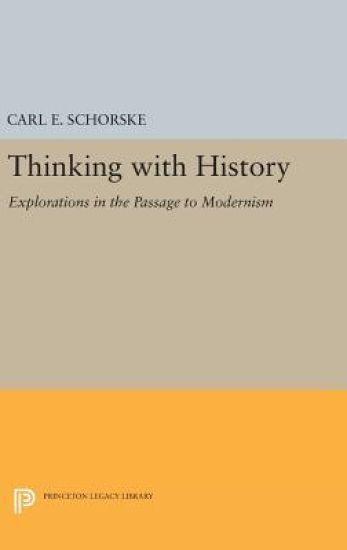
Thinking with History

Thinking with History

Carl E. Schorske

Princeton University Press
2014
pokkari
In this book, the distinguished historian Carl Schorske--author of the Pulitzer Prize-winning Fin-de-Siecle Vienna--draws together a series of essays that reveal the changing place of history in nineteenth-and twentieth-century cultures. In most intellectual and artistic fields, Schorske argues, twentieth-century Europeans and Americans have come to do their thinking without history. Modern art, modern architecture, modern music, modern science--all have defined themselves not as emerging from or even reacting against the past, but as detached from it in a new, autonomous cultural space. This is in stark contrast to the historicism of the nineteenth century, he argues, when ideas about the past pervaded most fields of thought from philosophy and politics to art, music, and literature. However, Schorske also shows that the nineteenth century's attachment to thinking with history and the modernist way of thinking without history are more than just antitheses. They are different ways of trying to address the problems of modernity, to give shape and meaning to European civilization in the era of industrial capitalism and mass politics. Schorske begins by reflecting on his own vocation as it was shaped by the historical changes he has seen sweep across political and academic culture. Then he offers a European sampler of ways in which nineteenth-century European intellectuals used conceptions of the past to address the problems of their day: the city as community and artifact; the function of art; social dislocation. Narrowing his focus to Fin-de-Siecle Vienna in a second group of essays, he analyzes the emergence of ahistorical modernism in that city. Against the background of Austria's persistent, conflicting Baroque and Enlightenment traditions, Schorske examines three Viennese pioneers of modernism--Adolf Loos, Gustav Mahler, and Sigmund Freud--as they sought new orientation in their fields. In a concluding essay, Schorske turns his attention to thinking about history. In the context of a postmodern culture, when other disciplines that had once abandoned history are discovering new uses for it, he reflects on the nature and limits of history for the study of culture. Originally published in 1998. The Princeton Legacy Library uses the latest print-on-demand technology to again make available previously out-of-print books from the distinguished backlist of Princeton University Press. These editions preserve the original texts of these important books while presenting them in durable paperback and hardcover editions. The goal of the Princeton Legacy Library is to vastly increase access to the rich scholarly heritage found in the thousands of books published by Princeton University Press since its founding in 1905.
Thinking with History

Thinking with History

Carl E. Schorske

Princeton University Press
2016
sidottu
In this book, the distinguished historian Carl Schorske--author of the Pulitzer Prize-winning Fin-de-Siecle Vienna--draws together a series of essays that reveal the changing place of history in nineteenth-and twentieth-century cultures. In most intellectual and artistic fields, Schorske argues, twentieth-century Europeans and Americans have come to do their thinking without history. Modern art, modern architecture, modern music, modern science--all have defined themselves not as emerging from or even reacting against the past, but as detached from it in a new, autonomous cultural space. This is in stark contrast to the historicism of the nineteenth century, he argues, when ideas about the past pervaded most fields of thought from philosophy and politics to art, music, and literature. However, Schorske also shows that the nineteenth century's attachment to thinking with history and the modernist way of thinking without history are more than just antitheses. They are different ways of trying to address the problems of modernity, to give shape and meaning to European civilization in the era of industrial capitalism and mass politics. Schorske begins by reflecting on his own vocation as it was shaped by the historical changes he has seen sweep across political and academic culture. Then he offers a European sampler of ways in which nineteenth-century European intellectuals used conceptions of the past to address the problems of their day: the city as community and artifact; the function of art; social dislocation. Narrowing his focus to Fin-de-Siecle Vienna in a second group of essays, he analyzes the emergence of ahistorical modernism in that city. Against the background of Austria's persistent, conflicting Baroque and Enlightenment traditions, Schorske examines three Viennese pioneers of modernism--Adolf Loos, Gustav Mahler, and Sigmund Freud--as they sought new orientation in their fields. In a concluding essay, Schorske turns his attention to thinking about history. In the context of a postmodern culture, when other disciplines that had once abandoned history are discovering new uses for it, he reflects on the nature and limits of history for the study of culture. Originally published in 1998. The Princeton Legacy Library uses the latest print-on-demand technology to again make available previously out-of-print books from the distinguished backlist of Princeton University Press. These editions preserve the original texts of these important books while presenting them in durable paperback and hardcover editions. The goal of the Princeton Legacy Library is to vastly increase access to the rich scholarly heritage found in the thousands of books published by Princeton University Press since its founding in 1905.
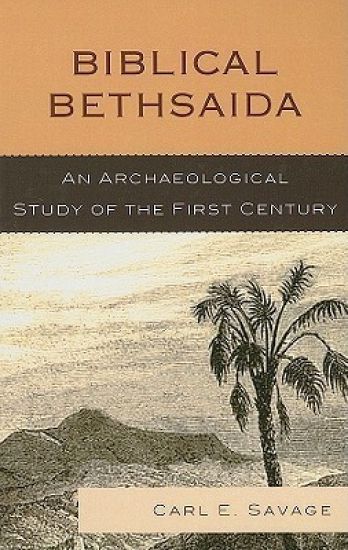
Biblical Bethsaida

Biblical Bethsaida

Carl E. Savage

Lexington Books
2011
sidottu
In his illuminating, well-researched book examining the site of Et-Tell, also known as Bethsaida, Carl E. Savage explores archaeological evidence to offer readers a portrait of the religious beliefs and practices of the community living near the north shore of the Sea of Galilee during the first century CE. In the study of the cultural and social matrix of the first century in the Galilee, scholars have commonly prioritized written sources over archaeological evidence because written sources seem to contribute more directly to an understanding of the religious beliefs and practices of a community. However, there exist many competing views of the landscape during that time due to the varying interpretations of the textual sources. Using archaeological data from Bethsaida itself, Savage investigates the material practices of Bethsaida's ancient inhabitants, describing these practices as significant indicators of their sense of place both ideologically and geographically. He evaluates the historical plausibility of various social reconstructions for the region, and finds that the image that emerges of first-century Bethsaida is one similar to those of other Jewish communities in the Galilee.
Who in the World Was Jesus

Who in the World Was Jesus

Carl E. Roemer

Hamilton Books
2018
nidottu
This book scrutinizes the 39 parables attributed to Jesus in the Gospels. Jesus was a part of a story-telling society in the first century land of Israel. A popular maxim characterizes them as “earthly stories with heavenly meanings.” They often appear that way in context of the Gospels of the New Testament. However, if you retroject them back into the dynamic context of the life and activity of Jesus they suddenly assume not just a “spiritual” but also a more “earthly” vibrancy. Knowing that context the reactions of his contemporaries become clear: we can grasp how they were heard, what people would think of the parables’ message and the character of the messenger. Jesus’ society was in a crisis and part of the intent of Jesus was to address that crisis and rescue his beloved nation from disaster. Story telling changes the way people think and makes them more attentive to new ideas. Although to describe Jesus’ message as subversive may seem to be a distasteful characterization, his parables were meant to subvert popular thought and belief. In this he was completely faithful, however, to Israel’s faith which, at its deepest level, rebels against the powers of this world. In the parables we meet Jesus “on the ground” as he walked the hills of the Galilee, gathered hearers in the villages, and sat among his contemporaries and called them to revolutionize mind and heart and, as the prophets of old also had implored the nation, to return to the gracious heart of their God. In this reading of the parables the reader will be surprised, challenged, and perhaps even be disturbed by the Jesus who emerges in his stories we call parables.
Justification

Justification

Carl E. Braaten

Augsburg Fortress
1990
pokkari
In Part I, Braaten assesses Luther's view of justification and its subsequent interpretation by orthodoxy, by Calvin, by Ritschl and Harnack, by Tillich, and by Barth. In Part II, the discussion turns to ecumenical dialogues on justification and the relation of the doctrine to evangelization, to the distinction between law and gospel, to pastoral care, and to the church's involvement in secular issues. Always lucid, often challenging, this book will stimulate thought and discussion beyond confessional lines.
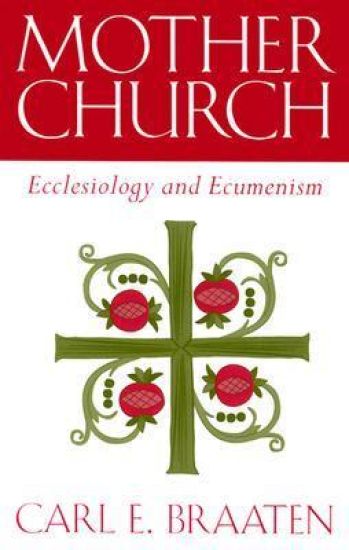
Mother Church

Mother Church

Carl E. Braaten

Augsburg Fortress
1998
pokkari
Carl Braaten here issues an energetic call for a truly ecumenical church, including a Lutheran rationale for recovery of the historical episcopacy and papal primacy as servants of the gospel.Quoting Augustine's dictum that You cannot have God for your father unless you have the church for your mother, Braaten writes of the church's place in the divine scheme of things and of the various modernisms that distort or hide the classical Christian tradition. Tracing his own ecumenical journey, he outlines an ecclesiology of communion and advances specific proposals for enhancing Christian unity in liturgy, spirituality, and church polity. The confessing movement named after Martin Luther he views in terms of its basic intent to reform and renew the church, not to start a new Christianity in a multiplicity of separate denominations.Vigorous, provocative, well and clearly argued, Braaten's case is a formidable and timely contribution to the ecumenical debate.
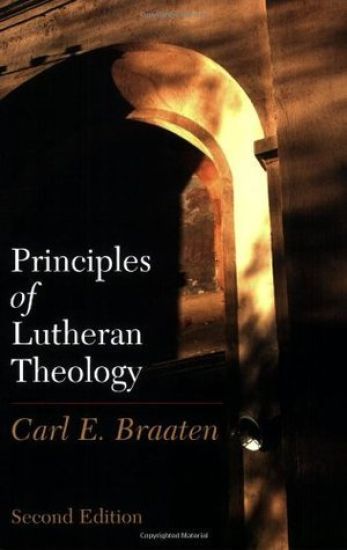
Principles of Lutheran Theology

Principles of Lutheran Theology

Carl E. Braaten

Augsburg Fortress
2007
pokkari
First published in 1983, "Principles of Lutheran Theology" has guided students into theological reflection on the landmarks of Christian faith as understood in the Lutheran confessional heritage for a generation. The book sets forth the main principles of classical Lutheran theology but with an eschatological accent. Canon, confession, ecumenicity, Christ-centeredness, sacrament, law/gospel, and two kingdoms are all examined not only in terms of their original meaning and historical development but also in light of current reflections. In this new edition, Braaten takes stock of the research and reflection of the last twenty-five years and also adds a chapter on the distinctive, Archimedean Lutheran insight into the hiddenness of God as a fount or ground of all theologizing. This new edition, cross-referenced to key readings in Luther's "Works" and "The Book of Concord", will both equip and facilitate the search for a contemporary articulation of Christian identity in light of the church's historic commitments.